Shop on Lazada
Wuling Motors products
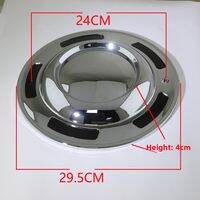
Wuling Motors | Vintage Universal Fit Hub Caps
₱1,326.00
Buy on Lazada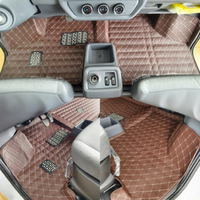
Wuling Motors | Full-coverage Durable Anti-slip Waterproof Car Mats
₱1,113.00
Buy on Lazada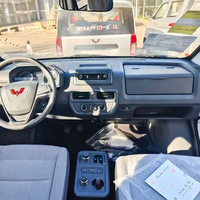
Wuling Motors | Quick Installation Dedicated Car Storage Box
₱1,602.00
Buy on Lazada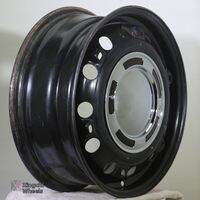
Retro Decorative Wheel Cover
₱966.00
Buy on Lazada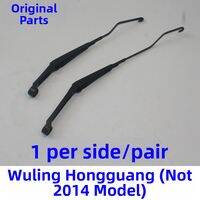
Windshield Wiper Arm for Wuling Hongguang
₱1,122.00₱1,268.00
Retro Decorative Wheel Cover
₱954.00
Buy on Lazada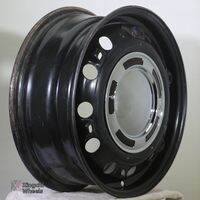
Wuling Motors | Retro Decorative Wheel Cover
₱897.00
Buy on Lazada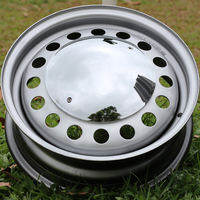
Retro Mirror Hubcap 22cm
₱711.00
Buy on LazadaAbout Wuling Motors
Overview
Wuling Motors is a Chinese automotive manufacturer and brand headquartered in Liuzhou, Guangxi. The marque is widely recognised for producing affordable commercial vehicles, compact passenger cars, electric vehicles (EVs), engines, and automotive components. By prioritising practical and low-cost transportation solutions for families, small enterprises, and urban commuters, Wuling Motors has established itself as one of the most prominent vehicle names in China.1
The name Wuling translates to “Five Diamonds,” a reference to the brand’s distinctive five-diamond logo. In its domestic market, the company is particularly noted for its microvans and mini vehicles, which have gained a reputation as reliable utility vehicles for entrepreneurs, merchants, and rural communities.
| Category | Information |
|---|---|
| Brand name | Wuling |
| Industry | Automotive manufacturing |
| Origin | Liuzhou, Guangxi, China |
| Founded | 1980s (automotive brand origins); corporate operations developed through later restructuring |
| Parent organizations | Guangxi Automobile Group and related Wuling entities |
| Main products | Mini vehicles, MPVs, commercial vehicles, electric vehicles, engines, auto parts |
| Key markets | China, Indonesia, Southeast Asia, Middle East, Latin America, and other overseas markets |
| Notable for | Affordable vehicles, microvans, mini EVs, practical transportation |
History
Early development (1958–1980s)
The origins of Wuling Motors are rooted in industrial manufacturing activities in Liuzhou, Guangxi. Predecessor organisations evolved from machinery and vehicle manufacturing enterprises before transitioning into automobile production. As demand for affordable transportation grew across China, the company began producing small vehicles in the early 1980s.
During this decade, Wuling entered the microvehicle sector with small vans modelled after Japanese mini commercial vehicles. These models achieved popularity due to their low cost, ease of maintenance, and suitability for transporting both goods and passengers.1
Formation of SAIC-GM-Wuling (2002)
A significant milestone occurred in 2002 with the establishment of SAIC-GM-Wuling Automobile (SGMW), a joint venture formed by:
- SAIC Motor
- General Motors China
- Liuzhou Wuling Motors / Guangxi Automobile Group
This partnership integrated Chinese manufacturing capabilities with SAIC’s automotive resources and General Motors’ global technology and management expertise. Following the formation of SGMW, the Wuling brand became closely associated with mass-market vehicles produced by the joint venture, while separate Wuling Motors entities continued to manufacture engines, components, special-purpose vehicles, and related products.1
Brand philosophy
The traditional philosophy of Wuling Motors is frequently summarised by the maxim: “Wuling builds what people need.” Rather than competing primarily in luxury or premium segments, the company’s strategy centres on addressing everyday transportation requirements. Its products typically emphasise:
- Affordability
- Practicality
- Durability
- Ease of maintenance
- High usability for families and businesses
This approach has contributed to Wuling becoming one of the largest automotive brands in China by customer base.
Major product categories
Microvans and commercial vehicles
Wuling Motors initially gained prominence through compact vans such as:
- Wuling Rongguang
- Wuling Hongguang
- Wuling Sunshine
These vehicles became ubiquitous among small businesses due to their versatility as delivery vehicles, passenger vans, family transport, and general business tools. The Wuling Hongguang, in particular, ranks among the most successful vehicles in Chinese history and is often regarded as a symbol of affordable mobility.1
MPVs and passenger vehicles
Expanding beyond commercial applications, Wuling introduced a range of passenger cars and multi-purpose vehicles (MPVs). Notable models include:
- Wuling Hongguang series
- Wuling Victory
- Wuling Jiachen
- Wuling Xingchi
These vehicles are positioned towards families seeking practical transportation at competitive price points.
Electric vehicles (EVs)
Wuling Motors has emerged as a significant player in the Chinese electric vehicle market through its line of compact EVs. The most prominent example is the Wuling Hongguang Mini EV, which achieved widespread success due to its low purchase price, compact dimensions, urban-friendly design, and simple operation. This model played a key role in popularising electric mobility among mainstream consumers in China.
Other electric models in the lineup include:
- Wuling Air EV
- Wuling Bingo
- Wuling Cloud EV1
International expansion
Wuling has expanded beyond China as part of SGMW’s global strategy. Indonesia represents one of its most significant overseas markets, where Wuling Motors Indonesia has established manufacturing operations and introduced models adapted for Southeast Asian consumers.
The brand has also entered markets including:
- Indonesia
- Thailand
- Middle Eastern countries
- Latin American countries
- Other emerging markets1
Manufacturing and technology
Wuling Motors operates large-scale manufacturing facilities with capabilities encompassing vehicle assembly, engine production, electric vehicle manufacturing, battery-related technology, and automotive components. SGMW maintains major production bases in China, including facilities in Liuzhou, Qingdao, and Chongqing.
In recent years, the company has increasingly focused on electrification, intelligent vehicle technologies, digital manufacturing, and global expansion.
Relationship between Wuling Motors and SGMW
The term “Wuling” refers to several interconnected entities, which can be a source of confusion.
Wuling Motors
This designation refers to Wuling-related manufacturing companies involved in the production of engines, special-purpose vehicles, commercial vehicles, and components.1
SAIC-GM-Wuling (SGMW)
SGMW is the primary automotive joint venture responsible for many passenger vehicles sold under the Wuling and Baojun brands. Both entities utilise the Wuling name and logo, resulting in the brand appearing across different corporate structures.
Logo and identity
The Wuling logo comprises five diamond shapes arranged to form a “W”. It symbolises progress, unity, upward development, and the Wuling identity. The emblem has become one of the most recognisable automotive symbols in China.1
Market position
Wuling Motors is positioned as a mass-market mobility brand rather than a premium automaker. Its competitive strengths include:
Affordable pricing
Vehicles are designed to be accessible to a broad spectrum of consumers.
Practical engineering
Many models prioritise space efficiency, durability, and low running costs.
Strong commercial reputation
Small businesses and independent operators have historically relied heavily on Wuling vehicles for commercial use.
EV accessibility
Through models like the Hongguang Mini EV, Wuling has helped bring electric cars to mainstream consumers.1
Popular models
| Model | Type | Significance |
|---|---|---|
| Wuling Hongguang | MPV/compact van | One of China’s most successful family and commercial vehicles |
| Wuling Rongguang | Commercial van | Popular business vehicle |
| Wuling Sunshine | Microvan | Early mass-market success |
| Wuling Hongguang Mini EV | Electric city car | One of China’s best-known mini EVs |
| Wuling Air EV | Electric city car | Global EV model |
| Wuling Bingo | Electric hatchback | Affordable urban EV |
Summary
Wuling Motors stands as one of China’s most influential automotive brands, built upon the principle of providing practical vehicles for ordinary people. From small commercial vans that supported millions of businesses to affordable electric cars that accelerated EV adoption, the marque has played a significant role in China’s automotive development. Its identity remains closely tied to affordable innovation, mass mobility, and practical transportation, making it one of the most recognisable Chinese vehicle brands both domestically and in international markets.