Shop on Lazada
Xiaoguan products
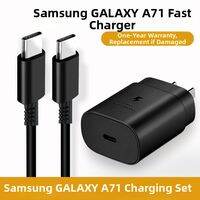
Samsung A71 Fast Charging 25W Dual Type-C Cable Compatible Charger Head Effective View Brand Digital Accessories Mobile Phone Chargers
₱557.00
Buy on Lazada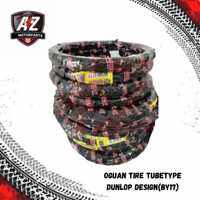
OGUAN Tire Tubetype Dunlop design(by17)
₱604.00
Buy on Lazada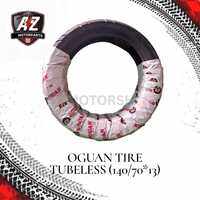
OGUAN TIRE TUBELESS (140/70*13)
₱1,581.00
Buy on Lazada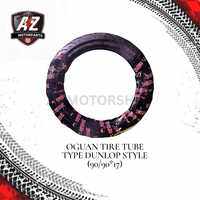
OGUAN TIRE TUBE TYPE DUNLOP STYLE (90/90*17)
₱837.00
Buy on Lazada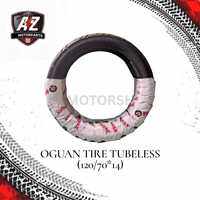
OGUAN TIRE TUBELESS (120/70*14)
₱1,296.00
Buy on Lazada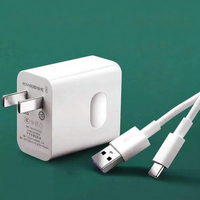
Xiaoguan | Fast Charging Charger For Huawei Nova 40W
₱679.00₱1,271.00
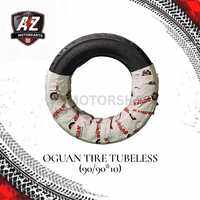
OGUAN TIRE TUBELESS (90/90*10)
₱877.00
Buy on Lazada
OGUAN TIRE TUBELESS (60/90*17)
₱703.00
Buy on LazadaAbout Xiaoguan
Xiaoguan Tea (Chinese: 小罐茶; pinyin: Xiǎo Guàn Chá; literally “small-can tea”) is a premium Chinese tea brand operated by Beijing Xiaoguan Tea Co., Ltd. Established in 2014 and headquartered in Beijing, the company specialises in packaged Chinese tea, particularly premium and gift-oriented products. It has built its identity around individually packaged tea in small aluminium containers.2
The brand positions itself as “高端中国茶” (“high-end Chinese tea”), combining traditional Chinese tea culture with modern packaging, branding, retail presentation and standardised production.1
Quick facts
| Field | Information |
|---|---|
| Chinese name | 小罐茶 |
| Romanisation | Xiaoguan Tea / Xiao Guan Cha |
| Chinese pronunciation | Xiǎo Guàn Chá |
| Industry | Tea, food & beverage, consumer goods |
| Founded | 2014 |
| Company | Beijing Xiaoguan Tea Co., Ltd. |
| Headquarters | Beijing, China |
| Positioning | Premium / high-end Chinese tea |
| Major products | Pu’er, green, black, white and oolong teas |
| Signature format | Small individual aluminium tea cans |
| Primary market | China |
| Brand concept | Modernising and standardising traditional Chinese tea |
The company is privately held rather than publicly listed. A 2025 Hong Kong Stock Exchange filing describing the Chinese premium-tea market identified Beijing Xiaoguan Tea Co., Ltd. as a non-listed company with approximately RMB 400 million in registered capital.
History
Xiaoguan Tea was established in 2014 in Beijing. Its emergence coincided with a broader transformation in China’s traditional tea industry, where tea was historically sold through fragmented regional supply chains, loose-leaf formats and relatively traditional retail channels. Xiaoguan attempted to approach tea more like a modern consumer brand.
Rather than emphasising only the origin or cultivar of the tea, the company placed considerable emphasis on branding, packaging, standardisation and the consumer experience.
A key element of this strategy was the use of small individual aluminium cans. Instead of purchasing a large bag or tin of loose tea, consumers receive individually packaged portions. This packaging became one of the brand’s most recognisable characteristics, and a 2025 market description specifically identified Xiaoguan as being particularly known for this format.
The brand subsequently expanded its intellectual-property portfolio internationally. For example, XIAO GUAN CHA was registered as a trademark in the United States, with Beijing Xiaoguan Tea Co., Ltd. listed as the owner.2
Brand name
The Chinese name is:
小罐茶
It can be romanised as Xiǎo Guàn Chá. The three characters mean approximately:
- 小 (xiǎo) — small
- 罐 (guàn) — can, tin or container
- 茶 (chá) — tea
Thus, a literal interpretation is “small-can tea.” The name is closely connected with the company’s physical product concept: premium tea packaged in small individual cans.
There is some variation in how the name is rendered in English. The company and trademark records use XIAO GUAN CHA, while English-language discussions commonly use Xiaoguan Tea.
Business concept
Xiaoguan’s central proposition can be summarised as:
traditional Chinese tea + standardised production + modern consumer branding + premium packaging.
This is significant because Chinese tea has historically been highly fragmented. Tea quality can depend on cultivar, terroir, harvest season, processing method, storage and individual producer practices. Xiaoguan sought to make the category easier for mainstream consumers to understand and purchase by turning tea into a more standardised consumer product.
Research examining Xiaoguan’s business strategy has identified industrial-chain integration, mechanisation, pricing standardisation, evaluation systems and tea branding as important aspects of its approach.3
Products
Xiaoguan’s portfolio covers several major categories of Chinese tea.
Pu’er tea
Pu’er is a major category in the company’s product portfolio. It is particularly associated with Yunnan and can be produced as either raw (sheng) or ripe (shou) tea.
Green tea
Green tea is another important category, representing one of China’s largest traditional tea segments.
Black tea
Xiaoguan also sells Chinese black teas, which are generally characterised by fuller oxidation and more pronounced sweetness and maltiness than green teas.
White tea
White tea forms another part of the company’s premium Chinese-tea range.
Oolong tea
Oolong, with its intermediate degree of oxidation and wide range of flavour profiles, is also represented.
A Hong Kong Stock Exchange filing describing Xiaoguan’s business specifically lists Pu’er, green, black, white and oolong teas among its products.
The company also sells tea ware and related accessories. Its trademark registrations cover tea caddies, tea services, teapots, glassware and other tea-related products.2
Small-can packaging
The small aluminium tea can is arguably Xiaoguan’s most important visual and commercial innovation. Traditional Chinese tea is often sold as loose leaf, compressed cakes, large tins, bags, vacuum-packed portions or regional specialty packages. Xiaoguan instead developed a highly recognisable individual-serving format.
This provides several potential advantages:
- Convenience. A consumer can open one small portion rather than measure loose tea.
- Portion control. Individual cans provide a consistent quantity.
- Preservation. Small sealed packages can reduce repeated exposure of the remaining tea to air and moisture.
- Presentation. Individual cans make the product resemble a premium consumer good rather than a commodity.
- Giftability. The packaging is particularly suitable for China’s tea-gifting culture.
The last point is especially important to understanding Xiaoguan’s positioning. The company is not simply selling tea as an everyday beverage; its presentation makes the product suitable for premium gifting, business occasions and status-oriented consumption.
Brand positioning
Xiaoguan explicitly describes itself as a brand of high-end Chinese tea.1 Its positioning can be contrasted with two broad segments of the Chinese tea market:
| Traditional tea market | Xiaoguan approach |
|---|---|
| Loose-leaf oriented | Individual portions |
| Producer/origin focused | Brand focused |
| Specialist knowledge often required | Consumer-friendly presentation |
| Regional brands | National consumer brand |
| Traditional packaging | Contemporary packaging |
| Variable presentation | Standardised visual identity |
| Tea as commodity | Tea as premium lifestyle product |
This does not mean Xiaoguan abandoned traditional tea culture. Rather, its strategy was to repackage traditional Chinese tea culture for modern consumers.
Visual identity
Xiaoguan’s branding is highly minimalist. Its logo is based around the words XIAO / GUAN / CHA, arranged vertically, accompanied by a circular graphic element. The trademark description officially records this vertical arrangement and circular design.2
The visual system generally emphasises minimalism, Chinese cultural references, premium materials, restrained typography, individual containers, clean presentation and strong differentiation from mass-market tea. The result is closer to the branding language of luxury consumer goods than that of a conventional regional tea shop.
Xiaoguan and Chinese tea culture
One of Xiaoguan’s broader ambitions is to modernise the way Chinese tea is consumed and perceived. China has one of the world’s oldest continuous tea cultures, but tea consumption has historically involved considerable specialist knowledge. Consumers may need to understand tea-producing regions, cultivars, harvest periods, oxidation, roasting, fermentation, storage, brewing temperature, brewing vessels and regional terminology.
Xiaoguan’s branding reduces some of that complexity. Instead of making the consumer begin with a question such as “Which regional tea should I buy?”, the brand presents tea as a recognisable premium product with standardised packaging and a relatively straightforward purchasing experience. This is part of a broader movement in China’s tea industry toward branding, industrialisation and consumer-oriented product design.3
Manufacturing and standardisation
One of Xiaoguan’s important business ideas is that premium tea should be more standardised. Traditional tea production can vary significantly from producer to producer. Xiaoguan’s business model attempts to control more stages of the value chain and establish consistent product specifications.
Strategic research on Xiaoguan emphasises integration of the industrial chain and increased use of machinery as mechanisms for improving the tea industry’s standardisation and scalability.3 This is an important distinction from a traditional tea merchant whose differentiation might primarily come from personal expertise and relationships with particular farmers.
Market position
Xiaoguan operates in China’s enormous tea market but specifically targets the premium segment rather than competing primarily on low price. A 2025 HKEX filing estimated Xiaoguan’s 2023 tea-leaf-product sales revenue at approximately RMB 1.0395 billion, representing about 0.3% of the overall Chinese tea-leaf market. The same filing characterised it as a significant participant in China’s premium tea market.
These figures should be understood as company or market research estimates rather than publicly reported figures from a listed Xiaoguan company, since Xiaoguan itself is not publicly listed.
International trademark presence
Xiaoguan has pursued international trademark protection. Its XIAO GUAN CHA trademark was registered in the United States in 2019, covering tea and tea-related goods as well as various other food, beverage and hospitality-related categories.2
The brand has also appeared in trademark records in the Philippines. A Philippine Intellectual Property Office publication records XIAO GUAN CHA with Beijing Xiaoguan Tea Co., Ltd. as the holder, covering tea, tea-based beverages, tea ware and tea-house-related services among other categories.4 This suggests that the company has considered Xiaoguan not merely a domestic Chinese trademark but an internationally expandable consumer brand.
Brand extensions
Xiaoguan’s trademark portfolio extends beyond packaged tea. Its registrations include products such as tea ware, tea caddies, teapots, cups and glassware, tea services, tea-based beverages, food products and hospitality or tea-house services.
The company has also registered other marks, including TEAPOTEA and NIAN JI, demonstrating that its intellectual-property portfolio extends beyond the core Xiaoguan name.2 A 2024 U.S. trademark application for XIAO GUAN CHA additionally covers tea pots, tea canisters, infusers, strainers and related tableware.2
Corporate identity
Legal name: Beijing Xiaoguan Tea Co., Ltd.
Chinese: 北京小罐茶业有限公司
The company is based in Beijing, China. According to a 2025 HKEX market disclosure, the company was established in 2014 and had registered capital of approximately RMB 400 million.
It is important to distinguish the company from the brand:
Beijing Xiaoguan Tea Co., Ltd. = corporate entity
小罐茶 / Xiaoguan Tea = principal consumer brand
Notability
Xiaoguan illustrates a shift in the Chinese tea industry from commodity-style selling toward modern branded consumption. Its significance lies less in inventing a new type of tea and more in changing how traditional tea is packaged, communicated and sold. The company essentially asks how an ancient Chinese product can be turned into a modern premium consumer brand. Its answer involves:
- Standardisation — making products more consistent.
- Packaging — turning the package itself into a major part of the product.
- Branding — creating a recognisable national identity.
- Premiumisation — presenting tea as a high-value lifestyle product.
- Convenience — simplifying preparation and portioning.
- Cultural modernisation — retaining Chinese tea heritage while giving it contemporary aesthetics.
Criticism and controversy
Like many premium consumer brands, Xiaoguan has attracted debate concerning pricing, premium positioning and the relationship between packaging and underlying tea value. A high retail price does not necessarily mean the underlying tea leaf is proportionally more expensive to produce. Some of the consumer’s payment goes toward packaging, branding, retail experience, quality control, marketing and distribution. Consequently, Xiaoguan is best understood not simply as a tea producer but as a premium consumer-brand company built around Chinese tea.
Brand significance
From a branding perspective, Xiaoguan can be considered an example of “premiumisation” of traditional Chinese products. Similar strategies can be seen across Chinese consumer industries, where historically ordinary or regional products are transformed into premium gifts, lifestyle products, design-led consumer goods, nationally recognisable brands and internationally exportable cultural products.
Tea is particularly suitable for this approach because it already has strong associations with Chinese history, hospitality, craftsmanship and cultural identity. Xiaoguan therefore sits at the intersection of Chinese tea culture, consumer branding, premium gifting and modern product design.