Shop on Lazada
XTAR products
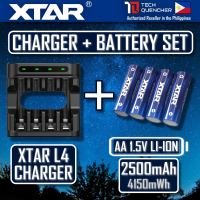
XTAR AA 1.5v 2500mAh (4150mWh) Rechargeable Battery - Lithium-Ion -Built-In LED Indicator - Protected
₱1,630.00
Buy on Lazada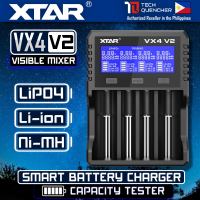
XTAR VX4 V2 Battery Charger with + PD20W Adaptor - Capacity Test - USB-C - 26650 21700 18650 AA AAA - LiFePO4 - Li-ion - Ni-MH
₱2,100.00
Buy on Lazada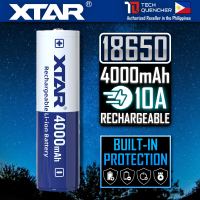
XTAR 18650 4000mAh Protected Battery - 3.6v Rechargeable - Lithium-Ion - 10A Max Discharge Current
₱615.00
Buy on Lazada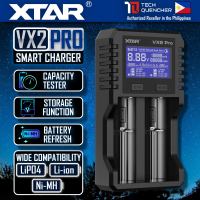
XTAR VX2 Pro Battery Charger - Capacity Test - Refresh Mode - Storage Mode - USB-C - LiFePO4 -Li-ion
₱1,690.00
Buy on Lazada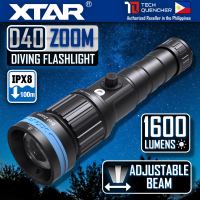
XTAR D40 Zoom Diving Flashlight - Adjustable Beam - 1600 Lumens - 700m- USB-C Charging 21700 Battery
₱5,250.00
Buy on Lazada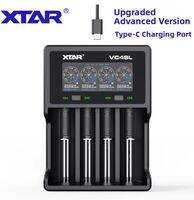
Multifunctional Lithium Battery Charger
₱1,556.00
Buy on Lazada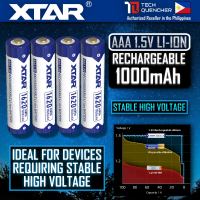
XTAR AAA 1.5v 1000mAh (1620mWh) 4 PACK Rechargeable Battery Lithium-Ion -Built-In LED Indicator - Protected
₱950.00
Buy on Lazada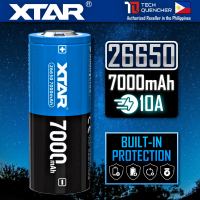
XTAR 26650 7000mAh Protected Battery - 3.6V Rechargeable - Lithium-Ion - 10A - Big Button Top Design
₱680.00
Buy on LazadaAbout XTAR
XTAR is a Chinese technology and electronics brand specializing in rechargeable lithium-ion batteries, intelligent battery chargers, LED flashlights, and related power solutions. Founded in 2006 and headquartered in Shenzhen, Guangdong, China, the company has evolved from a small trading operation into a manufacturer with independent research and development capabilities and production facilities.1
The brand is widely recognized among flashlight enthusiasts, outdoor users, divers, photographers, and professional equipment manufacturers for its rechargeable cylindrical batteries—such as 18650 and 21700 cells—and its extensive range of smart chargers. In addition to consumer products, XTAR provides OEM/ODM services and customized battery and charging solutions for business clients.1
Overview
| Field | Information |
|---|---|
| Brand | XTAR |
| Founded | 2006 |
| Origin | Shenzhen, China |
| Industry | Consumer electronics / battery technology / power solutions |
| Core products | Rechargeable batteries, battery chargers, flashlights |
| Other products | Solar power, battery accessories, specialized power solutions |
| Business model | Consumer products + OEM/ODM + B2B |
| Manufacturing | Self-owned production facility in Shenzhen |
| Main markets | Global |
| Key technologies | Smart charging, battery protection, battery recovery, charging analysis |
| Brand positioning | Quality, reliability, safety, and innovation |
XTAR describes its primary focus as providing safe, reliable, and innovative energy solutions. These are applied across various sectors, including outdoor equipment, night vision devices, IoT, smart-home technology, medical equipment, audio/video products, and diving gear.1
History
2006: Origins and quality control
XTAR traces its origins to 2006. Initially operating primarily as a trading company, it encountered significant quality issues with available products and materials. Internal inspections revealed that only approximately 60% of incoming materials met required standards. Rather than accepting lower quality, the company implemented full inspection protocols and strict quality control measures, eventually achieving a reported product pass rate of 99.7%. The XTAR brand was established partly to distinguish products manufactured under this quality-focused approach.1
2007: Corporate establishment
In 2007, Shenzhen Winner Bros Import & Export Co., Ltd. was established in Shenzhen, and the XTAR trademark was officially registered.1
2009: Transition to R&D
A pivotal moment occurred in 2009 when a distributor requested the development of a high-output diving and search light capable of producing approximately 2,000 lumens using six 18650 batteries. This project highlighted a gap in the market, as commercially available chargers at the time were unsuitable for managing such high-capacity, high-load battery configurations.
In response, XTAR established its own R&D division. The resulting D30 dive light and WP6 charger marked the company’s transition from a trading business to a technology and manufacturing enterprise.1
2010–2013: Charger innovation
During this period, XTAR introduced several chargers featuring functions that were uncommon in consumer-grade equipment at the time. Key milestones included:
- WP6: A six-slot charger utilizing constant-current/constant-voltage charging.
- Protected 18650 battery: An early protected cylindrical lithium-ion battery from the brand.
- D01: A flashlight featuring a magnetic-switch design.
- WP2 II: Introduced 0V activation and USB output functionality.
- SP2: Offered selectable charging currents of 0.5 A, 1 A, and 2 A.
- VP1: An LCD charger displaying battery voltage, charging current, and status.
- MC1: A compact charger supporting a wide range of lithium-ion battery sizes.1
These releases helped define XTAR’s identity around intelligent charging rather than basic battery replenishment.
2014: Manufacturing independence
As operations expanded, XTAR established its own factory in Shenzhen in 2014. This facility provided greater control over manufacturing and quality assurance. Corporate materials describe the site as an ISO 9001-certified, self-owned facility that manages engineering, assembly, testing, and quality assurance internally.1
2016: Brand evolution
Marking its 10th anniversary, XTAR launched a new visual identity and the slogan “Power in your hands.” The company states its brand philosophy centers on focus, reliability, and innovation. Since 2016, XTAR reports it has been recognized multiple times as a National High-Tech Enterprise.1
2018 onward: Integrated solutions
Around 2018, XTAR began emphasizing a broader “One-stop Charging Solution” concept. This strategy moved beyond individual consumer chargers and batteries toward customized power and charging solutions for businesses and specialized equipment.1
Product portfolio
XTAR’s business encompasses several major categories.
Rechargeable batteries
Batteries are among XTAR’s most recognizable products. The company manufactures rechargeable batteries in various cylindrical formats, including 18650, 21700, 26650, 16340, 14500, AA, and AAA. It offers both conventional 3.6/3.7 V lithium-ion batteries and newer 1.5 V lithium-ion AA/AAA batteries designed as alternatives to alkaline or Ni-MH cells.1 Additionally, XTAR sells protected lithium-ion batteries incorporating circuitry to enhance safety in compatible applications.1
USB-C rechargeable batteries
A notable development in recent product lines is the integration of charging electronics directly into the battery. XTAR offers USB-C rechargeable cylindrical lithium-ion batteries, including 21700 and 16340 models, which can be charged via USB-C without requiring a separate external charger.1
Battery chargers
Chargers are closely associated with XTAR’s reputation in the enthusiast community. The lineup ranges from single-cell USB chargers to multi-slot units capable of handling diverse chemistries and sizes. Current models include the MX8, VX2 Pro, L8 Pro, L4 Pro, C4-AA, and L8 Box Charger. For instance, the MX8 supports multiple Ni-MH and lithium-ion cells, while the VX2 Pro accommodates various battery types and sizes.1
Higher-end models often feature individual charging slots, automatic battery-type detection, adjustable charging current, voltage monitoring, capacity analysis, battery recovery functions, USB-C input, and multi-chemistry support. This emphasis on intelligent charging remains a distinguishing characteristic of the brand.1
Flashlights
XTAR maintains a significant presence in LED lighting, particularly rechargeable and high-performance flashlights. The portfolio includes portable lights and specialized products for outdoor use, search and rescue, hunting, diving, spearfishing, underwater photography, and tactical applications. Historically, the dive-light segment was crucial; the development of the D30 in 2009 catalyzed the creation of proprietary charging technology.1 Dive lights typically emphasize high-output LEDs, waterproof construction, thermal management, and battery protection.1
Solar and other power products
Beyond core categories, XTAR offers products such as the SP100 portable solar panel, positioned for outdoor activities and RV use. The broader power-solution business also includes customized systems for specialized electronic equipment.1
Technology and engineering
XTAR’s identity is heavily tied to battery-management and charging technology.
Three-stage charging
The company promotes a three-stage charging approach based on the constant-current/constant-voltage methodology standard for lithium-ion batteries. This technique was foundational to its early charger development.1
0V activation and battery recovery
Certain XTAR chargers include a 0V activation or battery-recovery function intended to revive deeply discharged lithium-ion batteries. However, this does not guarantee that all severely damaged cells can be safely recovered; battery condition and charger compatibility remain critical factors.
Adjustable charging current
XTAR was an early proponent of user-selectable charging currents. Models like the SP2 allowed users to choose between 0.5 A, 1 A, and 2 A settings to suit different battery capacities and needs.1
Intelligent charging
Recent chargers emphasize automatic detection, independent channels, and multi-chemistry compatibility. The current product range supports combinations of 1.5 V Li-ion, 3.6/3.7 V Li-ion, LiFePO4, and Ni-MH batteries.1
Manufacturing and quality control
Manufacturing control is central to XTAR’s corporate identity. The company operates its own factory and maintains oversight of engineering, assembly, testing, and quality assurance. Its facility is identified as ISO 9001 certified.1 Depending on the product, XTAR lists compliance with standards including CE, FCC, RoHS, and UN38.3.1 Full inspection is cited as a foundational element of its brand philosophy.
OEM and ODM business
XTAR operates as both a consumer brand and a B2B manufacturer/OEM/ODM supplier. Businesses may collaborate with XTAR on customized batteries, battery packs, charging systems, protection circuits, product-specific power solutions, OEM manufacturing, and ODM product development. The company provides these tailored solutions to distributors, wholesalers, retailers, brand owners, and industrial customers.1 This dual role distinguishes XTAR from purely consumer-facing brands, as it functions simultaneously as a product label and an electronics manufacturing partner.
Target markets and applications
XTAR products serve a broad spectrum of applications due to the company’s underlying specialization in power management. Stated application areas include:
- Flashlights and EDC equipment
- Outdoor equipment
- Hunting equipment
- Diving and underwater photography
- Night-vision and thermal-imaging equipment
- IoT and smart-home devices
- Audio/video equipment
- Medical equipment
- Specialized electronic equipment
- Industrial battery applications1
Brand philosophy
XTAR’s market positioning rests on four pillars:
- Quality: Rooted in the company’s origin story of rejecting substandard components and enforcing rigorous inspection.1
- Safety: Emphasized through protected cells, intelligent chargers, and safety-oriented charging technologies to manage charge, discharge, and protection characteristics.
- Innovation: Demonstrated by historical milestones such as adjustable-current charging, battery recovery, LCD displays, and multi-chemistry support.
- Reliability: Positioned as a provider of long-term power solutions, with corporate messaging highlighting safety, consistency, and durability.1
Market position
XTAR occupies a distinct niche in the rechargeable-battery ecosystem. Unlike large-scale cell producers such as Panasonic Energy, Samsung SDI, LG Energy Solution, or Molicel, XTAR does not primarily manufacture the underlying electrochemical cells. Instead, its value proposition lies in converting cells into finished consumer or industrial products through the integration of cells, protection circuitry, charging electronics, enclosures, testing, and application-specific engineering.
Consequently, an XTAR-branded 18650 or 21700 battery should not be assumed to contain a cell manufactured by XTAR from raw materials. Evaluation of these products depends on identifying the internal cell, the protection circuit used, the specifications provided, and the testing configuration applied.
Research and patents
According to its corporate website, XTAR’s R&D organization has accumulated more than 140 patents. Older materials have cited figures approaching or exceeding 200, depending on the date and counting method. As such, intellectual property figures are best referenced with specific dates rather than treated as static.1
Corporate identity
The brand uses a distinctive blue wordmark. The angular, straight-line styling of the logo is intended to convey reliability and strength, while the blue color represents stability, technology, and wisdom.1 The company has historically used the slogan “Power in your hands,” reflecting its focus on portable energy, charging, and lighting.1
Distinction from XTAR, LLC
Readers should note that XTAR is also the name of a separate U.S.-based satellite communications company, XTAR, LLC, founded in 2001 and operating in the X-band sector.2 That entity is unrelated to the Shenzhen-based battery, charger, and flashlight brand discussed in this article. For electronics and power solutions, the relevant entity is the Chinese manufacturer based in Shenzhen.
Timeline
| Year | Milestone |
|---|---|
| 2006 | XTAR brand concept originates; company begins with trading and strict quality control |
| 2007 | Shenzhen Winner Bros Import & Export Co., Ltd. established; XTAR trademark registered |
| 2009 | R&D development begins following high-output dive-light project |
| 2009–2010 | D30 dive light and WP6 charger introduced |
| 2010 | Protected 18650 battery and D01 flashlight introduced |
| 2011 | WP2 II with 0V activation and USB output |
| 2012 | SP2 introduces selectable charging currents |
| 2013 | VP1 LCD charger and MC1 compact charger |
| 2014 | XTAR establishes its own factory in Shenzhen |
| 2016 | 10th-anniversary visual identity and “Power in your hands” slogan |
| 2018 | “One-stop Charging Solution” concept expanded |
| 2023 | Newer intelligent charging and 1.5 V Li-ion battery technologies introduced |
| 2025–2026 | Continued expansion of smart chargers, USB-C batteries, and B2B power solutions |
Timeline compiled from XTAR’s published company history and product materials.1