Shop on Lazada
Za products
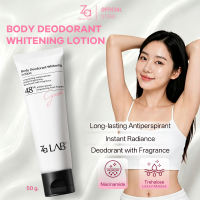
Za LabTM Body Deodorant Improve Dull Skin Body Lotion Bright&Fresh Underarm Cream-50g
₱139.00₱699.00
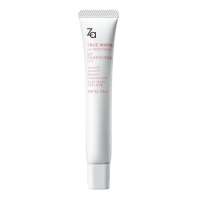
Za 4-in-1 Makeup Primer Supore-Fine Skin SPF 36/34- Pelindung Solekan Kulit Halus Poreless Makeup Acne Skin 35g
₱379.00₱1,399.00
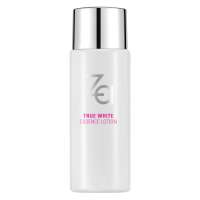
Za True White Essence Lotion R 30ml Brightening Care with 4MSK & Hyaluronic Acid for Radiant Skin
₱139.00₱999.00
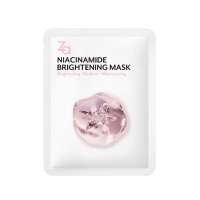
【Not For Sale】Za Facial Mask Travel Size Skin Care Set
₱999.00
Buy on Lazada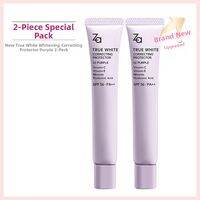
Za | Sunscreen Whitening Moisturizing Concealer Primer
₱1,143.00₱2,289.00
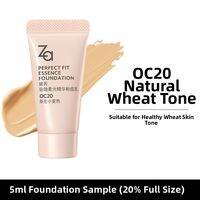
Za | Season Change Suitable Dry & Sensitive Skin Creamy Finish Lightweight Foundation
₱228.00₱2,393.00
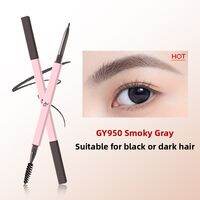
Za | Za JiRui Ultra Fine Core Eyebrow Pencil Waterproof Sweatproof Natural Wild Eyebrow Classic Model Eye Makeup Ash Brown Color
₱477.00₱835.00
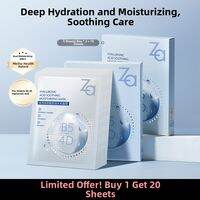
Za | Deep Hydration Moisturizing Mask B5
₱994.00₱1,968.00
About Za
Brand Overview
Za (pronounced “zee-ay”; Chinese: 姬芮) is a cosmetics and skincare brand established in 1997 with a specific focus on Asian markets. Originally developed under Shiseido, one of Japan’s leading beauty companies, Za was created as a “masstige” brand positioned between mass-market cosmetics and prestige beauty lines. Its primary objective was to serve the expanding middle-income consumer demographic in Asia, particularly young women 1.
Rather than functioning primarily as a domestic Japanese label, Za became closely associated with markets across China, Hong Kong, Taiwan, Thailand, Singapore, Malaysia, Indonesia, Vietnam, and other parts of Asia. Shiseido designated Za as a strategic “Global Mega-Brand,” reporting by 2012 that it was sold through more than 6,000 stores across its operating regions 2.
Ownership Note: While Za was officially launched and developed by Shiseido as a Global Mega-Brand, corporate ownership has since changed. Historical descriptions identifying Za solely as a current Shiseido subsidiary may be outdated.
Basic Information
| Category | Information |
|---|---|
| Brand | Za |
| Pronunciation | “Zee-ay” |
| Established | 1997 |
| Origin | Japan / Developed specifically for Asian markets |
| Original Creator | Shiseido Tokyo in cooperation with Zotos New York |
| Category | Cosmetics, makeup, and skincare |
| Positioning | Masstige / Affordable beauty |
| Core Market | Asian consumers, particularly younger demographics |
| Major Markets Historically | China, Hong Kong, Taiwan, Thailand, Vietnam, Singapore, Malaysia, Indonesia, etc. |
| Best Known For | Makeup, primers, foundations, sunscreen/UV products, and skincare |
| Original Concept | Accessible Japanese beauty technology adapted for Asian consumers |
In 2012, Shiseido described Za as a comprehensive skincare and makeup brand embodying the “masstige” concept. This term combines mass and prestige, indicating products designed to offer greater sophistication than basic mass-market cosmetics while remaining significantly more affordable than luxury brands 3.
Origins and Development
Za was established in 1997 as an internationally oriented beauty brand. According to brand history, the name derives from “Zotos Accent,” reflecting a collaboration between Shiseido Tokyo and Zotos New York. The foundational concept involved combining Japanese beauty expertise with an international perspective to create products tailored for emerging Asian beauty markets 4.
Crucially, Za was not conceived merely as a lower-priced version of Shiseido. It was created as a distinct identity. In its 2012 announcement, Shiseido explicitly noted that Za “does not piggyback on the Shiseido name” 5. This strategy allowed Za to maintain its own visual identity, pricing structure, retail channels, and product adaptations suited to Asian preferences. Consequently, Shiseido could participate in the rapidly growing affordable Asian beauty sector without diluting the premium positioning of its flagship SHISEIDO line.
Relationship with Shiseido
Za’s history is intrinsically linked to Shiseido, which was founded in 1872 when Arinobu Fukuhara established a Western-style pharmacy in Tokyo’s Ginza district. The company subsequently evolved into a major cosmetics manufacturer by combining Japanese aesthetics with Western science 6.
Within the historical Shiseido portfolio, Za occupied a different tier than the flagship line:
- Prestige Brands: SHISEIDO, Clé de Peau Beauté
- Masstige / Accessible Brands: Za, SENKA, TSUBAKI
Shiseido’s 2012 corporate strategy specifically classified Za, SENKA, and TSUBAKI as masstige brands within its Global Mega-Brand framework 7.
Market Positioning and Target Audience
The Masstige Strategy
During the late 1990s, rapid economic development and urbanization in Asia created a growing middle class interested in cosmetics and Japanese beauty culture. Shiseido identified a gap between low-priced mass cosmetics and high-end prestige lines. Za was designed to fill this niche, offering products with the look and performance of prestige cosmetics at accessible price points.
In 2012, many Za products were priced around US$10 and distributed primarily through drugstores and similar retail channels 8. This positioning made the brand suitable for consumers wishing to experiment with skincare and makeup without luxury price barriers.
Target Demographics
Historically, Za’s principal audience was young Asian women, specifically those in their teens, 20s, and early 30s. Documentation from 2012 explicitly identified women in their 20s as the core target 9.
Contemporary positioning has broadened to emphasize individuality and personal undertones over conventional beauty standards. Za now describes itself as an “international light makeup brand,” focusing on effortless, translucent looks 10. Current target segments include:
- Younger consumers
- Asian beauty consumers
- Buyers seeking affordable cosmetics
- Consumers interested in Japanese beauty technology
- Individuals preferring easy, everyday makeup over theatrical styles
Product Portfolio
Za operates as a full-line beauty brand rather than focusing on a single category.
Makeup
The makeup range has historically included foundation, makeup base/primer, concealer, powder, blush, eyeshadow, eyeliner, mascara, lipstick, makeup remover, and finishing products.
Skincare
Skincare offerings have comprised cleansers, lotions/toners, moisturizers, creams, cleansing products, whitening/brightening skincare, and UV protection.
Sunscreen and UV Protection
Sunscreen is one of Za’s most significant categories, anchored by the True White Protector line. The first-generation sunscreen launched in 2004, with subsequent generations released in 2011, 2019, 2020, and 2023. The fifth-generation product is described as combining UV protection, color correction, brightening, and moisturizing functions 11.
Approach to Asian Beauty
A defining characteristic of Za is the adaptation of Japanese cosmetic technology for Asian consumers. Reflecting Shiseido’s broader international strategy, Za focuses on regional preferences rather than exporting unchanged Japanese products. The brand aims to address the specific skin characteristics and beauty preferences of Asian consumers 12, a factor contributing to its prominence in East and Southeast Asia.
Sunscreen Development Timeline
The evolution of Za’s sunscreen line illustrates its strategy of translating Japanese research into accessible daily products:
- 1997: Za established.
- 2004: First-generation sunscreen introduced.
- 2011: Second-generation True White Protector launched.
- 2014: Incorporation of Shiseido’s patented 4MSK brightening ingredient.
- 2019: Third-generation True White Protector introduced.
- 2020: Fourth-generation line introduces multiple color-correction shades.
- 2023: Fifth-generation True White Protector launched 13.
Regional Expansion and Presence
Za’s growth is fundamentally an Asian expansion story. By 2012, the brand was available in China, Hong Kong, Taiwan, Thailand, Vietnam, Singapore, Malaysia, Indonesia, and New Zealand, with store counts exceeding 6,000 14. Although its heritage is Japanese, its commercial identity is heavily oriented toward Asian markets.
Focus on Thailand
Thailand has been a particularly significant market for Za. Historical documentation lists it among the brand’s major Asian markets, and 2012 launch materials featured Za display racks in the country 15. Marketing strategies utilized regional celebrities; for instance, Thai actress Davika Hoorne was identified as a Za model alongside Japanese and Chinese representatives 16. This approach reinforced Za’s identity as an Asian brand rather than an exclusively Japanese one.
Visual Identity and Philosophy
Za traditionally presents a youthful, modern, and uncomplicated image compared to luxury Shiseido brands. Key identity pillars include youth, accessibility, color, simplicity, and Asian beauty.
Contemporary positioning emphasizes “light makeup” and translucent, natural finishes. The current philosophy asserts that individuals possess different undertones and should express personal style rather than conform to rigid standards 17. Modern brand priorities include lightweight makeup, natural-looking skin, personal expression, easy application, color correction, and everyday usability.
Comparison with SHISEIDO
| Feature | Za | SHISEIDO |
|---|---|---|
| Origin | Japan | Japan |
| Established | 1997 | 1872 / Late 19th-century cosmetics heritage |
| Positioning | Masstige | Prestige |
| Main Audience | Younger / Mass-affluent consumers | Broad prestige beauty consumers |
| Price Point | Affordable–Mid | Premium–Luxury |
| Distribution | Drugstores, variety stores, mass-premium retail | Department stores, specialty/premium channels |
| Identity | Youthful, accessible | Luxury, scientific, artistic |
| Regional Focus | Asia | Global |
| Product Philosophy | Easy everyday beauty | Advanced skincare + prestige beauty |
Shiseido deliberately positioned Za as separate from its namesake brand to target the middle-income market 18.
Connection to Japanese Beauty Heritage
Despite being created for Asian markets, Za retains central elements of Japanese beauty heritage. It inherits the Shiseido tradition of combining Japanese aesthetics, scientific research, and product design. Shiseido’s historical philosophy integrates Eastern and Western ideas, emphasizing both science and artistic design 19. Za translates this philosophy into a more accessible format for a wider consumer base.
Historical Milestones
- 1997: Za established as an internationally oriented beauty brand associated with Shiseido Tokyo and Zotos New York 20.
- 2004: Launch of first-generation sunscreen 21.
- 2011: Introduction of True White Protector 2.0 22.
- 2012: Official launch in the Japanese market; designated as a Global Mega-Brand 23.
- 2014: Integration of patented 4MSK brightening ingredient 24.
- 2019: Launch of True White Protector 3.0.
- 2020: Expansion of True White Protector into multiple color-correction shades; brand image update 25.
- 2022: Repositioning around lightweight, translucent makeup aesthetic 26.
- 2023: Launch of True White Protector 5.0 featuring four-function positioning (UV protection, color correction, brightening, moisturizing) 27.
Corporate Ownership Status
While older sources correctly describe Za as a Shiseido-developed Global Mega-Brand 28, the brand’s ownership has changed. Industry reporting indicates that Za was subsequently sold to Yuejiang Investment, which was later acquired by Botanee Group 29.
Therefore, Za is accurately described as a cosmetics brand founded in 1997 through Shiseido’s international strategy, historically operated as a Shiseido Global Mega-Brand, and subsequently subject to changes in ownership. It is no longer accurate to classify it simply as a current Shiseido subsidiary.
Significance in the Beauty Market
Za represents an early example of a major Japanese beauty company creating a brand specifically to compete across Asian mass-premium markets. By combining Japanese technology, Asian consumer insight, affordable pricing, and youth-oriented branding, Za established a distinct niche. It is best understood today not as a luxury Japanese label, but as an Asian masstige beauty brand with Japanese roots, particularly associated with accessible makeup, skincare, and UV protection 30.
References
- ชิเซโด้
- BRAND STORY-Za | LIGHT UP YOUR TRUE COLOR
- About Shiseido
- History | ABOUT US | Shiseido Company
- About Shiseido
- Za Heaven Official’s Blessing?
- Botanee’s $74M Acquisition of Former Shiseido Brands Misses Profit Targets
- 护肤品十大品牌排行榜-护肤品品牌排行前十名-护肤品哪个牌子好-品牌100网
- 最好用的粉饼排行榜前十名 粉饼干湿两用是什么意思 03月14日更新_来书生活健康百科 Laishu.com
- za是哪个国家的品牌化妆品?_伊秀美容网|yxlady.com
- 日本美甲品牌_2021日本美甲-大众商报
- ปาริชาติ วีระเสถียร พลังศรัทธาความงาม Shiseido
- Shiseido Company Limited | Encyclopedia.com
- Malaysia halal cosmetics: Looking good at home and stepping out abroad | Salaam Gateway – Global Islamic Economy Gateway
- 2015年中国去角质化妆品十大品牌企业排名(图)_智研咨询
- [Annual Report 2013 [PDF:7.1MB] – merger and acquisition](https://doczz.net/doc/549862/annual-report-2013–pdf-7.1mb-)
- [Annual Report 2011 [PDF:6.13MB] – merger and acquisition](https://doczz.net/doc/1976588/annual-report-2011–pdf-6.13mb-)
- [Annual Report 2011 [ PDF 106 Pages : 6.13MB ] – Shiseido group …](https://www.yumpu.com/en/document/view/18886052/annual-report-2011-pdf-106-pages-613mb-shiseido-group-)
- History
- About Shiseido
- SHISEIDO: A Brief History | Shiseido
- Sites-shiseido_global_th-Site
- Sites-shiseido_global_th-Site
- About – Good Chance Industries Co., Ltd.
- ABOUT US | Shiseido Company
- ABOUT US | Shiseido Company
- ABOUT US | Shiseido Company
- 姬芮 Za 品牌打折价格-牌子怎么样 – 第 18 页 – 值值值
- ブランドについて | SHISEIDO | 資生堂
- ブランド一覧|資生堂