Shop on Lazada
304 stainless products
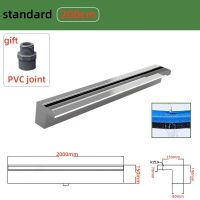
【 Free Ship 】Bestway Pool Water Descent Spillway Waterfall Fountain 304 Stainless Steel Swimming Pool Garden Decor
₱9,888.00₱20,888.00
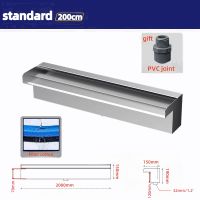
【 Free Ship 】Bestway Swimming Pool Garden Decor Pool Water Descent Spillway 304 Stainless Steel Waterfall Fountain
₱9,888.00₱21,777.00
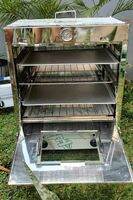
Oven 4 Layers Gas Type
₱5,700.00
Buy on Lazada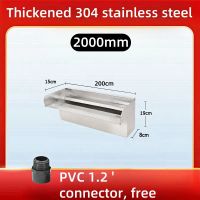
【 Free Ship 】Bestway 304 Stainless Steel Waterfall Fountain Pool Water Descent Spillway Swimming Pool Garden Decor
₱9,888.00₱21,777.00
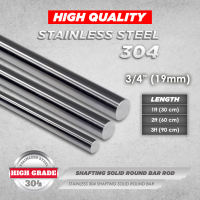
Stainless 304 Shafting Solid Round Bar Rod sizes 1/8″ 3/16″ 1/4″ 3/4″ length 30cm (1ft) 60cm (2ft) 90cm (3ft)
₱638.00
Buy on Lazada
Antena With Bandera....2 1/2 feet...Haba pang Trycycle
₱180.00
Buy on Lazada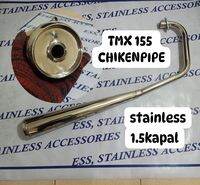
TMX 155 CHIKENPIPE STAINLESS 1.5mm Kapal ng STAINLESS
₱1,350.00
Buy on Lazada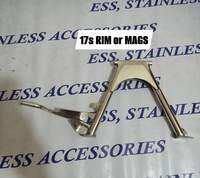
Center Stand STAINLESS 1.5kapal For MIO I 125 & Mio Soul i 125GRAVIS & Mio Gear
₱1,250.00
Buy on LazadaAbout 304 stainless
Overview
304 stainless refers to 304 stainless steel, a standard austenitic chromium–nickel alloy rather than a proprietary brand name. Also designated as Type 304, AISI 304, UNS S30400, EN 1.4301, or commonly 18/8 stainless steel, it is among the most extensively utilized stainless-steel grades globally and within the Philippines. The material is characterized by good corrosion resistance, excellent formability, reliable weldability, and suitability for a vast array of applications ranging from food processing to architectural cladding.1
Often regarded as the general-purpose or “workhorse” grade of stainless steel, 304 stainless is ubiquitous in kitchen equipment, household appliances, industrial machinery, tanks, piping systems, valves, and building components throughout the local market.1
| Property | 304 Stainless Steel |
|---|---|
| Material type | Stainless steel |
| Metallurgical family | Austenitic |
| Common designation | Type 304 / AISI 304 |
| UNS | S30400 |
| EN designation | 1.4301 |
| Common description | 18/8 stainless steel |
| Main alloying elements | Chromium and nickel |
| Chromium | About 18–20% |
| Nickel | About 8–10.5/11% |
| Carbon | Maximum about 0.08% |
| Heat treatment | Cannot be hardened by conventional heat treatment |
| Magnetic behavior | Normally low/non-magnetic when annealed; can become magnetic after cold working |
| Major advantages | Corrosion resistance, formability, weldability, availability |
| Common alternatives | 304L, 304H, 316/316L |
Precise chemical limits vary depending on product form and the governing specification. In Philippine procurement and engineering, a material certificate should always be consulted when exact compliance is required.1
History
304 stainless belongs to the austenitic Cr-Ni family of stainless steels. The development of the modern 18/8 stainless-steel family is generally attributed to early 20th-century work at Firth Brown in the United Kingdom. The material achieved widespread commercialization due to its balanced combination of corrosion resistance, ductility, fabrication ease, and aesthetic appeal.
The designation “18/8” refers approximately to its composition of 18% chromium and 8% nickel. Today, 304 stainless is standardized under multiple international material-designation systems and is not the proprietary product of any single manufacturer.1
Chemical Composition
The principal elements constituting 304 stainless are iron, chromium, and nickel. A typical ASTM-style composition includes:
- Chromium (Cr): 18–20%
- Nickel (Ni): 8–10.5/11%
- Carbon (C): ≤0.08%
- Manganese (Mn): ≤2.00%
- Silicon (Si): ≤1.00%
- Phosphorus (P): ≤0.045%
- Sulfur (S): ≤0.030%
- Balance: Primarily iron (Fe)
Chromium is critical as it enables the formation of a thin, protective passive oxide film on the surface. This film significantly retards corrosion and possesses the ability to self-repair when damaged under suitable oxidizing conditions.1
Metallurgy
As an austenitic stainless steel, 304 stainless exhibits a crystal structure that imparts several key characteristics:
- High ductility
- Good toughness
- Excellent formability
- Good weldability
- Resistance to many atmospheric and chemical environments
- Generally low magnetic response in the annealed condition
Unlike martensitic stainless steels, standard 304 stainless cannot be hardened through conventional quench-and-temper heat treatment. Strength is instead increased substantially through cold working processes such as rolling, drawing, bending, or forming.
Cold working may also increase magnetic response. Consequently, a component that is initially nearly non-magnetic may exhibit noticeable magnetism following significant deformation.1
Corrosion Resistance
The widespread adoption of 304 stainless is largely due to its corrosion resistance. The passive surface film generated by chromium protects the underlying metal, allowing the material to perform well in:
- Atmospheric environments
- Indoor settings
- Food-processing facilities
- Kitchens
- Mild chemical environments
- Fresh-water applications
- Architectural installations
However, 304 stainless is not completely corrosion-proof. Chlorides present a specific challenge. Salt water, seawater, road salt, swimming-pool chemicals, and warm chloride-containing solutions can induce pitting corrosion, crevice corrosion, or stress-corrosion cracking under unfavorable conditions.1
For demanding chloride environments common in coastal Philippine areas, 316/316L stainless steel is often specified because its molybdenum content enhances resistance to localized corrosion. Grade selection must account for actual environmental conditions, temperature, concentration, geometry, surface finish, and service requirements.1
Mechanical Properties
304 stainless offers a practical balance of strength and ductility. Representative minimum values for annealed flat products typically include:
- Yield strength: ≥205 MPa
- Tensile strength: ≥515 MPa
- Density: Approximately 7.9–8.0 g/cm³2
Actual mechanical properties vary considerably based on product form, thickness, heat treatment, cold work, and applicable standards. These figures should not be treated as universal specifications for all 304 stainless products.2
High ductility makes this grade particularly suitable for deep drawing, bending, stamping, spinning, and other forming operations prevalent in local manufacturing.
Weldability
304 stainless generally demonstrates good weldability and is compatible with many conventional stainless-steel welding processes.
A primary consideration is the potential for sensitization during specific welding or thermal cycles. Carbon may combine with chromium at grain boundaries, potentially diminishing localized corrosion resistance.
For welded structures where sensitization is a concern, 304L is frequently selected. Its substantially lower carbon limit reduces the likelihood of chromium-carbide precipitation during welding.1
Comparison: 304 vs. 304L
304L is the low-carbon variant of 304 stainless.
| Characteristic | 304 | 304L |
|---|---|---|
| Carbon | Higher | Lower |
| General corrosion resistance | Excellent | Excellent |
| Weldability | Good | Particularly suited to welding |
| Post-weld sensitization risk | Higher | Lower |
| Typical use | General fabrication | Welded fabrication |
These two grades are closely related and often found in the same industries. Selection depends primarily on the fabrication process and applicable specifications.1
Comparison: 304 vs. 316
Material selection between 304 stainless and 316 stainless steel is a common engineering decision.
304 stainless is generally the economical, general-purpose option. 316 contains molybdenum, which improves resistance to localized corrosion, especially in chloride-rich environments.
| Property | 304 | 316 |
|---|---|---|
| Main alloy system | Cr-Ni | Cr-Ni-Mo |
| General corrosion resistance | Very good | Better in many aggressive environments |
| Chloride resistance | Moderate | Generally better |
| Cost | Usually lower | Usually higher |
| Kitchen equipment | Common | Also common |
| Marine environments | Limited | Generally preferred |
| Food processing | Very common | Also common |
| Architectural use | Very common | Used for more demanding environments |
Neither grade is universally suitable for every environment. Material selection should be based on actual corrosion conditions rather than the assumption that “316 never rusts.”1
Manufacturing and Fabrication
304 stainless is produced in numerous forms, including:
- Sheet
- Plate
- Coil
- Strip
- Bar
- Rod
- Tube
- Pipe
- Wire
- Forgings
- Various fabricated components
Manufacturers value the material for combining availability, formability, weldability, and corrosion resistance. Major producers describe 304 stainless as an all-purpose grade appropriate for diverse products and manufacturing processes.1
Surface Finishes
304 stainless is available with numerous surface finishes, ranging from rough mill finishes to highly polished decorative surfaces. Common finishes include:
- 2B: Standard smooth cold-rolled finish
- BA: Bright annealed finish
- No. 4: Brushed or satin finish
- No. 8: Highly polished mirror-like finish
- Various hot-rolled and specialty finishes
Finish selection extends beyond aesthetics. Surface roughness, contamination, weld condition, cleaning protocols, and fabrication practices all influence corrosion behavior and maintenance requirements.1
Applications
304 stainless serves an exceptionally broad range of applications across various sectors.
Kitchen and Household
- Sinks
- Cookware
- Cutlery
- Food containers
- Kitchen appliances
- Countertops
- Dishwashing equipment
- Refrigeration equipment
Food and Beverage
- Food-processing machinery
- Storage tanks
- Mixing equipment
- Conveyors
- Brewing equipment
- Dairy equipment
- Food-contact surfaces
Industrial
- Tanks
- Piping
- Valves
- Flanges
- Machinery components
- Fasteners
- Heat-exchanger components
- Manufacturing equipment
Architecture
- Handrails
- Cladding
- Window frames
- Decorative panels
- Interior architectural components
- Exterior architectural elements
Transportation
The material is also utilized in vehicle and transportation components where its combination of corrosion resistance and fabricability provides distinct advantages.1
Advantages
Key advantages of 304 stainless include:
- Excellent general-purpose corrosion resistance
- High ductility
- Good formability
- Good weldability
- Attractive appearance
- Wide availability
- Large range of product forms
- Good resistance to many food and beverage environments
- Useful strength-to-weight characteristics
- Suitability for both industrial and consumer products
This broad balance of properties explains why 304 stainless remains one of the most extensively used stainless-steel grades.1
Limitations
Despite its popularity, 304 stainless is not appropriate for every application. Significant limitations include:
- Susceptibility to pitting corrosion in chloride environments
- Unsuitability for many severe marine applications
- Potential sensitization following welding and heat exposure
- Alteration of strength and magnetic response through cold working
- Dependence of corrosion resistance on surface condition, temperature, chemicals, geometry, and maintenance
- Higher cost compared to ordinary carbon steel
- Inability to be precipitation-hardened or conventionally heat-treated to achieve martensitic hardness
Higher-alloy stainless steels may be more appropriate for severe chloride or highly corrosive chemical environments.1
Standards and Designations
The same basic grade appears under different designation systems:
| System | Designation |
|---|---|
| AISI/ASTM | Type 304 |
| UNS | S30400 |
| EN | 1.4301 |
| EN material name | X5CrNi18-10 |
| JIS | SUS304 |
| Common commercial name | 18/8 stainless steel |
These designations should not automatically be assumed to be perfectly interchangeable for every product. The governing product standard determines exact chemistry, mechanical requirements, dimensions, testing, and delivery condition.1
Food Safety
304 stainless is widely used in food-processing and kitchen equipment due to its combination of corrosion resistance, cleanability, durability, and formability. It is commonly found in sinks, cookware, processing equipment, tanks, and other food-related applications.1
However, the “304” designation alone does not automatically certify a finished product for every specific food-contact application. Regulatory requirements, manufacturing cleanliness, surface condition, coatings, weld quality, and the specific food environment are also relevant factors.
Magnetic Properties
Annealed 304 stainless is normally regarded as non-magnetic or only weakly magnetic.
This is not an absolute rule. Cold working can induce magnetic response in austenitic stainless steel. Consequently, a sink, sheet, wire, fastener, or formed component may sometimes attract a magnet even though the underlying grade is genuinely 304 stainless.1
Therefore, magnetic attraction is not a reliable standalone method for identifying 304 stainless.
Market Popularity
The success of 304 stainless stems from its balance rather than superior performance in any single category. It is simultaneously corrosion resistant, formable, weldable, attractive, widely available, and relatively economical.
Manufacturers do not need to select the most expensive stainless alloy to obtain good performance for many ordinary applications. Producers describe the 304/4301 grade as an all-purpose stainless steel with good corrosion resistance, formability, and weldability, listing applications ranging from household appliances and kitchen equipment to food-and-beverage processing, tanks, flanges, and valves.
Related Grades
Closely related grades include:
- 304L: Low-carbon version useful for welded fabrication.
- 304H: Higher-carbon variant designed for elevated-temperature strength.
- 316/316L: Molybdenum-containing grades offering better resistance to chloride-induced localized corrosion.
- 321: Titanium-stabilized austenitic stainless steel used where stabilization against sensitization and elevated-temperature service are important.
304H is specifically utilized where improved high-temperature strength is required, including certain tube and pressure-vessel applications.
Summary
304 stainless is a general-purpose austenitic chromium–nickel stainless-steel grade defined by its approximately 18% chromium and 8–10% nickel composition. It offers an unusually effective combination of corrosion resistance, ductility, formability, weldability, appearance, availability, and cost.
Common uses encompass kitchen equipment, food-processing machinery, household appliances, architectural components, tanks, valves, piping, and general industrial fabrication. While highly resistant to many ordinary environments, it should not be considered universally corrosion-proof, particularly in chloride-rich or severe marine settings.1
304 stainless is the “general-purpose” stainless steel: not the most corrosion-resistant, strongest, or cheapest grade, but one of the best all-around compromises for everyday engineering and manufacturing.