Shop on Lazada
3CE products
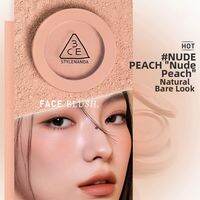
3CE | Matte Multi-use Blush Bean Pink
₱739.00₱1,410.00
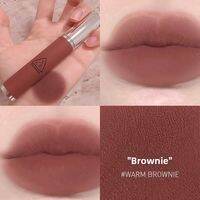
3CE | Long-lasting Color Fade-resistant Lip Color
₱857.66₱1,530.58
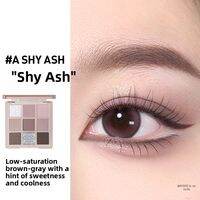
3CE | Matte Shimmer Earthy Orange Eyeshadow Palette Easy to Match
₱1,707.41₱2,863.06
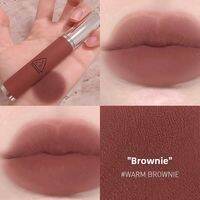
3CE | Long-lasting Color Fade-resistant Lip Color
₱821.00₱1,462.00
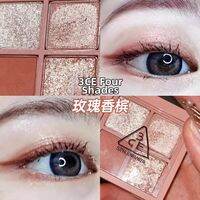
3CE | Natural Matte and Shimmer Earthy Tones Eye Shadow Palette
₱1,060.92₱3,772.96
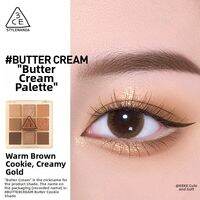
3CE | Non-removal Matte Eyeshadow Palette for Light Makeup
₱1,669.00
Buy on Lazada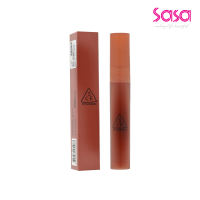
3CE Drop Glow Gel (3.8g) (expire on 31 Jul 2027)
₱1,020.00₱2,040.00
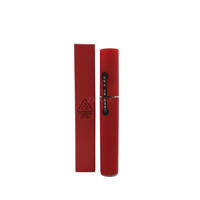
3CE Velvet Lip Tint - Daffodil/Best Ever/Walk N Walk 4g
₱816.06₱1,357.00
About 3CE
Brand Overview
3CE, an abbreviation for 3 Concept Eyes, is a South Korean cosmetics brand recognised for its fashion-led makeup, distinct colour identity, and editorial visual language. Established in 2009 as an extension of the Seoul-based fashion label Stylenanda, it has grown from a local cultural phenomenon into an international beauty brand.1 Today, 3CE operates under the Consumer Products Division of L’Oréal Groupe, maintaining its position as a trend-conscious K-beauty label with significant influence across Asia, including the Philippines.
Basic Information
| Field | Information |
|---|---|
| Brand Name | 3CE |
| Full Name | 3 Concept Eyes |
| Origin | Seoul, South Korea |
| Founded | 2009 |
| Founder / Parent Origin | Kim So-Hee / Stylenanda |
| Original Parent Company | Nanda Co., Ltd. / Stylenanda |
| Current Parent Group | L’Oréal Groupe |
| Industry | Cosmetics / Beauty |
| Core Category | Colour cosmetics / Makeup |
| Known For | Lip products, eyeshadow, blush, fashion-oriented makeup |
| Brand Positioning | Fashion-forward, colourful, creative, trend-conscious K-beauty |
3CE was originally developed within Stylenanda to complement the company’s clothing lines and overall styling concepts. L’Oréal currently defines the brand through three core pillars: fashion forward, made of colour, and playfully creative.
Meaning of “3CE”
The name 3CE stands for 3 Concept Eyes. It reflects the brand’s foundational relationship with Stylenanda’s fashion aesthetic. Rather than treating cosmetics as a standalone category, 3CE was conceived as an integral component of a complete look, serving as an extension of personal style, clothing, and colour expression. This connection remains central to its identity; L’Oréal describes 3CE as having been “born from fashion” and operating more like a lifestyle-oriented fashion and beauty brand than a conventional cosmetics manufacturer.2
History
Origins in Stylenanda (2004)
The history of 3CE is rooted in Stylenanda, which was founded in Seoul in 2004 by Kim So-Hee. Starting as a fashion business, Stylenanda became synonymous with a youthful and unconventional Korean street-fashion aesthetic. Kim So-Hee’s background in styling was instrumental; her approach focused on creating cohesive looks rather than treating clothing, accessories, hair, and makeup as separate entities.
Launch of 3CE (2009)
3CE was launched in 2009 as Stylenanda’s dedicated makeup line. The initial concept was straightforward: since Stylenanda already curated the clothing and aesthetic, it would also produce the makeup necessary to complete the vision. This strategy proved highly successful. According to L’Oréal, 3CE began as an insider label before rapidly evolving into a broader cultural phenomenon in Korea.
Rise to Prominence (2010s)
Throughout the 2010s, 3CE gained recognition for several defining characteristics:
- Strong and unconventional colour choices
- Highly coordinated packaging
- Fashion-editorial photography
- Matte and velvet textures
- Lip-focused products
- Eyeshadow palettes
- Influence from Korean street fashion
- Collaborations and limited-edition collections
These attributes aligned well with growing international interest in K-beauty. Unlike brands that relied solely on the traditional “natural Korean makeup” image, 3CE offered a more fashionable, editorial, and experimental interpretation of Korean beauty.
Acquisition by L’Oréal
A pivotal moment occurred on May 2, 2018, when L’Oréal announced the acquisition of 100% of Nanda Co., Ltd., the parent company of Stylenanda and 3CE. At the time, 3CE accounted for more than 70% of the company’s business, with Nanda reporting €127 million in revenue in 2017.
This acquisition was strategically significant for L’Oréal, providing access to a major Korean makeup brand with strong cultural relevance among younger Asian consumers. L’Oréal specifically identified 3CE as its first Korean beauty brand and stated that the acquisition would facilitate international expansion. Notably, 3CE was already an established Korean brand prior to joining the group.
Relationship with Stylenanda
The relationship between Stylenanda and 3CE is fundamental to understanding the brand. Stylenanda originated as a fashion and lifestyle label, while 3CE was developed as its cosmetics arm. This structure explains why 3CE differs historically from many conventional cosmetics companies; its visual identity is derived heavily from fashion culture rather than makeup alone. L’Oréal continues to describe 3CE as a brand born inside Stylenanda’s Seoul fashion world.
Brand Philosophy
3CE’s current philosophy is anchored in three key concepts.
Fashion-Forward
3CE treats makeup as an element of fashion and lifestyle. Its campaigns often resemble fashion editorials rather than traditional cosmetics advertising, with products designed to participate in a larger aesthetic narrative rather than simply offering functional beauty benefits.
Made of Colour
Colour is central to the brand’s identity. 3CE is particularly associated with sophisticated colour combinations, including muted pinks, dusty roses, brick reds, warm browns, terracotta, coral, beige, mauve, and neutral earth tones. L’Oréal identifies 3CE as an Asian leader in colour makeup, specifically across eyes, lips, and blush.3
Playfully Creative
The brand does not position makeup purely as a tool for conventional attractiveness. Instead, its identity emphasises experimentation, individuality, creativity, and fun, allowing it to bridge the gap between wearable everyday colours and more avant-garde editorial concepts.
Visual Identity
3CE’s international recognisability is largely attributed to its cohesive visual branding. Packaging, photography, retail spaces, campaigns, and product colours are designed as a unified visual system.
Packaging
The brand is known for packaging that coordinates closely with product colours and collection themes. This approach was distinctive in the Korean cosmetics market, which often favoured cute or character-based aesthetics. 3CE instead adopted a minimal, contemporary, and fashion-oriented appearance.
Photography
Campaign imagery frequently features:
- Editorial-style photography
- Unusual poses
- Strong colour blocking
- High-fashion styling
- Unconventional compositions
- Close-up makeup shots
- Distinctive lighting
This reinforces the perception of 3CE as a fashion brand expressed through makeup, rather than merely a cosmetics company selling fashionable products.
Product Categories
3CE’s primary business is colour cosmetics.
Lips
Lip products have historically been a cornerstone of the brand. Key formats include lipsticks, lip tints, velvet and matte lip products, glosses, and lip pencils. 3CE’s popularity grew significantly through its sophisticated range of Korean-style lip colours.
Eyes
The eye category comprises eyeshadow palettes, single shadows, glitter products, eye liners, and other eye makeup. Palettes often feature coordinated shades that allow consumers to create complete looks from a single collection.
Face
Face products include blush, contouring, highlighting, complexion items, and other face makeup. Blush is particularly significant to the brand’s colour-focused identity.
Tools
The product range has also included makeup tools such as brushes and accessories.
Signature Aesthetic
The typical 3CE makeup aesthetic can be described as modern Korean, fashion-editorial, sophisticated colour, and youthful experimentation. It occupies a space between natural Korean makeup and theatrical editorial looks. A representative 3CE-inspired look might combine soft matte skin, muted blush, monochromatic eyeshadow, and blurred or velvet lips, though specific collections may venture into more experimental territory.
Factors Behind Influence
3CE’s success stems from multiple converging trends.
The K-Beauty Boom
During the 2010s, global interest in Korean skincare, makeup techniques, ingredients, packaging, and celebrity culture surged. 3CE emerged as one of the most recognisable colour-makeup representatives of this K-beauty wave.
Convergence of Fashion and Beauty
3CE recognised that younger consumers viewed makeup as part of identity and fashion rather than just cosmetics. Its relationship with Stylenanda provided an advantage, as the brand already possessed expertise in fashion merchandising, styling, photography, and visual culture.
Social Media Compatibility
The combination of colourful packaging, distinctive shades, editorial photography, and recognisable branding made 3CE products naturally suited to image-driven platforms like Instagram. This helped transform the brand from a domestic Korean company into a globally recognisable lifestyle label.
Collaborations and Collections
Limited collections and collaborations are a key strategic component. Official archives include projects such as:
- Disney Collection9
- Maison Kitsuné Collection
- TOILETPAPER collection
- Smiley collaboration
- Pink Space Hotel
- Seasonal and limited editions
These partnerships reinforce the brand’s positioning at the intersection of beauty, fashion, art, design, and pop culture. Consequently, 3CE launches often resemble fashion drops or creative editions rather than standard cosmetics releases.
Retail Experience
3CE has historically invested heavily in physical retail as a branding tool. Iconic locations highlighted during the 2018 L’Oréal acquisition included the Hongdae flagship, Myeongdong Pink Hotel & Pink Pool, Garosu-gil 3CE Cinema, and Stylenanda Harajuku in Tokyo. These spaces function not merely as points of sale but as immersive brand experiences and highly photogenic environments.
International Expansion
Although initially a domestic Korean brand, 3CE expanded internationally even before the L’Oréal acquisition, entering markets such as Hong Kong, Singapore, Malaysia, and Thailand.4 Under L’Oréal, this expansion has continued, with particular emphasis on Southeast Asia. Recent financial reports have cited 3CE’s growth throughout Southeast Asia as a contributor to the brand’s performance.
Today, 3CE is best understood as a globally expanding K-beauty brand with a particularly strong Asian presence, rather than solely a Korean domestic label.
Current Status Under L’Oréal
As of 2026, 3CE remains part of L’Oréal’s Consumer Products Division. The group describes 3CE as one of its rising brands alongside labels such as essie, Mixa, and Dr.G. L’Oréal currently positions 3CE as the “No.1 Korean Makeup Brand in the World.”5 Recent growth is driven by internationalisation, innovation, and sustained global demand for K-beauty.
Market Positioning
| Dimension | 3CE’s Position |
|---|---|
| Country of Origin | 🇰🇷 South Korea |
| Beauty Segment | Colour cosmetics |
| Price Positioning | Accessible / Masstige |
| Main Audience | Young consumers, especially Gen Z & Millennials |
| Style | Fashion-forward |
| Colour Philosophy | Trend-driven, sophisticated |
| Brand Personality | Creative, youthful, experimental |
| Major Geographic Strength | Asia |
| Global Parent | L’Oréal |
| Heritage | Korean fashion + K-beauty |
3CE occupies a unique space distinct from both traditional luxury houses like Chanel or Dior and purely mass-market makeup brands. Its identity is best characterised as “fashionable contemporary beauty”.
Cultural Significance
Within the K-beauty landscape, 3CE demonstrated that Korean makeup could possess an identity beyond the stereotypical “clean, natural, youthful” aesthetic. By integrating Korean street fashion, Seoul youth culture, editorial makeup, colour experimentation, and social-media aesthetics, the brand became particularly influential among younger Asian consumers. 3CE did not merely participate in the K-beauty wave; it helped define what fashion-oriented K-beauty could represent.
Founder: Kim So-Hee
Kim So-Hee, founder of Stylenanda, established the original creative direction that led to 3CE. Her background in fashion was fundamental to the brand’s DNA. L’Oréal notes that Kim So-Hee was a fashion stylist known for creating complete, bold-yet-wearable looks that connected clothing and makeup.6 This explains a distinctive characteristic of 3CE: the brand thinks like a fashion stylist. Creative logic often begins with the desired look, colour story, or mood, with products serving as tools to achieve that vision.
Distinguishing Characteristics
Several factors differentiate 3CE from other K-beauty makeup brands:
- Fashion Heritage: Born from a fashion company rather than a pure cosmetics manufacturer.
- Strong Colour Storytelling: Products organised around palettes and moods.
- Editorial Branding: Imagery resembling fashion magazines and campaigns.
- Distinctive Packaging: Treated as a vital component of visual identity.
- Limited-Edition Culture: Collaborations maintain cultural dynamism.
- Seoul Identity: Explicitly powered by Seoul’s energy, street culture, subcultures, and creativity.7
Evolution Timeline
The brand’s development can be broadly categorised into four stages:
- 2004: Stylenanda founded as a Korean fashion business.
- 2009: 3CE launched as its makeup brand.
- 2010s: 3CE becomes a major Korean colour-cosmetics brand and expands internationally.
- 2018: L’Oréal acquires 100% of Nanda/Stylenanda.
- 2020s: Further development as an international K-beauty brand, with emphasis on Asia and Southeast Asia.
- 2026: Continues international expansion as part of L’Oréal’s Consumer Products Division.8
Summary
3CE (3 Concept Eyes) is a South Korean cosmetics brand founded in 2009 as the makeup division of Stylenanda, the fashion and lifestyle company established by Kim So-Hee. Known for its fashion-oriented aesthetic, colour-focused makeup, distinctive packaging, and editorial campaigns, it gained significant influence among young Asian consumers. In 2018, L’Oréal acquired 100% of Stylenanda’s parent company, Nanda Co., Ltd., integrating 3CE into the L’Oréal Group. Today, it operates as a globally expanding Korean makeup brand within L’Oréal’s Consumer Products Division, with a particularly strong presence in Asia and Southeast Asia. If Stylenanda represents Korean fashion culture, then 3CE represents that fashion culture translated into makeup.
References
- 3CE
- COLLECTIONS | 3CE Cosmetics | Stylenanda | 3CE Official | EDITIONS
- 日本における韓国コスメブームの火付け役!ソウル発のクリエイティブメイクアップブランド「3CE」がブランドイメージを刷新し日本再上陸 | 日本ロレアル株式会社のプレスリリース
- 3CE
- 3CE Makeup – Makeup That Speaks.
- Stylenanda | LinkedIn
- Stylenanda | LinkedIn
- Stylenanda | LinkedIn
- 3CE DISNEY COLLECTION |3CE Official |3CE COLLECTION | EDITIONS