Shop on Lazada
ABB products
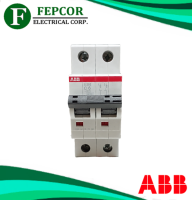
ABB MCB Miniature Circuit Breaker S200 1AT-100AT 2Pole
₱3,953.00
Buy on Lazada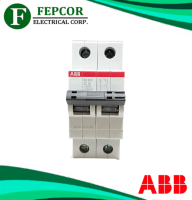
ABB MCB Miniature Circuit Breaker SH200 6AT-40AT 2Pole
₱573.00
Buy on Lazada
ABB | Compact Home Use RCBO 32A
₱3,071.38
Buy on Lazada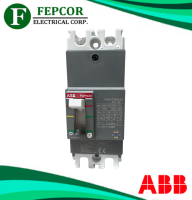
ABB SACE FORMULA Moulded Case Circuit Breaker A1N 125 TMF 20AT-100AT 2P
₱3,290.00
Buy on Lazada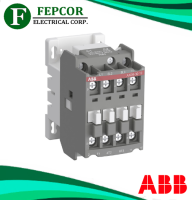
ABB MAGNETIC CONTACTOR AX09AX12 AX18 AX25
₱2,367.00
Buy on Lazada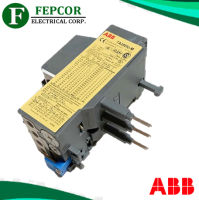
ABB THERMAL OVERLOAD RELAY TA25DU-M (0.4-32A)
₱2,016.00
Buy on Lazada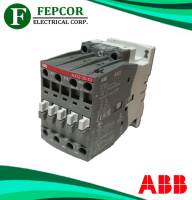
ABB MAGNETIC CONTACTOR AX32 AX40
₱4,390.00
Buy on Lazada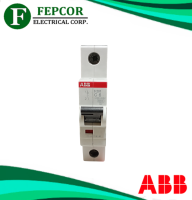
ABB MCB Miniature Circuit Breaker S200 1AT-100AT 1Pole
₱1,976.00
Buy on LazadaAbout ABB
ABB Ltd is a Swedish-Swiss multinational technology company specialising in electrification, motion, industrial automation, and digital technologies. Headquartered in Zurich, Switzerland, ABB serves industrial, commercial, infrastructure, energy, transportation, and utility customers worldwide.
The modern ABB was established in 1988 through the merger of Sweden’s ASEA and Switzerland’s Brown, Boveri & Cie. (BBC), although its technological heritage dates back to the 19th century. Today, ABB is recognised as a global technology leader in electrification and automation, employing approximately 110,000 people across more than 100 countries, with 2025 revenue of roughly US$33.22 billion.13
Company profile
| Category | Information |
|---|---|
| Full legal name | ABB Ltd |
| Common name / brand | ABB |
| Founded as ABB | 1988 |
| Predecessor companies | ASEA and Brown, Boveri & Cie. |
| Headquarters | Zurich, Switzerland |
| Industry | Electrical equipment, industrial automation, engineering and technology |
| Main businesses | Electrification, Motion, Automation |
| Employees | ~110,000 |
| Countries of operation | 100+ |
| 2025 revenue | US$33.22 billion |
| CEO | Morten Wierod |
| Chairman | Peter Voser |
| Stock exchanges | SIX Swiss Exchange and Nasdaq Stockholm |
| Current positioning | Electrification and automation technology |
| Corporate purpose | Enable a more sustainable and resource-efficient future |
ABB’s 2025 reporting identifies Electrification, Motion, and Automation as its three principal business areas.3
Origin of the name ABB
The name ABB originated from the merger of two predecessor companies:
- ASEA — Allmänna Svenska Elektriska Aktiebolaget, a Swedish electrical engineering company.
- BBC — Brown, Boveri & Cie., a Swiss electrical engineering company.
The two firms agreed to merge in 1987, with the new ABB organisation commencing operations on 5 January 1988.2 Consequently, ABB is not an acronym for a newly invented name but is derived directly from ASEA and Brown Boveri.
History
ASEA: Swedish origins
One of ABB’s ancestors was ASEA, founded in 1883 in Västerås, Sweden, by Ludvig Fredholm. Initially focused on electrical lighting and generators, ASEA became a key participant in Sweden’s electrification and railway development. Over subsequent decades, it expanded into power generation, mining, steel, transportation, and industrial technology, eventually becoming a significant pioneer in industrial automation and robotics.2
Brown, Boveri & Cie.: Swiss origins
The other predecessor, Brown, Boveri & Cie. (BBC), was founded in Switzerland in 1891 by Charles Eugene Lancelot Brown and Walter Boveri. BBC initially specialised in electric motors, generators, turbines, transformers, power-generation equipment, and general electrical engineering. It subsequently expanded across Europe to become a major international electrical engineering group.3
The 1988 merger
In 1987, ASEA and BBC announced their intention to merge. The resulting entity, ASEA Brown Boveri, began operations in January 1988. During its early years, the company maintained headquarters in both Zurich and Västerås, inheriting a vast portfolio of electrical engineering, power, transportation, and automation technologies. This merger effectively combined two major European industrial technology companies into a single global group.1
Corporate transformation
Historically, ABB was far more heavily involved in the power-generation and power-transmission industries than it is today. Over several decades, the company evolved through strategic acquisitions and technological development.
| Year | Development |
|---|---|
| 1988 | ASEA and BBC merge to create ABB |
| 1990 | ABB launches the Azipod electric marine propulsion concept |
| 2000 | ABB delivers a shore-to-ship power system |
| 2004 | ABB launches the 800xA automation system |
| 2008 | ABB participates in major HVDC transmission projects |
| 2011 | ABB acquires Baldor Electric |
| 2012 | ABB acquires Thomas & Betts |
| 2017 | ABB acquires B&R, strengthening machine automation |
| 2018 | ABB acquires GE Industrial Solutions |
| 2020 | ABB sells a majority stake in Power Grids to Hitachi |
| 2020 onward | ABB increasingly focuses on electrification and automation |
| 2023 | ABB announces an updated sustainability agenda |
| 2025 | ABB reports US$33.22 billion in revenue |
Current business structure
ABB’s contemporary operations are organised into three major areas: Electrification, Motion, and Automation. While the company retains a significant historical and technological connection to robotics, its 2025 financial reporting classifies the Robotics business as a discontinued operation.3
Electrification
The Electrification business focuses on technologies that distribute, control, protect, and manage electrical power. Products and solutions span the entire electrical chain from substations to buildings, factories, and individual loads. Key technologies include low- and medium-voltage equipment, switchgear, circuit breakers, electrical distribution systems, power protection, energy management, building electrification, wiring accessories, distribution automation, digital electrical systems, EV charging, and data-centre electrical infrastructure.
Essentially, ABB Electrification enables customers to safely deliver electricity from the power system to end-use equipment, making it a critical supplier for factories, commercial buildings, data centres, utilities, and transportation infrastructure.3
Motion
The Motion business centres on converting electrical energy into controlled mechanical movement. Major technologies include electric motors, generators, variable-speed drives, industrial drives, traction systems, mechanical power transmission, digital powertrain systems, and motion-control technologies.
For instance, an industrial facility may utilise an ABB motor to drive a pump, conveyor, compressor, or fan, while an ABB drive regulates the motor’s speed and torque. Given that electric motors account for a substantial portion of industrial electricity consumption, efficient motors and drives are vital for reducing both energy use and operating costs. The Motion business generated approximately US$10.3 billion in revenue in 2025.3
Automation
The Automation business focuses on controlling complex industrial processes across sectors such as oil and gas, chemicals, mining, metals, cement, pulp and paper, pharmaceuticals, food and beverage, power generation, water, marine, renewable energy, and battery manufacturing.
A flagship platform is ABB Ability™ System 800xA, a distributed control system (DCS) that allows large industrial facilities to monitor and control processes within an integrated digital environment. The broader Automation portfolio encompasses process control, safety systems, industrial software, measurement and analytics, human-machine interfaces, Industrial IoT, digital services, asset management, and AI-enabled industrial applications. In 2025, this segment employed approximately 26,300 people and generated US$8.1 billion in revenue.3
ABB Ability™
ABB Ability™ serves as the company’s digital technology platform and branding framework. It connects industrial equipment and automation technologies with cloud computing, industrial data, analytics, artificial intelligence, remote monitoring, predictive maintenance, optimisation software, and digital services.
Rather than simply selling hardware such as an electric motor, ABB integrates sensors, software, and analytics to provide real-time insights into condition and performance. This represents a fundamental shift from traditional industrial models to digital ecosystems where equipment feeds data into AI-driven optimisation loops. In its 2025 reporting, ABB noted that embedding software and AI into its solutions is a strategic priority, with more than half of its R&D workforce focused on digital solutions.3
Robotics
ABB has historically been a leading name in industrial robotics, with technologies applied in automotive manufacturing, welding, painting, assembly, packaging, material handling, machine tending, palletising, and collaborative automation. This heritage stems from the automation activities of its predecessor companies.
However, it is important to note that ABB classified its Robotics business as a discontinued operation in its 2025 consolidated financial statements. Therefore, when describing the modern company, its continuing core businesses are accurately identified as Electrification, Motion, and Automation, rather than including Robotics as a current core pillar.3
Industries served
ABB technologies are deployed across a diverse range of sectors:
Energy and utilities
- Power distribution
- Renewable energy
- Grid infrastructure
- Power management
- Substations
Manufacturing
- Factory automation
- Motors and drives
- Industrial control
- Robotics
- Machine automation
Mining and metals
- Motors
- Drives
- Process automation
- Electrification
- Energy management
Marine
- Electric propulsion
- Automation
- Power systems
Oil and gas
- Process automation
- Electrical systems
- Safety systems
- Instrumentation
Chemicals
- Process control
- Safety
- Measurement
- Electrification
Buildings
- Electrical distribution
- Energy management
- Building automation
- Switchgear
Transportation
- Electric propulsion
- Traction
- Charging infrastructure
- Electrification
Data centres
- Power distribution
- UPS/power protection
- Electrical monitoring
- Automation and energy management
Role in the energy transition
A central strategic theme for ABB is the electrification of the economy. As nations transition towards electric vehicles, renewable electricity, heat pumps, electrified industrial processes, energy-efficient factories, data centres, and battery manufacturing, demand for electrical infrastructure and automation rises.
ABB positions itself at the intersection of these trends, potentially supplying technologies across the entire value chain—from renewable generation and transmission to switchgear, drives, motors, industrial automation, and digital optimisation. Its stated corporate purpose is to enable a more sustainable and resource-efficient future through technology leadership in electrification and automation.1
Sustainability
Sustainability is integral to ABB’s corporate strategy, focusing on three broad areas:
Enabling a low-carbon society
Helping customers reduce energy consumption and emissions through electrification, automation, and efficiency technologies.
Preserving resources
Improving industrial efficiency while reducing waste and resource consumption.
Promoting social progress
Advancing workplace safety, inclusion, employee development, and responsible business practices.
The 2023 sustainability agenda included a commitment to achieve net zero by 2050 and to collaborate with customers and stakeholders in supporting a low-carbon society.1
Research and development
Engineering and R&D are fundamental to ABB’s identity. The company invests approximately 4–5% of annual revenue in R&D. According to its 2025 report, non-order-related R&D expenditure was roughly 4.0% of revenue, with cumulative spending reaching around US$4.7 billion since the beginning of 2022.13
Key technology areas include electrification, power electronics, motors, drives, industrial automation, control systems, robotics, industrial software, artificial intelligence, Industrial IoT, and energy efficiency.
Major acquisitions
Acquisitions have significantly shaped ABB’s development:
Baldor Electric (2011)
Acquired for approximately US$4.2 billion, strengthening ABB’s position in industrial motors and motion technologies.1
Thomas & Betts (2012)
Acquired for approximately US$3.9 billion, significantly expanding the electrical products business, particularly in North America.1
B&R (2017)
This acquisition enhanced ABB’s capabilities in machine and factory automation.1
GE Industrial Solutions (2018)
Acquired for approximately US$2.6 billion, reinforcing ABB’s position in electrification products.1
Divestment of Power Grids
A pivotal strategic shift occurred in 2020 when ABB sold a majority stake in its Power Grids business to Hitachi, creating what is now Hitachi Energy. Historically, power transmission and grid infrastructure had been core components of ABB’s portfolio. Following this transaction, the company concentrated exclusively on Electrification, Motion, and Automation, rather than operating across the entire electrical power industry.1
Operating philosophy: The ABB Way
ABB operates under an organisational model known as the ABB Way, introduced around 2020. This philosophy decentralises decision-making, granting individual businesses greater responsibility for strategy, resources, performance, customer relations, and operations. The objective is to enable business units closer to customers to make faster decisions without relying on a highly centralised corporate hierarchy.13
Global presence
ABB maintains a genuinely global footprint beyond its Swiss and Swedish roots. Its 2025 reporting indicates approximately 52,400 employees in Europe; 27,700 in the Americas; and 31,800 in Asia, the Middle East, and Africa, totalling roughly 111,900 employees as of 31 December 2025.3
The company operates in more than 100 countries, with major markets including Europe, North America, China, India, and other industrial economies.1
Headquarters and corporate structure
ABB’s corporate headquarters are located in Zurich, Switzerland. The company retains strong historical ties to both Switzerland (through Brown, Boveri & Cie.) and Sweden (through ASEA), which is why it is commonly described as a Swedish-Swiss multinational. ABB Ltd is publicly listed on both the SIX Swiss Exchange and Nasdaq Stockholm.2
Financial scale
According to ABB’s 2025 annual reporting, the company achieved revenue of approximately US$33.22 billion and employed roughly 111,900 people at year-end. ABB describes its business as geographically balanced across Europe, the Americas, and Asia, the Middle East, and Africa, placing it among the world’s leading industrial technology companies by financial scale.13
Competitive landscape
ABB competes with various companies depending on the specific product category:
Industrial automation
- Siemens
- Schneider Electric
- Rockwell Automation
- Emerson
- Honeywell
- Yokogawa
Motors and drives
- Siemens
- WEG
- Schneider Electric
- Nidec
- Rockwell Automation
Electrification
- Schneider Electric
- Siemens
- Eaton
- Legrand
- Rockwell Automation
Industrial robotics
Historically and currently relevant competitors include FANUC, Yaskawa, KUKA, Mitsubishi Electric, and Kawasaki Robotics. The competitive landscape varies considerably by region and technology.
Strategic significance
ABB occupies a critical position at the intersection of several major industrial trends:
- Electrification: Increasing adoption of electric power across all sectors.
- Automation: Growing automation of industrial processes.
- Digitalisation: Proliferation of data generation and utilisation in industrial equipment.
- Energy efficiency: Rising demand for higher output with lower electricity consumption.
- AI: Integration of artificial intelligence and advanced analytics into industrial systems.
- Energy transition: Need for sophisticated electrical infrastructure to support renewables, EVs, batteries, and electrified industry.
ABB’s 2025 reporting identifies growing electricity demand, the energy transition, digitalisation, and AI as key long-term drivers for its businesses.3
Technology ecosystem
ABB does not merely sell individual electrical components; it increasingly integrates hardware, control systems, software, data, and services into comprehensive industrial solutions. Its ecosystem links Electrification (switchgear, breakers, distribution, protection), Motion (motors, drives, generators, traction), and Automation (control, DCS, software, instrumentation) through the ABB Ability digital layer, leveraging IoT, AI, and industrial data to deliver optimisation.3
Brand identity
Unlike consumer brands, ABB is primarily a business-to-business (B2B) technology company. Its brand is strongly associated with industrial engineering, reliability, electrical technology, automation, efficiency, safety, sustainability, and digitalisation. Although ordinary consumers rarely interact directly with ABB, its equipment is often embedded behind the scenes in factories, power systems, ships, buildings, mines, water-treatment plants, transportation systems, data centres, and industrial machinery.
Current strategy
ABB’s current strategy utilises electrification, automation, digitalisation, and energy-efficient technologies to help industrial customers improve productivity and sustainability. This positioning is considerably narrower and more focused than the conglomerate of previous decades, centring on its three continuing business areas: Electrification, Motion, and Automation.13
The company articulates its overall strategic vision as “Engineered to Outrun,” reflecting its emphasis on helping customers enhance performance while achieving greater efficiency and sustainability.1