Shop on Lazada
Alpine products
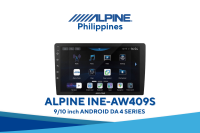
Alpine INE-AW409S 10″ 10INCH ANDROID DA 4SERIES / HEAD UNIT / INFOTAINMENT / NO APPLE CARPLAY & ANDROID AUTO
₱14,900.00₱22,900.00
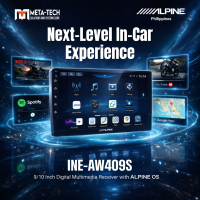
Alpine INE-AW409S 9″ 9 INCH ANDROID DA 4SERIES / HEAD UNIT / INFOTAINMENT / NO APPLE CARPLAY & ANDROID AUTO
₱13,900.00₱21,900.00
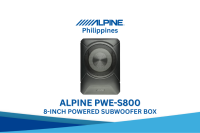
Alpine PWE-S800 8-INCH POWERED SUBWOOFER BOX
₱18,200.00
Buy on Lazada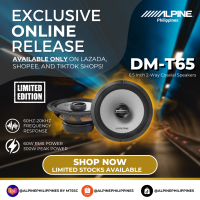
Alpine DM-T65 6.5 INCH COAXIAL 2 WAY CAR SPEAKERS
₱6,900.00
Buy on Lazada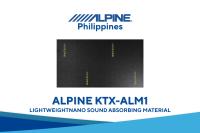
Alpine KTX-ALM1 LIGHTWEIGHTNANO SOUND ABSORBING MATERIAL (SOUND DEADENING)
₱1,725.00
Buy on Lazada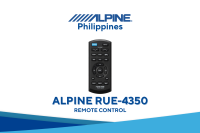
Alpine RUE-4350 REMOTE CONTROL
₱550.00
Buy on Lazada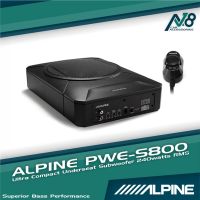
Alpine PWE-S800 Ultra Compact Underseat Subwoofer Genuine
₱17,808.00₱20,150.00
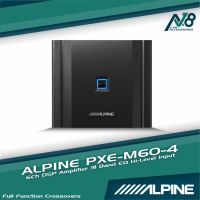
Alpine PXE-M60-4 6Ch DSP Amplifier 3I Band Genuine
₱20,048.00₱23,270.00
About Alpine
Alpine is a French automobile manufacturer specialising in lightweight, high-performance sports cars and motorsport. Established in 1955 by Jean Rédélé in Dieppe, France, the marque built its reputation on agility, elegant design and competition success. Today, Alpine operates as a dedicated business unit within Renault Group and is evolving from a niche sports car maker into a broader all-electric performance brand.1
Brand overview
| Field | Information |
|---|---|
| Brand name | Alpine |
| Full historical company name | Société des Automobiles Alpine |
| Founded | 1955 |
| Founder | Jean Rédélé |
| Country | France 🇫🇷 |
| Headquarters / historical home | Dieppe, France |
| Parent company | Renault Group |
| Industry | Automotive |
| Specialization | Sports cars, performance cars, motorsport |
| Current direction | Premium/performance electric vehicles |
| Most famous model | Alpine A110 |
| Major motorsport | Rallying, endurance racing, Formula One |
| Core philosophy | Lightness, agility, elegance and competition |
Origins
The history of Alpine traces back to Jean Rédélé, a young Renault dealer and motorsport enthusiast based in Dieppe, Normandy. Rédélé raced and modified Renault vehicles, particularly the Renault 4CV, demonstrating that small, lightweight machinery could be highly competitive. His successes in rallies across the Alpine region inspired the brand name “Alpine”.2
In 1955, Rédélé formally established the Société des Automobiles Alpine. Among the earliest models was the A106, which utilised Renault mechanical components. From its inception, Alpine maintained a close relationship with Renault: Alpine provided the sporting design and engineering philosophy, while Renault supplied much of the mechanical foundation.3
The Alpine philosophy
Rather than competing with large luxury manufacturers through size or extravagance, Rédélé pursued a distinct formula focused on making cars light, agile and enjoyable to drive. This philosophy rests on three core principles:
Agility
Alpine vehicles are engineered around low weight and responsive handling rather than simply maximising horsepower.
Elegance
The brand traditionally combines aerodynamic efficiency with a distinctly French approach to styling.
Competition
Motorsport has been integral to Alpine’s identity since its founding. Renault Group describes these three principles as central to Rédélé’s original vision.4
This approach explains why an Alpine often feels conceptually closer to a lightweight driver’s car than to a conventional luxury grand tourer.
The A110 and the birth of a legend
The most significant vehicle in Alpine’s history is the Alpine A110. Introduced in the early 1960s, the original A110 evolved from earlier lightweight sports cars and became the definitive expression of the company’s philosophy. Its combination of a lightweight body, compact dimensions and Renault mechanical components made it exceptionally effective in competition.5
Known as the “Berlinette”, the A110 featured a distinctive shape with a low roof, curved rear bodywork and compact proportions. These characteristics made it one of Europe’s most recognisable sports cars.
Rallying heritage
Motorsport transformed Alpine from a small French manufacturer into an internationally respected performance marque. During the late 1960s and early 1970s, Alpine became a dominant force in rallying.
Key achievements include:
- 1971: Alpine dominated the Monte Carlo Rally podium.
- 1973: Alpine won the Monte Carlo Rally again.
- 1973: Alpine became the first manufacturer to win the World Rally Championship.6
The 1973 World Rally Championship victory established Alpine as a serious international motorsport manufacturer rather than merely a small sports car company. Consequently, rallying became an essential pillar of the brand’s identity.
Relationship with Renault
Alpine and Renault have been closely connected since the beginning. Initially, Alpine cars used Renault engines and mechanical components, while Renault’s dealer network assisted with sales and service.7
The relationship deepened significantly over time. In 1973, Renault acquired a controlling stake in Alpine, integrating the company firmly into the organisation. It subsequently became known as Société des Automobiles Alpine Renault.8
Today, Alpine is not simply an independent sports car company cooperating with Renault; it is a Renault Group brand with its own distinct performance identity.
Decline of the original era
Despite considerable success, the original business model proved difficult to sustain. As a relatively small company, Alpine faced increasing challenges regarding production, safety standards and customer expectations. Renault’s involvement gradually became more critical.
Following the A610, Alpine ceased producing cars under its own name in the 1990s. However, the historic Dieppe factory remained vital to Renault, becoming associated with the production of Renault Sport performance vehicles.9
For more than two decades, Alpine existed primarily as a historic name and motorsport legacy rather than an active mainstream car brand.
Resurrection and the modern A110
Renault eventually decided to revive the marque. After several concept projects, the modern Alpine A110 was unveiled and launched in 2017. Rather than simply resurrecting an old badge, Renault sought to recreate the original philosophy: low weight, compact dimensions, rear-wheel drive, mid-engine layout and driver-focused handling.
The modern A110 serves as a spiritual successor to the legendary original rather than merely a retro-styled vehicle. It is a compact, lightweight, two-seat sports car designed primarily around handling and driver involvement. Unlike many contemporary performance cars, Alpine emphasises weight reduction as a fundamental engineering principle. Various versions have been released over the years, including increasingly performance-focused variants.
The A110 demonstrates the central Alpine tenet that performance does not necessarily require enormous size or power. It also preserves the visual connection with the 1960s and 1970s Berlinette while utilising modern engineering.
Expansion into a broader brand
For several years following its 2017 revival, Alpine essentially offered only one car: the A110. This began to change in the 2020s. In 2021, Renault Sport was integrated into Alpine, creating a much broader business structure.10
Alpine subsequently repositioned itself not just as a sports car manufacturer but as Renault Group’s global performance and sporting brand. In 2024, Alpine announced its “Dream Garage” strategy to create a family of vehicles. The lineup expanded to include:
Alpine A110
The traditional lightweight sports car and spiritual heart of the brand.
Alpine A290
A compact, sporty 100% electric city car and hot hatch, introduced as Alpine’s first electric production vehicle.
Alpine A390
A larger electric sport fastback, introduced as the next major expansion of the brand.
Renault Group describes the A290 and A390 as part of Alpine’s transition into a broader electric performance portfolio.11
Transition to electric vehicles
The shift to electric propulsion represents perhaps the most significant change in Alpine’s history. While the original philosophy was built around lightweight petrol-powered sports cars, the modern company aims to translate that ethos into the electric era.
Future product strategy is based on 100% electric vehicles while attempting to retain low-weight engineering, sharp handling, distinctive design, strong acceleration, driver engagement and motorsport-derived technology. Renault Group has stated that the future third-generation A110 will also become 100% electric.12
Alpine A290
The A290 marks a departure from the historical two-seat sports car format. Based on the Renault 5 family, it is transformed with Alpine-specific styling, chassis tuning and performance characteristics. This brings the brand’s philosophy into the hot-hatch and urban performance segment, offering access to customers seeking sportiness alongside everyday practicality.
Alpine A390
The A390 represents a further transformation as an electric sport fastback positioned above the A290. Strategically, it moves Alpine beyond being synonymous solely with small two-seat sports cars. Renault Group identifies the A390 as the second major member of the new electric “Dream Garage” following the A290.13
Motorsport activities
Formula One
Alpine is a major participant in Formula One. The operation is based around Enstone in the United Kingdom, while the team’s historic French motorsport expertise is associated with Viry-Châtillon. Renault Group identifies Enstone as the headquarters of the Alpine F1 team and Viry-Châtillon as a centre of motorsport expertise.14
The Formula One programme provides global visibility, motorsport technology, engineering expertise and brand prestige. This aligns with Alpine’s longstanding belief that motorsport can accelerate automotive technology development.15
Endurance racing
Alpine also maintains a significant history in endurance racing, including the 24 Hours of Le Mans. Competition activities today extend beyond Formula One as part of a wider Alpine Racing organisation. Historically, Alpine has always used motorsport not merely as advertising but as a central component of its engineering culture.
Manufacturing and design
The Dieppe factory
The Dieppe plant in Normandy is effectively Alpine’s historic home. Dating back to the period of the company’s growth, it remains responsible for the production of the A110.16 For Alpine, Dieppe holds symbolic importance comparable to Maranello for Ferrari, Molsheim for Bugatti, Crewe for Bentley or Zuffenhausen for Porsche.
Design language
Modern Alpine design combines references to the original A110 with contemporary aerodynamics. Common characteristics include compact proportions, pronounced rear haunches, four-headlamp visual signatures, flowing aerodynamic surfaces, sculpted bodywork, strong use of blue, minimalist interiors and motorsport-inspired details.
The design deliberately avoids making Alpine look like a conventional Renault. This distinction is crucial as Alpine is positioned as Renault Group’s performance-oriented brand rather than simply a sport trim.17
Market positioning and identity
Alpine occupies a unique position within the automotive industry. It differs from Ferrari by not focusing on extreme luxury, and from Porsche by remaining smaller and more tied to its lightweight heritage. It is also distinct from Renault Sport as a standalone brand and business unit.
Historically a niche manufacturer, Renault Group now positions Alpine as a premium performance brand with international ambitions. Intended competitors vary by model:
| Alpine model/type | Broad competitive territory |
|---|---|
| A110 | Porsche Cayman/718-type sports cars |
| A290 | Electric hot hatches / compact performance cars |
| A390 | Premium electric performance crossovers/fastbacks |
| Future Alpine EVs | Premium performance EV segment |
If Ferrari is associated with Italian exoticism and Lotus with lightness, Alpine’s identity sits at the intersection of French design, motorsport, lightweight engineering, distinctive blue-and-white visual heritage and electric performance.
Notable models
Historic
- A106 — First production model
- A108 — Important early lightweight sports car
- A110 Berlinette — Legendary rally car
- A310 — Larger GT-oriented model
- GTA — 1980s/90s performance model
- A610 — Final major sports car of the original era
Modern
- A110 — Revival model and current flagship
- A110 S — Higher-performance version
- A110 R — Track-focused version
- A110 R 70 — Anniversary edition for Alpine’s 70th anniversary
- A110 GTS — Newer A110 variant
- A290 — Compact electric performance car
- A390 — Electric sport fastback
The A110 remains the core reference point around which the modern brand is constructed.17
Key milestones
| Year | Event |
|---|---|
| 1955 | Jean Rédélé establishes Alpine |
| 1955 | A106 introduced |
| 1962 | Original A110 introduced |
| 1971 | Alpine dominates Monte Carlo Rally podium |
| 1973 | Alpine wins inaugural World Rally Championship for manufacturers |
| 1973 | Renault takes controlling stake in Alpine |
| 1990s | Original Alpine sports-car era ends |
| 2012 | Renault presents Alpine A110-50 concept |
| 2017 | Modern A110 enters production |
| 2021 | Renault Sport activities integrated into Alpine |
| 2024 | Alpine begins expanding with electric vehicles |
| 2024 | A290 launches |
| 2025 | Alpine celebrates 70th anniversary |
| 2025 | A390 introduced |
| Future | Third-generation A110 planned as electric sports car |
Current status and future outlook
As of 2026, Alpine is undergoing one of the most significant transformations in its history, moving from a single-model manufacturer toward a full performance-oriented electric brand. Its current strategy combines road cars (A110, A290, A390), motorsport (Formula One, endurance racing) and technology (electric powertrains, lightweight construction). Renault Group describes Alpine as a business unit with its own resources and long-term ambition to develop a global range of electric performance vehicles.18
The primary challenge lies in translating lightweight sports car DNA into the electric age, as batteries inherently add weight. Alpine addresses this through its own engineering, including the Alpine Performance Platform (APP) for future electric vehicles. This platform is intended to allow development adapted to different markets while maintaining the brand’s sporty and agile character.19
Ultimately, Alpine’s history encompasses three distinct lives: a small French sports car manufacturer (1955–1990s), a dormant heritage name, and a modern Renault Group performance brand reborn in 2017. Its current transformation into an electric performance marque may become the fourth and most consequential chapter.20
References
- Alpine – Renault Group
- History of the Alpine brand – Alpine global media website
- Alpine (automobile)
- Alpine 70 years, history, innovation and performance – Renault Group
- HISTORY OF THE ALPINE BRAND – Site media global de Renault Belgique
- Manufacture Alpine Dieppe Jean Rédélé – Renault Group
- Automobiles Alpine
- Alpine 70 ans, histoire, innovation et sportivité – Renault Group
- Alpine – Renault Group
- Alpine marks the end of a year celebrating its 70th anniversary and opens a new era – Alpine global media website
- Foot to the accelerator, as Alpine prepares to launch the strongest and most innovative product range in its history – Site media global de Alpine
- Alpine announces its motorsport strategy – Alpine global media website
- Alpine strenghtens its communications team – Alpine global media website
- Triple digit growth for Alpine in 2025 – Alpine global media website
- Bruno Hohmann is appointed VP Sales, Marketing and Customer Experience of the Alpine brand – Alpine global media website
- A historic gathering of Alpine in Dieppe to celebrate the 70th anniversary – Alpine global media website
- Alpine, design for performance – Renault Group
- Two icons of French industry, Alpine and BENETEAU, unite in long-term partnership aligning expertise and vision – Alpine global media website
- Alpine arrives to Slovenia! – Site media global de Alpine
- The history of the blue colour of the Alpine brand