Shop on Lazada
APRICA products
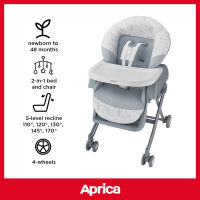
Aprica Yuralism Air Cushion 0-48m Rocker/Bed & High Chair
₱20,999.00
Buy on Lazada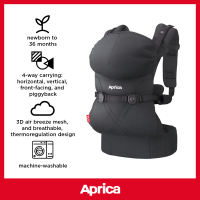
Aprica Colan CTS AB 0m-3y Newborn to Toddler Baby Carrier
₱11,599.75
Buy on Lazada![Aprica Air Ride 3-11y Junior Car Seat [with ICC sticker]](https://ph-live.slatic.net/p/27f6f73295a1cf4c4f8cc4df4063118f.jpg_200x200q80.jpg)
Aprica Air Ride 3-11y Junior Car Seat [with ICC sticker]
₱12,999.00
Buy on Lazada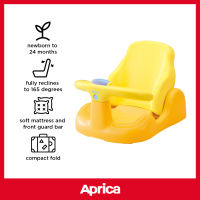
Aprica Bath Chair 0m-2y Newborn to Toddler Support
₱2,500.00
Buy on Lazada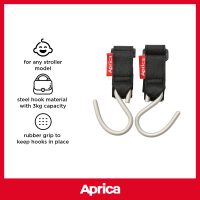
Aprica Kioko Hook for Baby Strollers ( S )
₱699.00
Buy on Lazada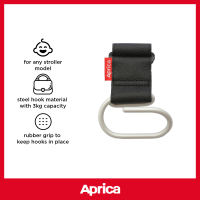
Aprica Kioko Hook for Baby Strollers (E)
₱499.00
Buy on Lazada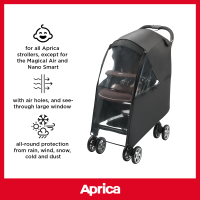
Aprica Rain Cover for Baby Strollers
₱600.00₱3,299.75
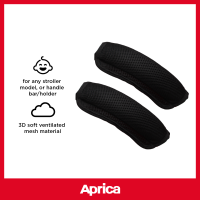
Aprica Kioko Handle Cover for Baby Strollers
₱299.00
Buy on LazadaAbout APRICA
APRICA is a Japanese brand specialising in baby-care and child-mobility products, including strollers, child car seats, baby carriers, and other childcare equipment. Founded in Japan in 1947, the brand has established a reputation for integrating infant development research, safety engineering, and Japanese product design into its offerings 1. APRICA currently operates as a brand under Newell Brands, a global consumer-products company, with its Japanese operations managed by Newell Brands Japan LLC 13.
Overview
| Category | Information |
|---|---|
| Brand | APRICA |
| Country of origin | Japan |
| Founded | 1947 |
| Founder | Kenzo Kassai |
| Original focus | Baby-care equipment |
| First major product | Baby stroller (1949) |
| Main products | Strollers, child car seats, baby carriers, childcare products |
| Current owner | Newell Brands |
| Japanese operating company | Newell Brands Japan LLC |
| Headquarters of operating company | Minato, Tokyo, Japan |
| Core philosophy | Designing products around babies’ physical and developmental characteristics |
| Key research concept | “Baby Science” |
| Official website | aprica.jp |
APRICA defines its corporate philosophy as creating optimal childcare environments by recognising that infants possess physical and developmental traits distinct from adults. The company states it has dedicated over 75 years to studying infant physiology and applying these insights to product development 1.
History
Foundation and early years
The origins of APRICA date to 1947, when founder Kenzo Kassai established a company dedicated to developing and selling childcare equipment. From its inception, the firm collaborated with paediatricians and specialists across various disciplines to address the needs of pre-verbal infants 1. This collaborative approach shaped the brand’s identity, prioritising the child’s physical condition, comfort, safety, and development over adult convenience alone.
In 1949, APRICA launched its first independently developed product, a baby stroller, which became a defining category for the brand 1. Continued innovation followed; in 1953, the company patented a stroller-seat structure designed to enhance ventilation around the infant 1.
Expansion of stroller technology
Throughout the 1970s and 1980s, APRICA focused on enhancing the compactness and practicality of its strollers. Key milestones included the introduction of the compactly folding “Apricar” stroller in 1975 and the lightweight Concord Mini A in 1980 1. Subsequent models incorporated increasingly sophisticated folding, reclining, and wheel mechanisms. In 1988, the brand commercialised a stroller featuring an automatic four-wheel mechanism, underscoring its commitment to manoeuvrability and mechanical engineering 1.
Childcare research development
A distinguishing feature of APRICA is its integration of childcare, medicine, and product engineering. In 1976, the company established the Aprica Childcare Research Association to explore the intersection of medical science and childcare products 3. This philosophy evolved into what the brand terms “Baby Science” and “Childcare Engineering,” involving ongoing collaboration with paediatricians to translate knowledge of infant anatomy and psychology into tangible product designs 3. Consequently, APRICA positions itself not merely as a manufacturer but as a research-led entity focused on infant physiology.
Child car seats and safety testing
APRICA expanded its portfolio beyond strollers to include child car safety systems. In 1997, it introduced the “Marshmallow Seat & Bed,” a bed-type child car seat capable of transitioning between bed and seat configurations for children up to approximately four years old 1.
To support safety validation, APRICA opened the Aprica Testing Research Center (later the Aprica Central Research Institute) in 2001. This facility was designed to measure crash forces specific to infants and utilised a proprietary 2.5 kg newborn dummy equipped with sensors and articulated joints 1. This investment reinforced the brand’s focus on child-specific safety standards rather than adapting adult-oriented equipment.
Product development in the 2000s
Product innovation continued into the new millennium with a focus on balancing compactness, comfort, and protection. The Nerukko Bed stroller, released in 2003, combined B-type compactness with enhanced infant protection features 1. In 2008, APRICA introduced the Cookie stroller, featuring a “high-seat” design intended to reduce infant exposure to road-surface heat 1.
Ownership and corporate structure
In 2008, Aprica Children’s Products joined the Newell Rubbermaid group, now known as Newell Brands, gaining access to a broader international business platform 13. The Japanese entity underwent several structural changes:
- 2008: Aprica Children’s Products Co., Ltd. was established as part of Newell Rubbermaid.
- 2014: Reorganised as Aprica Children’s Products LLC.
- 2017: Began distributing Baby Jogger products in Japan.
- 2020: Renamed Newell Brands Japan LLC 1.
Despite these corporate changes, APRICA remains a distinct consumer brand within the Newell Brands portfolio, described by the parent company as centred on baby development and childcare products 3.
Products
APRICA’s current portfolio focuses on transportation, protection, and daily care for infants and young children.
Strollers
Strollers remain APRICA’s signature category. The range includes lightweight models, reclining units, and newborn-compatible systems designed to mitigate environmental stressors such as road vibration, ultraviolet radiation, and ground heat 1. Designs are predicated on the heightened sensitivity of infants compared to adults.
Child car seats
The brand maintains a significant presence in the child car seat market, backed by its history of dedicated crash-testing facilities and infant-specific dummies. Current offerings span both child and junior seats 13.
Baby carriers
APRICA produces baby carriers designed to facilitate close physical contact while minimising physical strain on the caregiver and ensuring infant comfort 1.
Other childcare products
Historically, the company has also manufactured a wider array of childcare items, including riding toys, educational materials, and metal goods 1.
Brand philosophy
Central to APRICA’s identity is the premise that infants should not be treated simply as small adults. The brand’s Japanese slogan evokes the security of being held in a mother’s arms, reflecting over 75 years of research into infant characteristics 1. This philosophy comprises three pillars:
Baby Science
This involves studying the physical and developmental traits of infants and applying these findings to product design. Newell Brands notes that APRICA collaborates with paediatricians and specialists to maintain this evidence-based approach 3.
Childcare Engineering
This pillar translates biological insights into practical engineering solutions, addressing factors such as body positioning, impact protection, vibration dampening, temperature regulation, ergonomics, and ease of use.
Parent-and-child lifestyle
Products are designed to enable parents to maintain active lifestyles while keeping children comfortable and protected. When introduced to the U.S. market in 2010, APRICA explicitly positioned its offerings as combining scientific design with aesthetics to support active parenting 4.
Design philosophy
APRICA’s design language is rooted in Japanese functionalism, integrating sophisticated mechanical solutions into user-friendly products. Historical innovations include compact folding mechanisms, lightweight structures, high-seat configurations, and specialised wheel systems 1. The brand consistently seeks to resolve the tension between infant safety and parental convenience, often aiming to make products simultaneously protective, lightweight, and compact.
International presence
Although Japanese in origin, APRICA has pursued international expansion for decades. By the 1980s, it had established overseas distribution networks, including a U.S. entity in Los Angeles and manufacturing operations in Taiwan in 1988, followed by local production and sales activities in China in 1989 1. The brand was formally launched in the U.S. consumer market in 2010, marketed as a premium Japanese brand emphasising science and design 4. Its acquisition by Newell Brands subsequently provided additional global distribution infrastructure.
Market positioning
Within the childcare-product sector, APRICA is associated with characteristics typical of Japanese baby gear: compactness, portability, lightweight construction, and meticulous attention to safety and comfort. Its history of compact stroller innovation, specialised infant-support structures, and investment in crash testing has cemented its image as a research-oriented brand. It is generally positioned in the premium, technology-focused segment of the market rather than competing solely on basic functionality.
Current status
As of 2026, APRICA continues to sell strollers, baby carriers, and child/junior car seats in Japan. The brand emphasises its 75-year heritage and “Baby Science” methodology as foundational to ongoing product development 1. The Japanese operating company, Newell Brands Japan LLC, is headquartered in Tokyo and reported 349 employees as of May 1, 2026 1. New product releases in 2026, including updated strollers, carriers, and car seats, indicate that APRICA remains an active development brand rather than a legacy label 1.
Key characteristics
- Japanese heritage: Founded in Japan in 1947.
- Baby-centred design: Products developed around infant physical and developmental traits.
- Research orientation: Emphasis on “Baby Science” and “Childcare Engineering.”
- Stroller heritage: Strollers were the first independently developed product and remain a core category.
- Safety expertise: Investment in dedicated crash-testing facilities and infant-specific test dummies.
- Dual comfort: Products balance infant protection with caregiver convenience.
- Functional design: Integration of Japanese engineering with aesthetics and usability.
- Global infrastructure: Supported by Newell Brands’ international business platform.
- Current ownership: Newell Brands.
- Japanese operator: Newell Brands Japan LLC 12.