Shop on Lazada
BACARDÍ products
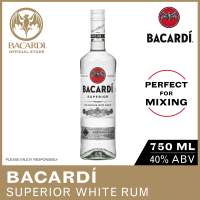
BACARDI Carta Blanca Superior White Rum - 750ml / 75cl 40% ABV - Gluten Free Spirit Aged in American White Oak Barrels
₱795.00
Buy on Lazada![[Bundle of 2] BACARDI Superior White Rum - 750ml / 75cl 40% ABV](https://ph-live.slatic.net/p/936fb82c1c3a140eb2ccd4c23ed474a6.jpg_200x200q80.jpg)
[Bundle of 2] BACARDI Superior White Rum - 750ml / 75cl 40% ABV
₱1,590.00
Buy on Lazada![[Bundle of 2] BACARDI Gold Rum - 750ml / 75cl 40% ABV](https://ph-live.slatic.net/p/d2459265e03ddab1ac4212235b18c19b.png_200x200q80.jpg)
[Bundle of 2] BACARDI Gold Rum - 750ml / 75cl 40% ABV
₱1,590.00
Buy on Lazada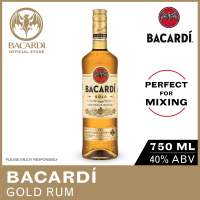
BACARDI Carta Oro Gold Rum - 750ml / 75cl 40% ABV - Gluten Free Golden Rum Aged in Toasted American White Oak Barrels
₱795.00
Buy on Lazada![[Bundle of 2] BACARDI Black Rum - 750ml / 75cl 40%](https://ph-live.slatic.net/p/03c68a91c4fc9b13e6771ba9417e9488.jpg_200x200q80.jpg)
[Bundle of 2] BACARDI Black Rum - 750ml / 75cl 40%
₱1,900.00
Buy on Lazada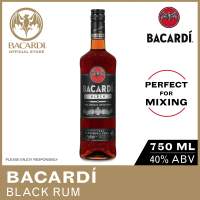
BACARDI Carta Negra Black Rum - 750ml / 75cl 40% ABV - Gluten Free Dark Rum Aged in Heavily Charred Oak Barrels
₱950.00
Buy on Lazada
Bacardi Mojito Ready-to-Serve Rum 750ml
₱678.86₱798.27
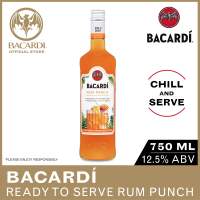
BACARDI Rum Punch - 750ml 12.5% ABV
₱775.00
Buy on LazadaAbout BACARDÍ
BACARDÍ is a globally recognized rum brand with roots in Santiago de Cuba, founded on February 4, 1862, by Don Facundo Bacardí Massó. It is particularly associated with light-bodied, mixable rum and has played a major role in the development of modern cocktail culture. The brand is now part of Bacardi Limited, a privately held, family-owned international spirits company headquartered in Hamilton, Bermuda.1
Today, BACARDÍ is one of the best-known rum brands in the world, sold across international markets and represented by a broad range of white, gold, dark, aged, flavoured, spiced and other rum expressions.1
Quick facts
| Attribute | Information |
|---|---|
| Brand | BACARDÍ |
| Category | Rum / distilled spirits |
| Founded | February 4, 1862 |
| Founder | Don Facundo Bacardí Massó |
| Place of origin | Santiago de Cuba, Cuba |
| Parent company | Bacardi Limited |
| Corporate headquarters | Hamilton, Bermuda |
| Signature symbol | Fruit bat |
| Best known for | Light-bodied rum, especially BACARDÍ Superior |
| Major associations | Cuba Libre, Daiquiri, Mojito and other cocktails |
| Ownership | Family-owned, privately held |
| Current corporate footprint | 200+ brands and labels in 160+ markets |
Bacardi Limited describes itself as the world’s largest privately held international spirits company and says it has more than 164 years of history and seven generations of family ownership.1
Origins
The BACARDÍ story begins in 19th-century Cuba.
Don Facundo Bacardí Massó, a merchant of Catalan origin, experimented with rum-making for years before establishing the company. On February 4, 1862, he purchased a small distillery on El Matadero Street in Santiago de Cuba for 3,500 pesos.1
At the time, rum was generally regarded as a fairly harsh, heavy spirit. Facundo wanted to create something considerably more refined: a smooth, lighter-bodied rum suitable for the emerging middle classes of Cuba and sophisticated enough to compete with other premium spirits.1
His experiments eventually produced the style that became associated with BACARDÍ.
Facundo’s innovations
According to Bacardi’s historical account, Facundo introduced or refined several techniques, including:
- Selection of quality sugarcane molasses
- Use of a distinctive yeast strain
- Controlled fermentation
- Distillation techniques designed to create lighter rum
- Filtration
- Ageing in American white-oak barrels
- Blending different rums to achieve a consistent flavour profile
Bacardi says the proprietary yeast strain, known as La Levadura BACARDÍ, remains exclusively associated with the production of BACARDÍ rum.1
This combination of techniques was important because it transformed rum from a relatively rough spirit into something that could be mixed easily in cocktails.
The famous bat logo
One of the most recognisable aspects of BACARDÍ is its bat emblem.
According to the company’s history, Facundo’s wife, Doña Amalia, noticed a colony of fruit bats living in the rafters of the distillery. Rather than seeing them as a nuisance, she interpreted their presence as a favourable sign.
Bacardi’s historical materials say bats held positive associations in Cuban Taíno and Spanish traditions, including ideas of good health, family unity and good fortune. Doña Amalia therefore suggested using the bat as the company’s symbol.2
The bat subsequently became one of the earliest and most enduring elements of BACARDÍ’s visual identity.
The logo has evolved substantially over the company’s history, but the bat remains the defining symbol of the brand.2
El Coco
Another important symbol in the company’s mythology is El Coco, a coconut palm.
After the company was established, Facundo’s son, Facundo Bacardí Moreau, planted a coconut tree outside the distillery. According to Bacardi’s historical account, the tree became a symbol of the family’s and company’s strength and resilience.
The company’s story associates El Coco with Bacardi’s survival through events including fires, earthquakes and hurricanes.2
Thus, BACARDÍ’s heritage has traditionally been represented by two particularly distinctive symbols:
- 🦇 The bat — good fortune, family and identity
- 🌴 El Coco — resilience and endurance
The rise of BACARDÍ
BACARDÍ’s reputation grew rapidly during the late 19th century.
In 1888, the company won a gold medal at the Barcelona Universal Exhibition and was subsequently recognised as a supplier to the Spanish Royal Household. These achievements helped establish BACARDÍ as a prestigious rum brand beyond Cuba.2
The brand’s growth coincided with a broader transformation in drinking culture. Instead of being consumed primarily as a strong standalone spirit, lighter rum could be combined with other ingredients to create refreshing mixed drinks.
This characteristic became central to BACARDÍ’s identity.
BACARDÍ and cocktail culture
Perhaps BACARDÍ’s greatest cultural contribution is its relationship with cocktails.
The company describes its rum as a pioneering light-bodied, mixable rum, and historical Bacardi materials connect the brand with several classic cocktails, including:
- Daiquiri
- Cuba Libre
- Mojito
- Piña Colada3
The Cuba Libre, in particular, became closely associated with BACARDÍ’s Cuban heritage.
The brand’s current corporate materials claim that more than 6 million Original BACARDÍ Cuba Libre cocktails are enjoyed worldwide every day.1
This is a useful way of understanding BACARDÍ’s positioning: it is not simply marketed as a rum to drink neat; historically, it has been positioned as a social and cocktail-oriented spirit.
The Cuban Revolution and relocation
BACARDÍ’s history is also closely intertwined with the political history of Cuba.
Following the Cuban Revolution, the Bacardi family’s business interests in Cuba were disrupted and the company ultimately moved its operations outside the country. This marked one of the most consequential periods in the company’s history.
BACARDÍ subsequently developed into a global spirits company rather than remaining primarily a Cuban producer. Its international expansion eventually made the bat logo recognisable far beyond the Caribbean.
The company itself divides its historical timeline into periods including “Cuban Revolution to Going Global”, reflecting the importance of this transition.1
An important distinction is therefore:
BACARDÍ was born in Cuba, but modern BACARDÍ is a global brand whose corporate operations are no longer centred in Cuba.
Puerto Rico
Puerto Rico became particularly important to BACARDÍ’s modern production history.
The company established a major distillery in Cataño, Puerto Rico, across the bay from San Juan. Bacardi later opened the Casa BACARDÍ Visitor Center there, creating a major tourism and brand-experience destination.2
Puerto Rico consequently became one of the most important locations associated with the modern production and cultural identity of BACARDÍ rum.
BACARDÍ Superior
The product most strongly associated with the brand is BACARDÍ Superior.
It is a light/white rum designed particularly well for mixing. Rather than emphasising intense oak or heavy molasses flavours, the style is comparatively clean and versatile.
The original concept behind Facundo’s rum was precisely this kind of smoother, lighter spirit. Historical Bacardi materials describe the original Carta Blanca as the lightest of Facundo’s early rums and note that it became known as a sophisticated, easy-to-drink spirit.2
Today, BACARDÍ Superior is therefore essentially the flagship expression of the brand’s historical philosophy: light, smooth, versatile and cocktail-friendly.
Product range
BACARDÍ has expanded considerably beyond its classic white rum.
Bacardi Limited’s current brand portfolio lists numerous BACARDÍ expressions, including:
- BACARDÍ Superior
- BACARDÍ Gold
- BACARDÍ Black
- BACARDÍ Spiced
- BACARDÍ Reserva Ocho
- BACARDÍ Añejo Cuatro
- BACARDÍ Grand Reserva Diez
- BACARDÍ Reserva Limitada
- BACARDÍ Gran Reserva Maestro de Ron
- BACARDÍ Heritage
- BACARDÍ Limón
- BACARDÍ Coconut
- BACARDÍ Mango
- BACARDÍ Raspberry
- BACARDÍ Lime
- BACARDÍ Pineapple
- BACARDÍ Dragon Berry
The exact assortment varies by market.1
This makes BACARDÍ better understood as a family of rum products rather than one single bottle.
What makes BACARDÍ rum distinctive?
At a high level, BACARDÍ’s identity rests on several characteristics.
Light-bodied style
The company’s original innovation was to produce a smoother and lighter rum than the heavier spirits common at the time.1
Mixability
BACARDÍ became particularly successful as a cocktail ingredient. Its relatively approachable profile allows it to work with citrus, cola, fruit juices, mint, sugar and other cocktail ingredients.
Consistency
The company emphasises controlled fermentation, its proprietary yeast and blending as important parts of maintaining the brand’s characteristic profile.1
Cuban heritage
Although the modern company is international, the brand’s identity remains heavily influenced by its Santiago de Cuba origins.
Visual identity
The bat logo makes BACARDÍ unusually recognisable within the spirits industry.
BACARDÍ’s place within Bacardi Limited
An important distinction exists between BACARDÍ and Bacardi Limited.
- BACARDÍ = the rum brand.
- Bacardi Limited = the larger spirits company that owns and manages BACARDÍ and a large portfolio of other brands.
Bacardi Limited currently says its portfolio contains 200+ brands and labels in more than 160 markets. Its portfolio includes brands such as PATRÓN, GREY GOOSE, DEWAR’S, BOMBAY SAPPHIRE and MARTINI, in addition to BACARDÍ.1
In corporate terms, the structure is: Bacardi Limited → BACARDÍ → rum brand/product family.
Family ownership
Bacardi is unusual among major international spirits companies because it remains family-owned.
Bacardi Limited describes itself as a seven-generation family company and the world’s largest privately held international spirits company. Its global headquarters are in Hamilton, Bermuda.1
The Bacardi family has therefore remained an important part of the company’s identity even as the business has expanded dramatically beyond its Cuban origins.
Global brand identity
BACARDÍ’s branding has historically centred on the idea of bringing people together.
Its marketing tends to emphasise:
- Music
- Parties
- Nightlife
- Cocktails
- Dance
- Summer and Caribbean imagery
- Creativity
- Social experiences
- Youth-oriented popular culture
The brand continues to use music and entertainment as major components of its global marketing. In 2026, for example, BACARDÍ’s official media centre highlighted partnerships and activations involving music festivals, artists and contemporary culture.3
This represents an evolution from simply selling rum towards selling a lifestyle and social experience associated with rum.
Casa BACARDÍ
Casa BACARDÍ is one of the brand’s most important physical expressions of its heritage.
The visitor experience at the Cataño distillery allows consumers to explore the history of the Bacardi family and the production of rum. Bacardi describes the site as a major visitor attraction and a celebration of the company’s history and rum-making traditions.2
For the brand, Casa BACARDÍ serves a similar purpose to a heritage museum, visitor centre and brand experience combined.
Marketing and popular culture
BACARDÍ has historically positioned itself strongly within popular culture rather than relying solely on traditional spirits advertising.
Its campaigns have involved:
- Musicians
- DJs
- Fashion
- Art
- Festivals
- Nightlife
- Celebrity collaborations
- Cocktail culture
Recent activity illustrates this continuing strategy. In 2026, BACARDÍ announced activations involving All Points East, Lollapalooza, contemporary music and artist collaborations.3
The brand therefore occupies a space somewhere between a traditional heritage spirits company and a contemporary culture and lifestyle brand.
Cultural significance
BACARDÍ is significant for more than simply being a successful rum.
Its history represents several important developments in the spirits industry:
The modernisation of rum
Facundo Bacardí’s techniques helped establish a lighter, smoother style of rum that differed substantially from heavier traditional styles.1
The rise of cocktail culture
Because BACARDÍ was designed to be mixable, it became closely associated with the growth of cocktails in the late 19th and 20th centuries.1
The globalisation of Cuban identity
Although the company left Cuba after the revolution, Cuban heritage remained central to the brand’s international identity.
Family-owned global business
The company transformed from a small Cuban distillery into one of the world’s largest privately held spirits businesses while maintaining family ownership.1
Brand symbolism
BACARDÍ’s visual language can be summarised through a few major symbols:
| Symbol | Meaning / association |
|---|---|
| 🦇 Bat | Good fortune, family unity, heritage |
| 🌴 El Coco | Resilience and endurance |
| 🇨🇺 Cuba | Place of origin and cultural heritage |
| 🍹 Cocktail | Mixability and social drinking |
| 🌴 Caribbean imagery | Warmth, celebration and lifestyle |
| 🎵 Music | Contemporary culture and nightlife |
The bat is particularly important because it gives BACARDÍ an instantly recognisable identity even without the brand name.
BACARDÍ today
As of 2026, BACARDÍ remains the flagship rum brand within Bacardi Limited’s extensive spirits portfolio.
The parent company reports:
- 164+ years of history
- 7 generations of family ownership
- 200+ brands and labels
- Presence in 160+ markets
- Global headquarters in Hamilton, Bermuda1
The brand continues to expand its product range, develop ready-to-drink offerings and participate in global music, entertainment and cultural events.1
Timeline
1814
Facundo Bacardí Massó is born.
1862
Facundo purchases a small distillery in Santiago de Cuba and officially establishes the Bacardi business on February 4.1
Late 19th century
BACARDÍ develops its reputation for lighter, smoother rum and becomes increasingly associated with cocktails.
1888
BACARDÍ wins a gold medal at the Barcelona Universal Exhibition and gains recognition as a supplier to the Spanish Royal Household.2
20th century
The brand expands internationally and becomes increasingly associated with cocktail culture.
Cuban Revolution era
The Bacardi business leaves Cuba and begins a major period of international expansion.1
1992
Casa BACARDÍ opens at the company’s Puerto Rico distillery.2
1995
BACARDÍ launches BACARDÍ Limón in the United States.2
2012
BACARDÍ celebrates its 150th anniversary.1
2020s
BACARDÍ continues expanding flavoured, aged and ready-to-drink products while increasingly integrating music, fashion and contemporary culture into its marketing.
2026
The brand continues global cultural activations, including music-festival partnerships and new collaborations.3