Shop on Lazada
Badger products
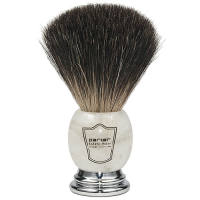
PARKER IVORY MARBLED HANDLE BLACK BADGER SHAVING BRUSH AND STAND
₱1,999.00
Buy on Lazada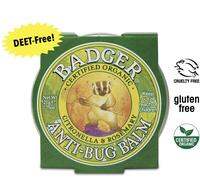
Badger - Anti Bug Balm Tin DEET-Free Mosquito Repelling Balm Badger Balm Bug Repellent 21g (Tested to repel mosquitoes and stable flies!)
₱760.00
Buy on Lazada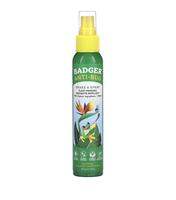
Badger Anti-Bug Shake & Spray Mosquito Repellent DEET free Certified Organic
₱1,050.00
Buy on Lazada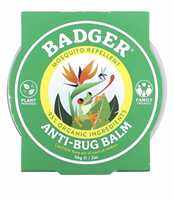
Badger - Anti Bug Balm Tin DEET-Free Mosquito Repelling Balm Badger Balm Bug Repellent 56g (Tested to repel mosquitoes and stable flies!)
₱1,100.00
Buy on LazadaAbout Badger
Badger is an American family-owned personal-care company best known for its organic balms, mineral sunscreens, lip care, body care, and natural insect repellents. Operating under the corporate name W.S. Badger Company, Inc., the brand is headquartered in Gilsum, New Hampshire, United States. Founded in 1995 by carpenter William “Badger Bill” Whyte, the company evolved from a homemade remedy for cracked hands into an international natural and organic body-care brand.1
Overview
| Category | Details |
|---|---|
| Brand | Badger |
| Company | W.S. Badger Company, Inc. |
| Founded | 1995 |
| Founder | William “Badger Bill” Whyte |
| Headquarters | Gilsum, New Hampshire, USA |
| Industry | Personal care / skincare / cosmetics |
| Specialization | Organic body care, balms, mineral sunscreen, lip care, bug repellents |
| Ownership | Family-owned |
| Leadership | Second-generation family leadership, including Emily Schwerin-Whyte and Rebecca Hamilton |
| Business model | Mission-driven, vertically integrated manufacturer |
| B Corp | Certified since 2011 |
| Manufacturing | Primarily in its own facility in New Hampshire |
| Brand positioning | Natural, organic, sustainable, family-oriented personal care |
The New Hampshire government describes Badger as a family-founded, second-generation, women-led consumer-products manufacturer recognized for plant-based skincare, Badger Balm, and mineral sunscreens.2
History
The origin: a carpenter’s hands
The history of Badger traces back to its founder, Bill Whyte, who worked as a carpenter in New Hampshire. Harsh New England winters left his hands extremely dry, rough, and cracked.
Rather than purchasing conventional skincare products, Whyte experimented with natural ingredients and created a simple balm using beeswax and olive oil. The formulation proved effective enough that he began sharing it with others before deciding to turn the concept into a business.3
The company officially launched in 1995, initially operating on a very small scale. Whyte reportedly produced batches in his kitchen, filled tins by hand, and sold them to local hardware stores directly from his work van.3
How the name “Badger” emerged
The company was not originally intended to be called Badger. Whyte had been developing a product under a different name but discovered a trademark conflict shortly before packaging production.
He eventually settled on “Badger,” which became both the company name and the central character of its visual identity. The original packaging featured a badger illustration, helping to establish the distinctive personality that the brand continues to use today.1
From one balm to a complete brand
What began as a single hand balm gradually expanded into a broader range of natural personal-care products. Today, the Badger portfolio includes items for:
- Skin moisturization
- Lip care
- Baby care
- Facial care
- Mineral sun protection
- Insect protection
- Itch relief
- Aromatherapy
- Hair and body care
The company states that it has grown from its original product into a business offering more than 100 natural and organic products.1
The flagship product: Badger Balm
The product that defines the brand is Badger Balm, originally created for hardworking, cracked hands.
The current formulation contains five primary organic ingredients:
- Organic extra-virgin olive oil
- Organic beeswax
- Organic castor oil
- Organic aloe vera
- Organic wintergreen oil
Badger describes the balm as a concentrated moisturizer designed for dry, rough, and weathered skin. The company also identifies the product as USDA Certified Organic and cruelty-free.1
The significance of Badger Balm extends beyond being a single item in the portfolio; the entire company was essentially built around it. The brand’s formulation philosophy continues to emphasize solving real problems for people rather than developing products based purely on market trends.1
Product categories
Balms and moisturizers
Balms remain at the heart of the Badger identity. The brand produces products intended to moisturize, protect, and soothe dry skin. This category includes the original Badger Balm as well as specialized body and face products.
Mineral sunscreens
Sunscreen has become one of Badger’s most important product categories. The company began developing its natural sunscreen in 2004 after Whyte noticed an employee using sunscreen during winter. Upon investigating conventional sunscreen ingredients, he decided to develop a simpler alternative.1
Badger sunscreen products primarily use zinc oxide, a mineral UV filter, and include formulations for everyday use, sports, children, and outdoor activities.1
The sunscreen line gained significant prominence following the Environmental Working Group’s first sunscreen guide in 2006. Badger reports that demand increased dramatically after this publication, with its annual supply selling out within two weeks.1
Baby care
Badger developed a baby-care range based on its philosophy of using relatively simple, naturally derived ingredients. This category grew partly from customer inquiries regarding whether the original balm was suitable for infants and requests for dedicated children’s products.1
Bug repellents and itch relief
Outdoor protection is another major category, comprising insect repellents and products intended to relieve itching. These items align with Badger’s broader strategy of providing botanical-based alternatives to conventional personal-care products.
Lip care
Lip balms represent an extension of the company’s original balm concept, applying the same emphasis on oils, waxes, and botanical ingredients to lip care.
Brand philosophy
Badger’s identity is strongly tied to the concept of “natural, simple and effective.”
The company states that its formulation philosophy combines traditional plant knowledge with modern scientific understanding. Rather than utilizing complex ingredient lists, it emphasizes relatively simple formulations based on botanicals, oils, waxes, and minerals.1
A core principle is that Badger develops products for people the company cares about. Its stated approach is to make products for real people and real needs first, then offer them to the wider market. This philosophy stems directly from the company’s origin, as the first product was created to address the founder’s personal need.1
Organic and natural positioning
Badger positions itself firmly within the natural and organic personal-care market. The company emphasizes:
- Organic agricultural ingredients
- Minimally processed botanical ingredients
- Natural oils and waxes
- Mineral ingredients
- Sustainable sourcing
- Cruelty-free products
- Reduced environmental impact
- Transparent manufacturing
Badger describes its ingredients as being sourced from farms and suppliers globally, with particular attention to organic and regenerative agriculture.1
It is noted that “natural” and “organic” are not synonymous. Individual Badger products carry different certifications and formulations; therefore, the organic status of one product should not be automatically assumed for the entire portfolio.
Manufacturing
A distinctive characteristic of Badger is that it manufactures most of its products internally rather than relying entirely on third-party contract manufacturers.
In 2011, the company constructed a dedicated manufacturing facility in Gilsum, New Hampshire. Badger states that this facility handles ingredient sourcing, formulation, filling, testing, and packaging.1
This vertical integration is central to the brand’s identity. Instead of functioning primarily as a marketing company that outsources production, Badger presents itself as a manufacturer first.1
Sustainability
Sustainability is a major component of Badger’s positioning. The company states that its manufacturing operations are powered by solar energy, and its products emphasize ingredients from organic and sustainably oriented agricultural sources. The original balm also utilizes packaging designed around recyclability and relatively simple materials.1
Badger has also stated a goal of reaching Net Zero by 2030.1
The company’s philosophy extends beyond environmental issues to encompass employee welfare, community involvement, and responsible business practices.
B Corporation status
Badger is a Certified B Corporation, having joined the B Corp movement in 2011.
The B Corp framework evaluates companies on their social and environmental performance rather than focusing exclusively on financial metrics. Badger pursued certification to help measure and improve its impact on people and the planet.1
Badger also played a role in supporting Benefit Corporation legislation in New Hampshire. The state passed this legislation in 2015, allowing qualifying companies to formally incorporate broader social and environmental objectives into their corporate purpose.1
Family ownership
Unlike many large beauty and skincare brands, Badger has retained a strong family-business identity. The company was founded by Bill Whyte, with leadership subsequently transitioning to the second generation of the family.
His daughters, Emily Schwerin-Whyte and Rebecca Hamilton, became co-CEOs as part of the company’s succession strategy. Badger describes their executive structure as a collaborative model reflecting its emphasis on family ownership and shared responsibility.1
This family ownership is central to the brand story, as the company repeatedly presents its long-term objective as building a business that can continue across generations rather than maximizing short-term financial returns.
Brand identity
Visually and emotionally, Badger occupies a distinct position in the personal-care market. Rather than presenting itself as a luxury beauty house, it has historically emphasized craftsmanship, nature, family, practicality, and sustainability.
The badger mascot reinforces this identity. The animal represents toughness and resilience, aligning with the company’s original concept of a balm for people performing physically demanding work.
The brand’s packaging and illustrations convey a distinctive apothecary, outdoors, and handcrafted aesthetic, differing from the minimalist luxury aesthetic used by many contemporary skincare brands.
Target consumers
Badger’s core customer base tends to overlap with consumers interested in:
- Organic and natural products
- Environmentally responsible brands
- Clean or simplified ingredient lists
- Outdoor activities
- Family and baby products
- Mineral sunscreen
- Sensitive-skin-friendly personal care
- Sustainable packaging
- Ethical and mission-driven companies
The brand is particularly suited to consumers seeking practical personal-care products rather than highly elaborate beauty routines.
International presence
Although Badger originated as a small New Hampshire business, it has expanded beyond the United States. The company sells internationally, and the New Hampshire government reports that its products reach customers in more than 15 countries.2
International growth has included markets in Asia and elsewhere, while the company continues to manufacture primarily from its New Hampshire facility.4
What makes Badger different?
Badger’s strongest point of differentiation is that its brand story and business philosophy are unusually consistent. While many natural-skincare companies use terms like “natural,” “organic,” or “sustainable” primarily as marketing positioning, Badger has integrated these concepts into multiple aspects of its business:
- Origin: The company started with a genuine personal problem rather than a market opportunity.
- Formulation: It emphasizes relatively simple botanical and mineral formulations.
- Manufacturing: It makes most products in its own facility.
- Ownership: It remains family-owned.
- Sustainability: Environmental considerations are integrated into manufacturing and sourcing.
- Corporate structure: It became a Certified B Corporation.
- Mission: It explicitly frames business as a means of creating positive social and environmental impact.
Badger’s evolution
A simplified timeline of the company’s development includes:
- 1990s: Bill Whyte develops a balm to treat cracked hands caused by carpentry.
- 1995: W.S. Badger Company is established.
- Late 1990s–2000s: Badger expands beyond its original balm.
- 2004: Development of the company’s natural/mineral sunscreen begins.
- 2006: Badger sunscreen gains major attention following the Environmental Working Group’s sunscreen guide.
- 2011: Badger becomes a Certified B Corporation and builds its dedicated manufacturing facility.
- 2010s: The company expands into baby care, lip care, body care, bug repellents, and other categories.
- 2020s: Second-generation family leadership becomes increasingly prominent, with Emily Schwerin-Whyte and Rebecca Hamilton serving as co-CEOs.1234
Reputation and market position
Badger is best understood as a specialist natural/organic personal-care brand rather than a conventional mass-market cosmetics company. Its strongest brand associations include organic skincare, natural ingredients, Badger Balm, mineral sunscreen, outdoor protection, sustainability, family ownership, New Hampshire manufacturing, and B Corp certification.
The original Badger Balm remains particularly significant because it provides the brand with a genuine origin story directly connected to the product itself, a feature often lacking in newer skincare companies.