Shop on Lazada
Bafang products
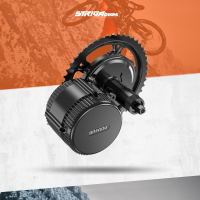
Bafang BBS02B 750W Mid Drive Kit with C961/500c Display
₱31,000.00
Buy on Lazada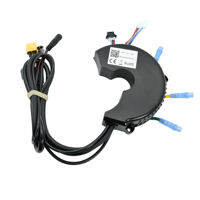
Bafang | BAFANG BBS02B MMG340 750W MID MOTOR UATR Controller Replacement Part
₱7,381.82₱9,596.37
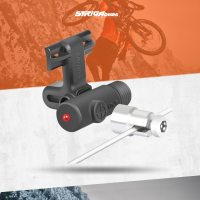
Bafang Speed Sensor (BBS01B/02B/HD)
₱824.00₱840.00
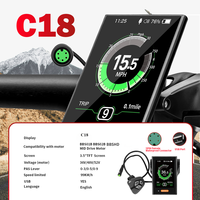
Bafang | BAFANG Gear Sensor Brake Sensor Speed Sensor Chain Wheel Crank 1T4 Cable C18 860C Display for Bafang BBS01B BBS02B E-Bike Motor
₱7,453.28₱9,689.27
About Bafang
Bafang (officially Bafang Electric (Suzhou) Co., Ltd.; Chinese: 八方电气(苏州)股份有限公司) is a Chinese developer and manufacturer of electric bicycle (e-bike) drive systems and e-mobility components. Established in 2003 and headquartered in Suzhou, Jiangsu, near Shanghai, the company supplies motors, batteries, electronic controls, displays, sensors, gear hubs, and complete drive systems for electric two-wheelers.1
Unlike conventional consumer bicycle brands, Bafang operates primarily as a B2B and OEM technology supplier. Its drive systems are integrated into e-bikes manufactured by bicycle companies worldwide. The firm also engineers comprehensive systems that combine motors, batteries, controllers, human-machine interfaces (HMI), sensors, and other components into unified platforms.
As of 2026, Bafang reports employing more than 1,000 staff across 12 international locations and has sold over 20 million systems globally. It is publicly listed on the Shanghai Stock Exchange under stock code 603489.1
Company overview
| Item | Information |
|---|---|
| Company name | Bafang Electric (Suzhou) Co., Ltd. |
| Chinese name | 八方电气(苏州)股份有限公司 |
| Brand | BAFANG |
| Founded | 2003 |
| Headquarters | Suzhou, Jiangsu, China |
| Industry | E-mobility / electric two-wheelers |
| Main products | E-bike motors, batteries, displays, controllers, sensors, gear hubs and complete drive systems |
| Main market | Global OEM / bicycle manufacturers |
| Stock listing | Shanghai Stock Exchange, 603489 |
| Employees | 1,000+ |
| Global locations | 12 international locations (2026 company data) |
| Main applications | eMTB, eRoad, eTour, eCity, eCargo and eFat |
| European production | Poland facility producing mid-drive systems |
| Official website | bafang-e.com |
History
Bafang commenced development of electric mobility components and systems in 2003. Over the subsequent two decades, the company evolved from a producer of individual electric-drive parts into a supplier of integrated e-bike propulsion systems.1
The company’s growth has largely paralleled the expansion of the global e-bike market. Rather than focusing on complete bicycles, Bafang has specialised in the underlying technology—specifically the motors and electronic systems that provide pedal assistance.
While its headquarters and primary R&D and manufacturing operations remain in Suzhou, Bafang established sales, service, and operational facilities across Europe, North America, and Asia as its international business grew. In 2012, it opened its European headquarters in the Netherlands, subsequently expanding its European network. The company later established a manufacturing facility in Poland to produce mid-drive systems specifically for the European market.1
Business model
Bafang is not primarily a bicycle manufacturer; instead, it functions as an OEM/ODM and technology supplier. Bicycle manufacturers select Bafang motors and components to integrate into their own frame designs and product lines.
The company offers both individual components and comprehensive system packages. Its product ecosystem includes:
- Electric motors
- Motor controllers
- Batteries
- Sensors
- Displays and other HMIs
- Wiring and connectors
- Gear hubs
- Mobile connectivity
- Complete e-bike drive systems
This model enables bicycle brands to maintain distinct product identities while relying on Bafang for electric propulsion technology. The company describes this approach as a flexible engineering partnership.1
Bafang designs and manufactures its complete drive systems largely in-house, covering drive units, batteries, displays, and shifting hubs. As of 2026, the company held more than 370 patents, operated a CNAS-accredited laboratory exceeding 5,000 m², and reported cumulative global sales of over 20 million systems.1
Products
Bafang’s portfolio is categorised into several major product lines.
Electric motors
Motors form the core of Bafang’s business, with offerings divided into mid-drive and hub motor families.
Mid-drive motors
The M-Series mid-drive motors are mounted at the bicycle’s bottom bracket or crank area, driving the bicycle through the drivetrain rather than directly turning the wheel. Bafang characterises the M-Series as compact, powerful, and quiet, with design emphasis on integrated installation and natural handling.1
These motors are commonly used in:
- Mountain e-bikes
- Trekking bikes
- Urban e-bikes
- Cargo bikes
- High-performance electric bicycles
The M-Series has been progressively expanded to address varying performance requirements and applications.
Hub motors
Bafang also manufactures front- and rear-wheel hub motors. The lineup includes the HF-Series front motors and HR-Series rear motors, positioned for urban, touring, and everyday e-bike applications.1 Hub motors offer a simpler drivetrain architecture by integrating the motor directly into the wheel hub.
Batteries
Bafang produces battery systems designed for compatibility with its drive units. The portfolio comprises:
- Integrated/intube batteries
- Downtube batteries
- Rack/carrier-mounted batteries
Integrated batteries fit within the bicycle frame, while downtube and rack-mounted options offer different balances of aesthetics, capacity, and accessibility. Rack-mounted batteries are currently listed with capacities of 450 Wh, 600 Wh, and 750 Wh.1 Battery capacity directly influences potential riding range, though actual range varies based on rider weight, terrain, speed, temperature, assist level, and bicycle configuration.
Human-machine interfaces
Bafang manufactures electronic interfaces for rider interaction with e-bike systems, including:
- LCD displays
- LED displays
- Remote controls
- TFT displays
- Bluetooth-connected interfaces
These displays show speed, battery status, assistance level, and other ride data. Newer systems support communication with the Bafang Go mobile application.1
Bafang Go
Bafang Go is the company’s connected e-bike platform, offering functions such as remote control, real-time tracking, personalised settings, navigation, and connected e-bike capabilities. This platform represents Bafang’s strategic expansion beyond hardware into software and connected mobility.1
Gear hubs and shifting technology
Electronic shifting is an increasingly significant segment of Bafang’s portfolio. The company’s GVT technology integrates electric drive systems with electronically controlled gearing. In 2026, Bafang introduced the RG E510, a five-speed automatic/manual electronic gear hub compatible with mid-drive systems including the M210, M410, and M430.1
This technology aims to automate gear selection and better coordinate motor output, transmission, and rider input, reflecting an industry-wide shift toward fully integrated electric drivetrains.
E-bike applications
Bafang organises its drive systems around specific e-bike categories:
eMTB
High-performance mid-drive systems designed for climbing, trail riding, and off-road use.
eRoad
Systems engineered for electric road bicycles, prioritising low weight, integration, and smooth assistance.
eTour
Touring-oriented systems emphasising range, comfort, and long-distance usability.
eCity
Urban systems designed for commuting and daily transportation.
eCargo
Cargo bike systems represent a growing segment. In 2025, Bafang introduced the M430 cargo-bike drive system, rated for a total payload of up to 300 kg, with specifications listing up to 120 Nm of torque and 910 W peak power.1
eFat
Systems supplied for fat-tire and recreational electric bicycles.
These application categories cover much of the mainstream e-bike market, from lightweight urban models to mountain, cargo, and recreational bikes.1
Technology and engineering
Bafang’s competitive position relies heavily on system integration. Rather than treating the motor as an isolated component, the company develops multiple electrical system elements concurrently:
Motor → Controller → Sensors → Battery → Display/HMI → Gear system → Software
This integrated approach enables components to communicate effectively, producing a consistent riding experience. For example, modern mid-drive systems utilise torque and cadence sensor data to determine motor assistance levels, with controllers regulating output based on rider input, selected assist mode, and system conditions.
Intelligent control, automatic shifting, and software algorithms have become central to Bafang’s development strategy.1
Manufacturing and global operations
Bafang’s principal headquarters, research centre, and manufacturing base are located in Suzhou, China. The company maintains international sales and service organisations in:
- China
- Netherlands
- Germany
- France
- Italy
- Denmark
- Poland
- United States
The Polish facility additionally manufactures mid-drive systems for European customers.1
This international infrastructure supports e-bike manufacturers’ requirements for technical support, spare parts, diagnostics, and after-sales service alongside hardware supply.
Position in the e-bike industry
Bafang is recognised as a significant global supplier of e-bike drive systems, particularly within the OEM market. Its role differs from consumer-facing brands such as Trek, Specialized, or Giant, which sell finished bicycles under their own names. Bafang’s technology typically operates as the propulsion system within another manufacturer’s e-bike.
In this respect, Bafang functions similarly to an automotive powertrain supplier rather than a traditional bicycle company. Consumers may purchase e-bikes from various brands without initially realising the drive system is manufactured by Bafang.
Comparison with other e-bike motor manufacturers
The e-bike drive-system market includes several major technology suppliers. Bafang competes with:
- Bosch eBike Systems
- Shimano
- Yamaha
- Brose
- Mahle
- DJI
- TQ
Bafang distinguishes itself through the breadth of its OEM-oriented component and complete-system portfolio, spanning hub motors, mid-drive systems, batteries, displays, controllers, and electronic shifting systems. The company’s stated objective is to become the leading brand for electric two-wheeler drive systems.1
Quality and certification
Bafang emphasises reliability, durability, and quality control in manufacturing. Production sites hold ISO 9001 certification, and products comply with RoHS requirements and carry CE marking where applicable. The company conducts continuous testing throughout production using dedicated facilities and test tracks.1
Certifications and testing have involved organisations including CQC, UL, SGS, and TÜV.1
Corporate identity
Bafang’s corporate identity centres on electric mobility rather than bicycles alone. The company addresses demand for alternative mobility solutions, evolving transportation infrastructure, and new vehicle usage patterns. Its stated vision is to become the leading brand for electric two-wheeler drive systems, reflected in the slogan “Power Your Life.”1
Recent developments
Bafang continues advancing toward higher-performance and more intelligent drivetrain systems. Notable recent developments include:
- Expansion of European production and service infrastructure
- Continued development of high-torque mid-drive motors
- Entry into professional cargo-bike systems
- Development of electronically controlled gear hubs
- Integration of motor, battery, display, and shifting technologies
- Increased focus on software and connected e-bike functions
In 2026, Bafang highlighted the RG E510 five-speed electronic gear hub and its integration with M210, M410, and M430 mid-drive platforms.1 Current strategy indicates a shift toward complete intelligent e-bike drivetrains rather than standalone motor sales.
Significance in the e-bike ecosystem
Bafang occupies a foundational position within the e-bike ecosystem, functioning for many e-bikes as a powertrain supplier does for automobiles. It provides the technology that converts conventional bicycles into electrically assisted vehicles.
Key factors contributing to its industry significance include:
- Long experience: Operating in electric mobility since 2003
- Broad portfolio: Motors, batteries, displays, controllers, sensors, and gearing
- OEM focus: Supplying technology to bicycle manufacturers rather than relying solely on direct consumer sales
- Global footprint: Sales, service, and manufacturing operations across Asia, Europe, and North America
- Vertical integration: Capability to develop multiple drive system components concurrently
- Large installed base: More than 20 million systems sold worldwide
- Continued innovation: Growing emphasis on intelligent shifting, software, and connected e-bike systems1
Note: Corporate metrics such as employee count, number of locations, and systems sold are subject to change. Figures cited above reflect information available as of 2026.