Shop on Lazada
BAND-AID products
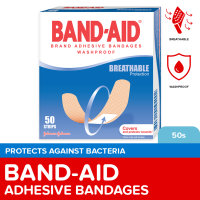
Band-Aid Adhesive Washproof Bandages 50s - First Aid Wound Care
₱97.00₱102.00
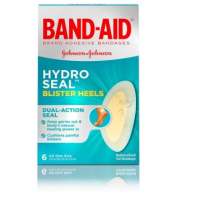
Original Hydro Seal Band Aid BLISTER HEELS Bandage 1Box | 6ct (Imported from USA) HYDROSEAL BANDAID
₱799.00₱1,399.00
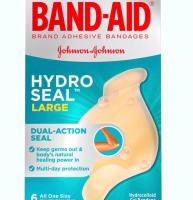
Hydro Seal Band-Aid Advanced Healing Waterproof Hydrocolloid Gel Plasters LARGE 1 Box | 6 ct
₱869.00₱1,299.00
Band-Aid for Kids Toddlers Unisex Plasters First Aid for Scrapes Cuts
₱299.00
Buy on Lazada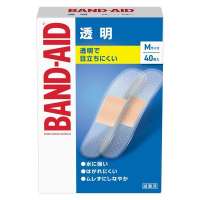
Kenvue Band-Aid Super Fit / Waterproof / Transparent
₱434.00₱699.00
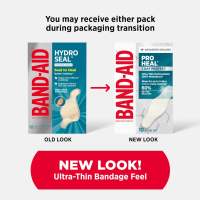
Band Aid Hydro Seal Seal To Heal Hydrocolloid Gel Bandage
₱810.00
Buy on Lazada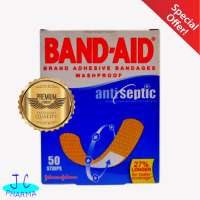
Authentic BAND-AID Brand Adhesive Bandages Washproof 50 Strips
₱148.00₱240.00
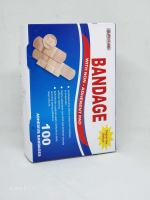
Band Aid First Aid Waterproof Bandages Flexible Fabric Bandages Extra Long Heavy Duty
₱191.00
Buy on LazadaAbout BAND-AID
BAND-AID is an American wound-care brand best known for its adhesive bandages. The brand originated at Johnson & Johnson in the early 1920s after employee Earle Dickson developed a practical way for his wife to cover minor cuts without assistance. Today, BAND-AID is part of Kenvue, the consumer-health company that became independent from Johnson & Johnson in 2023.1
Quick facts
| Category | Information |
|---|---|
| Brand name | BAND-AID |
| Product category | Wound care / first aid |
| Best known for | Adhesive bandages |
| Origin | United States |
| Invention | 1920 |
| First commercial sale | 1921 |
| Inventor | Earle Dickson |
| Original company | Johnson & Johnson |
| Current owner | Kenvue |
| Current status | Global consumer-health brand |
| Major products | Adhesive bandages, advanced-healing bandages, gauze, wound-care products, first-aid supplies, tapes/wraps and antiseptic products |
| Trademark | BAND-AID |
Kenvue currently categorizes BAND-AID as one of its essential-health/wound-care brands.1
What is BAND-AID?
BAND-AID is a consumer wound-care brand whose signature product is the adhesive bandage: a small dressing consisting broadly of an absorbent wound-contact pad attached to an adhesive material that sticks to the surrounding skin.
The fundamental idea is simple: instead of requiring someone to hold gauze against a small wound and secure it separately with tape, the dressing combines the components into a ready-to-use product.
That seemingly simple idea was significant in the early 20th century because it allowed people to treat many minor wounds themselves.
Over more than a century, BAND-AID expanded from a single type of adhesive dressing into a broad first-aid portfolio. Its current product range includes adhesive bandages, gauze and larger wound covers, first-aid kits, tapes and wraps, topical antibiotics, and antiseptic washes and sprays.1
The origin story
Earle and Josephine Dickson
The story begins in 1920 with Earle Dickson, who worked for Johnson & Johnson as a cotton buyer.
Dickson’s wife, Josephine, frequently suffered small cuts and burns while cooking and doing household work. Conventional methods of dressing these injuries were inconvenient because she needed someone to help prepare and secure the dressing.
Dickson came up with a solution using materials that Johnson & Johnson already manufactured: adhesive tape and gauze.
He placed small sections of gauze at intervals along an adhesive strip and covered the arrangement with a protective material called crinoline. This allowed an individual section to be cut off and applied to a wound.1
The concept was essentially a pre-made adhesive dressing.
It solved an ordinary household problem, but it eventually became one of the most recognizable consumer-health products in the world.
From invention to commercial product
Johnson & Johnson’s management recognized the potential of Dickson’s invention.
The company began selling the product in 1921 under the BAND-AID name. The earliest commercial version was very different from the familiar small rectangular bandage people know today.
The original product was essentially a long strip that consumers had to cut into appropriate pieces themselves. Johnson & Johnson subsequently improved the manufacturing process and introduced individually sized, ready-to-use bandages.1
Early development
- 1920: Earle Dickson develops the concept.
- 1921: BAND-AID adhesive bandages enter the market.
- 1924: Machine production makes smaller, ready-to-use individual bandages possible.
- 1926: The famous metal BAND-AID tin is introduced.
- 1932: The brand introduces its first waterproof bandage, called DryBak.1
Interestingly, the product was not an immediate commercial sensation. The National Inventors Hall of Fame notes that first-year sales were only around $3,000. Johnson & Johnson subsequently promoted the product more aggressively and helped consumers understand how to use it.
Why the product became successful
Several characteristics helped BAND-AID become culturally significant.
Convenience
The product transformed wound dressing from a small procedure into something almost anyone could do quickly.
Portability
Individual bandages could easily be carried in a pocket, handbag, medicine cabinet or first-aid kit.
Standardization
Instead of improvising a dressing with tape and gauze, consumers could purchase a standardized, ready-made product.
Brand recognition
BAND-AID became associated so strongly with adhesive bandages that, in some English-speaking markets, “Band-Aid” is commonly used as a generic term for an adhesive bandage, even when the product is made by another company.2
That is an example of extremely strong brand-name recognition.
The iconic BAND-AID tin
One of the brand’s notable early innovations was its packaging.
In 1926, BAND-AID introduced an iconic metal tin. The packaging wasn’t simply functional: the empty tins could be reused as small containers for household objects such as nails, buttons, marbles and other small items.1
The tin became part of the product’s identity and contributed to BAND-AID becoming a familiar household item rather than merely a medical supply.
The brand continues to sell collectible and themed tins today.1
BAND-AID during World War II
The brand’s importance increased as first-aid products became increasingly integrated into military and civilian preparedness.
During World War II, BAND-AID shipped millions of adhesive bandages overseas, including products packaged in soldiers’ first-aid kits.1
This helped reinforce the association between BAND-AID and first aid, preparedness and emergency care.
Moving beyond plain bandages
BAND-AID eventually realized that an adhesive bandage didn’t have to be merely a medical-looking rectangle.
In 1956, the brand introduced Stars ‘n Strips, its first mass-marketed decorated bandages.1
This was important from a branding perspective because it helped transform the bandage from something associated exclusively with injury into something that could also be:
- colorful,
- playful,
- attractive to children,
- collectible,
- and culturally relevant.
The company has continued this strategy with licensed characters, entertainment properties, artistic designs and themed collections. Its current product catalog, for example, includes designs associated with Minecraft, Nickelodeon Dora, KPop Demon Hunters, Monet, Redon, Van Gogh and Hokusai.1
BAND-AID goes to the Moon
One of the brand’s more memorable historical anecdotes occurred during the Apollo 11 mission.
In 1969, BAND-AID adhesive bandages were included in the medical kit aboard the Apollo 11 spacecraft—the mission that carried humans to the Moon.1
This became part of the brand’s heritage and is a particularly memorable example of how an everyday consumer product found its way into an extraordinary technological and historical event.
Product evolution
The original BAND-AID was essentially a simple adhesive strip with a wound pad.
Modern wound care is much more diverse.
Today, the BAND-AID portfolio includes products designed around different requirements such as:
- Flexible movement
- Water resistance
- Protection of larger wounds
- Advanced wound healing
- Blister protection
- Children’s use
- Different skin and wound-care situations
- First-aid preparedness
The brand’s current U.S. catalog lists dozens of products. Among its contemporary offerings is the PRO HEAL line, including advanced-healing hydrocolloid bandages.1
What is hydrocolloid?
One example of how BAND-AID has evolved technologically is the use of hydrocolloid technology.
Hydrocolloid dressings are designed to interact with wound fluid and create a moist wound environment. They are widely used in modern wound-care products, particularly for certain minor wounds and blisters.
BAND-AID’s current PRO HEAL products use advanced-healing hydrocolloid technology, showing how the brand has moved beyond the basic adhesive-and-gauze concept invented in 1920.1
Current product categories
Today, BAND-AID is considerably broader than just its classic adhesive strips.
According to its official product categories, the brand covers:
- Adhesive bandages — everyday minor cuts and wounds.
- Gauze, pads & large covers — larger wound coverage.
- First-aid kits — collections of first-aid supplies.
- Tapes & wraps — products for securing and supporting dressings.
- Topical antibiotics — products intended for infection prevention.
- Antiseptic washes & sprays — cleansing and wound-care products.1
So, strategically, BAND-AID has developed from an adhesive-bandage brand into a broader wound-care and first-aid brand.
Ownership: Johnson & Johnson to Kenvue
For most of its history, BAND-AID was associated directly with Johnson & Johnson.
That changed as Johnson & Johnson reorganized its consumer-health business.
In 2023, Johnson & Johnson separated its consumer-health business into a new publicly traded company called Kenvue. BAND-AID became part of Kenvue’s brand portfolio.12
Kenvue describes BAND-AID as part of its essential health portfolio, alongside brands such as Listerine and Johnson’s.1
So the modern corporate structure can be summarized as:
BAND-AID → Kenvue → independent consumer-health company
rather than:
BAND-AID → Johnson & Johnson directly
The relationship with Johnson & Johnson
Although BAND-AID is now a Kenvue brand, its history is inseparable from Johnson & Johnson.
Johnson & Johnson had already established expertise in sterile surgical supplies, gauze, sutures and other medical products before BAND-AID was invented. The company therefore already possessed much of the technology and manufacturing knowledge necessary for Dickson’s concept.
This is an important part of the story: BAND-AID wasn’t invented in isolation. It emerged by combining existing technologies—adhesive material and gauze—in a new consumer-friendly format.
The inventor: Earle Dickson
Earle Dickson is the central individual behind the invention.
Dickson was born in 1892 and died in 1961. He worked for Johnson & Johnson as a cotton buyer and eventually rose through the company after the success of his invention.
The National Inventors Hall of Fame inducted him in 2017 for his work on the adhesive bandage. His U.S. patent was No. 1,612,267.
His career at Johnson & Johnson also demonstrates how important the invention became to the company: he eventually became a vice president and remained with the company until his retirement in 1957.
The BAND-AID brand name
The name BAND-AID is a trademark rather than the generic name for the product category.
The generic description is generally adhesive bandage or adhesive dressing.
But BAND-AID became so famous that its name entered everyday language. This phenomenon is known as genericization or generic trademark use in discussions of branding.
Comparable examples of brands whose names became strongly associated with product categories include:
- Kleenex → facial tissues
- Xerox → photocopying
- BAND-AID → adhesive bandages
This creates both a marketing advantage and a trademark-management challenge: the brand is incredibly recognizable, but the company must also preserve the distinction between its trademark and the generic product category.
Branding and cultural impact
BAND-AID’s greatest achievement may not simply be its product technology.
It made first aid feel ordinary.
Before ready-made adhesive bandages, treating a small cut could require several separate materials. BAND-AID turned this into a familiar household ritual:
cut → clean → cover → continue with your day
The product became associated with childhood injuries, sports, cooking accidents, outdoor activities, school first-aid kits and household medicine cabinets.
Its cultural presence is also reinforced through:
- children’s character designs,
- collectible tins,
- artistic collaborations,
- seasonal designs,
- advertising,
- first-aid education,
- and its distinctive visual identity.
Design as a branding tool
A particularly clever part of BAND-AID’s evolution is the use of design.
A conventional medical dressing can visually communicate:
“You are injured.”
A colorful or character-themed BAND-AID can instead communicate:
“You’ve got a little injury, but you’re okay.”
That distinction is particularly useful for children.
The brand therefore occupies an unusual intersection between healthcare and consumer lifestyle branding.
Its products have to perform a functional medical role while also being visually approachable.
Innovation strategy
BAND-AID’s century-long history can roughly be divided into several stages:
Stage 1 — Invention
1920–1924
Create a practical, ready-to-use adhesive dressing.
Stage 2 — Mass production
1924 onward
Make individual bandages inexpensive and convenient enough for widespread consumer use.
Stage 3 — Waterproofing and specialized performance
1930s onward
Improve durability and usability.
Stage 4 — Consumer branding
1950s onward
Introduce decorative designs and make the product more appealing to families and children.
Stage 5 — Lifestyle and character licensing
Late 20th century onward
Use entertainment, characters and visual culture to increase consumer engagement.
Stage 6 — Advanced wound care
21st century
Introduce technologies such as hydrocolloid dressings and increasingly specialized wound-care products.1
BAND-AID’s position in the market
BAND-AID competes in the broader first-aid and wound-care market.
Its competitive environment includes traditional adhesive-bandage brands, pharmacy/private-label products and specialized wound-care manufacturers.
Its strongest competitive advantages are arguably:
- Very high brand recognition
- More than a century of history
- Strong consumer familiarity
- Extensive distribution
- Broad product portfolio
- Association with first aid
- Product innovation
- Strong emotional recognition, particularly among families
The brand isn’t simply selling an adhesive strip; it is selling a trusted, familiar first-aid solution.
BAND-AID today
As of 2026, BAND-AID continues to operate as a Kenvue wound-care brand.
Its official U.S. website currently presents a portfolio extending well beyond traditional bandages, including advanced-healing products, flexible fabric bandages, collectible tins, children’s products, gauze, first-aid kits, tapes and wraps, and antiseptic products.1
Kenvue identifies BAND-AID specifically under its wound-care portfolio.1
Major historical timeline
| Year | Event |
|---|---|
| 1920 | Earle Dickson invents the basic adhesive-bandage concept. |
| 1921 | BAND-AID adhesive bandages enter the market. |
| 1924 | Mass-produced individual bandages replace the original cut-to-fit format. |
| 1926 | Iconic reusable metal tins introduced. |
| 1932 | First waterproof BAND-AID bandage, DryBak, introduced. |
| 1942 | Millions of bandages shipped overseas during World War II. |
| 1956 | Stars ‘n Strips becomes the first mass-marketed decorated BAND-AID bandage. |
| 1969 | BAND-AID products accompany the Apollo 11 mission. |
| Late 20th century | Brand expands into children’s designs and broader wound-care products. |
| 21st century | Greater emphasis on specialized and advanced-healing technologies. |
| 2023 | BAND-AID becomes part of Kenvue following Johnson & Johnson’s consumer-health separation. |
| 2026 | Brand continues as a major Kenvue wound-care brand with a broad first-aid portfolio. |
The historical milestones through Apollo 11 are documented by BAND-AID’s official history.1
What makes BAND-AID iconic?
If you reduce the brand to its essential strengths, there are five big reasons for its longevity:
1. It solved a real problem
The original invention came from an everyday inconvenience rather than an abstract technological exercise.
2. It was incredibly simple
The product combined two existing technologies into something much easier to use.
3. It became part of everyday life
Unlike many medical innovations, consumers could encounter BAND-AID multiple times throughout childhood and adulthood.
4. The brand evolved
It moved from plain medical dressings to waterproof, flexible, decorated and advanced-healing products.
5. The name became culturally synonymous with the category
“BAND-AID” became one of the world’s most recognizable names for adhesive bandages.