Shop on Lazada
BASCOLIN products
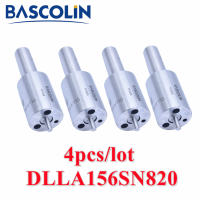
4pcs/lot DLLA156SN820 Bascolin Diesel Fuel Injection Nozzle DLLA-156SN-820 1153111800 9432610716 105015-8200 H105015820 for ISUZU 8PC1/8PD1/8PE1 Engine
₱2,077.00₱2,659.00
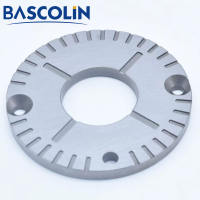
BASCOLIN Diesel Feed Pump Cover 1460134317 Repair Kits 1 460 134 317
₱451.28₱1,284.00
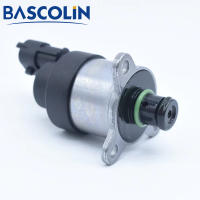
0928400608 BASCOLIN Fuel Pump Pressure Regulator 0 928 400 608 0928 400 608 Control Valve for KIA Sorento
₱2,396.36₱5,362.00
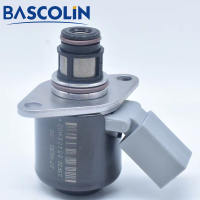
Bascolin Metering Valve 33115-4X400 331154X400 Metering Unit Valve for High Pressure Pump A2C59513830 A2C53384062 5WS40893
₱2,356.78₱5,302.00
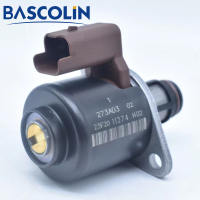
Bascolin Metering Valve 33115-4X500 331154X500 Metering Unit Regulator Valve for High Pressure Pump
₱2,356.78₱5,302.00
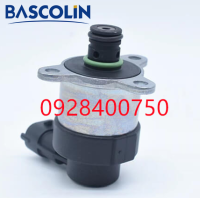
Bascolin Fuel Pressure Sensor 0928400750 for Hyundai Accent D4FA 1.5L-U CDRi MC
₱1,568.00₱1,694.00
About BASCOLIN
BASCOLIN is an automotive aftermarket brand specialising in diesel fuel-injection systems, common-rail components, and related diesel-engine parts. The company positions itself as a global supplier of diesel-system solutions serving automotive, commercial-vehicle, agricultural, locomotive, and marine applications 1.
It is important to distinguish the brand’s registration from its manufacturing origin. BASCOLIN’s official FAQ states that the trademark is registered in Germany, while its products are manufactured in China and its global marketing centre is also located there 1. Consequently, “German-registered brand” should not be interpreted as “German-manufactured brand.”
Basic profile
| Item | Information |
|---|---|
| Brand | BASCOLIN® |
| Industry | Automotive / diesel fuel-injection |
| Core specialisation | Diesel injection systems and common-rail components |
| Market position | OEM-replacement / independent aftermarket |
| Trademark | Registered in Germany, according to BASCOLIN 1 |
| Trademark number stated by BASCOLIN | 30 2020 223 899 1 |
| Manufacturing | China, according to BASCOLIN 1 |
| Global marketing centre | Putian, Fujian, China 1 |
| Main markets | International aftermarket, with distribution in 60+ countries/regions claimed by the company 1 |
| Warranty | 12-month warranty advertised through distribution materials 2 |
| Main applications | Passenger vehicles, commercial vehicles, trucks, buses, agricultural equipment, locomotives, and marine applications 1 |
The company describes BASCOLIN as a global diesel-system supplier and states that its products are distributed to more than 60 countries and regions 1.
Product portfolio
BASCOLIN is primarily associated with fuel-injection hardware rather than general automotive parts. Its product range includes:
- Common-rail injectors
- Common-rail injector valves and control valves
- Common-rail nozzles
- Injection-pump components
- Injector repair kits
- Control valves
- Suction control valves
- Pressure and relief valves
- Inlet metering valves
- Pump components
- Plungers
- Delivery valves
- Head rotors
- Diesel injection elements
- Injector testing equipment
- Diesel locomotive injection components
Company materials describe the range as covering thousands of applications, including components associated with Bosch, Delphi, Denso, Zexel, Caterpillar, John Deere, GE/EMD, and other systems 2.
Common-rail specialisation
The common-rail diesel system is central to BASCOLIN’s current identity. This system separates high-pressure fuel generation from individual injection events, allowing electronically controlled injectors to deliver precisely timed fuel quantities at high pressure. Components such as injectors, nozzles, and control valves are therefore critical to fuel economy, combustion efficiency, emissions, engine performance, starting behaviour, and durability. BASCOLIN explicitly describes its common-rail products as being designed for efficiency and reduced emissions 1.
Origin and manufacturing
Brand registration
BASCOLIN’s official FAQ states that the brand is registered in Germany with registration number 30 2020 223 899 1. However, this registration does not establish that BASCOLIN is a German manufacturer.
Manufacturing base
The same official FAQ explicitly confirms that BASCOLIN products are manufactured in China 1. The company’s listed marketing office is located at #189, LiyuanZhong Road, LiCheng District, Putian, Fujian, China 1. Therefore, BASCOLIN is most accurately described as a China-manufactured diesel aftermarket brand whose trademark is registered in Germany. This distinction is relevant when evaluating the brand’s origin and quality claims.
Brand history and development
Publicly available material does not provide a conventional corporate history with a documented founding year. Instead, the brand’s development can be traced through its product progression. According to distributor material, the business initially concentrated on fuel-injection nozzles before expanding into additional diesel-injection components 3.
The reported progression includes:
- Fuel-injection nozzles
- Delphi, Bosch, Denso, and Zexel head/rotor components
- Elements, delivery valves, feed pumps, and control valves
- Common-rail nozzles
- Common-rail valves and injectors
- Diesel locomotive components
- Further common-rail injector components and repair products
This evolution reflects the broader shift in the diesel aftermarket from conventional mechanical injection toward high-pressure common-rail systems 3.
Business model
BASCOLIN operates primarily as an independent aftermarket and OE-replacement supplier rather than as an original vehicle manufacturer.
Independent aftermarket
The replacement-parts market serves diesel repair shops, parts distributors, wholesalers, engine specialists, fleet operators, and vehicle owners. BASCOLIN describes its aftermarket strategy as providing a one-stop diesel-system solution covering drawings, production, packaging, delivery, and after-sales support 1.
OEM-related solutions
While BASCOLIN uses the term “OEM” to describe portions of its business, this requires careful interpretation. There is a significant difference between manufacturing an aftermarket component to an OE-style specification, supplying an OEM replacement, providing OEM manufacturing services, and being a Tier-1 original supplier to a vehicle manufacturer. Public material supports the first three concepts more clearly than it establishes BASCOLIN as a Tier-1 supplier to major vehicle manufacturers.
Compatibility with major systems
BASCOLIN products are frequently listed as replacements or compatible components for systems associated with major diesel-injection manufacturers, including Bosch, Delphi, Denso, Zexel, Caterpillar, John Deere, Cummins, and Scania. For example, the brand has promoted common-rail injector products for Cummins/Scania XPI systems and Caterpillar HEUI-related products 1.
This compatibility does not imply affiliation with or ownership by those companies. In most cases, it indicates that the BASCOLIN component is intended as an aftermarket replacement for a specific injection system or application.
Quality philosophy
BASCOLIN states that it uses dedicated testing and quality-control procedures to produce components that function as premium replacements for OE products 1. Its stated quality approach includes supplier qualification, production controls, product testing, dimensional and precision control, performance testing, continuous improvement, aftermarket warranty, and technical support. The company claims to have built its own testing procedures to evaluate products before they reach customers 1.
However, a manufacturer’s claim regarding quality standards differs from independent certification or comparative testing. Buyers evaluating BASCOLIN for fleet or wholesale use should consider part-specific test reports, calibration data, warranty history, failure rates, and independent injector testing alongside marketing claims.
Warranty
BASCOLIN promotes a 12-month warranty in its brand and distributor information 2. The official FAQ also states that the company accepts responsibility for products subject to valid quality complaints 1.
For actual purchases, warranty terms should be verified with the specific distributor, as conditions may depend on installation procedures, injector coding and calibration, fuel-system cleanliness, return requirements, testing procedures, proof of failure, and whether the seller is an authorised distributor.
Global presence
BASCOLIN describes itself as an international brand with distribution covering Asia, the Middle East, Africa, South America, North America, and Europe 1. The company maintains distributor, service-centre, and wholesale-agent systems intended to provide local assistance, including parts identification and troubleshooting. It also maintains multilingual website versions in Chinese, Russian, and Spanish 1.
Industries served
BASCOLIN’s application areas extend beyond passenger cars to include:
- Passenger vehicles
- Trucks
- Buses
- Agricultural machinery
- Locomotives
- Marine applications
- Commercial vehicles
- Industrial diesel applications
The company’s worldwide profile specifically identifies the automotive, agricultural, locomotive, and marine sectors 1.
Market positioning
BASCOLIN is best understood as a specialist aftermarket diesel-injection brand operating within the replacement-component ecosystem. It does not compete directly with vehicle manufacturers like Toyota or Ford, nor is it equivalent in corporate status to Bosch, Denso, or Delphi. Its competitive proposition combines OE-compatible application coverage, competitive aftermarket pricing, a broad catalogue, and diesel specialisation 1.
Technology and innovation
BASCOLIN identifies innovation as a central element of its strategy, citing investment in product development, manufacturing technology, precision processing, testing equipment, technical personnel, new common-rail products, and customisation 1. Recent product announcements indicate continued expansion into newer diesel applications, including Cummins/Scania XPI injectors and Caterpillar HEUI injector assemblies and rebuild kits 1.
Environmental goals
The company’s environmental messaging focuses on cleaner diesel combustion, describing common-rail technology as a means of improving combustion and reducing emissions 1. Modern common-rail systems allow more precise control over injection pressure, timing, and quantity than older mechanical systems. However, actual emissions depend on the complete engine system, injection calibration, ECU strategy, combustion system, emissions equipment, fuel quality, and vehicle condition; installing a single component does not automatically render an engine environmentally compliant.
Comparison with Bosch, Denso, and Delphi
| Characteristic | BASCOLIN | Bosch / Denso / Delphi |
|---|---|---|
| Primary identity | Aftermarket diesel-component brand | Major global automotive technology/OE suppliers |
| Common-rail products | Yes | Yes |
| Replacement parts | Major focus | Yes |
| OE manufacturing | Claims OEM-related capability | Major established OE business |
| Manufacturing origin | China | Global manufacturing footprint |
| Price positioning | Generally aftermarket/competitive | Often higher, depending on product |
| Brand history | Comparatively newer | Decades of established automotive history |
| Typical buyer | Aftermarket distributor, repair shop, fleet, parts reseller | OEM + aftermarket + industrial customers |
BASCOLIN should not be treated as a direct corporate equivalent of Bosch or Denso. It is more accurately categorised as a specialist aftermarket competitor supplying components for systems commonly associated with those established manufacturers.
Trademark registration
In addition to its German registration, BASCOLIN holds a U.S. trademark (Registration No. 6,566,677), registered on 23 November 2021. This mark covers goods including fuel injectors, injector components, pumps, valves, and related machinery and engine components 4. This provides evidence that BASCOLIN is an established commercial brand rather than a generic product label.
Presence in the Philippines
BASCOLIN products are available in the Philippine aftermarket. Listings on platforms such as Shopee Philippines offer BASCOLIN common-rail injectors for applications like the Hyundai Starex, with some seller profiles identifying themselves as bascolin.ph.
While this demonstrates market availability, a marketplace listing does not confirm that a seller is an official BASCOLIN distributor. Philippine buyers should distinguish between genuine products from authorised distributors, independent resellers, and marketplace sellers, rather than assuming all products carrying the BASCOLIN name originate from the same distribution channel.
Strengths and considerations
Based on published information, BASCOLIN’s primary strengths include:
- Specialisation: Heavy focus on diesel fuel-injection technology.
- Broad catalogue: Extensive selection of common-rail and conventional injection components.
- Aftermarket orientation: Designed around replacement-parts demand.
- Competitive pricing: Positioned as an alternative to more expensive OE-branded components.
- International distribution: Claimed presence in over 60 countries and regions.
- Multiple applications: Coverage from passenger cars to trucks, agriculture, locomotives, and marine.
- Product development: Continued expansion of common-rail and injector portfolios.
- Warranty: Advertised 12-month warranty through brand and distributor materials 2.
Buyers and diesel shops should nevertheless evaluate the brand on a part-by-part basis. For fuel-injection components, particularly injectors, critical factors include manufacturing consistency, nozzle and control-valve quality, calibration accuracy, test-bench results, spray pattern, flow-rate consistency, response characteristics, durability, spare parts availability, warranty support, and seller authenticity. A reliable distributor should provide correct part-number cross-referencing, application information, and ideally, testing and calibration documentation for critical injectors.
Overall assessment
BASCOLIN is a Chinese-manufactured, internationally marketed aftermarket diesel fuel-injection brand with a German-registered trademark. Its core expertise lies in diesel injection, particularly common-rail technology, with a portfolio extending from injectors and nozzles to valves, pumps, and repair kits. The company targets the global independent aftermarket as a one-stop supplier for diesel-system components 1.
Its positioning can be summarised as a specialist diesel-injection aftermarket brand offering broad application coverage, OE-replacement positioning, and competitive pricing. While more specialised than a generic auto-parts label, it should not be equated with the engineering heritage, OE status, or global scale of Bosch, Denso, or Delphi.
For prospective buyers, the most relevant consideration is not simply whether BASCOLIN is a reputable brand overall, but whether a specific part from a specific supplier is properly calibrated and reliable for the intended engine and injection system. This is particularly important for common-rail injectors, where manufacturing and calibration quality directly affect engine performance and longevity.