Shop on Lazada
TOYO Stationery products
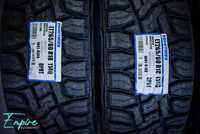
265 60 18 Toyo RT
₱12,000.00₱12,500.00
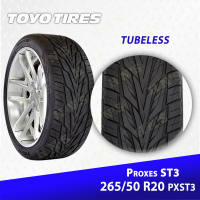
TOYO Tire PXST3 Proxes ST3 ( 265/65 R17 265/60 R18 265/50 R20 ) All Terrain Tires for Toyota Fortuner Ford Everest Mitsubishi Montero Sport etc
₱14,440.60
Buy on Lazada
Toyo 225/55 R18 102V Proxes ST3 (PXST3) Tire
₱9,830.00₱10,922.00
Toyo 225/55 R19 99V Proxes ST3 (PXST3) Tire
₱10,815.00₱12,013.00
Toyo 265/60 R18 114V Proxes ST3 (PXST3) Tire
₱10,395.00₱11,550.00
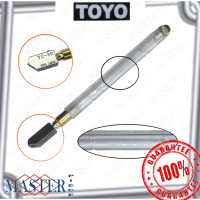
(1 PC) TOYO ORIGINAL Glass Cutter Made in JAPAN TC-30
₱299.00₱485.00
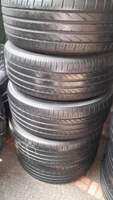
215/50/18 Toyo Proxes Dot 2022 Made in japan - Surplus (Per pc )
₱3,000.00
Buy on Lazada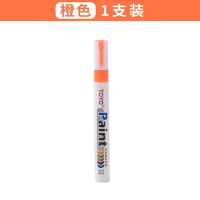
TOYO Waterproof Paint Marker Pen Multipurpose Permanent Marker
₱79.00
Buy on LazadaAbout TOYO Stationery
TOYO Stationery is a stationery brand with documented origins in Singapore, evolving from the De’ Quek trading business into an international operation during the 1990s. Its product portfolio encompasses everyday school, office, writing, filing, adhesive, desktop, and art-and-craft supplies. The brand was established for the mass market, emphasizing a combination of variety, quality, and affordability.1
Readers should distinguish TOYO Stationery from the separate Chinese stationery manufacturer also marketed as TOYO / 东洋, which is associated with Shengyi Industrial in Shaoguan and is primarily known for markers and pens.2
Infobox
| Field | Information |
|---|---|
| Brand | TOYO Stationery |
| Industry | Stationery and office/school supplies |
| Origin | Singapore |
| Early corporate roots | De’ Quek Traders / De’ Quek Trading |
| Business roots | 1985 |
| TOYO trademark | 1993 |
| TOYO Stationery international debut | 1994 |
| Main markets/expansion | Southeast Asia and international markets |
| Manufacturing development | China, including Shenzhen |
| Official website | TOYO Stationery |
History
1985–1993: Pre-brand era
The company’s history traces back to De’ Quek Traders, established on 1 May 1985 as an enterprise stationery business. In 1993, De’ Quek Trading Pte Ltd was formed and adopted the TOYO trademark.2
While the TOYO Stationery brand itself dates to the early 1990s, its commercial foundations were laid in 1985.
1994: International launch
According to the company profile, TOYO Stationery Corporation Pte Ltd was incorporated in 1994, marking its entry into the stationery business under a new brand aimed at the mass market.3 That same year, TOYO Stationery exhibited at two major international events:
- Taipei Giftionery Fair
- Frankfurt Paperworld
These appearances were identified as a significant step in expanding TOYO beyond its original local market.4
1997–1999: R&D and regional expansion
In 1997, TRI-T Technology Innovation Ltd was established to focus on research and development, specifically product design and molding.5
By 1999, the TOYO business had expanded its affiliated corporate structure to include:
- TOYO Stationery Corporation Pte Ltd
- TRI-T Technologies Ltd
- TOYO Stationery Corporation (Malaysia) Sdn Bhd
The company profile also notes affiliated operations in Singapore, Hong Kong, and Malaysia.6
Manufacturing and supply chain
A defining feature of TOYO’s development was its transition from a trading and distribution model toward product development and manufacturing. The company subsequently established manufacturing facilities in China to enable in-house design and production.7
In 2004, TOYO established a manufacturing plant in Shenzhen following the acquisition of technologies from Japan.8
This evolution places TOYO in a distinct position within the industry: while its historical identity is Singaporean, its manufacturing and product-development network became increasingly regional, with significant operations in China.
Business model
TOYO was explicitly positioned for the mass market. Rather than presenting itself solely as a premium Japanese-style stationery maker, the company developed a broad catalog of practical products.9
Historically, its business activities combined:
- Branding and product development
- Stationery distribution
- Regional trading
- Product design, molding, and R&D
- Manufacturing
- Distribution partnerships with other stationery brands
From around 2000, TOYO formed strategic alliances and acted as a sole distributor in its territories for brands including PLUS (Japan), SDI (Taiwan), Desk Mate (Hong Kong), MID (Singapore), Ecomaz, Colleen, Inozto, Daycraft, and Kikkerland. Consequently, TOYO functioned not only as a manufacturer but also as a regional stationery distributor and trading organization.
Product range
TOYO maintains a broad product portfolio across multiple categories.
Writing instruments
The writing category includes pencils, pencil leads, caps, grips, permanent markers, name pens, and whiteboard markers. Specific catalog items include the MK132 Permanent Marker, MK122 Name Pen, WB512 White Board Marker, and various pencil accessories.3
School stationery
School supplies encompass pencil cases, bags, sharpeners, battery-operated desk sharpeners, erasers, rulers, protractors, set squares, geometry sets, pen erasers, and eraser sets. The range includes both basic items and specialized desk accessories such as desk vacuum cleaners.4
Adhesives and tapes
The adhesive category features stationery tape, OPP/clear tape, cloth tape, double-sided tape, masking tape, glue, glue sticks, super glue, and bonding glue. Multiple tape dimensions and glue formats are available.5
Correction products
Correction tape is listed as a dedicated product category alongside adhesives and office stationery.24
Filing and storage
Product offerings include files, storage stationery, desktop organizers, and stamps, reinforcing TOYO’s positioning as a general stationery supplier rather than a niche pen or notebook brand.6
Art and craft
The art-and-craft range comprises colored pencils, graphite pencils, caps, grips, magic pens, and drawing accessories. Graphite grades range from hard (2H) to soft (6B and EE).7
Market positioning
TOYO is best characterized as a mass-market, broad-spectrum stationery brand. Its positioning differs from specialists in the following ways:
| Type | Typical focus |
|---|---|
| Premium Japanese stationery brands | Writing feel, paper, design, craftsmanship |
| Specialist pen brands | Pens, ink technology, writing performance |
| Office-supply manufacturers | Professional workplace products |
| TOYO Stationery | Broad everyday stationery across school, office, storage, writing, and craft |
The brand’s primary strength lies in breadth and practicality, allowing customers to source pencils, erasers, rulers, sharpeners, correction tape, adhesives, glue, files, and markers from a single brand family.
International development
TOYO internationalized relatively early. Its participation in stationery fairs in Taipei and Frankfurt in 1994 occurred almost immediately after the establishment of the TOYO stationery business.4 The company subsequently developed affiliated operations across Asia and established manufacturing capacity in China.6
The brand has a demonstrable presence in Indonesia, where industrial e-commerce retailer MonotaRO lists TOYO Stationery products including correction tape, rulers, glue sticks, staples, paper tape, and mini staplers.8916171819202122 Products are also available through Indonesian retail channels; for example, Gramedia lists Toyo Loose Leaf 100 Lembar.11
Relationship with Japan
TOYO Stationery is not a Japanese stationery brand; its documented corporate origin is Singaporean. However, the company states that its Shenzhen manufacturing operation was established after acquiring technologies from Japan.8 Additionally, historical distribution partnerships included the Japanese stationery company PLUS.
A precise description would be: A Singapore-origin stationery brand with regional Asian operations and manufacturing, including technology and business relationships involving Japan.
The name “TOYO”
The TOYO trademark was registered in 1993 as the brand expanded from De’ Quek Trading.2 However, the name is not unique to this entity. In China, a separate stationery company markets products under TOYO/东洋, manufacturing markers and pens.2 Consumers should verify the country of origin, logo, packaging, and corporate information before attributing a specific TOYO product to the Singapore-origin TOYO Stationery business.
Corporate status
While the official TOYO Stationery website remains online and presents the brand as active,6 Singapore corporate records indicate that TOYO STATIONERY CORPORATION PTE LTD (UEN 199800034N) was struck off in 2026.1023 Government gazette materials also list the company in striking-off notices.12131415
It is important to note that the status of a legal entity and the status of a brand are not necessarily identical. Trademarks, manufacturing operations, distributors, or successor entities may continue even if a specific corporate entity is struck off. As of August 2026, TOYO Stationery remains a Singapore-origin brand established in the 1990s with a documented history of regional distribution and Chinese manufacturing, despite the reported striking off of its historically named Singapore corporate entity.
Timeline
- 1985 — De’ Quek Traders established as an enterprise stationery business.17
- 1993 — De’ Quek Trading Pte Ltd established; TOYO trademark adopted.18
- 1994 — TOYO Stationery Corporation Pte Ltd incorporated; brand appears at Taipei Giftionery Fair and Frankfurt Paperworld.19
- 1997 — TRI-T Technology Innovation established for R&D, design, and molding.20
- 1999 — Regional corporate network expanded to include Singapore, Malaysia, and associated technology operations.21
- 2000 — Strategic distribution alliances begin with numerous international stationery brands.22
- 2004 — Manufacturing plant established in Shenzhen following acquisition of Japanese technology.8
- 2020s — Products continue to appear through Asian and Indonesian retail and distribution channels.16
- 2026 — Singapore corporate records report TOYO Stationery Corporation Pte Ltd as struck off; official website remains accessible.23
Overall assessment
Historically, TOYO Stationery exemplifies a Southeast Asian stationery company that evolved from a local trading business into an internationally oriented brand. Its development followed a trajectory from a Singapore trading business to a TOYO trademark, international trade fairs, regional subsidiaries, R&D, Chinese manufacturing, and a broad mass-market catalog.
The brand’s philosophy centers on practicality, variety, and accessibility, addressing the everyday needs of students, households, and offices rather than focusing exclusively on premium writing instruments. This broad-market strategy continues to be reflected in its current product catalog.23
References
- TOYO Stationery
- TOYO Stationery
- TOYO Stationery
- TOYO Stationery
- TOYO Stationery
- TOYO Stationery
- TOYO Stationery
- Jual Alat Tulis 100% Original – Mei 2026 – TOYO Stationery | monotaro.id
- Jual Produk Kantor 100% Original – Maret 2026 di Kota Tangerang – TOYO Stationery | monotaro.id
- TOYO STATIONERY CORPORATION PTE LTD (199800034N) – Singapore Company
- Florenthia Kezia Kurniawan’s email & phone number – Owner at Toyo Stationery | SignalHire
- TOYO Stationery, De’Quek Trading Pte Ltd, 1 Tampines North Drive 1, #06-20 T-Space, Singapore (2026)
- TOYO STATIONERY TRADING (35676600D)
- TAMPINES NORTH DRIVE 1 Postal 528559
- 1 TAMPINES NORTH DRIVE 1 T SPACE Postal 528559
- Jual Alat Tulis 100% Original – Mei 2026 di Kota Bogor – TOYO Stationery | monotaro.id
- Jual Produk Kantor 100% Original – Mei 2026 di Kota Semarang – TOYO Stationery | monotaro.id
- Jual Kebutuhan Kantor 100% Original – Januari 2026 – TOYO Stationery | monotaro.id
- Jual Stapler Kantor/Sekolah 100% Original – Juli 2026 di Kota Tangerang – TOYO Stationery | monotaro.id
- Jual Lakban Kantor/Sekolah 100% Original – Februari 2026 – TOYO Stationery | monotaro.id
- Jual Lain – lain 100% Original – Februari 2026 – TOYO Stationery | monotaro.id
- Beli TOYO Stationery Isi Staples | monotaro.id
- TOYO STATIONERY CORPORATION PTE LTD (199800034N)
- TOYO Stationery