Shop on Lazada
Biotherm products
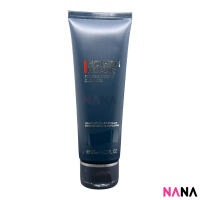
BIOTHERM Homme Force Supreme Anti-Aging Cleanser 125ml
₱2,350.00₱3,020.00
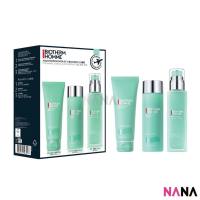
BIOTHERM Homme Aquapower Power Of 3 Set (120ml + 200ml + 100ml)
₱5,920.00₱7,280.00
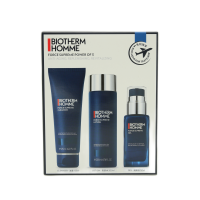
BIOTHERM Homme F.S. Power of 3 Set (Cleanser 125ml+Lotion 200ml+Gel 50ml)
₱7,283.50₱10,880.00
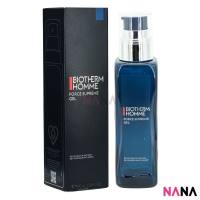
BIOTHERM Force Supreme Anti-Aging Gel 100ml
₱5,500.00₱6,690.00
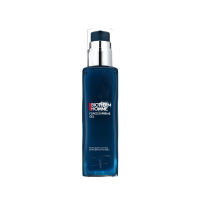
BIOTHERM Homme Force FS Anti-Aging Moisturizing Gel 100ml
₱5,554.50₱7,880.00
BIOTHERM HOMME Force Supreme Blue Serum LP-XR 60ml
₱5,699.00₱5,881.00
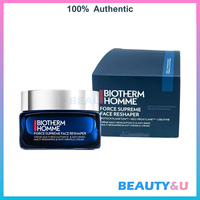
BIOTHERM Homme Force Supreme Reshaper 50ml
₱5,333.50₱8,500.00
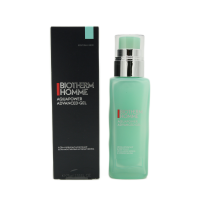
BIOTHERM Homme Aquapower Advanced Gel 75ml
₱2,382.50₱3,480.00
About Biotherm
Biotherm is a French premium skincare brand recognised for integrating aquatic biology, biotechnology, and skincare science into its formulations. Established in 1952, the brand’s heritage is rooted in the thermal waters of the French Pyrenees, with an identity centred on water, microorganisms, and the connection between aquatic life and skin health.1 Biotherm currently operates under the L’Oréal Luxe division and offers skincare ranges for the face, body, and men.13
Basic information
| Biotherm | |
|---|---|
| Brand name | Biotherm |
| Founded | 1952 |
| Origin | French Pyrenees / Monaco |
| Founder | Jeanine Marissal, with Dr Jos Jullien and Georges Marissal involved in the discovery and development of thermal plankton |
| Parent company | L’Oréal |
| Business division | L’Oréal Luxe |
| Industry | Cosmetics / skincare |
| Core category | Premium skincare |
| Key scientific concept | Thermal/Life Plankton and biotechnology |
| Brand philosophy | Skin health, aquatic science, biotechnology and “water lovers” |
| Major markets | International/global |
| Notable men’s line | Biotherm Homme |
The brand describes itself as having been born in the French Pyrenees and raised in Monaco.2
The name Biotherm
The name Biotherm is derived from the combination of biology and thermal water. The brand’s origin story begins with the thermal springs at Molitg-les-Bains in the French Pyrenees, where Dr Jos Jullien observed a substance rich in microorganisms associated with the waters. Jeanine Marissal, a biochemist, later identified the potential for incorporating this material into cosmetic formulations.3
This discovery established the foundational concept of using the biological resources of water to develop skincare, a principle that remains central to the brand more than 70 years later.
Founding and early history
1940s: Discovery
In 1948, Dr Jos Jullien, working in the hydrobiology laboratories associated with Molitg-les-Bains, observed an unusual microorganism in the thermal waters. Together with Georges Marissal, he collected and cultivated samples of what was identified as thermal plankton.3 Jeanine Marissal, a biochemist and beauty specialist, subsequently recognised the material’s potential application in skincare.
1952: Establishment
In 1952, Jeanine Marissal patented the use of thermal plankton in skincare, establishing the foundation of Biotherm. The company initially developed products incorporating this ingredient into face and body care formulations.14
One of the earliest products was Biomains, a hand-and-nail treatment which remains in the brand’s portfolio today.3 Biotherm was distinctive for its era due to its combination of cosmetics, biological research, thermal-water culture, natural ingredients, scientific formulation, and sensory experiences. The brand also pioneered distribution through pharmacies rather than relying exclusively on traditional beauty channels.3
Acquisition by L’Oréal
A significant turning point occurred in 1970 when Biotherm was acquired by L’Oréal.3 This acquisition provided access to extensive research infrastructure, manufacturing capabilities, international distribution networks, marketing resources, and scientific expertise. Following the acquisition, Biotherm continued to develop its identity as a science-driven premium skincare brand.
In 1974, Biotherm opened a research centre and production facility in Monaco, which was inaugurated by Princess Grace of Monaco.2 The brand remains part of L’Oréal Luxe today.3
Evolution of the brand
Biotherm has historically created skincare categories aligned with evolving consumer lifestyles.
1960s
The company expanded beyond basic facial skincare into body care, sun protection, firming products, and slimming or body-contouring treatments. Its history includes the development of an early sunscreen in 1961, followed by various body and firming products.2
1970s
During this decade, Biotherm increasingly connected skincare with lifestyle and leisure, particularly focusing on sun, body care, and water. The brand also developed products targeting specific skincare concerns.
1980s: Men’s skincare
In 1985, Biotherm launched Biotherm Homme, described as the first premium selective skincare range specifically developed for men.14 This line helped establish men’s skincare as a significant category within the premium beauty market and became a defining pillar of the brand.
Life Plankton™
Life Plankton™ is the ingredient most strongly associated with Biotherm. The brand’s current technology originates from its research into thermal plankton. In 1994, after years of research, Biotherm developed a fermentation process called Fermogénèse™ to obtain a concentrated fraction from Life Plankton.2
Biotherm describes Life Plankton as a microorganism-derived biotechnology ingredient and a key component of its formulations. The modern proposition has evolved from simply using thermal spring water to a pathway of aquatic biology leading to biotechnology, active ingredients, and skincare formulations. The company states that its biotechnology platform enables the cultivation of Biotech Plankton™ to produce ingredients with controlled characteristics and high purity.3
Market positioning and identity
Biotherm occupies a distinct position between several beauty categories. It is not solely a natural brand; while it uses naturally inspired and aquatic-derived ingredients, it is fundamentally a science- and biotechnology-driven skincare company. The brand explicitly states it is not a “clean beauty” brand according to strict industry definitions, describing its approach instead as science-based and combining biotechnology with naturally inspired ingredients.2
Furthermore, Biotherm is not a traditional dermatological brand. While it focuses on efficacy and dermatological testing, its positioning aligns more closely with premium lifestyle skincare than clinical pharmacy skincare. Within the L’Oréal Luxe division, its luxury proposition is derived from science, sensorial textures, premium formulations, and aquatic inspiration rather than traditional codes such as haute couture or exclusivity.
Within the broader market, Biotherm holds a premium-to-prestige skincare position. It is closer in spirit to a scientific premium skincare brand than to a traditional luxury house.
Skin Fitness
Recent brand positioning is built around the concept of “Skin Fitness,” which compares healthy skin to a physically fit body. The underlying philosophy suggests that just as exercise supports physical performance, skincare can support the skin’s natural biological functions.
Biotherm states that its Skin Fitness approach focuses on six aspects of skin function:
- Skin energy
- Skin recovery
- Skin balance
- Skin rehydration
- Skin defense
- Skin building
This philosophy is combined with Biotech Plankton and targeted ingredients such as collagen and vitamins.3 This represents a shift from simple moisturisation towards maintaining the skin in good functional condition.
Product categories
Biotherm maintains a broad portfolio spanning facial skincare, body care, and men’s skincare.
Facial skincare
This category includes moisturisers, serums, lotions, toners, eye treatments, anti-aging products, cleansing products, and sun care. Well-known product families include Aquasource, Life Plankton, and Blue Therapy.
Body care
Body care is integral to the brand’s heritage. Historically associated with body milk, moisturisers, firming products, and shower products, the Lait Corporel body milk remains one of Biotherm’s most recognisable items.
Men’s skincare
Biotherm Homme is a major component of the company’s identity. The portfolio includes cleansers, moisturisers, anti-aging products, shaving and after-shave products, eye care, and body care. The brand’s early investment in this category provides it with historical credibility in premium men’s skincare.2
Key product families
- Aquasource: A hydration-focused franchise centrally associated with the brand’s aquatic identity.
- Life Plankton™: The signature scientific platform incorporated into multiple formulas rather than a single product.
- Blue Therapy: An anti-aging and skin-repair franchise designed to address visible signs of aging.
- Lait Corporel: A body-care line recognised for its body milk format and citrus sensory profile.
- Homme / Aquapower: Includes Aquapower, one of Biotherm Homme’s best-known hydration franchises.
- Force Supreme: A men’s anti-aging line positioned for stronger, firmer-looking skin.
The current portfolio also includes newer lines such as Collagen Fit and Aquasource+.14
Sustainability and Blue Beauty
Water serves as the central symbol of Biotherm, extending beyond marketing to the brand’s literal origins in thermal water and aquatic microorganisms. In 2012, the brand established the Biotherm Water Lovers programme to connect its business with marine and ocean conservation.2
The environmental platform, known as Blue Beauty, focuses specifically on water and oceans. Since 2012, Biotherm has worked with organisations including Mission Blue, Tara Ocean Foundation, and Surfrider Foundation Europe on initiatives covering ocean research, conservation, education, and marine pollution.14 The company reports donating more than US$1.5 million to NGO partners since 2012.2
Sustainability efforts also extend to formulation. Biotherm states that its rinse-off formulas reached a minimum of 90% biodegradability in 2011, and microbeads were banned from rinse-off products in the same year.2
Target consumer
Historically associated with women seeking premium skincare, Biotherm has progressively broadened its audience. Current target consumers include those interested in premium hydration, anti-aging skincare, biotechnology, aquatic ingredients, and active lifestyles. The men’s division provides a distinctive position compared to many traditional premium skincare brands.
Relationship with L’Oréal
L’Oréal acquired Biotherm in 1970, and the brand is currently part of L’Oréal Luxe.34 This ownership structure allows Biotherm to access a global research and distribution ecosystem while maintaining its own brand identity, product franchises, scientific narrative, aquatic positioning, and sustainability platform.
Key historical timeline
| Year | Event |
|---|---|
| 1948 | Dr Jos Jullien observes thermal plankton associated with the thermal waters of Molitg-les-Bains. |
| 1952 | Jeanine Marissal establishes Biotherm and patents the use of thermal plankton in skincare. |
| 1950s | Early products including Biomains are introduced. |
| 1961 | Biotherm develops an early sunscreen. |
| 1970 | L’Oréal acquires Biotherm. |
| 1974 | Research and production facilities are established in Monaco. |
| 1982 | Biotherm sponsors sailor Florence Arthaud, reinforcing its association with water and active lifestyles. |
| 1985 | Biotherm Homme launches its premium men’s skincare range. |
| 1994 | Biotherm advances its Life Plankton biotechnology through Fermogénèse™. |
| 2012 | Water Lovers programme is created; the brand strengthens its ocean-conservation activities. |
| 2017 | Partnership with Tara Ocean Foundation. |
| 2025 | Biotherm emphasises its Skin Fitness positioning. |
Sources: Biotherm and L’Oréal official historical accounts.14
Strengths and challenges
Biotherm possesses substantial credibility derived from over 70 years of history and a distinctive scientific DNA centred on Life Plankton and aquatic biotechnology. The brand holds strong equity in hydration and benefits from the extensive research, manufacturing, and distribution capabilities of L’Oréal. Additionally, its focus on ocean conservation is coherent with its brand origin story. The Biotherm Homme line further secures a historically important position in premium men’s skincare.
However, the brand faces challenges in a crowded premium skincare market where competitors emphasise dermatology, luxury, natural ingredients, or clinical results. Communicating the specific benefits of Life Plankton requires more explanation than common ingredients like hyaluronic acid or vitamin C. Furthermore, as a water-focused beauty company, Biotherm must ensure its packaging, ingredients, and manufacturing practices consistently align with its environmental claims. Finally, the brand must balance its 1952 heritage with the need to remain relevant to younger consumers.