Shop on Lazada
Bioaqua products
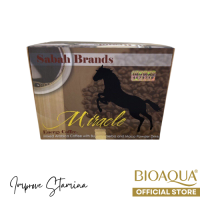
Miracle Coffee Sabah Brand 20 Sachets (1 Box) Herbal Coffee Blend Supports Energy Digestion Focus & Daily Wellness
₱1,781.01₱2,599.00
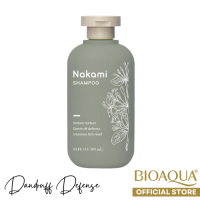
Nakami Anti-Dandruff Shampoo 300ml Dandruff Control Shampoo Helps Reduce Flakes Itchy Scalp
₱843.48₱1,799.00
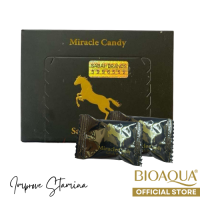
Miracle Coffee Sabah Brand Candy | Energy Candy with Herbal Extracts
₱104.94₱399.00
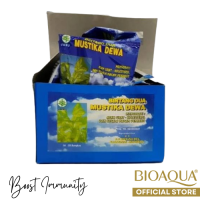
Original Mustika Dewa Herbal Tea Supports Daily Wellness Relaxation & Vitality
₱780.00₱1,299.00
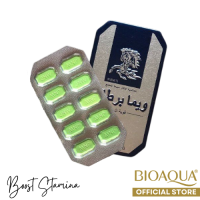
Original Thai Horse for Men - Adult Wellness Support Tablets
₱320.76₱599.00
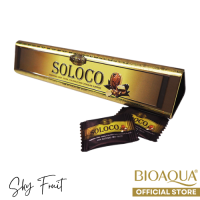
Soloco Chocolate Candy (Malaysia) – Dark Chocolate Candy Supplement | Energy Support & Herbal Blend Candy (12pcs)
₱1,187.01₱3,999.00
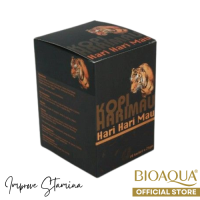
Kopi Harimau Hari Hari Mau Coffee for Men and Women
₱1,202.37₱7,707.10
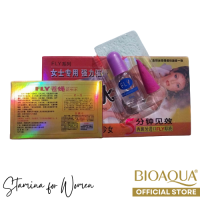
Original Spanish Fly Liquid Drops | Wellness Support Liquid Drops for Women
₱197.01₱599.00
About Bioaqua
Bioaqua (Chinese: 泊泉雅, commonly styled as BIOAQUA) is a Chinese beauty and personal-care brand best known internationally for affordable skincare, facial masks, cleansers, serums, creams, body care, hair care, and makeup. The brand is particularly visible in Asian and emerging markets, where it has built a reputation around low prices, a very broad product assortment, and social-commerce distribution.
There is an important caveat when researching Bioaqua: public information about its corporate ownership and founding history is inconsistent. Some brand and distributor sources describe Bioaqua as originating in China around 2000, while U.S. trademark records show a BIOAQUA mark registered to Rabinkov Holding LLC in 2016, and Chinese business-industry sources associate the 泊泉雅/Bioaqua brand with Guangzhou companies. Consequently, claims about a single founder or a single global parent company should be treated cautiously 1.
Overview
| Field | Information |
|---|---|
| Brand | Bioaqua |
| Chinese name commonly associated with the brand | 泊泉雅 |
| Industry | Cosmetics, skincare, personal care |
| Country of origin | China |
| Major production/industrial base associated with it | Guangzhou, Guangdong, China |
| Reported founding year | 2000, according to several brand/distributor sources |
| Main categories | Skincare, masks, cleansers, serums, creams, body care, hair care, makeup |
| Market positioning | Mass-market / affordable beauty |
| Distribution | E-commerce, social commerce, distributors, retail |
| Notable international market | Southeast Asia, particularly Indonesia |
| Brand philosophy | Affordable, accessible beauty with plant-derived/natural ingredients and modern formulations |
The 2000 founding date is widely repeated by Bioaqua-related distributors and Chinese brand directories, but it is not as strongly documented in independent corporate records as one would ideally want, so it is better described as a reported founding year rather than an indisputable fact 2.
History
Bioaqua is generally described as a Chinese cosmetics brand established around 2000. Chinese and international distributor sources associate the brand with Guangzhou, one of China’s major cosmetics-manufacturing and trading centers 3.
The brand’s early positioning appears to have centered on the mass-market beauty segment: relatively inexpensive products covering many stages of a skincare routine rather than a small collection of premium products.
According to Bioaqua-related sources, the company emphasizes plant-derived ingredients, traditional skincare concepts, formulation research, and product development. Its official-style “About Us” material describes the brand as specializing in plant-based skincare and makeup, particularly products addressing hydration, exfoliation, acne, blackheads, and facial masks 4.
A note about the founding story
Different dates are encountered online regarding the brand’s origins:
- 2000 — frequently given as Bioaqua’s founding year by distributors and Chinese brand directories.
- 2015–2016 — a BIOAQUA trademark was filed in the United States in November 2015 and registered in July 2016 to Rabinkov Holding LLC.
- 2021 — one Chinese industry analysis describes a Bioaqua operation focused on Southeast Asia as having been established in 2021 5.
These dates do not necessarily contradict each other. They may represent different corporate entities, trademark registrations, or the creation of a particular overseas business operation. What is not well established from public sources is a single, authoritative corporate timeline connecting all of them.
Country of origin
Bioaqua is generally regarded as a Chinese brand, rather than a Korean or Japanese brand.
This distinction matters because Bioaqua’s packaging and product presentation sometimes resemble the visual language of East Asian beauty brands, particularly the highly popular Korean skincare aesthetic.
Sources describing the brand identify Guangzhou, China as its production base or brand location. A distributor source, for example, describes a production facility of more than 2,000 m² in Guangzhou.
There is also substantial evidence of Bioaqua-branded products being manufactured in Guangdong, China. Alibaba’s current supplier listings, for example, show Bioaqua products associated with Guangzhou cosmetics manufacturers 6.
In simple terms, Bioaqua is best understood as a Chinese mass-market beauty brand, not a Korean skincare brand.
Brand name
The brand is commonly written as Bioaqua in Latin characters. In Chinese-market references it is associated with the name 泊泉雅 (Bóquányǎ).
The name “BIOAQUA” appears to evoke two concepts:
- Bio — biological, botanical, natural or science-oriented beauty
- Aqua — water, hydration and skincare
The brand consequently uses a lot of hydration-oriented imagery and terminology, although the name itself should not be interpreted as a scientific claim about the products.
Product portfolio
One of Bioaqua’s defining characteristics is the enormous breadth of its product range. Its products span several major beauty categories.
Facial skincare
Common categories include:
- Facial cleansers
- Toners
- Essences
- Serums
- Emulsions
- Moisturizers
- Face creams
- Facial oils
- Exfoliators
- Acne-oriented products
- Blackhead/pore products
- Brightening products
- Sunscreen/sun-care products
Trademark records also show BIOAQUA being used for facial creams, cleansers, cleansing milk, masks, facial makeup, foundation, and sun-care products 7.
Face masks
Face masks are arguably one of Bioaqua’s most recognizable categories. The brand sells numerous types of sheet masks, wash-off masks, hydrating masks, brightening masks, eye masks, and nose/blackhead masks. This fits the brand’s strategy of offering inexpensive products that can be added to multi-step skincare routines.
Serums and treatment products
Bioaqua sells many targeted serums and treatment-style products built around ingredients such as hyaluronic acid, niacinamide, vitamin C, plant extracts, peptides, and other commonly used cosmetic actives. The exact formulation varies considerably between products and markets, so it is important not to assume that an ingredient associated with the Bioaqua brand is present in every Bioaqua product.
Body care
The range also includes body lotions, body creams, shower products, body scrubs, hand creams, foot-care products, and essential oils. U.S. trademark documentation specifically covers body lotion, shower gel, soap, body polish, body and foot scrubs, foot cream, and related products.
Hair care
Bioaqua also sells shampoo, conditioner, hair masks, and hair treatments.
Makeup
Although Bioaqua is particularly associated with skincare, its portfolio also extends into cosmetics. Examples include BB cream, CC cream, foundation, concealer, powder, eyeliner, mascara, and makeup-removing products. Its current online catalog likewise lists makeup products alongside skincare 8.
Product philosophy
Bioaqua’s own brand materials emphasize three broad ideas:
Plant-based beauty
The brand says it emphasizes plant-derived ingredients and botanical extracts.
Accessible beauty
Rather than positioning itself alongside luxury brands such as La Mer, SK-II or Estée Lauder, Bioaqua’s strategy is fundamentally value-oriented. The idea is essentially a large selection of beauty products at prices accessible to ordinary consumers. This makes the brand particularly attractive to younger consumers and shoppers who enjoy experimenting with different skincare products without spending heavily.
Broad skincare solutions
Instead of specializing exclusively in one hero product, Bioaqua attempts to cover almost the entire skincare routine. A consumer can theoretically buy cleanser, toner, essence, serum, moisturizer, eye care, mask, and sunscreen from the same brand. That breadth is an important part of Bioaqua’s identity.
Manufacturing
Bioaqua products are associated strongly with China’s cosmetics manufacturing ecosystem, particularly Guangdong/Guangzhou. This is significant because Guangzhou is one of China’s major hubs for cosmetics manufacturing, formulation, packaging and export.
The cosmetics industry commonly uses brand-owned manufacturing, contract manufacturing, OEM production, ODM production, and multiple suppliers. Public supplier databases show Bioaqua products associated with multiple Chinese manufacturers, including companies in Guangdong.
What matters for a particular product is its actual manufacturer, regulatory labeling, formulation, batch information and distribution channel.
Global expansion
Bioaqua’s international presence is particularly interesting because the brand has become highly visible through e-commerce and social commerce. It has been distributed in markets across Southeast Asia, Russia and surrounding markets, Eastern Europe, Middle Eastern markets, and other international online markets.
Russian distributor sources, for example, describe Bioaqua as a Chinese cosmetics brand that entered the Russian market during the mid-2000s.
Bioaqua in Indonesia
Indonesia is one of the most important markets for the modern Bioaqua story. A Chinese industry analysis describes Bioaqua as having become a major beauty seller in Indonesia through TikTok Shop, with skincare and personal-care products priced around the mass-market range 9.
Even more strikingly, a document concerning Guangdong cosmetics-industry company Guangzhou Oubo Cosmetics Co., Ltd. reported that Bioaqua ranked second in global TikTok Shop sales in 2022 and that by June 2023 its TikTok Shop products had accumulated approximately 3.8 million sales and RMB 137 million in sales value. The same source describes Bioaqua as having become a leading beauty brand in Indonesia within roughly two years 10.
This helps explain why Bioaqua became much more visible to Indonesian consumers than its traditional international profile might suggest.
Why Indonesia?
Bioaqua’s model fits the Indonesian digital-beauty market particularly well due to:
- Low product prices
- Large selection
- Attractive packaging
- Frequent product launches
- TikTok-friendly products
- Influencer marketing
- Live-shopping compatibility
- Strong Chinese cosmetics supply chains
- High consumer interest in skincare
In other words, Bioaqua is a good example of how Chinese beauty brands can scale internationally through social commerce rather than relying primarily on traditional department stores.
Marketing strategy
Bioaqua’s marketing is very different from the classic luxury-beauty model. Instead of building its identity around exclusivity, it emphasizes:
Affordability
Products are generally positioned at prices accessible to mass-market consumers.
Variety
The enormous catalog encourages consumers to try multiple products.
Ingredient-focused marketing
Names and packaging frequently highlight recognizable skincare ingredients such as hyaluronic acid, niacinamide, vitamin C and botanical extracts.
Visual appeal
Packaging tends to be colorful and highly product-specific, making individual items easy to identify on e-commerce platforms.
Social commerce
TikTok, short-form video, livestreaming and influencers have become particularly important to Bioaqua’s international growth, especially in Southeast Asia 11.
Market positioning
Bioaqua is best categorized as mass-market / affordable skincare. A simplified market map would look something like:
Luxury → La Mer / Clé de Peau / SK-II
Premium → Estée Lauder / Lancôme / Shiseido
Mass-market / accessible → Bioaqua
Ultra-budget / marketplace cosmetics → Numerous private-label and unbranded sellers
Bioaqua sits toward the affordable end of branded skincare, while still presenting itself as a recognizable beauty brand rather than simply an anonymous commodity manufacturer.
Why Bioaqua became popular
Several factors explain its popularity:
1. Low barrier to purchase
Consumers can experiment with a serum, mask or moisturizer without committing to an expensive purchase.
2. Huge product variety
There is a product for almost every common skincare concern.
3. Strong visual branding
The packaging works well for online shopping and social-media content.
4. Ingredient trends
Bioaqua frequently incorporates ingredients that consumers already recognize from the broader skincare industry.
5. Chinese manufacturing advantage
China has an enormous cosmetics supply chain, allowing brands to produce and launch products relatively efficiently.
6. TikTok/e-commerce distribution
The brand’s growth in Indonesia demonstrates how quickly social commerce can turn a relatively inexpensive cosmetics brand into a mass-market phenomenon 12.
Brand reputation
Bioaqua has a somewhat unusual reputation. Among consumers, it is often viewed as having pros such as being very affordable, having a huge product selection, being easy to find online, having attractive packaging, being convenient for experimentation, and having many products with lightweight/hydrating formulations.
The last point is especially important: “Bioaqua” is a brand name, not a guarantee that every product has identical formulation, manufacturing source or regulatory status worldwide.
Trademark and corporate complexity
This is probably the most interesting part of Bioaqua’s corporate story. A U.S. trademark record shows BIOAQUA registered in 2016 under Rabinkov Holding LLC, covering a broad range of cosmetics and personal-care products 13. Canada’s official trademark database likewise records BIOAQUA as a registered trademark belonging to Rabinkov Holding LLC, with use in Canada claimed from 2016 14.
At the same time, Chinese and industry sources associate Bioaqua/泊泉雅 with Guangzhou businesses, while an industry document specifically associates the Bioaqua brand with Guangzhou Oubo Cosmetics Co., Ltd. in the context of its Indonesian TikTok business.
This suggests that the word BIOAQUA has been used across multiple corporate, trademark, distribution and manufacturing structures. Therefore, statements such as “Bioaqua is owned entirely by Company X” should be treated carefully unless they are backed by a current official corporate or trademark record for the particular market.
Official brand claims vs. independently established facts
A useful distinction when researching Bioaqua is:
| Claim | Confidence |
|---|---|
| Bioaqua is associated with Chinese cosmetics | High |
| Guangzhou/Guangdong is strongly associated with its production/business | High |
| Bioaqua sells skincare and cosmetics | High |
| The brand targets affordable/mass-market consumers | High |
| Bioaqua is widely sold internationally | High |
| Bioaqua became particularly successful in Indonesia/TikTok Shop | High |
| Bioaqua was founded in 2000 | Widely reported, but documentation is less definitive |
| One particular person founded Bioaqua | Not adequately established from reliable public records |
| All Bioaqua products come from one factory | Not supported |
| Bioaqua is a Korean brand | Not supported; evidence points to China |
That distinction is important because a lot of Bioaqua information online is copied between distributor websites, marketplaces and blogs.
Current identity
Today, Bioaqua can be understood less as a traditional Chinese cosmetics company selling primarily within China and more as an internationally oriented affordable beauty brand powered by China’s cosmetics supply chain and modern e-commerce.
Its strongest characteristics are: Chinese origin + affordable pricing + enormous product range + ingredient-led skincare + social-commerce distribution.
Its growth in Indonesia is especially significant because it demonstrates the brand’s transition from a relatively inexpensive Asian cosmetics label into a major social-commerce beauty brand. Industry data cited in a Chinese corporate document placed Bioaqua among the strongest-selling brands on TikTok Shop in 2022–2023 15.
Bioaqua’s significance in the beauty industry
Bioaqua is interesting beyond its individual products. It represents a broader change in the global cosmetics industry:
The old model
China → manufacture → domestic distribution → traditional overseas distributors
The newer model
China → manufacture/formulate → social media → TikTok/Lazada → international consumer
Bioaqua is an example of the second model. Its success illustrates how a Chinese beauty brand can use low production costs, fast product development, aggressive e-commerce distribution and influencer-driven marketing to compete internationally without first becoming a luxury or department-store brand.
Conclusion
Bioaqua is a Chinese mass-market beauty and skincare brand associated with Guangzhou and commonly known in Chinese as 泊泉雅. Reported to have originated around 2000, the brand offers a very broad portfolio of affordable skincare, facial masks, cleansers, serums, moisturizers, body care, hair care and makeup. Its identity centers on accessible beauty, plant-derived ingredients and ingredient-oriented skincare, while its international expansion has increasingly relied on e-commerce and social commerce. Bioaqua has become particularly prominent in Indonesia, where TikTok Shop and influencer-driven marketing helped turn it into a major affordable beauty brand. Public records concerning its trademarks, corporate entities and manufacturing relationships are somewhat fragmented, so claims about a single founder or single worldwide parent company should be treated cautiously.
References
- Bioaqua косметика
- 泊泉雅/BIOAQUA品牌」泊泉雅/BIOAQUA是哪个国家的品牌-什么档次,怎么样-排行榜123网
- BIOAQUA Trademark of RABINKOV HOLDING LLC – Registration Number 5002514 – Serial Number 86833427 :: Justia Trademarks
- BIOAQUA/泊泉雅品牌_泊泉雅牌子口碑_BIOAQUA实力档次排名
- О брендах
- Canadian Trademarks Details: BIOAQUA — 1915103 — Canadian Trademarks Database – Intellectual property and copyright…
- Bioaqua Beauty – Bioaqua Skincare
- bioaqua brand country of origin: China?
- ЕАЭС N RU Д-CN.РА07.В.95247/25 от 15 сентября 2025 г.
- Bioaqua Apakah Mengandung Merkuri? – Membedakan
- 万字长文,读懂东南亚美妆市场(下篇) – 智象出海
- 七五观察 | 美妆个护占印尼热销第三,百亿市场如何掘金?-AMZ123跨境导航
- BIOAQUA闫佳佳Grace:月销30w+,自有品牌0-1的出海路|MS2022灵眸大赏第47期
- BIOAQUA」如何在印尼TikTok从0-1打造销售额Top1品牌?
- Contacts – Bioaqua Skincare Products Wholesale