Shop on Lazada
Bluedio products
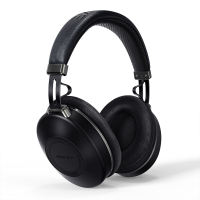
Bluedio H2 Bluetooth 5.0 Headset With ANC Active Noise Cancellation
₱1,450.00₱1,899.00
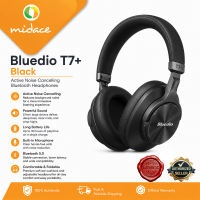
Bluedio T7 Plus Wireless Headphones + FREE Earpads | Good Condition | Mild Scratches
₱999.00₱1,899.00
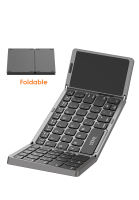
Vidvie KB03 Portable Wireless Folding Keyboard
₱1,950.00₱3,759.00
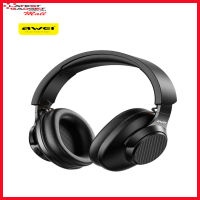
Latestgadget PH Awei A997Pro ANC Active Noise Cancelling Wireless Stereo Headphone
₱875.00₱1,599.00
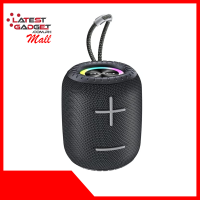
Awei Y526 6 Watts Bluetooth Speaker - Black
₱999.00₱1,899.00
About Bluedio
Bluedio is a Chinese consumer audio brand best known for Bluetooth headphones, wireless earbuds, headsets, and related audio equipment. The brand is associated with Guangzhou Liwei Electronics Co., Ltd., an electronics manufacturer based in Guangzhou. Bluedio describes itself as an audio device manufacturer with capabilities spanning product design, software and hardware development, structural part production, assembly, and marketing.1
Basic information
| Item | Information |
|---|---|
| Brand | Bluedio / 蓝弦 |
| Industry | Consumer electronics / personal audio |
| Main products | Bluetooth headphones, TWS earbuds, wired headphones, headsets, speakers |
| Country of origin | China |
| Associated company | Guangzhou Liwei Electronics Co., Ltd. |
| Base | Guangzhou, Guangdong, China |
| Company history | Generally traced to 2002 |
| Main market identity | Affordable-to-mid-range wireless audio |
| Known for | Large-driver headphones, Bluetooth products, long battery life, feature-heavy designs |
| Official website | Bluedio.com |
While the 2002 founding date is supported by various industry profiles of Guangzhou Liwei Electronics, some corporate history materials suggest the company’s roots extend back to 1999, with Bluetooth development beginning around 2001. Other profiles consistently identify 2002 as the formal establishment date.2
History
Early years
The history of Bluedio is closely linked to Guangzhou Liwei Electronics. According to later historical accounts, Liwei originally focused on general electronics and battery manufacturing before transitioning into Bluetooth technology in the early 2000s. Industry records describe the company as being established in 2002 with an initial concentration on Bluetooth accessories and electronic products.
This period was significant as Bluetooth technology began transforming mobile electronics. Rather than remaining solely an OEM or ODM manufacturer, Liwei eventually shifted toward developing its own consumer-facing brand.
Creation of Bluedio
In an interview, Liwei chairman Yang Jiawei explained that the company initially participated heavily in OEM manufacturing but decided that relying on contract production offered limited long-term margins. Consequently, the company began building its own brand, Bluedio, a name intended to combine the concepts of Bluetooth and music.3
Some industry reporting places the formal establishment of the Bluedio brand around 2009, although the company frequently describes its audio experience as extending back more than two decades. The timeline can be understood as progressing from electronics and battery manufacturing roots between 1999 and 2002, to Bluetooth products in the early 2000s, followed by the development of the Bluedio consumer brand in the late 2000s. The 2010s saw international expansion through online marketplaces, while the 2020s have involved continued headphone and earbud development alongside expansion into other audio categories.4
International expansion
Bluedio was built with an international market in mind. During the 2010s, the brand became particularly visible through cross-border e-commerce platforms such as Amazon, eBay, AliExpress, and Wish, serving customers in North America, Europe, and other global markets.5
Corporate accounts published in 2024 state that Bluedio products reached customers in more than 160 countries and that the company claimed a peak production capacity of approximately 600,000 headphones per day. As these are company-provided figures rather than independently audited statistics, they are treated as historical corporate claims. This international e-commerce strategy distinguished Bluedio as an export-oriented audio brand rather than a primarily domestic Chinese manufacturer.
Brand positioning
Bluedio is best understood as a value-oriented technology and audio manufacturer rather than a luxury audiophile brand. Its historical strategy has been to incorporate a large number of features and substantial hardware into relatively affordable products. Older Bluedio headphones were notable for unusually large drivers, Bluetooth connectivity, wired operation, EQ functions, and FM radio or microSD playback on certain models. Later models added features such as active noise cancellation (ANC), Bluetooth 5.x, companion apps, USB connectivity, and gaming-oriented functions.6
This approach differentiates Bluedio from companies whose primary selling points are luxury materials, brand prestige, or studio-grade reference tuning.
Major product families
Bluedio has produced numerous models over the years, with naming systems that have evolved significantly.
Turbine / T series
The Turbine concept became one of Bluedio’s most recognizable product lines. The company experimented with unusually large drivers, with some models utilizing 57 mm units that became a distinctive selling point. Older models such as the T2 and T2S became particularly recognizable among budget Bluetooth headphone enthusiasts.7
Later products continued the Turbine branding. For example, the T7 used a 57 mm driver, Bluetooth 5.0, and ANC, with a claimed battery life of roughly 30–40 hours depending on the operating mode.9
T6 series
The T6 and T6c generation represented a move toward more sophisticated noise-cancelling wireless headphones. The T6c featured Bluetooth 5.0, a multi-driver configuration, approximately 25 hours of Bluetooth music or talk time, and Bluedio’s proprietary PPS8 acoustic technology.8
T7 series
The T7 combined Bluetooth 5.0, ANC, a 57 mm driver, smartphone app functions, physical controls, and voice or AI-related functions in certain software versions. Bluedio advertised approximately 30 hours of Bluetooth music or talk time and up to 40 hours under specific operating conditions.9
Earbuds and TWS
Bluedio expanded beyond traditional over-ear headphones into true wireless stereo (TWS) earbuds. Product verification documentation lists numerous TWS models including P, Fi, EI, Ei2, G, Ti2, X, Action, HN+, H2, HS, and LS.
Gaming products
The brand has also entered the gaming audio segment. Official store listings include products such as the D5 gaming headset, which features USB and 3.5 mm connectivity along with an integrated microphone.10
Technology and engineering
Large drivers
Bluedio became particularly associated with large dynamic drivers. The use of 57 mm drivers on several Turbine products was considerably larger than those found in many conventional portable headphones. This design choice aimed to provide stronger bass, greater perceived scale, high output, and a distinctive listening experience, becoming part of the brand’s visual and technical identity.11
PPS8 Acoustics
Bluedio has promoted its PPS8 Exclusive Acoustics Technology, which uses an eight-driver configuration on certain products. The company states that this technology uses multiple drivers to reproduce different frequency ranges and cites patents associated with the design.
Noise cancellation
Later Bluedio headphones increasingly incorporated active noise cancellation. For example, the T7 advertised an ANC sensitivity of approximately −25 dB, while other products listed separate battery life figures for Bluetooth-only, ANC-only, and combined operation.12
Connectivity
Bluedio transitioned from early Bluetooth generations to Bluetooth 5.0 and later wireless technologies. Products have supported standard Bluetooth profiles including A2DP, AVRCP, HSP, and HFP. Some headphones also support wired 3.5 mm operation and microSD playback on particular models.13
Design philosophy
Bluedio describes its philosophy using four words: Innovative, Dedicating, Satisfying, and Inspiring. The company states it emphasizes simplicity, refinement, and innovative audio equipment.14
In practice, industrial design has tended to combine relatively large earcups, prominent branding, metallic or metallic-look elements, folding mechanisms on portable models, physical controls, large battery capacities, and feature-heavy specifications. The aesthetic has varied substantially between generations, meaning there is no single universal “Bluedio look.”
Price positioning
Bluedio has traditionally competed primarily on features per dollar, following a strategy of providing consumers with extensive hardware and functionality for the price rather than building prestigious luxury items. This distinction is important when comparing Bluedio with brands such as Sony, Bose, Sennheiser, Audio-Technica, JBL, or premium audiophile manufacturers.
Products have historically been positioned below established premium brands while attempting to compete through specifications such as driver size, battery capacity, ANC, and connectivity. Current official store listings continue to show relatively inexpensive products; for example, a D5 gaming headset is listed at US$23.99.15
Manufacturing model
Bluedio is not simply a brand that outsources all production. Guangzhou Liwei describes capabilities covering design, hardware and software development, structural parts, assembly, and marketing, providing considerably more vertical integration than typical small consumer electronics brands.16
Historical company profiles describe a 12,000 m² Liwei Electronics Industrial Park in Guangzhou with manufacturing capabilities for Bluetooth headsets, headphones, speakers, and related electronics. This manufacturing background helps explain the company’s ability to release many different headphone designs relatively quickly.
Intellectual property
Bluedio states that it holds more than 30 invention patents. Products have incorporated patented acoustic designs such as the PPS8 system.17
There have been multiple trademark registrations for BLUEDIO associated with Guangzhou Liwei Electronics. A 2017 registration covered headphones, loudspeakers, and related electronic products, while a newer 2023 registration covers headphones, speakers, gaming headphones, noise-cancelling headphones, soundbars, wireless headsets, and related accessories.18
Relationship with DioDIY
After building experience in personal audio through Bluedio, the parent company launched DioDIY in 2023 with a focus on larger, professional, high-power wireless speakers. This suggests an expansion from the consumer headphone market into broader professional audio equipment.19
Reputation among consumers
Bluedio has developed a distinctive reputation among headphone enthusiasts. Strengths commonly associated with the brand include strong specifications for the price, powerful sound driven by large drivers, long battery life, and willingness to experiment with features such as microSD playback, FM radio, and ANC. Unlike anonymous marketplace brands, Bluedio is tied to a manufacturer with a long history in electronics production.20
However, trade-offs exist. Bluedio is generally not regarded as a direct equivalent to top-end Sony, Bose, Sennheiser, or high-end audiophile products. Reviews and enthusiast discussions have sometimes criticized inconsistent tuning between models, bulky designs, mediocre microphones on some generations, software limitations, ANC performance that does not match premium competitors, complicated product naming, and uneven long-term support. Product-by-product variation is significant, making it difficult to judge the brand based on a single model.
Significance
Bluedio represents a notable chapter in the development of Chinese consumer electronics brands moving from OEM manufacturing toward independent global branding. Its evolution progressed from OEM manufacturer to Bluetooth accessory maker, then to own-brand headphones, international e-commerce, feature-heavy wireless audio, and finally expansion into TWS, gaming, and broader audio categories.
Current status
As of 2026, the Bluedio official website remains active and continues to sell headphones, earbuds, and gaming audio products. The company maintains product verification, warranty, and after-sales systems.21 The brand remains part of the Guangzhou Liwei electronics business, though its product portfolio and corporate direction have evolved substantially from its origins as a budget Amazon headphone brand in the 2010s.
References
- Bluedio official store | About US
- 蓝弦Bluedio品牌介绍-蓝弦耳机_无线耳机-买购APP
- 年营收超2000万美金 Bluedio有何秘笈被亚马逊点名成出口品牌
- Bluedio and DioDIY: A Journey of Audio Excellence and Innovation
- Bluedio HT H-Turbine 57mm Driver BT Headphones review | Page 3 | Headphone Reviews and Discussion – Head-Fi.org
- Bluedio official store
- Bluedio official store
- Bluedio official store
- Bluedio official store
- BLUEDIO Trademark of Guangzhou Liwei Electronics Co., Ltd – Registration Number 5194372 – Serial Number 87017214 :: Justia Trademarks
- Bluedio official store
- Bluedio official store | Warranty Guidelines
- Bluedio Headphones And Earphones Under ₹20,000 | Smartprix
- Bluedio Headphones And Earphones Price List in India | Smartprix
- Bluedio Turbine Wireless Headphone – Price in India (May 2026), Specs, Reviews | Smartprix
- Bluedio Hangi Ülkenin Markası?
- Bluedio Hangi Ülkenin Malı Markası – Kimin Malı
- BLUEDIO Trademark – Serial Number 79070699 :: Justia Trademarks
- Bluedio Trademark | Trademarkia
- Bluedio impressions thread | Headphone Reviews and Discussion – Head-Fi.org
- Bluedio official store