Shop on Lazada
Creative Labs products
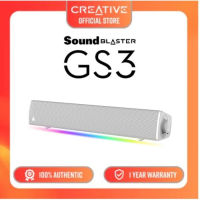
Creative Sound Blaster GS3 (MF8465) Compact RGB Gaming Soundbar with SuperWide technology Powered via USB Bluetooth 5.4 Headphone-out port for PC and Mac
₱3,200.00₱3,999.00
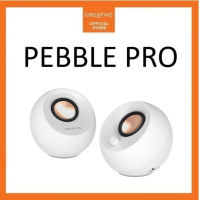
Creative Pebble Pro (MF1710) Minimalist 2.0 USB-C Desktop Computer Speakers with Bluetooth 5.3 and Customizable RGB Lighting Clear Dialog and BassFlex Tech USB Audio Headset Port for Desktop PC and Mac
₱3,950.00₱4,999.00
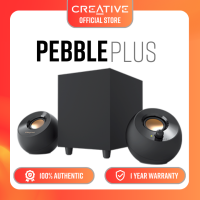
Creative Pebble Plus (MF0480) 2.1 USB-Powered Desktop Speakers with Down-Firing Subwoofer and Far-Field Drivers Up to 8W RMS Total Power for PCs and Laptops
₱3,100.00₱3,410.00
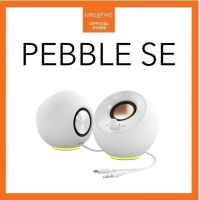
Creative Pebble SE (MF1725) Minimalist 2.0 USB-C Powered PC Speakers with RGB Lighting 3.5 mm AUX-in Up to 4.4W RMS Power for Computers and Laptops
₱1,600.00₱1,999.00
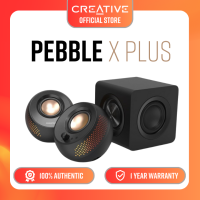
Creative Pebble X Plus (MF0495) 2.1 USB-C Computer Speakers with Subwoofer and Customizable RGB Lighting Bluetooth 5.3 USB Audio Up to 15W RMS Power for PC and Mac
₱8,290.00₱9,990.00
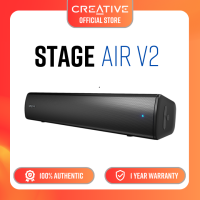
Creative Stage Air V2 (MF8395) - Compact USB Soundbar with BT 5.3 Dual-Driver and Passive Radiator Hours of Play Compatible with PS5/Nintendo Switch
₱3,100.00₱3,410.00
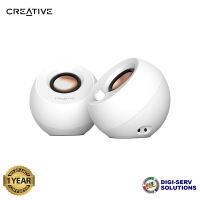
Creative Pebble Pro (MF1710) Minimalist 2.0 USB-C Computer Speaker ~Choose Your Color
₱3,519.00₱3,950.00
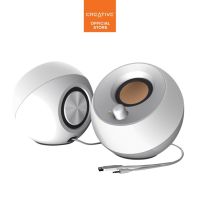
Creative Pebble (MF1680) 2.0 USB-Powered Desktop Speakers White Black with Far-Field Drivers and Passive Radiators for Pcs and Laptops
₱1,600.00₱1,760.00
About Creative Labs
Creative Labs is the consumer-facing brand and operating name of Creative Technology Ltd., a Singapore-based technology company renowned for its pioneering contributions to computer audio. The firm achieved international prominence through Sound Blaster, a line of sound cards that established audio as a standard component in personal computers rather than an optional peripheral. Today, the Creative Labs portfolio extends beyond traditional PC sound cards to include speakers, headphones, gaming audio equipment, soundbars, external DACs and amplifiers, webcams, and proprietary audio-processing technologies.
Overview
| Category | Information |
|---|---|
| Brand | Creative Labs |
| Parent company | Creative Technology Ltd. |
| Industry | Consumer electronics / audio technology |
| Best known for | Sound Blaster sound cards and audio technology |
| Origin | Singapore |
| Creative Labs, Inc. established | 1988, United States |
| Founder | Sim Wong Hoo |
| Corporate headquarters | Singapore |
| Major markets | Worldwide |
| Flagship brand | Sound Blaster |
| Current product areas | Sound cards, DACs/amps, speakers, soundbars, headphones, earbuds, gaming headsets, webcams and accessories |
| Public company | Creative Technology Ltd., listed on the Singapore Exchange since 1994 |
Creative Labs operates globally with regional organisations across the Americas, Europe, and Asia, maintaining distribution networks in over 80 countries.1
Origins
The history of Creative Labs traces back to Singapore in the early 1980s, when founder Sim Wong Hoo established the business that would become one of the nation’s most significant technology enterprises. Before achieving recognition for sound cards, the company explored broader computer and multimedia technologies. An early milestone was the CUBIC CT, a multilingual multimedia PC released in Singapore in 1986.
In 1987, the company introduced the Creative Music System (C/MS), a stereo music synthesiser card designed to deliver significantly more sophisticated sound to personal computers.2 The following year, Sim Wong Hoo expanded operations to the United States by founding Creative Labs, Inc. in South San Francisco, California, creating a dedicated entity to serve the rapidly expanding American PC market.
The birth of Sound Blaster
The defining moment for Creative Labs arrived in 1989 with the release of the original Sound Blaster 1.0. While many PCs at the time were limited to basic beeps and simple synthesised tones, the Sound Blaster integrated FM synthesis, digitised audio input/output, MIDI support, and a joystick interface into a single consumer sound card.3
The impact of Sound Blaster extended well beyond the hardware itself. It emerged as a de facto standard for PC audio, enabling software developers to design games and multimedia applications specifically around Sound Blaster-compatible hardware. As adoption grew, compatibility with the platform became a critical consideration for PC software and game development. Creative Labs characterises this era as the beginning of the PC audio revolution.
By December 1990, Sound Blaster had become the best-selling add-on board in the PC market.3
Sound Blaster becomes a PC standard
Throughout the early 1990s, Creative Labs rapidly expanded the Sound Blaster family to meet evolving multimedia demands.
Sound Blaster Pro
Released around 1991, the Sound Blaster Pro brought stereo audio capabilities to the mainstream PC market and was subsequently adopted as a standard for multimedia PC audio.4
Sound Blaster 16
In 1992, the company launched the Sound Blaster 16, offering 16-bit stereo sampling at a price point accessible to consumers. This landmark product helped establish higher-quality digital audio as a norm in PC gaming and multimedia applications.5
AWE series
Creative Labs later developed the Sound Blaster AWE family, incorporating advanced wavetable synthesis. The AWE32, introduced in 1994, utilised technology derived from E-mu Systems’ EMU8000 chip following Creative’s acquisition of E-mu Systems in 1993.
During this period, Creative Labs evolved from a component manufacturer into a key architect of the emerging multimedia PC ecosystem.
Expansion beyond sound cards
Although audio remained its core competency, Creative Labs spent much of the 1990s and early 2000s diversifying into a broader multimedia technology provider. Its product range during this era included:
- Sound cards
- Computer speakers
- CD-ROM and multimedia upgrade kits
- Video capture hardware
- Graphics products
- Webcams
- Portable digital music players
- Audio software
- Multimedia accessories
The company also acquired or invested in several technology firms, including E-mu Systems and 3Dlabs.6 In 1994, Creative Technology Ltd. became a publicly traded company with shares listed on the Singapore Exchange.7
Sound Blaster Live! and the multimedia era
A pivotal product in the late 1990s was Sound Blaster Live!, introduced in 1998. This card emphasised environmental and multichannel audio, delivering immersive sound experiences for PC gaming and entertainment. Creative Labs subsequently built a range of PC home theatre products around this ecosystem.
This launch coincided with a shift in PC usage towards 3D gaming, DVD playback, music, internet communications, multimedia education, and digital content creation. By 1999, cumulative worldwide shipments of Sound Blaster products had surpassed 100 million units.
Audigy and the 5.1/7.1 era
In the early 2000s, Creative Labs continued the lineage with the Audigy series. These cards focused on superior playback quality, gaming audio, surround sound, and hardware-accelerated audio processing. Historical records note the introduction of Audigy in 2001, followed by the Audigy 2 ZS, which integrated 7.1-channel surround sound into the Sound Blaster ecosystem.
Concurrently, PC audio increasingly became part of comprehensive home entertainment systems, prompting Creative Labs to develop complete speaker systems and PC theatre solutions alongside its sound cards.
Moving beyond the internal sound card
A significant strategic shift occurred when Creative Labs moved Sound Blaster technology outside the PC chassis. The Sound Blaster Extigy was introduced as the first external USB Sound Blaster, marking a transition toward standalone audio hardware.8
Subsequent products expanded this concept into:
- USB audio interfaces
- External DACs
- Headphone amplifiers
- Gaming audio processors
- Console-compatible audio devices
- Portable audio equipment
This evolution represented Sound Blaster “rising out of the PC” to integrate with consoles, mobile devices, and other platforms.9
X-Fi
In the mid-2000s, Creative Labs launched the Sound Blaster X-Fi family. X-Fi pushed PC audio beyond basic playback through advanced digital signal processing, gaming effects, surround virtualisation, and high-fidelity music reproduction. The X-Fi Titanium HD, released in 2010, specifically targeted audiophiles and enthusiasts.
This era highlighted Creative Labs’ dual focus on both the gaming/multimedia segment and the enthusiast/high-fidelity audio market.
The rise of gaming audio
As PC gaming sophistication increased, Creative Labs aligned Sound Blaster marketing closely with gaming performance. Modern technologies emphasise:
- Positional audio
- Footstep enhancement
- Surround virtualisation
- Equalisation
- Game/voice mixing
- Headphone processing
- External DACs and amplifiers
The current technology portfolio identifies Gaming, Audio Immersion, and Communications as primary development pillars.10 Notable innovations include Scout Mode, designed to amplify critical in-game audio cues such as footsteps.
Sound BlasterX
Creative Labs established Sound BlasterX as a sub-brand dedicated to gaming peripherals. The lineup includes:
- Gaming sound cards
- USB DACs
- Gaming headsets
- Speakers
- Soundbars
- Gaming-oriented audio processors
The Sound BlasterX Katana, introduced in 2017, is credited with helping to define the gaming soundbar category.11 In 2018, the Sound BlasterX G6 was released as an external gaming DAC/amplifier compatible with both PCs and consoles.12
Super X-Fi
Super X-Fi is a spatial audio technology developed by Creative Labs to replicate the experience of listening to speakers in a physical room through headphones. Often described as “headphone holography,” it aims to personalise spatial audio and recreate a natural, speaker-like soundstage.
Since its introduction, Super X-Fi has been integrated into headphones, amplifiers, gaming products, and other devices. This technology represents a strategic pivot toward differentiation through audio processing and software rather than hardware specifications alone.
Creative today
As of 2026, the Creative Labs portfolio extends far beyond its historical association with internal PC sound cards. Current product categories include:
Audio hardware
- Internal sound cards
- External sound cards
- DACs and headphone amplifiers
- Desktop speakers
- Portable speakers
- Soundbars
- Headphones
- True-wireless earbuds
- Gaming headsets
Gaming
- Gaming DACs
- Gaming headsets
- Positional-audio technologies
- Game/voice mixing
- Gaming soundbars
- Audio enhancement software
Communications
- Microphones
- Webcams
- Conference cameras
- Voice-processing technologies
Accessories
- Bluetooth adapters
- Audio cables
- Connectivity accessories
These categories reflect the breadth of the current product catalogue.
Major Creative brands and technologies
Sound Blaster
Sound Blaster remains the most historically significant brand under Creative Labs. Originating as a PC sound card line in 1989, it has evolved into a comprehensive audio ecosystem. Over 400 million Sound Blaster products have been sold throughout the brand’s history. Today, the name encompasses internal sound cards, external DACs, gaming amplifiers, speakers, soundbars, and audio-processing technologies.
Super X-Fi
Super X-Fi is the company’s proprietary spatial audio technology, primarily associated with headphone listening. Its objective is to simulate the acoustic characteristics of speakers positioned in a physical room.
Pebble
Pebble is a family of compact desktop speakers representing the modern consumer-focused side of Creative Labs. These affordable, small-form-factor audio solutions are designed for laptops, desktop PCs, and everyday users.
Sound BlasterX
Sound BlasterX serves as the identity for gaming-oriented hardware and processing technologies within the Creative Labs ecosystem.
Technology philosophy
Creative Labs distinguishes itself from conventional speaker manufacturers through a heavy emphasis on digital audio processing. Rather than relying solely on driver size or amplifier power, the company develops algorithms intended to alter how listeners perceive sound. Key areas of technological focus include:
- Surround virtualisation
- Spatial audio
- Acoustic processing
- Voice enhancement
- Noise reduction
- Dialog enhancement
- Gaming positional audio
- Equalisation
- Headphone processing
The overarching goal is to make audio more immersive, personal, and accessible.
Corporate structure
A distinction exists between Creative Labs and Creative Technology Ltd. The latter is the Singapore-based parent company and corporate group, while Creative Labs serves as the consumer-facing brand and operating name for various subsidiaries. For instance, Creative Labs, Inc. was established in California in 1988, Creative Labs Europe in 1993, and the Asian organisation in 1999.
Corporate headquarters remain in Singapore, with the Americas organisation based in California and the European organisation operating from Ireland.
Importance to the PC industry
The historical significance of Creative Labs to the personal computing industry is substantial. Prior to Sound Blaster, audio was not considered a fundamental aspect of the PC experience. Sound Blaster transformed audio into an expected standard component. Its influence spans several domains:
- PC gaming: Compatibility with Sound Blaster became a primary target for game developers.
- Multimedia PCs: Creative Labs helped popularise the concept of the PC as an entertainment system.
- Digital audio: Sound cards facilitated the mainstream adoption of digital recording and playback.
- Surround sound: The company introduced increasingly sophisticated multichannel audio to consumer PCs.
- Gaming audio: Audio processing was established as a potential competitive advantage for gamers.
Creative Labs describes Sound Blaster as having created the PC sound standard and catalysed the PC audio revolution.
Market position
Creative Labs occupies a unique niche in the audio industry, situated between traditional hi-fi manufacturers and gaming peripheral companies. Its identity integrates PC hardware, consumer electronics, gaming, digital signal processing, and audio engineering.
Historically, its primary competitive advantage lay in ecosystem dominance and compatibility surrounding Sound Blaster. Contemporary differentiation relies more heavily on audio processing technology, gaming features, compact consumer products, and proprietary innovations like Super X-Fi.
Legacy
The enduring legacy of Creative Labs is arguably the Sound Blaster standard. While the company did not invent computer audio, it successfully transformed it into a mass-market category. The evolutionary trajectory includes:
- 1980s: Computer beeps → Creative Music System → Sound Blaster
- 1990s: Sound Blaster standard → Sound Blaster 16 → AWE → Live!
- 2000s: Audigy → external Sound Blaster → X-Fi → PC home theatre
- 2010s: Gaming audio → Sound BlasterX → external DACs → Katana → G6
- 2020s: Super X-Fi → gaming audio → speakers → headphones → earbuds → communications and spatial audio
This progression explains the continued recognition of Creative Labs despite the internal PC sound card no longer being central to mainstream computing.
Timeline
| Year | Event |
|---|---|
| 1981 | Creative’s origins trace to the early Singapore technology business founded by Sim Wong Hoo |
| 1986 | CUBIC CT multimedia PC introduced |
| 1987 | Creative Music System introduced |
| 1988 | Creative Labs, Inc. established in the United States |
| 1989 | First Sound Blaster launched |
| 1990 | Sound Blaster becomes the leading PC add-on board |
| 1992 | Sound Blaster 16 launched; Creative also goes public in the U.S. |
| 1993 | Creative acquires E-mu Systems |
| 1994 | Creative becomes publicly listed in Singapore |
| 1995 | 3D Blaster introduced |
| 1998 | Sound Blaster Live! launched |
| 1999 | Sound Blaster surpasses 100 million units shipped |
| 2001 | Sound Blaster Audigy introduced |
| 2002 | Sound Blaster Extigy expands the brand into external USB audio |
| 2010 | X-Fi Titanium HD targets high-fidelity PC audio |
| 2014 | Sound Blaster E5 and X7 expand high-resolution/external audio |
| 2017 | Sound BlasterX Katana gaming soundbar introduced |
| 2018 | Sound BlasterX G6 gaming DAC launched |
| 2019 | Sound Blaster X3 incorporates Super X-Fi |
| 2020s | Creative expands into spatial audio, gaming, speakers, headphones, earbuds and communications |
References
- Creative Labs (United States) | Sound Blaster Sound Cards, Super X-Fi, Speakers and Soundbars, Webcams, Headphones and Gaming Headsets
- Sound Blaster 30 Years of Revolutionizing Audio – Creative Labs (United States)
- Our Audio Technologies and Innovations – Creative Labs (United States)
- Our Audio Technologies and Innovations – Creative Labs (Pan Euro)
- Creative Labs (Pan-European) | Sound Blaster, Gaming Headsets, Speakers, Headphones
- Powered by Sound Blaster – Creative Labs (United States)
- Our Audio Technologies and Innovations – Creative Technology (Singapore)
- Sound Blaster révolutionne l’audio depuis 30 ans – Creative Labs (France)
- Creative Labs (Canada) | Sound Blaster, Gaming Headsets, Speakers, Headphones
- Creative Labs (Asia) | Sound Blaster, Gaming Headsets, Speakers, Headphones
- Creative Labs (United Kingdom) | Sound Blaster, Gaming Headsets, Speakers, Headphones
- Creative Labs (Malaysia) | Sound Blaster, Gaming Headsets, Speakers, Headphones