Shop on Lazada
Braun products
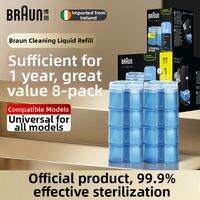
Braun | Shaving Accessories Cleaning Solution
₱8,164.74₱12,673.70
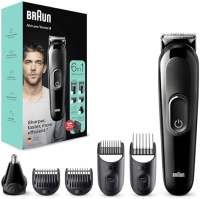
MGK3320 Braun Multigrooming Kit 6-in-1 Styling Kit
₱3,995.00
Buy on Lazada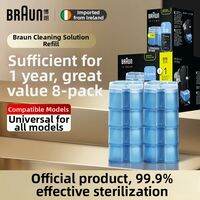
Braun | CCR Series Cleaning Solution
₱8,130.89₱12,621.50
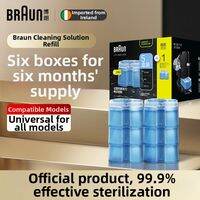
Braun | Cleaning Solution For Shaving Devices
₱7,578.42₱11,006.54
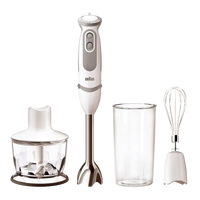
Braun | Baby Food Processor Hand Blender
₱9,484.72₱10,132.10
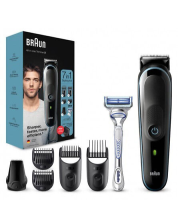
MGK3342 Braun Multigrooming kit 3 7-in-1
₱2,245.00₱4,495.00
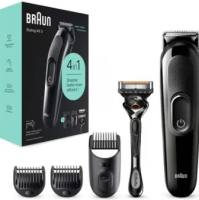
SK3300 Braun Styling Kit 3 Trimmer
₱1,898.00₱3,795.00
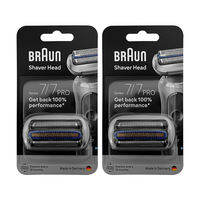
Braun | Razor Blade 7 Series 75S
₱9,010.75₱23,704.37
About Braun
Braun is a German-origin consumer electronics and household appliance brand recognised globally for its functional industrial design, engineering precision, electric shavers, grooming products, and small domestic appliances. Founded by engineer Max Braun in Frankfurt am Main in 1921, the company evolved from a small engineering and radio equipment workshop into one of the most influential names in 20th-century industrial design.1 In the Philippines, Braun is widely available through major retail chains and e-commerce platforms, serving as a benchmark for premium personal care and kitchen appliances.
The brand holds particular significance in design history. Under the guidance of designers including Dieter Rams and Hans Gugelot, Braun helped establish a distinctive product philosophy characterised by simplicity, utility, clarity, durability, and visual restraint. This design language subsequently influenced generations of industrial designers and is often associated with the principles later summarised by Rams as “less, but better.”2
Today, the Braun name operates across distinct business segments rather than as a single unified entity. Procter & Gamble (P&G) owns the Braun brand and manages its grooming business, which includes electric shavers, trimmers, and related personal care products. Meanwhile, De’Longhi Group holds a perpetual licence to use the Braun brand for household small appliances such as food preparation devices and irons.3
Quick facts
| Field | Information |
|---|---|
| Brand | Braun |
| Founded | 1921 |
| Founder | Max Braun |
| Origin | Frankfurt am Main, Germany |
| Original business | Engineering, radio components and electrical equipment |
| Best known for | Industrial design, electric shavers, grooming appliances, household appliances |
| Major historical designer | Dieter Rams |
| Design philosophy | Simplicity, functionality, clarity, durability |
| Current brand owner | Procter & Gamble |
| Household-appliance licensee | De’Longhi Group |
| Major historical acquisition | Gillette, 1967 |
| Gillette acquired by P&G | 2005 |
| Household-appliance licensing agreement with De’Longhi | 2012 |
| Current major grooming products | Electric shavers, beard trimmers, hair clippers, IPL, epilators |
| Current major household products | Hand blenders, food processors, mixers, coffee makers, kettles, toasters, irons |
Origins: 1921–1940s
Braun began in February 1921 when engineer Max Braun established a small engineering workshop in Frankfurt. The company’s early operations were closely tied to the rapidly developing radio industry, initially producing radio components before expanding into complete radio equipment and related electrical products.4
By the late 1920s, Braun had grown considerably. The company opened its own factory in 1928, employing around 400 people, and developed a reputation for technical innovation. By 1929, it was manufacturing complete power amplifiers and radio sets.5
A notable early innovation was Braun’s combination of a radio and record player in a single unit. This development was significant as it demonstrated the company’s shift beyond individual components towards integrated consumer products.6
The familiar Braun logo also dates from this era; the distinctive design featuring the raised, rounded “A” first appeared in 1934.7
World War II and reconstruction
World War II severely disrupted Braun’s civilian business. The company was forced to largely abandon consumer-oriented production, and its Frankfurt factories were almost completely destroyed in 1944.8
Following the war, Max Braun rebuilt the enterprise. In 1945, Braun restarted operations with approximately 150 employees. The postwar period became a pivotal chapter in the company’s history, marking a transition from pure engineering to a broader concept of consumer product design.9
Breakthrough into electric shavers
A major milestone occurred in 1950 with the introduction of the S 50, Braun’s first electric shaver. The S 50 utilised an oscillating cutter mechanism beneath a thin but strong steel foil. This innovation laid the foundation for Braun’s characteristic foil shaver technology, which the company continued to develop for decades.10
Concurrently, Braun entered the household appliance market. The Multimix food processor also launched in 1950, establishing a product category that remains central to the brand today.11
This period cemented a pattern that would define Braun: the integration of engineering, practical functionality, and carefully considered design. Rather than treating appearance as mere decoration applied after engineering, Braun increasingly approached engineering and design as a unified discipline.12
The Braun design revolution
Dieter Rams
The figure most strongly associated with Braun’s design identity is Dieter Rams. Rams joined Braun in 1955, initially as an architect and interior designer. He subsequently became one of the most influential industrial designers of the 20th century, serving as Braun’s chief design lead for decades.13
However, Braun’s design transformation was a collective effort. The company collaborated with designers connected to the Ulm School of Design, including Hans Gugelot. Other key contributors included Fritz Eichler, Otl Aicher, Wilhelm Wagenfeld, Gerd Alfred Müller, and Reinhold Weiss.14
Together, they developed an unusually coherent visual language.
Characteristics of classic Braun design
Classic Braun products typically emphasise:
- Simple geometric forms
- Clear controls
- Visual hierarchy
- Minimal decoration
- Neutral colours
- Honest expression of function
- Ergonomics
- High manufacturing quality
- Long-term usability
- Consistency across an entire product system
Braun describes its design approach in terms of quality, functionality, clarity, longevity, and timelessness.15
“Less, but better”
The phrase most closely associated with Dieter Rams is “Less, but better.” It encapsulates the central tenet of Braun’s design philosophy: removing unnecessary visual and functional elements rather than continually adding features.
While influenced by Bauhaus and Ulm design traditions, Braun’s approach evolved into something distinctly its own. The company’s design principles emphasised simplicity, order, and harmony.16
Rams later formulated his Ten Principles for Good Design:
- Good design is innovative.
- Good design makes a product useful.
- Good design is aesthetic.
- Good design helps us understand a product.
- Good design is unobtrusive.
- Good design is honest.
- Good design is long-lasting.
- Good design is thorough down to the last detail.
- Good design is environmentally conscious.
- Good design involves as little design as possible.
These principles were strongly informed by Rams’ experience at Braun and became influential far beyond the company. Braun continues to describe good design through the concepts of being simple, useful, and built to last.17
Iconic products
Braun’s historical importance is best understood through its seminal products.
SK 4 radio/phono combination
Introduced in the 1950s and designed by Hans Gugelot and Dieter Rams, the SK 4 became a defining object of the Braun design era. Its transparent lid, simple controls, and clean rectangular form contrasted sharply with the heavily decorated wooden radios common at the time, demonstrating that consumer electronics could appear modern without looking complicated.
KM 3 kitchen machine
The KM 3 food processor became another classic, with Braun producing versions of the machine for more than three decades.18 Its significance extends beyond kitchen equipment, illustrating how Braun’s design principles could be successfully applied to everyday domestic appliances.
S 50 electric shaver
The 1950 S 50 established Braun’s electric shaver business. The company subsequently refined this technology through numerous generations of foil shavers.19
Sixtant
Released in the 1960s, the Sixtant became one of the most recognisable products of Braun’s classic design period. Braun describes it as the first mass-produced article of its design era to reach the market.20
Calculators, clocks and audio equipment
Braun also produced pocket calculators, alarm clocks, radios, record players, audio equipment, watches, kitchen appliances, hair dryers, and irons. Many of these products are now considered important examples in industrial design history.
Expansion after Max Braun
Max Braun died suddenly in 1951. His sons, Artur Braun and Erwin Braun, subsequently took over the company.21
Under their leadership, Braun underwent a major strategic transformation. Instead of competing primarily as an electronics manufacturer, the company positioned itself as a producer of well-designed products for modern everyday life. This decision reflected a philosophy that technology should be understandable, useful, and aesthetically calm. This approach helped Braun gain international recognition as a design brand during the 1950s and 1960s.
Mass-market industrial design
One of Braun’s greatest historical achievements was bringing sophisticated industrial design to ordinary consumer products. Prior to Braun’s design revolution, many domestic electrical products were designed to resemble furniture or were heavily ornamented.
Braun moved in the opposite direction. A Braun product often resembled precision equipment: functional, geometric, restrained, systematic, and easy to understand. This helped establish the notion that an everyday appliance could itself be a piece of design. Consequently, Braun became an important bridge between modernist design and mass-market consumer electronics, helping bring “good design” into the mainstream.22
Acquisition by Gillette
By the 1960s, Braun had grown beyond the scale of a family-run company. In 1967, the American company Gillette acquired a majority shareholding in Braun. The brand continued to operate distinctly while gaining access to Gillette’s international distribution and investment resources.23
This acquisition was particularly significant for Braun’s grooming business. Electric shavers became increasingly central to commercial success, and from the 1970s onwards, shavers formed one of the company’s core businesses.24
Electric shaver development
Braun’s grooming business remains one of its most enduring areas. Key technological milestones include:
| Period | Development |
|---|---|
| 1950 | S 50, first Braun electric shaver |
| 1970s | Shavers become a central Braun business |
| 1990 | Flex Control with two foils and pivoting head |
| 1994 | Flex Integral with integrated long-hair trimmer |
| 1999 | Clean&Charge cleaning system |
| 2006 | Series 7 with high-frequency linear motor |
| Today | Advanced foil shavers, trimmers and connected/personal-care technologies |
This trajectory illustrates a key feature of Braun’s strategy: the company has generally evolved its products through incremental engineering improvements rather than abandoning established product concepts.
P&G era
In 2005, Procter & Gamble acquired Gillette. As a result, Braun became part of P&G’s global brand portfolio. P&G currently places Braun within its Grooming business alongside brands such as Gillette and Venus.26
Modern Braun electric shavers, trimmers, and related grooming products are therefore managed as part of P&G’s grooming division. P&G continues to invest in Braun’s grooming technology; for example, in 2026, P&G introduced Braun NEVO, presenting it as a new generation of electric shaving technology.27
De’Longhi licensing arrangement
The current structure of the Braun brand involves distinct operators for different categories. In 2012, P&G and De’Longhi reached an agreement granting De’Longhi a perpetual licence to use the Braun brand for household small appliances. This agreement covers categories such as kitchen appliances and ironing products but specifically excludes Braun’s male dry shaving and female electric hair removal businesses. P&G retained ownership of the Braun brand.28
De’Longhi subsequently incorporated Braun household products into its own portfolio. De’Longhi states that Braun joined its group in 2013 and currently covers products including food preparation devices, hand blenders, food processors, mixers, blenders, cooking appliances, coffee makers, kettles, toasters, and irons.29
In summary:
- Braun grooming: Managed by P&G
- Braun household appliances: Managed by De’Longhi under licence
Major product categories today
Personal grooming
Braun’s most recognisable modern category is men’s grooming. Products include electric foil shavers, beard trimmers, hair clippers, body groomers, and styling products. The current range includes the Series 3, Series 5, Series 7, Series 8, and Series 9 families, with Series 9 positioned at the premium end.30
Female hair removal
Braun also operates in the female hair removal market. Its portfolio includes Silk-épil epilators, lady shavers, bikini stylers, and IPL hair removal devices. Braun acquired the French company Silk-épil in 1988, subsequently making epilation a key part of its portfolio.31
Hair care
Braun’s hair care products include hair dryers, straighteners, curlers, brushes, and airstylers. The company’s involvement in hair dryers dates back to the 1960s, and Braun developed notable compact designs such as the PGC 1000 in 1978.32
Household appliances
Under De’Longhi’s management, the Braun brand continues to appear on hand blenders, food processors, hand mixers, jug blenders, choppers, juicers, coffee makers, kettles, toasters, grills, and irons. The MultiQuick hand blender family is particularly important to Braun’s current household business, with De’Longhi describing Braun as a world leader in hand blenders.33
Design identity
Braun’s design identity can be summarised through several key attributes:
- Simple: Products should be easy to understand rather than visually complicated.
- Functional: Every significant element should serve a purpose.
- Human-centred: Products should respond to how people actually use them.
- Durable: Emphasis on long-term usefulness rather than disposable styling.
- Timeless: Avoidance of unnecessary fashion trends.
- Precise: Controls, materials, proportions, and interfaces should communicate technical quality.
Braun currently summarises its design philosophy as “simple, useful and built to last.”
Influence on other companies
Braun’s design language became an important reference point for later designers and technology companies. Perhaps the most cited example is Apple. Designers and commentators have frequently compared aspects of Apple’s product philosophy with Braun’s design tradition, particularly regarding minimalism, clear interfaces, neutral surfaces, geometric forms, reduction of visual clutter, and the integration of technology and industrial design.
This comparison is notable because Apple’s Jony Ive openly admired Dieter Rams and Braun’s work. However, it is more accurate to say that Braun helped establish a broader modernist industrial design vocabulary that later technology companies adapted, rather than suggesting direct imitation.
Design philosophy versus luxury design
Braun represents a distinct conception of premium design. While luxury products often communicate value through precious materials, ornamentation, branding, decorative details, and exclusivity, Braun historically communicated value differently: through precision, simplicity, engineering, and usability.
Consequently, a classic Braun product can appear almost anonymous at first glance. The underlying idea is that a product should demonstrate its quality through performance rather than decoration. This philosophy remains a primary reason for Braun’s enduring importance in industrial design history.
Brand positioning
Braun generally occupies the premium to upper-mainstream segment of consumer appliances. It is not positioned as an ultra-luxury design house; instead, the brand combines German engineering heritage, practical functionality, modern design, and technological innovation.
The resulting brand identity sits at the intersection of traditional German engineering, modernist industrial design, mass-market consumer electronics, and premium personal care. Braun describes its heritage through innovation, design, and quality.
Distinguishing characteristics
Several factors distinguish Braun from standard appliance brands:
- Design as DNA: For Braun, design has historically been a fundamental part of product development rather than a superficial styling exercise.
- German heritage: The brand’s identity remains strongly connected with German engineering and industrial design, despite its current operation within larger international groups.
- Visual consistency: Products from different decades often appear related due to shared principles of proportion, typography, controls, geometry, and restraint.
- Product continuity: Technologies such as electric shavers and kitchen appliances have developed through successive generations rather than constant reinvention.
- Design influence: Few appliance companies have matched Braun’s impact on the history of industrial design.
Distinction from B. Braun
It is important to distinguish between two similarly named entities. Braun is the consumer brand founded by Max Braun in Frankfurt in 1921, known for shavers, grooming products, and household appliances.
B. Braun, conversely, is a German medical and healthcare company whose history dates to 1839, when Julius Wilhelm Braun acquired a pharmacy in Melsungen. B. Braun operates in areas such as infusion therapy, surgery, wound care, and extracorporeal blood treatment. The two are entirely separate corporations.
Legacy
Braun’s historical legacy encompasses three major areas:
- Industrial design: Establishing the principle that everyday appliances could be designed according to serious standards of clarity, usability, and aesthetics.
- Consumer technology: Developing significant products in radios, audio equipment, kitchen appliances, shavers, and grooming devices.
- Design philosophy: Promoting the idea that good products need not be ostentatious, but should instead be understandable, useful, and durable.
This philosophy remains visible in Braun products today, even though the corporate structure behind the brand has changed significantly since Max Braun’s original workshop.
Current status
As of 2026, Braun remains a major international brand, best understood as a brand with different business operators rather than a single unified company. P&G operates Braun’s major grooming business, including electric shavers, trimmers, hair removal products, and related personal care items. P&G continues to describe Braun as one of its major grooming brands.
De’Longhi Group operates the Braun household appliance business under its perpetual brand licence, covering food preparation, cooking, breakfast appliances, and ironing. The brand itself continues to emphasise the principles established during its classic design era: functionality, simplicity, quality, and longevity.
References
- About Us | Braun US
- The History of Braun’s Design & Innovation | Braun US
- BRAUN History|BRAUN Healthcare | Asia Pacific
- Microsoft Word – DeLonghi_press release B closing – v7 – 30082012 – ENG
- 100 years of Braun. – Stories | Braun Audio
- BraunPrize 2018 : DESIGN FOR WHAT MATTERS – About
- Braun Product | Braun
- About Braun | Braun UK
- Braun NEVO: A Masterclass in Design, Durability, and a Perfect Shave | P&G
- Braun | De’ Longhi Group – Corporate Website
- Electric Shavers for Men | Braun
- MegaBrand | Braun
- B. Braun: Company History – B. Braun
- ABOUT US & HISORY | BRAUN(ブラウン)公式サイト
- Hair Removal, Grooming & Hair Care Products | Braun SG
- Design & Craftsmanship – All about Braun Designers, Products and History | Braun SG
- Braun Electric Shavers, Trimmers, Epilators, and IPLs
- Welcome to Braun
- Braun Electric Shavers, Trimmers, Epilators, and IPLs
- Welcome to Braun
- Electric Grooming Products for Men and Women | Braun US
- Braun designers | Braun
- About BRAUN|BRAUN Healthcare | Asia Pacific
- Electric Shavers – Braun Official Shop
- About Braun | Braun HK
- Terms and Conditions | Braun SG
- Braun
- About Braun | Braun PT
- Braun GmbH | Science Museum Group Collection
- 해외 제품에 대한 서비스 및 보증에 관한 주의 사항 | De’Longhi KR
- De’Longhi | Partner Links | De’Longhi AU
- Brand Experience – B. Braun
- B. Braun: leading medical tech for over 180 years – B. Braun