Shop on Lazada
Bridgestone products
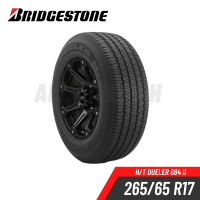
Bridgestone 265/65 R17 Tire - Dueler H/T 684II Tires for SUV Pick up B1
₱8,580.00₱12,500.00
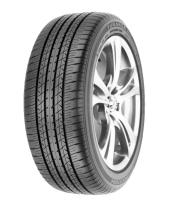
Bridgestone 215/55R17 94V Turanza ER33 Quality Passenger Car Radial Tire
₱5,248.00₱6,998.00
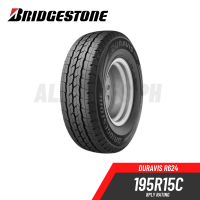
Bridgestone 195 R15C (8PLY) - R624 Duravis Heavy Duty Tire S1
₱4,980.00₱7,000.00
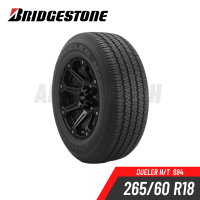
Bridgestone 265/60 R18 Tire - Dueler H/T 684II Tires for SUV Pick up B2
₱8,880.00₱10,500.00
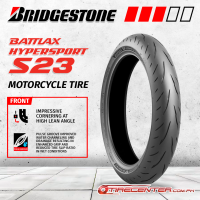
120/70-17 58W Bridgestone Battlax Hypersport S23 Tubeless Motorcycle Racing & Street Tire
₱9,599.00₱10,599.00
Bridgestone 245/70R16 111S Dueler H/T 689 Quality SUV Radial Tire
₱6,386.00₱7,695.00
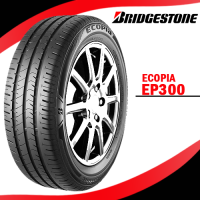
Bridgestone 185/65R15 88H EP300 Quality Passenger Car Radial Tire
₱3,892.00₱5,190.00
Bridgestone 185/55R15 82V EP300 Quality Passenger Car Radial Tire
₱4,293.00₱5,724.00
About Bridgestone
Bridgestone Corporation is a Japanese multinational corporation best known for its Bridgestone tyre brand and for developing technologies and services related to mobility, rubber, and advanced materials. Founded in 1931 by Shojiro Ishibashi in Kurume, Fukuoka, Japan, the company has grown from a domestic tyre manufacturer into one of the world’s major tyre and mobility companies.1
Today, Bridgestone describes itself as a sustainable solutions company, with its traditional premium tyre business at the centre of a broader portfolio of mobility and advanced solutions. Its businesses include passenger-car, truck and bus, aircraft, mining, construction, agricultural and motorcycle tyres, as well as commercial solutions, retail services, recycling technologies and experimental mobility technologies.2
Basic information
| Item | Information |
|---|---|
| Company name | Bridgestone Corporation |
| Japanese name | 株式会社ブリヂストン |
| Industry | Tyres, rubber products, mobility solutions, advanced materials |
| Founded | March 1, 1931 |
| Founder | Shojiro Ishibashi |
| Headquarters | Tokyo, Japan |
| Current Global CEO | Yasuhiro Morita |
| Employees | 115,716 consolidated employees (Dec. 31, 2025) |
| Paid-in capital | ¥126.354 billion (Dec. 31, 2025) |
| Core brand | Bridgestone |
| Major affiliated brand | Firestone |
| Main product | Tyres |
| Corporate mission | “Serving Society with Superior Quality” |
The current corporate profile lists Yasuhiro Morita as Global CEO and Representative Executive Officer as of January 2026.3
Origin of the name “Bridgestone”
The name Bridgestone is essentially an English translation of its founder’s surname. The company’s founder was Shojiro Ishibashi. In Japanese, ishi means stone and bashi/hashi means bridge. Ishibashi therefore chose the English-style name Bridgestone for his tyre company.
The decision was intentional: Ishibashi wanted a name that would work internationally as he anticipated the future globalisation of the automobile and tyre industries.4
Ishibashi → “Stone Bridge” → Bridgestone
Founder: Shojiro Ishibashi
Shojiro Ishibashi (1889–1976) was a Japanese entrepreneur from Kurume, Fukuoka. Before entering the tyre business, Ishibashi was involved in his family’s traditional footwear business, which produced jika-tabi, a Japanese type of rubber-soled work footwear.
This experience gave Ishibashi an understanding of rubber manufacturing and mass production. As Japan’s automobile industry began developing, he recognised that tyres could become a major industry. At the time, Japan did not have a large domestic tyre industry comparable to those developing in the United States and Europe, so Ishibashi decided to manufacture tyres domestically.
The first Bridgestone tyres were produced in 1930, and Bridgestone Tire Co., Ltd. was formally established on March 1, 1931.5
Early history: 1930–1945
Bridgestone’s first major manufacturing base was its Kurume Plant in Fukuoka Prefecture. Full-scale tyre production began there in 1934. The company subsequently expanded into other rubber products, including golf balls, V-belts and rubber hoses.6
The company faced enormous difficulties during World War II. In 1942, Bridgestone Tire Co., Ltd. was renamed Nippon Tire Co., Ltd. under wartime government policy. The war severely disrupted operations; the Tokyo headquarters was destroyed by bombing and overseas assets were lost. However, important factories such as those in Kurume and Yokohama survived, allowing the company to restart production after the war.7 Following the war, the company returned to the Bridgestone name.
Post-war growth and technology
The 1950s and 1960s were critical to Bridgestone’s development. In 1951, Bridgestone became the first company in Japan to sell rayon-cord tyres, while simultaneously modernising its manufacturing facilities.8
In the 1960s, the company increasingly focused on radial tyre technology, which would eventually become the dominant technology for modern passenger and commercial vehicles. Important milestones included:
- 1961: Bridgestone became publicly listed.
- 1962: Development of steel radial tyres for trucks and buses.
- 1964: Development of Japan’s first passenger-vehicle radial tyres.
- 1965: Opening of the Malaysia plant, its first post-war overseas production plant.
- 1967: Establishment of Bridgestone Tire Company of America.
- 1968: Adoption of the corporate mission “Serving Society with Superior Quality.”9
This period transformed Bridgestone from primarily a Japanese manufacturer into an increasingly international company.
Global expansion
During the 1970s and 1980s, Bridgestone accelerated its international expansion. The company’s strategic objective was not simply to export Japanese-made tyres but to establish manufacturing, research, sales and distribution operations around the world.
A particularly important development occurred in the United States. In 1983, Bridgestone purchased a tyre manufacturing plant in Tennessee from Firestone. This became Bridgestone’s first North American production facility.10
Bridgestone and Firestone
The 1988 acquisition
In 1988, Bridgestone acquired The Firestone Tire & Rubber Company for approximately US$2.6 billion. Firestone had been founded in 1900 in Akron, Ohio, by Harvey Firestone, making it considerably older than Bridgestone.11
The acquisition gave Bridgestone access to:
- A major North American manufacturing network
- European operations
- Latin American operations
- Established distribution networks
- The Firestone brand
- A major motorsports heritage
- Additional technological and engineering capabilities
The deal transformed Bridgestone into one of the world’s largest tyre and rubber companies.12
Bridgestone vs. Firestone
It is important to understand that Bridgestone and Firestone are not originally the same company. They began as separate businesses:
- Firestone: Founded 1900 → United States → Harvey Firestone
- Bridgestone: Founded 1931 → Japan → Shojiro Ishibashi
They became part of the same corporate group following Bridgestone’s acquisition of Firestone in 1988.13 Firestone remains an important brand within Bridgestone’s global operations.
Becoming a global tyre leader
Following the Firestone acquisition, Bridgestone continued expanding across North America, Europe and Asia. During the 1990s, the company expanded manufacturing operations in countries including Thailand, India, China, Poland and the United States.
Bridgestone also invested heavily in motorsports as a way of developing tyre technology and strengthening brand recognition.14 In 1997, Bridgestone entered Formula 1, bringing its tyre technology into one of the world’s most technologically demanding motorsports competitions.15
Motorsports
Motorsport has played an important role in Bridgestone’s brand identity. The company’s racing activities have included Formula 1, IndyCar, Indianapolis 500, motorcycle racing, sports-car racing and other international racing categories.
The basic philosophy mirrors that of many performance-oriented tyre manufacturers: racing → technology development → testing → consumer products. Bridgestone entered Formula 1 in 1997 and subsequently achieved numerous race victories and championships before ending its F1 tyre supply involvement after the 2010 season. The company’s Firestone brand also has a particularly strong connection to American open-wheel racing and the Indianapolis 500.16
Product portfolio
Although most consumers know Bridgestone primarily for car tyres, the corporation’s business is considerably broader.
Passenger-car tyres
These include tyres for sedans, SUVs, crossovers, sports cars, luxury cars and electric vehicles. Bridgestone’s passenger tyre portfolio includes performance, touring, all-season and other specialised categories.
Truck and bus tyres
Bridgestone produces commercial tyres for trucks, buses, fleets, long-haul transportation and regional transportation. Commercial tyres are particularly important because tyre performance affects fuel efficiency, safety, maintenance and fleet operating costs.
Specialty tyres
The company also produces tyres for mining vehicles, construction equipment, agricultural machinery, aircraft, motorcycles and other off-road equipment. These are technically very different from normal passenger-car tyres because they must operate under specialised loads and environments.17
Beyond tyres
A major part of Bridgestone’s modern strategy is moving beyond the traditional idea of being “just a tyre company.” The company has developed a broader solutions business. Its current corporate profile divides its activities into three broad areas:
Premium Tire Business
The traditional core comprising passenger-car tyres, truck and bus tyres, and specialty tyres.
Solution Business
Commercial and service-oriented solutions, including mining solutions, aviation solutions, truck and bus solutions, and retail and service solutions.
Exploratory Business
New technologies and businesses, including tyre recycling, AirFree® technology, lunar-rover tyres, soft robotics and other advanced mobility technologies.18
This represents a significant change in the company’s long-term strategy.
Sustainability
Bridgestone increasingly presents itself as a company focused on sustainable mobility. Its current corporate vision is centred on creating social and customer value while reducing environmental impact.
One of its major initiatives is the Bridgestone E8 Commitment, which establishes eight values beginning with the letter “E” as a framework for its sustainability activities. The company has also been investigating technologies such as tyre recycling, renewable and recycled materials, more efficient tyres, airless tyre technologies, circular-economy approaches and mobility solutions with lower environmental impact.
Bridgestone states that its long-term ambition is to continue evolving toward a sustainable solutions company through 2050.19
Technology philosophy
A tyre looks simple from the outside, but modern tyres are extremely complex engineered products. A modern Bridgestone tyre can involve engineering in rubber chemistry, polymer science, reinforcement materials, steel and textile cords, tread design, aerodynamics, vehicle dynamics, computer simulation, noise reduction, heat management, rolling resistance, wet braking, snow and ice performance, and durability.
This complexity necessitates extensive research and development capabilities. The company’s history shows a repeated pattern: new vehicle technology → new tyre requirements → tyre research → new tyre technology. That relationship has become especially important with the rise of electric vehicles, which can have different requirements due to their weight, torque characteristics and efficiency targets.
Major tyre families
The exact product portfolio differs by market, but several Bridgestone names have become particularly recognisable.
Potenza
Potenza is Bridgestone’s famous performance-oriented tyre family. It is associated with sports cars, high-performance vehicles, handling, cornering and performance driving. The Potenza line was launched in 1979 and became one of Bridgestone’s most important performance tyre names.20
Turanza
Turanza generally represents Bridgestone’s touring-oriented passenger tyres, emphasising characteristics such as comfort, highway performance and refinement.
Dueler
Dueler is associated primarily with SUVs, pickups and 4×4 vehicles.
Alenza
Alenza is positioned toward SUVs and crossover vehicles, particularly premium-oriented applications.
Ecopia
Ecopia focuses heavily on fuel efficiency and reduced rolling resistance.
Blizzak
Blizzak is Bridgestone’s best-known winter/snow tyre family, designed for cold-weather conditions.
Brand identity
Bridgestone’s branding has changed several times during its history. The company created its original logo in 1931. The corporate identity was subsequently redesigned, notably in 1974, 1984, 2004, and 2011.21
The familiar Bridgestone wordmark and stylised B symbol have become strongly associated with engineering, reliability, safety, performance, Japanese industrial quality and global mobility. The company’s historic mission, “Serving Society with Superior Quality,” remains particularly important to its corporate identity.22
Global presence
Bridgestone is a genuinely global corporation rather than a Japanese company that simply exports products. Its operations span major automotive markets around the world, with manufacturing, research, sales and service operations across multiple regions.
The company has particularly significant operations in Japan, the United States, Canada, Mexico, Brazil, Europe, Thailand, Indonesia, China, India and other Asian markets. Thailand is particularly important to Bridgestone’s Asian manufacturing network; the company’s global expansion included production facilities in Thailand during the 1990s.23
Corporate structure
At the top of the organisation is Bridgestone Corporation, headquartered in Tokyo, Japan. Under the global corporation are regional and specialised organisations serving different markets. One major example is Bridgestone Americas, which manages substantial operations throughout North and Latin America. Another important part of the group is the Firestone brand and associated businesses.
The result is better understood as a global mobility and tyre group rather than a single tyre factory or consumer brand.
Current scale
According to Bridgestone’s latest corporate profile available for December 31, 2025, the company had:
- 115,716 consolidated employees
- 13,934 non-consolidated employees
- ¥126.354 billion in paid-in capital
- Headquarters in Tokyo
- Yasuhiro Morita as Global CEO and Representative Executive Officer as of January 202624
These figures demonstrate the enormous scale of the company compared with the small tyre manufacturer established by Ishibashi in 1931.
Important milestones
| Year | Event |
|---|---|
| 1930 | First Bridgestone tyres produced |
| 1931 | Bridgestone Tire Co., Ltd. established |
| 1934 | Full-scale production begins at Kurume |
| 1951 | First Japanese company to sell rayon-cord tyres |
| 1961 | Listed on Tokyo and Osaka stock exchanges |
| 1962 | Steel radial truck/bus tyre development |
| 1964 | Japan’s first passenger-vehicle radial tyre |
| 1965 | Malaysia plant opens |
| 1968 | “Serving Society with Superior Quality” adopted |
| 1979 | Potenza performance tyre launched |
| 1983 | First Bridgestone North American production plant |
| 1984 | Company renamed Bridgestone Corporation |
| 1988 | Firestone acquired |
| 1995 | Firestone returns to IndyCar/Indianapolis 500 |
| 1997 | Bridgestone enters Formula 1 |
| 2007 | Bandag acquired, strengthening tyre-retreading business |
| 2011 | Brand symbol and tagline refined |
| 2021 | 90th anniversary |
| 2020s | Increasing emphasis on sustainable mobility and advanced solutions |
Competitive characteristics
Bridgestone’s competitive identity can be summarised through several key characteristics.
Japanese engineering heritage
The company originated in Japan during the early development of the country’s automotive industry and built its reputation around manufacturing quality and technological development.
Massive global scale
The Firestone acquisition in 1988 dramatically expanded its geographic reach and transformed it into a global tyre company.
Strong R&D culture
Bridgestone has historically invested heavily in tyre technology, including radial tyres, performance tyres and specialised commercial tyres.
Strong OEM relationships
Bridgestone supplies tyres for original equipment applications, meaning tyres installed on vehicles when they leave the factory, as well as replacement tyres.
Motorsport heritage
Formula 1, IndyCar and other racing programmes have helped Bridgestone develop and market performance technologies.
Movement toward solutions
The company increasingly seeks to earn revenue not only from selling tyres but also from providing data, services, maintenance, fleet management, mobility solutions and other technologies.25
Industry positioning
A simple way of positioning Bridgestone within the global tyre industry is to compare it with other major tyre manufacturers.
| Company | Origin | Famous brands / identity |
|---|---|---|
| Bridgestone | 🇯🇵 Japan | Bridgestone, Firestone |
| Michelin | 🇫🇷 France | Michelin |
| Goodyear | 🇺🇸 USA | Goodyear, Cooper |
| Continental | 🇩🇪 Germany | Continental |
| Pirelli | 🇮🇹 Italy | Pirelli |
Bridgestone’s particular historical advantage is its combination of Japanese manufacturing heritage, global expansion, Firestone, extensive tyre technology and motorsports.
Role in the automotive world
Bridgestone is significant because tyres are not merely accessories; they are the only components of a normal road vehicle that continuously contact the road surface. Consequently, tyre characteristics directly influence braking, acceleration, steering, cornering, ride comfort, road noise, fuel consumption, EV range, wet-weather safety, vehicle stability and overall driving feel.
This makes Bridgestone a significant engineering partner to the automotive industry, rather than simply a manufacturer of replacement parts.
Modern strategic transition
Modern Bridgestone is essentially built around a transition from a traditional tyre manufacturer and rubber products maker to a provider of premium tyres, mobility solutions, data and services, sustainable materials and advanced mobility technologies.
The company still considers tyres its core business, but its stated ambition is to use that core to become a broader sustainable mobility and advanced solutions company.26
References
- Profile | Bridgestone
- A Global Dream | Bridgestone Story | History | Corporate | Bridgestone Corporation
- History | Corporate | Bridgestone Corporation
- Bridgestone Americas History & Transformation
- 1981-1990 | Bridgestone Story | History | Corporate | Bridgestone Corporation
- Bridgestone History | Bridgestone Tires
- 1991-2000 | Bridgestone Story | History | Corporate | Bridgestone Corporation
- About Bridgestone | Bridgestone Corporation
- 90th Anniversary|Bridgestone Corporation
- Brand | Bridgestone
- Latest Financial Results | Investor Relations | Bridgestone Corporation
- Bridgestone Releases its Bridgestone 3.0 Journey 2025 Integrated Report News | Bridgestone
- Bridgestone Story | History | Corporate | Bridgestone Corporation
- Integrated Reports | Investor Relations | Bridgestone Corporation
- Business Reports | Investor Relations | Bridgestone Corporation
- Library | Bridgestone
- Site Search – ANNUAL REPORT | Bridgestone Global Website
- Investor Relations | Bridgestone
- Site Search – annual report | Bridgestone Global Website
- Annual Report | Library | Bridgestone
- Site Search – Annual report | Bridgestone Global Website
- Site Search – Annual Report | Bridgestone Global Website
- History
- bsa-redesign-OurHistory Component
- Corporate Profile | Bridgestone.co.th
- Bridgestone History | Bridgestone Tyres