Shop on Lazada
Calbee products
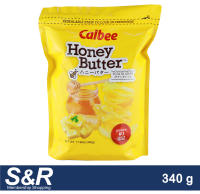
Calbee Honey Butter Potato Chips 340g
₱289.00
Buy on Lazada
2 x Calbee Honey Butter (170g)
₱311.00
Buy on Lazada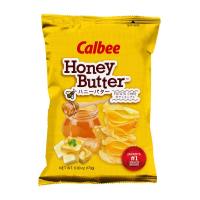
Calbee Potato Chips Honey Butter Party Size 170g - Pack of 2
₱267.00₱295.00
Calbee | Less Sugar Nutritious Oatmeal
₱1,146.00
Buy on Lazada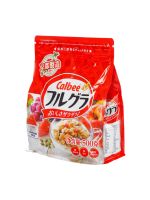
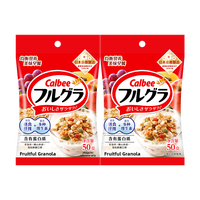
Calbee Fruit Granola Japan Mainland Version 450g 日本 本土版京都富果乐卡乐比水果燕麦片
₱899.00₱999.00
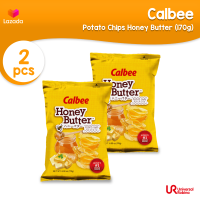
BUNDLE OF 2 Calbee Potato Chips Honey Butter (170g)
₱311.00
Buy on Lazada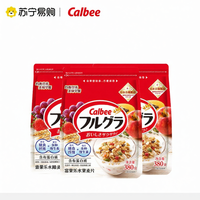
Calbee | Original Flavor Fruit Cereal 380g by Calbee Instant Breakfast Meal Replacement Satiety Instant Grains with Sugar from Japan
₱1,904.00
Buy on Lazada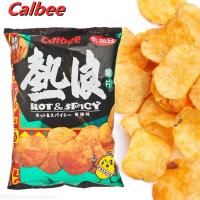
Calbee Hot & Spicy Potato Chips 105g 卡乐比热浪薯片
₱350.00₱399.00
About Calbee
Overview
Calbee, Inc. (Japanese: カルビー株式会社, Karubī Kabushiki-gaisha) is a leading Japanese food manufacturer recognised internationally for its potato chips, shrimp crackers, vegetable snacks, and breakfast cereals. Established in 1949, the company has evolved from a domestic confectionery producer into a multinational snack group with operations spanning Asia, North America, Europe, and Oceania.1
In its home market, Calbee is synonymous with brands such as Calbee Potato Chips, Kappa Ebisen, JagaRico, Jagabee, Sapporo Potato, and Frugra. The company distinguishes itself by combining Japanese manufacturing precision with a focus on natural ingredients, product innovation, and enjoyable eating experiences.2
Corporate Profile
| Item | Details |
|---|---|
| Company | Calbee, Inc. |
| Japanese name | カルビー株式会社 |
| Founded | April 30, 1949 |
| Headquarters | Tokyo, Japan |
| Industry | Food & beverage / snack foods |
| Main products | Potato chips, potato snacks, shrimp snacks, corn/flour/bean snacks, cereals |
| CEO | Makoto Ehara |
| Fiscal year | Ends March 31 |
| Employees | 6,974 consolidated; 3,711 parent company (as of March 31, 2026) |
| FY2026 consolidated net sales | ¥340.2 billion |
| Overseas markets | 11 markets |
| Listed company | Tokyo Stock Exchange |
The firm identifies its principal business as the production and sale of snacks and other food products.3
Origin of the Name
The name Calbee is a portmanteau derived from two nutritional terms:
- Cal: Calcium
- bee: Vitamin B1
Adopted in 1955 when the entity became Calbee Confectionery Co., Ltd., the name reflects the founder’s aspiration to create products that contribute to public health and nutrition.4 Unlike many invented brand names, Calbee was deliberately constructed around a health-and-nutrition concept.
History and Development
Founding and Early Years
Calbee traces its origins to Hiroshima, Japan, where it was established in 1949 as Matsuo Food Processing Co., Ltd. by Takashi Matsuo. Matsuo’s philosophy laid the groundwork for the company’s future product development approach.5
Initially, the company did not focus on potato snacks. Early production included caramel and rice crackers. A significant early release was Kappa Arare in 1955, but the company’s first major breakthrough arrived with the launch of Kappa Ebisen in 1964.6
Kappa Ebisen and International Expansion
Kappa Ebisen, a savoury snack made by incorporating fresh shrimp into wheat dough, became a defining product that established Calbee’s reputation for innovation.7 This success prompted early international expansion:
- 1966: Export of Kappa Ebisen began to Southeast Asia and Hawaii.
- 1967: Exports expanded to North America.
- 1970: Establishment of the first North American subsidiary.8
These moves demonstrate that Calbee’s international ambitions date back nearly as far as its modern snack business.
Transition to Potato Snacks
The most transformative period in Calbee’s history was its pivot to potato-based snacks. In 1972, the company introduced Sapporo Potato, its first product using fresh potatoes. This was followed by the launch of its core Potato Chips line in 1975.9
Rather than relying solely on external suppliers, Calbee developed expertise across the entire potato value chain, from variety development and cultivation to processing and retail. As of FY2026/3, the company works with approximately 1,600 contract farms and procures around 371,000 tonnes of potatoes domestically, representing roughly 19% of Japan’s total potato production.10 This vertical integration makes agricultural sourcing and raw-material technology central pillars of its business model.
Key Brands and Products
Calbee maintains a diverse portfolio that extends well beyond standard potato chips.
Calbee Potato Chips
Introduced in 1975, Calbee Potato Chips remain the company’s flagship family. Iconic flavours such as Seaweed Salt (1976) and Consommé Punch (1978) helped cement its dominance.11 According to FY2026 data, Calbee holds a 72.3% share of the Japanese potato-based snack market based on cumulative nationwide retail sales value.12
JagaRico
Launched in 1995, JagaRico is characterised by its short stick shape and crunchy texture. Its development allowed Calbee to utilise potatoes that were unsuitable for conventional chip slicing, reflecting a broader corporate philosophy of efficient resource use.13
Jagabee
Released in 2006, Jagabee uses cut potato pieces to replicate the texture of eating an actual potato. It has since been successfully introduced to multiple overseas markets.14
Kappa Ebisen
Dating back to 1964, Kappa Ebisen was instrumental in Calbee’s transformation into a major snack manufacturer.15 The brand has been adapted for various international markets, illustrating the company’s strategy of modifying Japanese-developed products to suit local palates.16
Sapporo Potato
As Calbee’s first fresh-potato product, Sapporo Potato (1972) references Hokkaido, the region most strongly associated with Japanese potato farming.17
Frugra
Calbee entered the cereal category in 1988 and launched Fruit Granola (now Frugra) in 1991. Frugra grew to become a dominant force in the sector, helping Calbee secure the No. 1 position in Japan’s domestic cereal market.18
Brand Portfolio Summary
| Brand | Main category | Key characteristic |
|---|---|---|
| Calbee Potato Chips | Potato chips | Flagship potato-chip franchise |
| JagaRico | Potato snack | Stick-shaped, crunchy texture |
| Jagabee | Potato snack | Authentic potato-piece texture |
| Kappa Ebisen | Shrimp snack | Historic iconic brand |
| Sapporo Potato | Potato snack | Long-running fresh-potato brand |
| Frugra | Breakfast cereal | Fruit-and-granola cereal |
| Harvest Snaps | Bean/vegetable snack | Key North American brand |
| miino | Bean snack | Individual/resealable format |
Calbee currently highlights Potato Chips, JagaRico, Jagabee, Kappa Ebisen, Sapporo Potato, and cereals as its core Japanese categories.19
Corporate Philosophy and DNA
Calbee’s identity is anchored in the concept of “harnessing nature’s gifts.” Its corporate philosophy emphasises bringing taste and fun while contributing to healthy lifestyles.20 This manifests in four key areas:
- Nature: Reliance on agricultural ingredients like potatoes, shrimp, beans, and grains.
- Taste: Significant investment in flavour, texture, and manufacturing technology.
- Fun: Product design focused on enjoyable eating experiences.
- Health: Expansion into cereals and wellness-oriented products.
A distinct element of Calbee’s corporate DNA is the utilisation of previously underused food resources. This includes transforming whole or irregular potatoes into snacks and converting beans and vegetables into savoury treats. Founder Takashi Matsuo’s influence remains evident in this approach, which asks how natural agricultural resources can be turned into desirable consumer products rather than simply inventing new flavours.21
Domestic Market Position
Calbee maintains exceptional strength in Japan. For FY2026/3, the company reported:
- ¥340.2 billion in consolidated net sales.
- 72.3% share of the potato-based snack category.
- 56.4% share of the flour-based snack category.
- 21.7% share of the corn-based snack category.
- 58.9% share of the bean-based snack category.
- No. 1 ranking in both the overall snack and cereal markets.22
Notably, seven brands generate annual sales exceeding ¥10 billion, underscoring the depth of its portfolio.23
Global Expansion Strategy
While Calbee has operated internationally for decades, overseas growth accelerated significantly after 2010. The company now operates in 11 markets, including the United States, South Korea, Mainland China, Hong Kong, Thailand, Singapore, Indonesia, Australia, New Zealand, and the United Kingdom.24
Calbee’s global strategy avoids simply exporting identical Japanese products. Instead, it combines Japanese technology with local manufacturing, flavours, and consumer preferences.25
United States
Entering the US market in 1970, Calbee’s North American portfolio includes Harvest Snaps, Shrimp Chips, JagaRico, Asian Style Chips, and Takoyaki Ball. Harvest Snaps serves as a flagship US brand, demonstrating the company’s ability to develop products aligned with local eating habits rather than relying exclusively on Japanese imports.26
South Korea
South Korea represents a key success story for localised innovation. The Honey Butter Chip, launched in 2014, became a massive hit and proved Calbee’s capacity to create products specifically tailored to Korean tastes using its proprietary technology.27
China
China is a priority market where Calbee both imports goods and manufactures locally. Products such as Jagabee and Frugra are produced within the country.28 In May 2026, Calbee announced the commencement of local OEM production for Frugra, further strengthening its Chinese supply chain.
United Kingdom
In the UK, Calbee has pursued growth through acquisition, notably purchasing Seabrook, a well-established British crisp brand. This move broadened its portfolio and provided a stronger platform for UK market growth, showcasing a sophisticated strategy that incorporates established local brands alongside Japanese ones.
Strategic Alliances and Listing
In 2009, Calbee formed a business and equity alliance with PepsiCo. This partnership included Japan Frito-Lay becoming a Calbee subsidiary, strengthening its domestic position and connecting it to a global beverage giant. Despite this alliance, Calbee remains an independent, publicly listed Japanese company.
Calbee listed on the First Section of the Tokyo Stock Exchange in 2011. Its corporate structure now encompasses snack manufacturing, cereals, potato procurement, logistics, overseas operations, and food-and-health initiatives.
Competitive Advantages
Calbee’s market position rests on five pillars:
- Potato Expertise: Comprehensive knowledge spanning varietals, farming, processing, and finished goods.
- Product Innovation: Continuous creation of new shapes, textures, and formats, from Kappa Ebisen to Frugra.
- Strong Brands: A diversified portfolio that reduces reliance on any single product.
- Manufacturing Know-how: Transfer of Japanese technologies to overseas businesses with local adaptation.
- Raw-material Control: Direct relationships with farmers and agricultural research ensuring quality and supply security.
Business Model and Value Chain
Calbee operates an integrated value chain covering ten processes, from natural-ingredient development to final delivery:
Agriculture → Ingredient Sourcing → Variety Research → Processing Technology → Product Development → Manufacturing → Branding & Marketing → Retail/E-commerce/Food Service → Consumers
This end-to-end control is considered one of the company’s most critical strategic assets.
Evolution Timeline
- 1949–1960s: Founded in Hiroshima; early focus on caramel, rice crackers, and Kappa Ebisen.
- 1970s: “Potato Revolution” with Sapporo Potato and Potato Chips.
- 1980s–1990s: Diversification into cereals; infrastructure development; JagaRico launch.
- 2000s: Portfolio expansion with Jagabee; PepsiCo alliance.
- 2010s: Accelerated globalisation across Asia, North America, and Europe.
- 2020s: Focus on agribusiness, food & health, sustainability, and global growth.
Current Strategic Direction
As of 2026, Calbee functions as a global food company built on snack expertise, agricultural capability, and product technology. While its Japanese core remains robust, the firm is actively expanding its international footprint and developing new growth engines in agribusiness and health.
Its long-term strategy focuses on three dimensions:
- Defend and Innovate Core: Sustaining leadership in Potato Chips, JagaRico, Jagabee, Kappa Ebisen, and Frugra.
- Global Growth: Strengthening businesses in North America, Greater China, Asia-Pacific, and Europe.
- Beyond Snacks: Expanding into agriculture, natural ingredients, and health-related sectors.
Brand Identity
| Dimension | Positioning |
|---|---|
| Origin | Japanese |
| Core Category | Snacks & cereals |
| Hero Ingredient | Potato |
| Brand Promise | Taste + fun |
| Personality | Playful, approachable, innovative |
| Functional Strength | Ingredient and manufacturing expertise |
| Emotional Appeal | Enjoyable everyday snacking |
| Global Strategy | Japanese expertise adapted locally |
| Innovation Style | New flavours, textures, formats, ingredients |
| Corporate Theme | Harnessing nature’s gifts |
Brand Architecture
Calbee’s portfolio is structured to address diverse categories and regional needs:
- Potato Snacks: Calbee Potato Chips, JagaRico, Jagabee, Sapporo Potato
- Savoury Snacks: Kappa Ebisen
- Cereal: Frugra
- Plant/Bean Snacks: miino, Harvest Snaps
- Local/Global Brands: Honey Butter Chip, Seabrook, and market-specific products
This architecture is flexible, allowing for deliberate adaptation to local market conditions.
Notable Facts
- The name Calbee combines calcium and vitamin B1.
- The company originally produced caramel and rice crackers before focusing on potatoes.
- Kappa Ebisen (1964) predates Calbee Potato Chips (1975) by over a decade.
- International exports began in the 1960s, with a North American subsidiary established in 1970.
- Agriculture is strategically vital, involving roughly 1,600 contract farms in Japan.
- The business extends beyond snacks to include cereals, logistics, and health initiatives.
- Localisation is key; examples include Honey Butter Chip in Korea and Harvest Snaps in North America.
References
- Corporate Data|Calbee
- Calbee: At a Glance|Calbee
- Our Business|Calbee
- Calbee
- Digest|Calbee
- History|Calbee
- Calbee’s Corporate DNA|Calbee
- Product History|Calbee
- Products (Overseas)|Calbee
- Products(Japan)|Calbee
- 8Calbee Group Integrated Report 2025MessageOu
- Integrated Report|Calbee
- IR Documents|Calbee
- IR・投資家情報|カルビー
- News|Calbee
- Investor Relations|Calbee
- Business Risks|Calbee
- Integrated Report|Calbee
- Products Depelopment Story|Calbee
- Investor Relations|Calbee
- CEO Message|Calbee
- Earnings Presentation|Calbee
- IR資料室|カルビー
- IR資料室|カルビー
- IR・投資家情報|カルビー
- 決算説明会資料|カルビー
- Financial Book|Calbee
- Calbee – About Us