Shop on Lazada
Kirin products
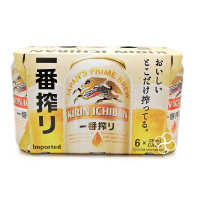
Kirin Ichiban Beer in Can 6 x 330mL
₱799.00₱998.00
CMH Kirin Japanese Lemon Tea 1.5L
₱205.00₱288.00
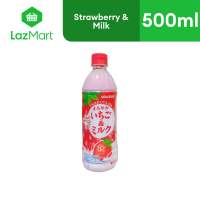
Sangaria Strawberry & Milk Drink 500ml
₱99.96₱102.00
Kirin Afternoon Milk Tea 1.5l
₱220.01₱224.50
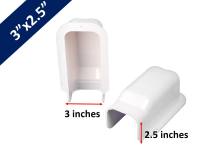
3x2.5 inches - PVC Molding 90⁰ Wall Cover for Air Conditioning
₱270.00
Buy on Lazada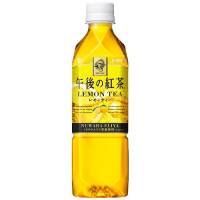
Kirin Lemon Tea 500ml
₱190.00
Buy on Lazada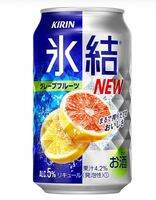
Kirin Hyoketsu Grapefruit Alc. 5% 350ml x 1
₱279.00₱299.00
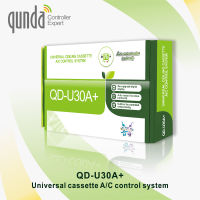
Universal Board – Cassette 4hp / 3tr (Non-Inverter)
₱3,000.00
Buy on LazadaAbout Kirin
Kirin is a prominent Japanese beverage brand and the flagship name of Kirin Holdings Company, Limited, a corporate group with origins in brewing. While internationally recognised primarily for Japanese beer, particularly Kirin Ichiban, the wider Kirin Group operates across alcoholic beverages, soft drinks, health science, and pharmaceuticals.1 The name “Kirin” refers both to the consumer brand found on beverages and to the holding company that manages this extensive portfolio.
Overview
| Field | Information |
|---|---|
| Brand name | Kirin |
| Japanese name | 麒麟 / キリン |
| Industry | Brewing, beverages, health science, pharmaceuticals |
| Country of origin | Japan |
| Corporate predecessor | Japan Brewery Company |
| Japan Brewery founded | 1885 |
| Kirin Brewery founded | 1907 |
| First Kirin Beer | 1888 |
| Major beer brands | Kirin Ichiban, Kirin Lager |
| Current parent | Kirin Holdings Company, Limited |
| Headquarters | Tokyo, Japan |
| Current CEO | Yoshinori Isozaki |
| 2025 consolidated revenue | ¥2.433 trillion |
| 2025 employees | 31,144 |
| 2025 group companies | 190 |
Kirin Holdings was incorporated on February 23, 1907. In 2007, Kirin Brewery changed its name to Kirin Holdings and became the holding company for the wider Kirin Group.2
Origins
The history of Kirin began in 1885 with the establishment of the Japan Brewery Company in Japan. The company aimed to produce beer using German brewing technology, ingredients, and equipment.3 In 1888, Japan Brewery introduced Kirin Beer, a German-style lager, marking the beginning of the Kirin consumer brand.4
The name Kirin is derived from the qilin (麒麟), a mythical creature in East Asian tradition symbolising auspiciousness, prosperity, and good fortune. The distinctive emblem of this creature has appeared on packaging since 1888 and represents quality and joy.5
Establishment of Kirin Brewery
In 1907, Kirin Brewery Company, Limited was established to take over the business of Japan Brewery Company, forming the corporate foundation of the modern Kirin Group.6 Early operations were heavily influenced by German brewing traditions, with an emphasis on authentic lager brewing and quality raw materials that helped establish beer as a significant part of Japanese consumer culture.7 Over time, the Kirin name became synonymous with beer in Japan.
Logo and Visual Identity
A defining feature of the brand is the qilin/kirin illustration. This image is based on the traditional East Asian legendary creature associated with good fortune rather than a generic fantasy animal. Although the design has undergone stylistic changes, the core concept has remained consistent. Historical records indicate that while the brand launched in 1888, the label design evolved through various versions in 1889, 1949, 1957, and subsequent periods.8 This continuity distinguishes Kirin from many modern beverage brands that frequently redesign their logos, maintaining a strong connection to its nineteenth-century heritage.
Key Beer Brands
Kirin Lager
Kirin Lager Beer is one of the company’s oldest surviving beer identities. Originally released as Kirin Beer in 1888, the product was renamed Kirin Lager Beer in 1988, retaining much of its traditional label design.9 It represents the company’s heritage of classic Japanese lager influenced by German techniques and remains historically significant despite the international prominence of other variants.
Kirin Ichiban
Kirin Ichiban is the most internationally recognisable Kirin beer, introduced in 1990.10 The name Ichiban (一番) translates to “number one” or “first/best.” Its primary distinction is the single-brew process, which uses only the first press of the wort, unlike conventional methods that may reuse brewing material. This process is marketed as producing a clean, refined character with rich malt flavour.11 Kirin positions Ichiban as a representation of Japanese craftsmanship rather than a standard mass-market lager.
Expansion Beyond Beer
Kirin diversified beyond brewing during Japan’s postwar economic expansion. Between 1956 and 1964, Japanese beer demand grew at an average annual rate of 20.6%.12 Key milestones in this diversification included:
- 1928: Launch of Kirin Lemon, marking entry into soft drinks.
- 1963: Establishment of a vending-machine beverage business.
- 1972: Entry into whisky via Kirin Seagram.
- 1976: Expansion into dairy products through Koiwai.
- 1980s onwards: Increasing involvement in health science and pharmaceuticals.13
This evolution transformed Kirin from a brewer into a diversified consumer and science-based group.
Transition to Conglomerate
During the 1980s and 1990s, Kirin leveraged its expertise in fermentation, microorganisms, and biotechnology to enter sectors beyond conventional beverage production. Interests expanded to include food, health-related products, pharmaceuticals, and scientific research. Notably, Kirin established a joint venture with American biotechnology company Amgen in 1984 focused on erythropoietin research and production.14 This strategy utilised technological knowledge developed through brewing to create businesses in health science and medicine.
Creation of Kirin Holdings
In 2007, a major organisational restructuring occurred when Kirin Brewery became Kirin Holdings Company, Limited. This entity serves as the holding company overseeing the wider Kirin Group, distinct from the operating company responsible for alcoholic beverages.15 Consequently, the modern group encompasses substantially more than beer.
Current Operations
As of the FY2025 results, Kirin Holdings reported ¥2.433 trillion in consolidated revenue, ¥251.8 billion in normalised operating profit, 190 group companies, 31,144 employees, and ¥102 billion in share capital.16 Operations span several geographic regions:
Japan
- Alcoholic beverages
- Non-alcoholic beverages
- Health science
- Pharmaceuticals
- Other businesses
Asia & Oceania
- Alcoholic beverages
- Non-alcoholic beverages
- Health science
- Pharmaceuticals
United States
- Alcoholic beverages
- Non-alcoholic beverages
- Pharmaceuticals
Europe
- Alcoholic beverages
- Pharmaceuticals17
Despite its popular image as a beer brand, Kirin operates as a multinational corporate group with a broad business model.
Major Products and Brands
Beer
- Kirin Ichiban: Premium lager launched in 1990 with international prominence.
- Kirin Lager Beer: Historic brand tracing roots to the original 1888 Kirin Beer.
Soft Drinks
The non-alcoholic portfolio includes tea beverages, carbonated drinks, fruit beverages, and functional beverages. Kirin Lemon, launched in 1928, was particularly significant as it represented early expansion beyond alcohol.18
Whisky and Other Alcoholic Drinks
Kirin operates in the whisky category, with a business dating back to the establishment of Kirin Seagram in 1972.19
Brand Philosophy and Cultural Significance
Kirin’s brewing philosophy centres on the concept of “Reverence for Life,” reflecting an emphasis on learning from living organisms and using fermentation and biotechnology to develop products.20 This philosophy underpins the company’s progression from brewing to health science and pharmaceuticals.
Domestically, Kirin is considered a classic Japanese beer name alongside Asahi, Sapporo, and Suntory. With a brand history dating to 1888, it is strongly associated with traditional craftsmanship, German-style lager heritage, and long-term brand continuity.21 Internationally, Kirin Ichiban serves as the primary brand ambassador, positioned as a Japanese premium lager emphasising craftsmanship and the distinctive mythical-creature logo.22
Corporate Structure
The Kirin entity can be understood through three layers:
1. Kirin (Consumer Brand): The name and logo appearing on products.
2. Kirin Brewery: The operating company for alcoholic beverages.
3. Kirin Holdings: The parent company controlling the wider group including health science and pharmaceuticals.
This structure explains how a company perceived as a brewer maintains significant operations in biotechnology and medicine.
Timeline
| Year | Event |
|---|---|
| 1885 | Japan Brewery Company established |
| 1888 | Kirin Beer launched |
| 1907 | Kirin Brewery Company established |
| 1928 | Kirin Lemon launched |
| 1943 | Kirin Science Institute established |
| 1949 | Kirin Beer trademark revived after wartime restrictions |
| 1963 | Beverage vending-machine business established |
| 1972 | Kirin enters whisky business |
| 1976 | Expansion into dairy products |
| 1984 | Kirin-Amgen pharmaceutical/biotechnology venture established |
| 1990 | Kirin Ichiban introduced |
| 2007 | Kirin Brewery becomes Kirin Holdings |
| 2010s | Greater international expansion and restructuring |
| 2020s | Increasing focus on health science and wellbeing |
| 2025 | Group revenue reaches ¥2.433 trillion |
This historical sequence is documented in Kirin’s official corporate history.23
Distinctive Characteristics
Kirin is distinguished by an identity that is simultaneously traditional and technological. It remains an historic Japanese beer brand with a recognisable nineteenth-century logo, while its parent company has developed into a diversified science-oriented corporation. The company is best described as a Japanese brewing company that transformed its expertise in fermentation and biotechnology into a global food, beverage, health-science, and pharmaceutical group.24
References
- About Us | KIRIN – Kirin Holdings Company, Limited
- Company Overview | About Us | KIRIN – Kirin Holdings Company, Limited
- 1885 – 1949 | Our History | KIRIN – Kirin Holdings Company, Limited
- キリンラガービールの歴史|キリンラガービール|キリン
- KIRIN ICHIBAN|ABOUT KIRIN
- キリンビール|商品ブランドの歴史|キリン歴史ミュージアム
- Our History | About Us | KIRIN – Kirin Holdings Company, Limited
- 1990 – 1999 | Our History | KIRIN – Kirin Holdings Company, Limited
- キリングループの歴史 | キリングループについて | KIRIN – キリンホールディングス株式会社
- Kyowa Kirin Publishes “Integrated Report 2025” – Kyowa Kirin
- Integrated Report | Investors | Kyowa Kirin Co., Ltd.
- Kirin Group Published “Integrated Report 2025” | 2025 | KIRIN – Kirin Holdings Company, Limited
- “Ichiban Shibori” continues to pursue the “ideal delicious beer.” Its journey and the reason for its taste|KIRIN
- KIRIN ICHIBAN Relaunch and Craft Beer Market Development | KIRIN JOURNAL | KIRIN – Kirin Holdings Company, Limited
- キリングループの歴史 | キリングループについて | KIRIN – キリンホールディングス株式会社
- About Us | KIRIN – Kirin Holdings Company, Limited
- キリングループについて | KIRIN – キリンホールディングス株式会社
- Integrated Report PDF | Integrated Report | KIRIN – Kirin Holdings Company, Limited
- Our History | About Us | KIRIN – Kirin Holdings Company, Limited
- Integrated Report | IR Library | KIRIN – Kirin Holdings Company, Limited
- Investors | KIRIN – Kirin Holdings Company, Limited
- IR Library | Investors | KIRIN – Kirin Holdings Company, Limited
- Integrated Report PDF | Integrated Report | KIRIN – Kirin Holdings Company, Limited
- 商品ブランドの歴史|キリン歴史ミュージアム