Shop on Lazada
Callaway products

Callaway | Quantum Triple Diamond Max Driver
₱41,790.15₱60,510.82
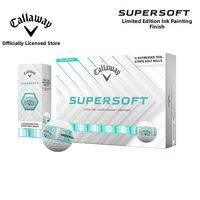
Callaway | Limited Edition Super Soft Ink Painted Golf Balls
₱2,813.67₱4,445.88

Callaway | Cb 12 Cavity Back Steel Wedge Backspin Prevention MenS Chrome Ns Pro 950 Neo
₱9,578.63₱15,287.29

Callaway | Callaway Chrome Tour / Soft Golf Balls 12-Count 10 Types (4-Piece /3-Piece) Choose 1
₱3,017.97₱4,404.39
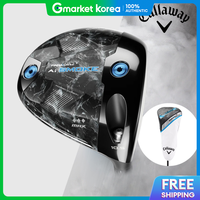
Callaway | Callaway Ai Smoke Max D Triple Diamond Driver Head Only 2024 Parallel Import Authenticity Guaranteed
₱23,057.28₱38,834.18

Callaway | Super Soft 25 6 Colors Ta3551315
₱2,021.64₱2,943.96
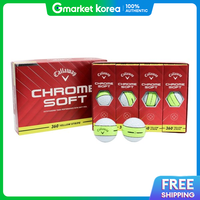
Callaway | Callaway Chrome Soft 360 Stripe Golf Ball 3-Piece Ta3815144
₱3,655.27₱5,320.33
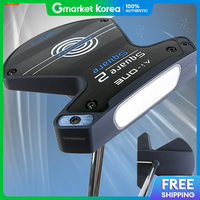
Callaway | Callaway 2025 Ai-One Square 2 Square Max1 Putter Pa3654448
₱19,575.08₱28,448.46
About Callaway
Callaway Golf is an American golf equipment and lifestyle company best known for its golf clubs, balls, bags, apparel, and accessories. Founded in 1982 by Ely Reeves Callaway Jr., the company grew from a small California golf club business into one of the world’s most recognized golf brands. Its reputation is particularly associated with innovation, game-improvement technology, distinctive product design, and making golf equipment accessible to a broad range of players. 1
As of 2026, the corporate entity has returned to the name Callaway Golf Company following its separation from Topgolf. It operates a portfolio that includes the Callaway, Odyssey, TravisMathew, and OGIO brands. 2
Quick facts
| Category | Information |
|---|---|
| Full corporate name | Callaway Golf Company |
| Brand | Callaway Golf |
| Founded | 1982 |
| Founder | Ely Reeves Callaway Jr. |
| Origin | California, United States |
| Headquarters | Carlsbad, California, USA |
| Industry | Golf equipment, apparel, bags and accessories |
| Core products | Drivers, fairway woods, hybrids, irons, wedges, putters, golf balls, bags and accessories |
| Major associated brands | Odyssey, TravisMathew, OGIO |
| Stock exchange | New York Stock Exchange |
| Current ticker | CALY |
| Corporate focus in 2026 | Pure-play golf and complementary golf/active-lifestyle products |
The company was originally incorporated in California in 1982 and became publicly traded on the NYSE in 1992. In January 2026, it changed its corporate name back from Topgolf Callaway Brands Corp. to Callaway Golf Company and adopted the ticker CALY. 2
Origins
Ely Callaway
The story of Callaway begins with Ely Reeves Callaway Jr. (1919–2001), an American businessman who entered the golf industry relatively late in life.
Before golf, Callaway had successful careers in textiles and winemaking. He founded Callaway Vineyard & Winery in Temecula, California, in 1973 and later sold the winery in 1981. At the age of 63, he returned to his lifelong interest in golf. 1
In 1982, Callaway became involved with Hickory Stick USA, a small golf club manufacturer in California. The business subsequently developed into Callaway Golf Company. 1
His philosophy was unusual for the golf equipment industry at the time: instead of designing equipment primarily for elite golfers, Callaway wanted to make clubs that were easier and more enjoyable for ordinary golfers to use. This philosophy eventually became central to the brand.
The Callaway philosophy
One of Callaway’s most recognizable philosophies is:
“Demonstrably Superior & Pleasingly Different”
The phrase captures two ideas:
- Demonstrably Superior — products should offer measurable or noticeable performance benefits.
- Pleasingly Different — products should not simply copy conventional golf equipment designs.
Callaway’s own history describes this philosophy as a foundation of its products and activities. 3 This helps explain why Callaway has historically invested heavily in clubhead design, materials, ball construction, launch technology, forgiveness, fitting, and player-oriented engineering.
The breakthrough: Big Bertha
If there is one product that transformed Callaway into a global golf brand, it is the Big Bertha driver.
Callaway introduced the original Big Bertha in 1991. It featured a substantially larger clubhead than many conventional drivers of its era and helped popularize the idea that a larger, more forgiving driver could make golf easier for ordinary players. 1
The significance of Big Bertha went beyond one successful club. It helped establish several concepts that are now normal in golf:
- Larger clubheads
- Greater forgiveness
- Perimeter-weighted designs
- Technology marketed directly to recreational golfers
- Golf equipment designed around ease of use rather than tradition alone
Callaway’s rise accelerated rapidly after Big Bertha. The company went from being a relatively young golf manufacturer to one of the industry’s major technology brands. 4
Going public
Callaway became a publicly traded company in 1992, listing on the New York Stock Exchange under the ticker ELY, a reference to founder Ely Callaway. 2
This gave the company access to capital for international expansion, research and development, manufacturing, marketing, and acquisitions. Callaway subsequently evolved from primarily a golf club company into a broader golf equipment business.
Expansion into putters: Odyssey
A major milestone came in 1997, when Callaway acquired Odyssey, a leading putter brand. 2
Odyssey became particularly important because putting represents a distinct part of the golf equipment market. The acquisition gave Callaway a strong position across multiple parts of a golfer’s bag:
Driver → Fairway wood → Hybrid → Iron → Wedge → Putter
Odyssey subsequently became one of the world’s most prominent putter brands. Callaway describes Odyssey as retaining the position of #1 putter brand in golf, with its success attributed to technology, feel, roll, and head design. 2
Entering the golf ball market
Callaway expanded beyond clubs into golf balls. In 2000, it introduced its first golf ball, Rule 35. 2
Golf balls became an important part of Callaway’s business because they complement its club portfolio. The company could increasingly offer a golfer an integrated equipment ecosystem rather than just individual clubs. Callaway later expanded its golf ball capabilities through acquisitions, including the acquisition of the Top-Flite golf ball business in 2003. 2
Technology and product development
Technology has always been central to Callaway’s identity. The company positions itself around research and development, engineering, and product innovation, rather than treating golf equipment simply as sporting goods. 4
Some recurring areas of Callaway engineering include:
Clubhead design
Callaway has repeatedly experimented with:
- Multi-material construction
- Carbon composites
- Titanium
- Tungsten weighting
- Adjustable weighting
- Face technologies
- Aerodynamic shaping
Forgiveness
A major part of Callaway’s consumer proposition is helping golfers who do not consistently strike the center of the clubface. Instead of designing only for maximum performance on a perfect strike, Callaway frequently emphasizes distance retention, stability, and forgiveness on off-center hits.
Speed and distance
Modern Callaway drivers and fairway woods emphasize increasing ball speed while maintaining launch characteristics and forgiveness.
Wedges
Callaway’s wedge development focuses on combinations of:
- Spin
- Groove design
- Sole geometry
- Turf interaction
- Short-game control
Golf balls
The company develops different balls for different player profiles, balancing:
- Distance
- Spin
- Feel
- Launch
- Control
This is why Callaway is better understood as a golf technology company than simply a manufacturer of golf clubs.
Professional golf
Callaway has also built its reputation through professional golfers and tournament golf. Over the years, professionals associated with Callaway equipment have included players such as Phil Mickelson, Sergio García, Henrik Stenson, Jim Furyk, Annika Sörenstam, and Michelle Wie, among many others. 4
Professional golf serves an important role for the brand:
Tour validation → technological credibility → consumer awareness
When professional golfers win major tournaments using a company’s equipment, the brand gains considerable visibility among amateur golfers. At the same time, Callaway’s philosophy has generally emphasized that technology developed for elite players can eventually benefit recreational golfers.
Expansion beyond golf clubs
During the 2010s, Callaway increasingly diversified.
OGIO
In 2017, Callaway acquired OGIO, a company known for bags and storage products. 2 OGIO’s products include:
- Golf bags
- Sports bags
- Travel bags
- Backpacks
- Business/lifestyle bags
TravisMathew
Also in 2017, Callaway acquired TravisMathew, a California lifestyle and golf apparel brand. 2
This was strategically important because it expanded Callaway into:
- Golf apparel
- Casual clothing
- Footwear
- Lifestyle products
The idea was to participate not only in the golfer’s equipment purchase but also in the lifestyle surrounding golf.
Jack Wolfskin
In 2019, Callaway acquired Jack Wolfskin, a German outdoor apparel brand. 2
This represented a significant move outside traditional golf. Jack Wolfskin gave the corporate group exposure to:
- Outdoor clothing
- Hiking
- Travel
- Outdoor equipment
However, this diversification was later reversed as the company refocused on golf. Callaway completed the sale of Jack Wolfskin to ANTA Sports in 2025. 2
The Topgolf era
One of the biggest developments in Callaway’s corporate history was Topgolf. Callaway had actually invested in Topgolf as early as 2006, and the two companies maintained a strategic relationship for many years. 2
In 2021, Callaway and Topgolf completed a merger. This created a much broader golf company combining:
Golf equipment + apparel + technology + entertainment
Topgolf operated entertainment venues where customers could play golf in a social environment, while Toptracer provided ball-tracking and golf technology capabilities. The combination was designed to broaden golf’s appeal beyond traditional golfers. 2
Topgolf Callaway Brands
Following the merger, the corporate name changed. In September 2022, Callaway Golf Company became Topgolf Callaway Brands Corp. The NYSE ticker also changed from ELY to MODG. 5
The corporate portfolio at this point was considerably broader than traditional Callaway golf equipment. It included businesses such as:
- Callaway Golf
- Odyssey
- TravisMathew
- OGIO
- Topgolf
- Toptracer
- Jack Wolfskin
This effectively made the company a combination of a golf equipment company, active-lifestyle company, and golf entertainment company.
Strategic refocusing
The company subsequently decided that the businesses were better separated. In September 2024, Topgolf Callaway Brands announced plans to separate the Topgolf business from the Callaway golf equipment and active-lifestyle business. 2
The rationale was essentially that the two businesses had different:
- Business models
- Capital requirements
- Growth profiles
- Investment characteristics
The separation allowed each company to focus on its own market.
Callaway returns to its roots
In January 2026, the corporate company officially changed its name back to Callaway Golf Company. At the same time, it returned to the NYSE under the ticker CALY. 2
The company described the move as a reaffirmation of its position as a pure-play golf business. 2 Its current portfolio includes:
Callaway
The flagship golf equipment brand.
Odyssey
Putters and related golf products.
TravisMathew
Golf and lifestyle apparel and footwear.
OGIO
Golf, sports, travel, and lifestyle bags.
The company currently describes itself as a premium golf equipment, gear, and apparel company. 2
What Callaway sells
Callaway’s product ecosystem can broadly be divided into several categories.
Golf clubs
Drivers
* Designed primarily for maximum distance, speed, and forgiveness.
Fairway woods
* Longer clubs intended for shots from the fairway or tee.
Hybrids
* Designed to combine characteristics of woods and irons.
Irons
* A major part of Callaway’s business, ranging from highly forgiving game-improvement irons to more player-oriented designs.
Wedges
* Short-game clubs designed around spin, control, and turf interaction.
Putters
* Primarily represented within the corporate portfolio by Odyssey.
Golf balls
Callaway sells multiple ball families designed for different combinations of:
- Distance
- Spin
- Feel
- Control
- Player ability
Bags and accessories
Through Callaway and OGIO, the company sells:
- Stand bags
- Cart bags
- Travel bags
- Backpacks
- Headwear
- Gloves
- Accessories
Apparel
Through Callaway and TravisMathew, the group participates in:
- Golf shirts
- Pants
- Shorts
- Jackets
- Outerwear
- Footwear
- Casual lifestyle clothing
Callaway therefore covers much of the golfer’s journey from equipment → apparel → bags → accessories. 1
Target customers
Callaway is unusual in that it does not focus exclusively on one skill level. Its products broadly target:
| Golfer | Typical Callaway proposition |
|---|---|
| Beginner | Forgiveness and ease of use |
| Casual golfer | Distance, forgiveness, and enjoyment |
| Intermediate golfer | Combination of performance and forgiveness |
| Low-handicap golfer | Control, feel, and precision |
| Professional | Tour-level performance and customization |
This broad positioning is one of the most important characteristics of the brand. Callaway’s stated mission is to create technologically innovative products that allow golfers of all abilities to play better and find more enjoyment in golf. 2
Callaway’s brand positioning
In the golf equipment market, Callaway is generally positioned as a premium, mainstream performance brand. Its competitive landscape includes companies such as:
- TaylorMade
- Titleist
- PING
- Cobra Golf
- Mizuno
- Srixon
Callaway’s distinctive positioning has historically been its combination of technology + forgiveness + recognizable design + professional validation.
Why Big Bertha matters so much
From a branding perspective, Big Bertha is probably the most important product name in Callaway history. It did three things simultaneously:
1. Product innovation
It challenged traditional assumptions about driver design.
2. Consumer communication
The name and oversized design were easy for ordinary golfers to understand.
3. Brand building
The success of Big Bertha transformed “Callaway” from a relatively young golf manufacturer into a household name among golfers.
It is therefore comparable to products such as the iPhone for Apple in the sense that it became strongly associated with the company’s identity and philosophy. Callaway itself credits the Big Bertha driver with helping drive the company to the top of the industry during the early 1990s. 4
Corporate identity vs. brand identity
An important distinction is that Callaway can refer to both the consumer brand and the corporation.
Callaway brand
The consumer-facing golf brand selling:
Drivers + woods + hybrids + irons + wedges + balls + bags + accessories
Callaway Golf Company
The corporate organization that owns and operates the broader portfolio:
Callaway + Odyssey + TravisMathew + OGIO
This distinction became especially confusing during the Topgolf Callaway Brands period from 2022 to 2026. Today, the corporate name is once again Callaway Golf Company. 1
Callaway’s place in modern golf
Callaway has evolved through several distinct phases:
1982–1990
Small California golf club company
↓
1991–1990s
Big Bertha drives explosive growth
↓
1997–2000s
Expansion into putters and golf balls
↓
2010s
Expansion into bags, apparel, and lifestyle
↓
2021–2025
Combination with Topgolf and creation of Topgolf Callaway Brands
↓
2026–present
Return to a focused golf equipment and active-lifestyle company
This makes Callaway one of the more interesting examples of how a traditional sporting goods company can evolve into a diversified consumer brand and then subsequently return to its core category.
Callaway’s legacy
Callaway’s biggest contribution to golf equipment is arguably making technology and forgiveness central to mainstream golf equipment.
Historically, golf equipment could be strongly associated with tradition and the needs of highly skilled players. Callaway helped popularize a different proposition:
Technology can make golf easier and more enjoyable.
That philosophy appears repeatedly throughout the company’s history—from Big Bertha to modern club and ball technologies. 1 Its legacy consequently extends beyond individual products. Callaway helped change consumers’ expectations about what a modern golf club should do.
Timeline
| Year | Event |
|---|---|
| 1982 | Ely Callaway establishes Callaway Golf Company |
| 1986 | Richard “Dick” Helmstetter becomes chief club designer |
| 1991 | Big Bertha driver introduced |
| 1992 | Callaway becomes publicly traded |
| 1997 | Acquires Odyssey |
| 2000 | Enters golf ball business with Rule 35 |
| 2003 | Acquires Top-Flite golf assets |
| 2006 | Callaway makes an early investment in Topgolf |
| 2017 | Acquires OGIO and TravisMathew |
| 2019 | Acquires Jack Wolfskin |
| 2021 | Completes merger with Topgolf |
| 2022 | Becomes Topgolf Callaway Brands Corp.; ticker changes to MODG |
| 2024 | Announces plan to separate Topgolf |
| 2025 | Completes sale of Jack Wolfskin |
| 2026 | Returns to Callaway Golf Company; ticker becomes CALY |
Summary
Callaway is an American premium golf brand founded in California in 1982 by Ely Callaway. It became famous for challenging conventional golf equipment design, most notably through the Big Bertha driver introduced in 1991. Over the following decades, it expanded from clubs into golf balls, putters through Odyssey, bags through OGIO, and apparel through TravisMathew. Its 2021 merger with Topgolf temporarily transformed the company into a much broader golf-and-entertainment group known as Topgolf Callaway Brands. After separating from Topgolf, the corporation returned to the Callaway Golf Company name in 2026. Today, Callaway represents one of the world’s major golf equipment brands, with a core identity built around innovation, performance, forgiveness, technology, and making golf more enjoyable for players of different abilities. 2
If one reduces Callaway’s history to a single concept, it is that Callaway took golf equipment from “traditional sporting equipment” toward “consumer-focused sports technology.” That is why Big Bertha, forgiveness, engineering, product innovation, and accessibility are so central to the Callaway identity. The company’s current return to a focused golf business in 2026 also brings its corporate story back toward the same core idea with which Ely Callaway began in 1982. 1