Shop on Lazada
Camry products

Camry Bathroom Scale BR2016 Max 130kg Bathroom
₱529.00
Buy on Lazada
Mechanical Personal Scale BR9807-C
₱690.00
Buy on Lazada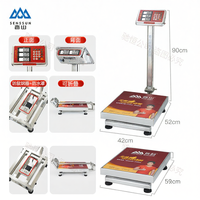
Camry | Waterproof Stainless Steel Platform Scale
₱12,008.00₱18,257.00
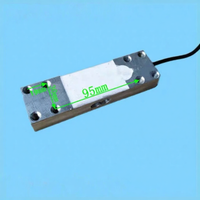
Original Full Set Electronic Scale Parts Motherboard Keypad Display
₱1,011.00
Buy on Lazada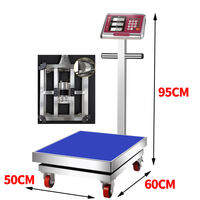
Camry | Stainless Steel Waterproof Folding Digital Scale 100kg
₱19,778.00
Buy on Lazada
Camry Digital Weighing Scale With Battery (Assted Design)
₱1,500.00
Buy on Lazada
Electronic Baby Scale - ER-7210H & ER7230
₱2,650.00
Buy on Lazada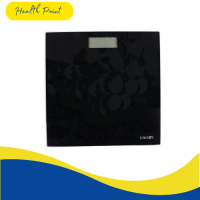
Bathroom Scale Digital CAMRY
₱1,265.00
Buy on LazadaAbout Camry
Overview
The Camry is a mid-size automobile nameplate manufactured by Toyota Motor Corporation. Since its introduction in 1980, it has evolved from a compact Japanese family saloon into one of Toyota’s most internationally recognised passenger cars, with particular prominence in North America. As of the 2026 model year, the Camry is in its ninth generation and is offered exclusively as a hybrid-electric vehicle (HEV) in the United States market.1
| Attribute | Details |
|---|---|
| Manufacturer | Toyota Motor Corporation |
| Model | Toyota Camry |
| Class | Mid-size / D-segment sedan |
| Body styles | Primarily 4-door sedan |
| Production | 1980–present |
| First generation | 1980, originally Celica Camry |
| Current generation | 9th generation |
| Current generation introduced | 2023 for 2025 model year |
| Current powertrain | Hybrid-electric, depending on market |
| Major market | North America |
| Related Toyota models | Historically related to vehicles such as the Vista and other Toyota mid-size platforms |
| Manufacturer website | Toyota Global – Camry archive |
Note: Specifications, engines, trim levels, and powertrain availability differ substantially between countries. The ninth-generation Camry, for example, is all-hybrid in the United States, but other markets may have different configurations.
History
Origins: Celica Camry
The Camry lineage began in 1980 with the Toyota Celica Camry, a four-door sedan derived from the Celica family. Toyota’s official historical archive lists the Celica Camry as the first vehicle in the Camry line, dated January 23, 1980.2 Despite sharing the Celica name, it was positioned as a practical, family-oriented sedan rather than a sports car variant, and utilised a front-engine, rear-wheel-drive layout.
The name “Camry”
The name Camry derives from the Japanese word kanmuri (冠), meaning “crown.” This aligns with Toyota’s historical naming tradition, which includes models such as the Toyota Crown that reference royalty or crowns.
Second generation: Independent model
A significant transformation occurred in March 1982 when Toyota redesigned the car, dropped the “Celica” prefix, and transitioned the Toyota Camry to a front-wheel-drive architecture with a transversely mounted engine. Toyota describes this as its first passenger car to use this specific front-engine, front-wheel-drive configuration.3 This generation established core characteristics including efficient packaging, four-cylinder engines, comfortable ride quality, and an increasing focus on international markets. Toyota’s archive dates this sedan to March 24, 1982.4
Generations
Toyota’s official archives identify the Camry lineage through successive generations.5
| Generation | Approx. introduction | General significance |
|---|---|---|
| Celica Camry | 1980 | Original predecessor |
| 2nd generation | 1982 | First standalone Camry; FWD |
| 3rd generation | 1986 | Major expansion and internationalisation |
| 4th generation | 1990 | Larger, more mature global sedan |
| 5th generation | 1994 | Continued growth and V6 availability |
| 6th generation | 1996 | Important global/North American evolution |
| 7th generation | 2001 | Major modern-market success |
| 8th generation | 2006 | More upscale and technologically advanced |
| 9th generation | 2011 | New global design direction |
| 10th generation | 2017 | TNGA-era Camry |
| Current generation | 2023/2024 | Ninth-generation modern Camry; all-hybrid in U.S. |
An apparent numbering discrepancy exists because Toyota’s Japanese and global archives historically count the 1980 Celica Camry as the first-generation entry, while later U.S. communications refer to the current car as the ninth-generation Camry. Different archives and markets therefore use varying generation conventions.
1980s: Establishing the Camry
Throughout the 1980s, Toyota positioned the Camry as a practical, economical sedan whilst gradually expanding its international presence. The shift to front-wheel drive improved interior space utilisation and packaging efficiency. The third-generation Camry arrived in 1986, followed by the fourth generation in 1990; Toyota’s official archive records these introductions as August 20, 1986, and July 11, 1990, respectively.6 During this period, the model transitioned from a primarily Japanese-market family car to an important global product.
1990s: Global mid-size sedan
The 1990s were pivotal for the Camry. Fourth- and fifth-generation models grew larger and more sophisticated, competing directly with established mid-size sedans from Honda, Nissan, Ford, and Chevrolet. The Camry developed a reputation for reliability, durability, comfortable ride quality, low ownership costs, fuel economy, practicality, and conservative styling. Toyota also increasingly offered V6 engines, allowing the Camry to compete beyond the traditional economy segment. The fifth generation appeared in 1994, with another generation following in 1996 according to Toyota’s official vehicle archive.7
North American success
The United States eventually became the Camry’s most important market. Local manufacturing helped integrate the model into the American automobile industry. The Camry succeeded by occupying a useful middle ground: more affordable and economical than many luxury cars, yet more refined and comfortable than basic compact cars. Toyota later described the model as having been the best-selling passenger car in the United States for 15 consecutive years during the period referenced in its 2017 global announcement.8 Subsequent communications noted that the Camry dominated the U.S. best-selling sedan category for more than two decades.9
2000s: Mainstream American icon
The seventh generation, introduced in 2001, cemented the Camry’s status as a mainstream American family sedan widely used by families, commuters, businesses, rental companies, fleet operators, and transport services. The eighth generation, introduced in 2006, pushed the model towards a larger, more upscale character with continued four-cylinder and V6 engine options depending on market and trim. By this era, the Camry had become Toyota’s definitive answer to the mainstream American mid-size sedan.
Hybrid era
Toyota introduced the Camry Hybrid in the mid-2000s, connecting the nameplate with the broader hybrid strategy established by the Prius. Combining a petrol engine with Toyota’s hybrid-electric system, it delivered substantially better fuel efficiency than conventional versions whilst retaining saloon practicality. Hybrid technology eventually became a defining characteristic of the model.
2011 generation
A major redesign arrived in 2011. Toyota’s official archive dates this generation to September 5, 2011.10 It continued the strategy of offering a comfortable, efficient sedan but placed increased emphasis on safety, fuel efficiency, electronics, hybrid technology, interior refinement, and broader consumer appeal, reinforcing the Camry’s importance in North America.
2017: The TNGA Camry
The 2017 Camry represented a philosophical shift, moving onto the Toyota New Global Architecture (TNGA) platform family. Rather than focusing exclusively on conservative comfort, Toyota aimed for a more visually aggressive and engaging driving experience. Features included lower proportions, expressive styling, improved handling, new interior architecture, updated four-cylinder engines, V6 availability, hybrid variants, and expanded driver-assistance technology. Toyota described the redesign as encompassing changes across the platform, powertrain packaging, electronics, and core components.11 This generation helped alter public perception from a purely conservative family sedan to a more stylish and dynamically capable car.
Ninth generation: The modern Camry
The latest major redesign is the ninth-generation Camry, unveiled in late 2023 for the 2025 model year in the United States and going on sale in 2024. The most significant change was the elimination of the conventional petrol-only powertrain from the U.S. lineup.
All-hybrid powertrain
For the U.S. market, the new Camry is 100% hybrid, combining:
- A 2.5-litre four-cylinder petrol engine
- Toyota’s fifth-generation Hybrid System (THS 5)
- Electric motor-generators
- Front-wheel drive or available electronic all-wheel drive
Toyota rates the FWD version at 225 net combined horsepower, while AWD versions produce 232 net combined horsepower. The LE FWD configuration is estimated to achieve up to 51 mpg combined in the U.S.12
Electronic AWD
The ninth-generation Camry introduced an available AWD system using a dedicated rear electric motor instead of a mechanical connection between axles. When additional traction is required, power is sent to the rear wheels. This arrangement provides better traction, improved packaging without a conventional driveshaft, additional acceleration capability, and efficient operation. Toyota states the electronic AWD system is available across all four U.S. grades of the ninth-generation car.13
Design
The latest Camry departs from the traditionally conservative appearance associated with the nameplate. Toyota employs a design language characterised by a “hammerhead” front fascia, with slim lighting elements extending toward the outer edges.14 Sport-oriented versions feature more aggressive styling, including larger wheels, sportier front-end treatment, aerodynamic elements, sport-tuned suspension, and aggressive rear styling. This reflects Toyota’s effort to imbue the Camry with a stronger emotional and performance-oriented identity whilst retaining its role as a practical sedan.
Technology and safety
Modern Camrys are equipped with significantly more technology than earlier generations. The ninth-generation U.S. car includes Toyota Safety Sense 3.0 as standard, featuring pre-collision detection, pedestrian detection, lane-related assistance, adaptive cruise control, road-sign recognition, blind-spot monitoring, and rear cross-traffic alert. Higher grades receive larger digital instrument displays and additional infotainment technology.15
Manufacturing
The Camry is integral to Toyota’s manufacturing operations outside Japan. A key facility is Toyota Motor Manufacturing Kentucky in Georgetown, Kentucky. In May 2024, Toyota announced that production of the ninth-generation Camry had begun at this plant, making it a central production hub for the new hybrid-only U.S.-market Camry.16 International production locations have varied by generation and market.
Global presence
Although strongly associated with the United States, the Camry is a genuinely international model sold in more than 100 countries, with cumulative worldwide sales exceeding 18 million vehicles.17 Its importance varies dramatically between markets:
United States
The Camry remains one of Toyota’s most important passenger cars and has historically been one of America’s dominant mid-size sedans.
Japan
While originating in Japan, the Camry’s positioning there differs from North America, and Toyota’s domestic lineup strategy has evolved considerably over the years.
Europe
The Camry has had an intermittent presence. Toyota UK notes it was introduced in 1983, discontinued after successive generations, and later returned as a hybrid from 2019 to 2022.18
Asia
In several Asian markets, the Camry has traditionally been positioned as a relatively upscale Toyota sedan, sometimes occupying a more prestigious position than its mainstream American image suggests.
Reputation
The Camry’s enduring success is largely attributable to its reputation for reliability, comfort, practicality, and low running costs. While not glamorous, this combination has proven commercially effective. The design philosophy traditionally emphasised everyday usability, with owners prioritising dependability over performance, comfort over aggressive handling, fuel economy over outright power, low maintenance costs, resale value, passenger space, and ease of ownership. These attributes made the Camry a strong choice for fleets, families, and commuters.
Competitors
Throughout its history, the Camry has competed primarily in the mainstream mid-size sedan segment against models including:
- Honda Accord
- Nissan Altima
- Hyundai Sonata
- Kia K5
- Volkswagen Passat
- Mazda6
- Ford Fusion
- Chevrolet Malibu
- Subaru Legacy
The Toyota Camry vs. Honda Accord rivalry is particularly notable in the United States, with both models symbolising reliable Japanese mid-size sedans. The Camry generally emphasised reliability, comfort, efficiency, and easy ownership, while competitors often focused more on driving dynamics, styling, technology, or value. The exact balance has shifted substantially across generations.
Factors in success
The Camry’s success stems from repeated refinement of an effective formula rather than any single revolutionary feature:
- Reliability: Long-term dependability established a strong reputation among consumers and fleet buyers.
- Practical size: Large enough for families without the bulk of a full-size sedan.
- Reasonable operating costs: Four-cylinder engines and later hybrid systems provided efficient transport.
- Comfort: Traditional prioritisation of smooth ride and quiet cabin.
- Strong resale value: High demand for used examples supported residual values.
- Global production: Enormous scale in manufacturing and sales.
- Continuous evolution: Repeated redesigns documented in Toyota’s archives from 1980 onward.19
The Camry nameplate today
The modern Camry differs considerably from the 1980 original. Today it is a globally recognised, sophisticated mid-size sedan and a major hybrid vehicle, available with electronic AWD in some markets and equipped with extensive driver-assistance technology. Styling is more aggressive than earlier iterations, yet the car remains designed around everyday usability. In the United States, the move to an all-hybrid lineup represents arguably the biggest change in the model’s history, transforming the Camry into a mainstream electrified vehicle without abandoning its successful foundational formula.20
Timeline
- 1980 — Celica Camry introduced in Japan.
- 1982 — Standalone Camry introduced; switches to front-wheel drive.21
- 1986 — Third-generation Camry.
- 1990 — Fourth generation.
- 1994 — Fifth generation.
- 1996 — Sixth generation.
- 2001 — Seventh generation.
- 2006 — Eighth generation.
- 2011 — Ninth generation in Toyota’s historical archive.
- 2017 — TNGA-based Camry introduced.
- 2023 — Ninth-generation modern Camry unveiled for the 2025 model year.
- 2024 — Production of the new hybrid-only U.S. Camry begins.
- 2025 — Ninth-generation Camry reaches the U.S. market as an exclusively hybrid model.
- 2026 — Camry continues as Toyota’s current mid-size sedan in the U.S. lineup.
In popular culture and automotive history
The Camry holds a distinctive status in automotive culture as simultaneously one of the world’s most recognisable sedans, a symbol of Japanese engineering, a benchmark for reliability, a common family and fleet vehicle, a frequent subject of jokes about “boring” cars, and increasingly, a surprisingly capable performance-oriented sedan. The stereotype of the Camry as boring is part of its cultural identity; Toyota deliberately built the model around dependability and usability, demonstrating that these traits can be more commercially vital than exotic styling or extreme performance. Newer generations have nevertheless attempted to challenge this stereotype with sportier styling, stronger powertrains, and more engaging handling.
Overall significance
The Toyota Camry is best understood as a continuously evolving product philosophy rather than a single type of automobile. Beginning as the Celica Camry in 1980, it became an independent front-wheel-drive model in 1982, expanded into a global mid-size sedan, achieved extraordinary success in North America, adopted hybrid technology, moved onto the TNGA architecture, and ultimately evolved into an exclusively hybrid sedan in the U.S. market. Its historical importance lies in Toyota’s success in making the Camry a car that millions could depend on for ordinary daily life. This combination of reliability, comfort, efficiency, practicality, and low ownership complexity made the Camry one of the defining mainstream automobiles of the late 20th and early 21st centuries.
For a full historical reference, Toyota’s own Camry vehicle archive documents the successive generations and original vehicles. Toyota Camry official archive
References
- Toyota Unveils Completely Redesigned Camry | Toyota | Global Newsroom | Toyota Motor Corporation Official Global Website
- Camry – Toyota USA Newsroom
- Toyota Unveils the Powerful and Purely Hybrid Next Generation Camry – Toyota USA Newsroom
- Camry | Company Archives | Downloadable Assets | Toyota Motor Corporation Official Global Website
- Camry | Vehicle Gallery | Toyota Brand | Mobility | Toyota Motor Corporation Official Global Website
- 2025 Toyota Camry – Toyota USA Newsroom
- First-Ever Toyota Crown Signia and Next-Generation Toyota Camry Arrive in Los Angeles for Auto Show Debut – Toyota USA Newsroom
- Five Things To Know About the New 2025 Toyota Camry – Toyota USA Newsroom
- Toyota Camry Goes Exclusively Hybrid Plus a New Look and More Technology – Toyota USA Newsroom
- Building on Greatness: Redesigned Toyota Camry Goes All-Hybrid at Kentucky Plant – Toyota USA Newsroom
- Camry – Archive – Toyota Media Site
- Toyota Celebrates Production of 10 Millionth Camry in Kentucky – Toyota USA Newsroom
- Camry | Toyota Motor Corporation Official Global Website
- Toyota Unveils Completely Redesigned Camry | Toyota Motor Corporation Official Global Website
- Toyota Camry History: our super-selling saloon | Toyota UK
- トヨタ企業サイト | トヨタ自動車75年史 | 車両系統図 | 車両詳細情報
- Toyota Unveils the Celica Camry | Toyota | Global Newsroom | Toyota Motor Corporation Official Global Website
- カムリ | 企業アーカイブズ | 画像・動画ダウンロード | トヨタ自動車株式会社 公式企業サイト
- 2025 Toyota Camry | Toyota.com
- Toyota Camry Archives – Toyota USA Newsroom
- 75 Years of TOYOTA | TOYOTA MOTOR CORPORATION GLOBAL WEBSITE | Vehicle Lineage | Engine type