Shop on Lazada
Canson products
Canson Sketch Pad 90gsm 9 x 12 50sheets + Doodle Pad A6
₱275.00
Buy on Lazada
Canson Sketch Pad 90gsm 12″ x 18″ 24sheets + Doodle Pad A6
₱275.00
Buy on Lazada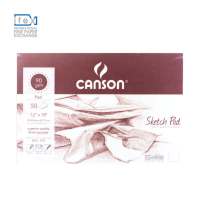
Canson Sketch Pad 90gsm 12 x 18 50sheets + Doodle Pad A6
₱495.00
Buy on Lazada
Canson Watercolor pad 9x12
₱360.00
Buy on Lazada
Canson Balloon Sketch Pad 90gsm A3 - 24sh + Doodle Pad A6
₱275.00
Buy on Lazada
Canson Watercolor Pad 200g 12 x 18 24sheets
₱577.00
Buy on Lazada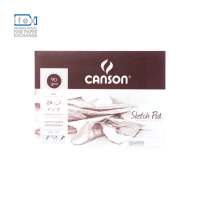
Canson Sketch Pad 90gsm 9 x 12 24 sheets + Doodle Pad A6
₱154.00
Buy on Lazada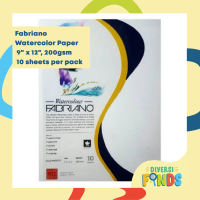
2 PACKS or 20 sheets Canson or Fabriano Watercolor Paper 9 x 12 200gsm 10 sheets/pack
₱248.00
Buy on LazadaAbout Canson
Overview
Canson is a historic French manufacturer of paper and fine-art materials, widely recognised for producing high-quality papers used in drawing, sketching, watercolour, pastel, painting, illustration, printmaking, photography, architecture, and various creative applications. The brand traces its origins to 1557, making it one of the world’s oldest continuously operating papermaking traditions.1 Today, Canson positions itself as a global leader in the fine-arts paper market, manufacturing products in France for artists, designers, architects, students, and hobbyists.
| Field | Information |
|---|---|
| Brand | Canson® |
| Origin | France |
| Historical roots | 1557 |
| Canson name introduced | 1801 |
| Industry | Paper / Fine-art materials |
| Headquarters / historic centre | Annonay, Ardèche, France |
| Parent company | F.I.L.A. Group |
| Acquired by F.I.L.A. | 2016 |
| Main products | Fine-art paper, sketchbooks, drawing pads, watercolour paper, pastel paper, technical paper, digital fine-art paper |
| Major markets | Fine art, education, design, architecture, photography, creative leisure |
| International presence | Distributed in more than 100 countries |
| Historical association | Montgolfier family and the invention of the hot-air balloon |
While the brand’s heritage extends back to 1557, the name Canson was formally integrated into the business in 1801 when Barthélemy Barou de la Lombardière de Canson assumed control of the Montgolfier paper enterprise.2
Origins: The Montgolfier Family
The history of Canson predates the modern brand by several centuries. In 1557, papermaker Jacques Montgolfier relocated from Ambert in Auvergne to the Beaujolais region, establishing a family involvement in papermaking that would span multiple generations.3 The family eventually settled in Vidalon, near Annonay in the Ardèche region of southeastern France, where they developed a reputation for technical experimentation in paper production.
This lineage is historically significant due to two notable descendants:
- Joseph-Michel Montgolfier
- Jacques-Étienne Montgolfier
Both brothers were papermakers and inventors whose experiments with paper envelopes and heated air led directly to the development of the Montgolfière hot-air balloon.
Canson and Aviation History
A defining element of Canson’s identity is its connection to early aviation. On 14 December 1782, the Montgolfier brothers conducted a successful experiment with a paper balloon at their family mill, preceding their famous public demonstrations of hot-air flight in 1783.4 Consequently, the hot-air balloon has become an enduring symbol of the brand.
In 2021, Canson updated its visual identity to reflect this heritage, introducing a logo in which a hot-air balloon replaces the letter “O” in the brand name, accompanied by the slogan “Manufacture depuis 1557” (“Manufactured since 1557”).5 This emblem serves as a direct link between the contemporary company and the experimental history of the Montgolfier family.
Formation of Canson & Montgolfier
The name Canson entered the company’s history in 1801 following the death of Étienne de Montgolfier, when his son-in-law, Barthélemy Barou de la Lombardière de Canson, succeeded him. The firm subsequently became known as Canson et Montgolfier.6 During this era, the company began integrating traditional papermaking knowledge with advanced manufacturing techniques, earning a reputation for specialised and innovative papers rather than conventional production.
Early Technical Innovations
Canson’s development is closely tied to several key advancements in papermaking technology.
Tracing Paper
Around 1809, the Canson family developed transparent paper suitable for tracing. This innovation proved particularly valuable for architects and technical draftsmen, as it allowed drawings to be copied without redrawing entire plans.7
Coloured Paper
The company pioneered techniques for incorporating colour directly into the paper pulp. Unlike surface-colouring methods, this process yielded sheets with consistent colouration throughout the material.8
Paper Machine Improvements
During the early 19th century, Canson contributed to the mechanisation of papermaking through improvements in water drainage and sheet formation. These included the suction-box system associated with Étienne de Canson, which enhanced the strength and consistency of machine-made paper.9
Internal Sizing
In 1827, Barthélemy and Étienne de Canson developed an improved sizing method involving wax-based materials incorporated into the pulp. This advancement significantly benefited papers intended for writing, drawing, and wet media techniques.10
Photography and Digital Imaging
Canson’s involvement with photographic media began in the 19th century. Historical records indicate a photographic-paper patent secured in 1865, while museum documentation suggests earlier development during the 1850s aimed at simplifying printing processes and reducing costs.11 This historical foundation evolved into the modern Canson Infinity range, designed for professional photographic and digital fine-art printing. Canson describes Infinity as its premier line for artists and photographers producing high-quality archival prints.12
Association with Artists
Canson maintains a longstanding cultural association with prominent European and international artists. Historical records cite the use of Canson papers by figures including:
- Vincent van Gogh
- Edgar Degas
- Eugène Delacroix
- Jean-Auguste-Dominique Ingres
- Henri Matisse
- Pablo Picasso
- Salvador Dalí
- Andy Warhol
- Aristide Maillol
- Wassily Kandinsky
- Georges Braque
Beyond supplying standard materials, Canson historically collaborated with artists to develop papers tailored to specific techniques. A notable example involves Aristide Maillol, who sought a high-quality paper for woodcuts around 1910; this collaboration led to the creation of Montval paper.14
Montval Paper
Canson Montval remains one of the brand’s most distinguished fine-art papers, particularly associated with watercolour and wet-media applications. Its development exemplifies Canson’s philosophy that paper is an active component of artistic creation, where texture, absorbency, sizing, weight, and tooth influence the behaviour of the artwork. Professional artists frequently distinguish between specific Canson ranges based on these technical properties rather than viewing the brand as a generic product.
Educational Products
In 1947, Canson introduced a paper pouch or folder that facilitated the sale and storage of individual drawing sheets. This product became deeply embedded in French school art education,15 making the brand familiar to generations of students and teachers. This dual identity—serving both professional fine-art markets and accessible educational needs—remains central to the brand’s positioning.
International Expansion
Canson expanded beyond France during the 20th century, establishing a subsidiary in New York in 1926 to support growing international ambitions.16 By the late 20th century, the company had developed subsidiaries and operations outside France,17 and today states that its products are distributed in more than 100 countries.18
Corporate Ownership
Arjomari
During the mid-20th century, Canson became increasingly aligned with the French paper group Arjomari, fully integrating into the group in 1976.19
Hamelin
In 2007, Canson joined the Hamelin Group, a major European supplier of school and office products known for brands such as Oxford and Elba.
F.I.L.A.
In 2016, Canson was acquired by the Italian group F.I.L.A. — Fabbrica Italiana Lapis ed Affini, a major international company specialising in artistic expression and creativity products. This acquisition placed Canson within a broader portfolio of art-material brands.
Current Product Portfolio
Canson’s contemporary offerings span several major categories.19
Fine-Art Paper
The core category includes papers designed for drawing, sketching, watercolour, pastel, charcoal, coloured pencil, oil painting, acrylic, printmaking, illustration, art publishing, and conservation.
School Products
Papers designed for students and classroom use, available in various weights, colours, textures, and formats.
Creative Leisure
Papers intended for general crafts and recreational creative activities.
Digital Fine Art
The Canson Infinity line targets photographers, digital artists, and fine-art printers, offering papers engineered for high-quality inkjet reproduction.
Technical and Design Applications
Specialist papers for technical drawing, architecture, conservation, and related professional fields.
Key Product Families
Several product lines are closely identified with the Canson brand:
- Canson 1557: A classic drawing and sketching paper. The current range supports pencil, coloured pencil, pastel, charcoal, red chalk, and felt pen. The 120 gsm version features a subtle grain suited to dry techniques.
- Canson Montval: A historic fine-art paper primarily associated with watercolour and wet techniques.
- Canson XL: A student-oriented range popular for sketching, drawing, and mixed-media work.
- Canson Graduate: A contemporary line for students and developing artists, covering watercolour, manga, and mixed media.
- Canson Infinity: The premium digital fine-art and photographic printing family.
Technical Specifications
Canson papers are differentiated by specific engineering characteristics rather than brand name alone. Key variables include:
- Weight (gsm)
- Texture and grain
- Tooth
- Absorbency
- Sizing
- Surface finish
- Colour
- Opacity
- Acid-free status
- Archival and conservation properties
For instance, Canson 1557 180 gsm paper is specified as having a light grain, being acid-free and FSC-certified, and optimised for dry media such as graphite, coloured pencil, pastel, charcoal, and felt pen. Different ranges are engineered for distinct artistic techniques, making generalisations about “Canson paper” technically imprecise.
Market Positioning
Canson operates simultaneously across multiple market segments:
- Professional: Specialised papers for finished artwork, exhibitions, printmaking, and demanding watercolour applications.
- Student: Affordable, versatile papers for art education.
- Hobbyist: Sketchbooks and drawing pads for casual artists.
- Digital Art: High-end digital printing and photographic reproduction via Canson Infinity.
This breadth of coverage is considered one of the brand’s primary strengths.
Environmental Standards
Canson emphasises environmentally responsible production in France. Specific products carry distinct certifications; for example, Canson 1557 180 gsm is listed as FSC-certified and acid-free. However, environmental and archival specifications vary by product line and should be verified individually.
Musée des Papeteries Canson & Montgolfier
The brand’s heritage is preserved at the Musée des Papeteries Canson & Montgolfier in Davézieux, near Annonay, France. Located in a historic site associated with the Montgolfier family, the museum documents the evolution of papermaking from handmade production to industrial machinery.9 Notably, it houses a full-size operational paper machine, allowing visitors to observe industrial papermaking processes firsthand. The museum functions as a custodian of Canson’s historical identity rather than merely a corporate exhibition space.
Timeline
| Year | Event |
|---|---|
| 1557 | Jacques Montgolfier’s papermaking story begins in the historical Canson lineage |
| 1692 | Montgolfier family becomes established at Vidalon |
| 1777 | Development of high-quality vellum-like paper |
| 1782 | Montgolfier brothers conduct early paper-balloon experiments |
| 1784 | Vidalon receives the status of Manufacture Royale |
| 1801 | Name Canson enters the papermaking business |
| 1809 | Major developments in tracing and coloured paper |
| 1824 | Improvements to paper-machine drainage |
| 1827 | New internal-sizing technique |
| 1865 | Canson secures a photographic-paper patent |
| 1887 | Van Gogh is documented as using Canson & Montgolfier paper |
| 1910 | Montval paper development begins |
| 1926 | Canson & Montgolfier establishes a New York subsidiary |
| 1947 | Famous Canson school-paper pouch introduced |
| 1956 | Canson becomes involved in the restructuring of the French paper industry |
| 1976 | Canson becomes part of Arjomari |
| 1979 | International expansion accelerates |
| 1987 | Canson & Montgolfier museum established |
| 2007 | Canson joins Hamelin |
| 2016 | Canson acquired by F.I.L.A. |
| 2021 | New logo introduced featuring the hot-air balloon |
| Today | Canson operates as a major international fine-art paper brand |
Brand Identity
Canson’s identity rests on three foundational pillars:
- French Heritage: Emphasis on longstanding papermaking history and connection to Annonay.
- Art and Creativity: Provision of surfaces and materials enabling artistic creation.
- Innovation: Historical foundation rooted in the Montgolfier family’s experimentation with paper and hot-air balloons.
The 2021 logo synthesises these elements: the balloon represents the Montgolfier legacy, while “Manufacture depuis 1557” communicates the company’s extensive history.5
Historical Significance
Canson occupies a unique position at the intersection of art, science, industry, and education. Its history encompasses traditional European papermaking, industrialisation, technical drawing, architecture, photography, fine art, art education, aviation history, and digital imaging. The same papermaking tradition that supplied artists also contributed to one of the 18th century’s most significant technological achievements: the Montgolfier hot-air balloon.
References
- About us | Canson®
- Canson® – Serving Artists
- Our Story | Canson®
- 1557 Birth of a saga – Our Story Canson Infinity
- Stationery through the centuries – Musée Papeteries Canson & Montgolfier
- 150 years of photography | Canson Infinity
- 1557® 120gsm | Canson
- 1557® 180g/m² | Canson
- History & Presentation – Musée Papeteries Canson & Montgolfier
- 1801 Birth of Canson et Montgolfier – Our Story Canson Infinity
- La papeterie au fil des siècles – Musée Papeteries Canson & Montgolfier
- Histoire & Présentation – Musée Papeteries Canson & Montgolfier
- Canson® 1557® Art Book | Canson
- 1557® – Fine art | Canson
- Canson® 1557® Art Book | Canson
- Notre histoire : Canson®, plus de 450 ans de papier de qualité
- Canson® – Serving Artists
- Qui sommes-nous ? | Canson®
- Drawing – Fine art | Canson