Shop on Lazada
Cavendish & Harvey products
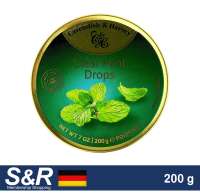
Cavendish & Harvey Clear Mint Drops 200 g
₱112.00
Buy on Lazada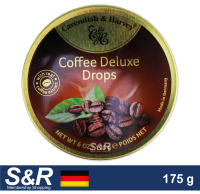
Cavendish & Harvey Coffee Deluxe Drops 175g
₱111.00
Buy on Lazada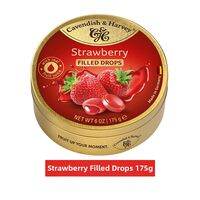
Cavendish & Harvey | Fruity Filling High-appeal Online-popular Candy 175g
₱302.00
Buy on Lazada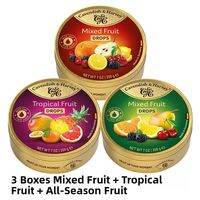
Mixed Fruit Flavored Hard Candy
₱856.00
Buy on Lazada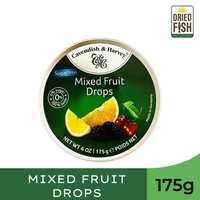
CAVENDISH & HARVEY Mixed Fruit Drops 175g Sugar free 0% sugar 0% fat Made in Germany
₱230.00₱280.00
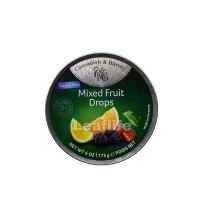
Cavendish and harvey drops candy
₱195.00
Buy on Lazada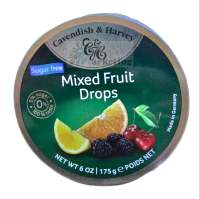
AUTHENTIC CAVENDISH & HARVEY NO SUGAR WITH MIXED FRUIT DROPS 100% TASTE 175g
₱209.00₱229.00
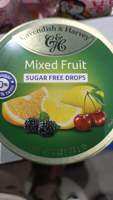
Cavendish & Harvey Sugar Free Mixed Fruit Drops
₱269.00₱299.00
About Cavendish & Harvey
Overview
Cavendish & Harvey is a German confectionery brand recognised for its premium hard candies, fruit drops, caramel sweets, and other confections sold in distinctive gold-coloured metal tins. Although the modern brand was established in London in 1977, its corporate origins trace back to a trading business founded in Hamburg in 1932.1 Today, the company is headquartered in Kaltenkirchen, Schleswig-Holstein, Germany, and operates as a family-owned business within the Boettger Group.12
| Field | Information |
|---|---|
| Brand name | Cavendish & Harvey |
| Company | Cavendish & Harvey Confectionery GmbH |
| Industry | Confectionery / FMCG |
| Origin of corporate roots | Hamburg, Germany, 1932 |
| Cavendish & Harvey brand founded | 1977 |
| Brand’s original 1977 location | London, United Kingdom |
| Current headquarters | Kaltenkirchen, Schleswig-Holstein, Germany |
| Ownership | Boettger Group |
| Business type | Family-owned |
| Main products | Hard candies, fruit drops, filled drops, caramel sweets and other confectionery |
| Signature packaging | Gold-coloured metal tins |
| International presence | More than 80 countries historically; current materials cite more than 100 markets |
| Production | More than 2.2 billion pieces of confectionery annually |
| Positioning | Premium / gourmet confectionery |
| Tagline associated with the brand | “Confectionery for Connoisseurs” |
Recent company materials state that the brand is sold in more than 100 countries and that its German operation employs around 200 people.1 Older corporate profiles cited distribution in more than 80 countries, indicating an expansion of market reach over time.1
History
1932: The beginnings
The history of Cavendish & Harvey dates to 1932, when Paul Schmedding established a trading company in Hamburg-Altona. The business originally focused on duty-free goods and imported products, particularly those from Britain.1 This early connection with British goods later became central to the company’s identity.
1950s: British confectionery
From around 1959, the company increasingly specialised in trading British confectionery.1 This period provided extensive experience with English sweets and laid the foundation for the eventual creation of the Cavendish & Harvey brand.
1977: Cavendish & Harvey is born
A decisive milestone occurred in 1977 with the establishment of Cavendish & Harvey Ltd. in London.3 The new brand was created to develop an internationally recognisable confectionery identity. Products were initially sourced in Britain and packaged at the company’s facility in Goole, near Hull, where the 200 g “Travel Tins” became a key product format.3 Consequently, Cavendish & Harvey possesses a dual heritage: its corporate roots are German, while the brand itself launched with a British identity.
1983–1984: Return to Germany
The British packaging operation closed in 1983, with activities relocating to Hamburg.3 In 1984, Cavendish & Harvey established its German corporate structure and opened a new factory in Kaltenkirchen, north of Hamburg.3 Kaltenkirchen subsequently became the long-term home of the business.
1990s: Moving into own production
During the early 1990s, Cavendish & Harvey transitioned beyond trading and packaging to manufacturing its own confectionery. In 1991, it began producing hard caramels and candies.3 A significantly larger factory followed in 1995, enabling expanded production capacity.3 The company was formally renamed Cavendish & Harvey Confectionery GmbH in 1998.1
2001: Major factory fire
In July 2001, a major fire caused extensive damage to the Kaltenkirchen candy factory.1 The facilities were subsequently rebuilt, and operations continued.
2002: Acquisition by Boettger
Cavendish & Harvey was acquired by the Boettger Group, a German family-owned business group, in 2002.1 The Boettger Group remains the owner of the brand. In 2024, the group described Cavendish & Harvey as its internationally oriented confectionery subsidiary and expanded its confectionery activities through the acquisition of Jahnke Süßwaren.
2010s–present: International premium brand
In subsequent years, Cavendish & Harvey increasingly positioned itself as a premium confectionery brand, emphasising recipes, ingredients, quality standards, and distinctive packaging. The company uses the positioning “Confectionery for Connoisseurs”, reinforcing the concept that its products occupy a premium space distinct from ordinary everyday candy.4
Products
The Cavendish & Harvey portfolio centres on hard confectionery, particularly fruit-flavoured sweets.
Fruit Drops
Fruit Drops are among the brand’s best-known products. They typically combine concentrated fruit flavours with a hard-candy format and are packaged in the characteristic gold tins. Some products use real fruit juice, natural flavours, and plant-derived colouring ingredients.5 Varieties include orange, raspberry, cherry, lime, and mixed fruit.
Double Fruit Drops
Double Fruit Drops represent a distinctive product concept combining two fruit flavours in a single candy. For example, the Orange with Raspberry Filling product features an orange-flavoured exterior and a raspberry filling.6 Cavendish & Harvey states these products use real fruit juices and are dusted with icing sugar before packaging in gold tins.6 Another combination, Cherry with Lime Filling, pairs a sweet cherry exterior with an acidic lime centre.6
Caramel Drops
The brand produces caramel-focused sweets presented as premium drops in gold-tin packaging.5 Varieties include salted caramel, Belgian chocolate, and Arabica coffee.
Other confectionery
The wider portfolio has included mints, fudge, wine gums, toffees, jellies, and éclairs, although the brand is most strongly associated with its fruit drops and hard candies.7
The famous gold tins
The gold-coloured metal packaging is one of the most recognisable characteristics of Cavendish & Harvey. The tin serves as a major component of the brand’s identity rather than merely functional packaging. Products are presented as premium confectionery in reusable-looking metal tins, distinguishing them from conventional plastic bags or inexpensive wrappers. This contributes to the perception of Cavendish & Harvey as a giftable, sophisticated, and somewhat nostalgic brand.
Historically, the 200 g Travel Tins were particularly significant, serving as a key product when the international brand was established in the 1970s.5
Brand identity
Cavendish & Harvey occupies a space between traditional confectionery and premium gourmet candy. Its branding is characterised by gold packaging, traditional European and British visual references, metal tins, fruit and caramel flavours, an emphasis on craftsmanship and recipes, premium positioning, gift-oriented presentation, and international distribution. The company describes its philosophy as focusing on selecting quality ingredients, developing distinctive recipes, and maintaining strict quality standards.5 The phrase “Confectionery for Connoisseurs” summarises this positioning.4
German brand with British heritage
Describing Cavendish & Harvey simply as a “British candy brand” would be misleading. The company began as a German trading business, developed a strong connection with British confectionery, established the Cavendish & Harvey brand in London in 1977, and eventually consolidated production in Germany. Today, products are explicitly marketed as “Made in Germany.”1 In modern terms, Cavendish & Harvey is best described as a German confectionery manufacturer and international premium candy brand with British heritage.
Manufacturing
The principal manufacturing site is located in Kaltenkirchen, Germany. Production has expanded considerably since the early 1990s. According to company information, Cavendish & Harvey produces more than 2.2 billion pieces of confectionery annually, packed into more than 25 million tins.8 Approximately 80% of production is exported.8 Following a production expansion in 2021, the factory was reported as capable of producing up to 50 tonnes of different products per day.1
International presence
Cavendish & Harvey has evolved from a European confectionery company into a global export business. While older information described distribution in more than 80 countries, recent materials state products are sold in more than 100 countries.8 Key international markets include regions in Europe, North America, East Asia, Southeast Asia, and the Middle East. Earlier reporting specifically identified China, Taiwan, Japan, the United States, Saudi Arabia, and South Korea as important export markets.1 International exports are fundamental to the brand’s business model rather than reliance on the German domestic market.
Ownership
Cavendish & Harvey Confectionery GmbH is part of the Boettger Group, a German family-owned business group that acquired the company in 2002.1 The company continues to describe itself as a family-owned business with headquarters and main manufacturing operations in Kaltenkirchen.5 In 2024, the Boettger Group further expanded its confectionery activities by acquiring Jahnke Süßwaren GmbH, known for liquorice products.
Position in the confectionery market
The competitive identity of Cavendish & Harvey differs from mass-market candy companies. Rather than competing primarily on low prices or enormous variety, the brand emphasises premium presentation, distinctive flavours, traditional confectionery, German manufacturing, and international appeal. The gold tin transforms hard candy into a product suitable for use as a small gift, souvenir, travel purchase, or premium treat. Consequently, Cavendish & Harvey products are found in international retail, specialty food stores, travel-oriented channels, and gift-oriented environments.
Packaging and consumer appeal
Packaging is arguably as important to the brand as the confectionery itself. A typical product features three recognisable components: the gold tin, which creates a premium and collectible appearance; traditional typography and decoration communicating heritage and sophistication; and colour-coded flavour presentation facilitating easy distinction between varieties. This combination provides distinctive shelf presence and differentiates the brand from conventional candy sold in plastic bags.
Ingredients and product characteristics
Many fruit products emphasise real fruit juice, natural flavours, and natural or plant-derived colours. For example, the Double Fruit Drops Orange/Raspberry product lists fruit juice concentrates, natural flavourings, and colouring plant extracts. It is described as gluten-free, preservative-free, kosher, and halal.6 These characteristics may vary by product and should not be assumed for the entire portfolio.
Cavendish & Harvey in the Philippines
Cavendish & Harvey maintains a presence in the Philippine market. Philippine FDA records list Cavendish & Harvey Coffee Deluxe Drops as a registered food product, identifying the manufacturer as Cavendish & Harvey Confectionery GmbH in Kaltenkirchen, Germany. This illustrates the brand’s international distribution model, wherein confectionery is manufactured in Germany and imported or distributed through local partners in individual markets.
Distinctive characteristics
Cavendish & Harvey stands out for several reasons:
- Unusual history: Combines German corporate origins with British confectionery heritage.
- The gold tin: Metal packaging is synonymous with the brand and central to its premium positioning.
- Premium hard candy: Presents hard candy as a sophisticated confectionery product rather than a basic inexpensive sweet.
- Fruit-focused recipes: Fruit flavours, fruit juice, and combinations such as orange/raspberry and cherry/lime are central to product identity.
- German production: Contemporary confectionery is manufactured in Germany despite British-inspired heritage.
- Strong export orientation: Products reach more than 100 countries according to current company materials.5
Timeline
| Year | Event |
|---|---|
| 1932 | Paul Schmedding establishes a trading company in Hamburg-Altona. |
| 1959 | The company expands its specialisation in British confectionery. |
| 1977 | Cavendish & Harvey Ltd. is established in London. |
| 1983 | British packaging operation closes and operations move back to Germany. |
| 1984 | New factory established in Kaltenkirchen. |
| 1991 | Company begins its own production of hard caramels. |
| 1995 | Larger production facility constructed in Kaltenkirchen. |
| 1998 | Company becomes Cavendish & Harvey Confectionery GmbH. |
| 2001 | Major fire damages the Kaltenkirchen factory. |
| 2002 | Cavendish & Harvey is acquired by the Boettger Group. |
| 2010s | Brand increasingly develops its premium international positioning. |
| 2021 | Production facilities are expanded. |
| 2024 | Boettger Group acquires Jahnke Süßwaren, expanding its confectionery portfolio. |
| 2026 | Cavendish & Harvey continues operating from Kaltenkirchen as an internationally distributed German premium confectionery brand. |
Historical details are compiled from company and industry material and historical reporting.12
References
- Cavendish & Harvey
- WIR SUCHEN UNTERSTÜTZUNG!
- Cavendish & Harvey Confectionery GmbH – cavendish,harvey,bona dea
- Cavendish & Harvey Confectionery
- German Sweets Guide – C&H Travel Tins
- Double Fruit Drops ⇒ Orange drop with raspberry filling ⇒ Cavendish & Harvey
- Cavendish & Harvey Confectionery GmbH – Company Profile and News – Bloomberg Markets
- Cavendish & Harvey Confectionery GmbH | LinkedIn