Shop on Lazada
Chivas Regal products
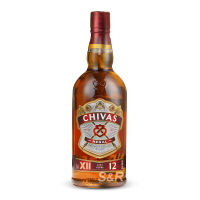
Chivas Regal Aged 12 Years Blended Scotch Whisky 1L
₱1,184.00
Buy on Lazada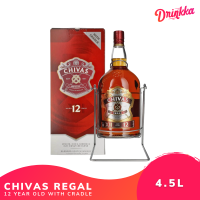
Chivas Regal 12 Year Old with Cradle 4.5L | Blended Scotch Whisky | Drinkka
₱8,754.00₱9,999.00
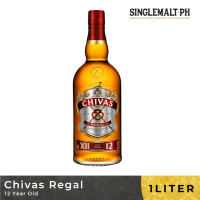
Chivas Regal 12 Year Old Blended Scotch Whisky 1L
₱1,349.00₱1,689.00
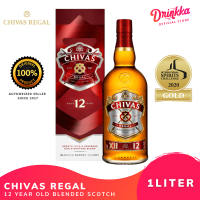
Chivas Regal 12 Year Old 1L Blended Scotch Whisky | Drinkka
₱1,362.00₱1,631.00
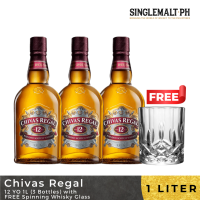
Chivas Regal 12 YO 1L (3 Bottles) with FREE Spinning Whisky Glass
₱4,081.00₱4,679.00
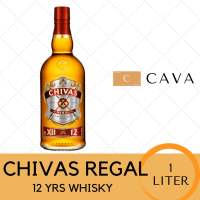
Chivas Regal 12yo Scotch Whisky 1 liter - New Bottle
₱1,199.99
Buy on Lazada
Chivas Regal Aged 12 Years Blended Scotch Whisky 1L (w/ Box)
₱2,350.00₱2,498.00
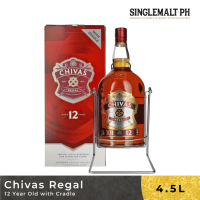
Chivas Regal 12 Year Old with Cradle 4.5L
₱8,999.00₱9,749.00
About Chivas Regal
Chivas Regal is a Scottish blended Scotch whisky brand with roots in Aberdeen and a history stretching back to the early 19th century. Today, it stands as one of the most recognised premium Scotch whisky brands internationally and operates under Pernod Ricard through its Scotch whisky division, Chivas Brothers. The brand is particularly associated with a smooth, rich blended profile, luxury positioning, Scottish heritage, and the concept of shared success.1
Overview
| Category | Details |
|---|---|
| Brand | Chivas Regal |
| Industry | Scotch whisky / alcoholic beverages |
| Origin | Aberdeen, Scotland |
| Country | Scotland, United Kingdom |
| Founded / historical roots | 1801; Chivas Brothers developed in the 19th century |
| Founders associated with the brand | James Chivas and John Chivas |
| Product type | Blended Scotch whisky |
| Parent company | Pernod Ricard |
| Whisky company | Chivas Brothers |
| Spiritual home | Strathisla Distillery, Speyside |
| Signature core expression | Chivas Regal 12 Year Old |
| Global reach | More than 100 countries |
| Brand positioning | Premium / super-premium Scotch whisky |
Chivas Brothers describes Chivas Regal as one of its strategic international Scotch whisky brands, reaching more than 100 countries. Pernod Ricard identifies Chivas Regal as a super-premium Scotch whisky brand and notes that it has been part of the group since 2001.18
Composition and blending philosophy
Chivas Regal is not a single malt whisky; it is a blended Scotch whisky. This distinction is fundamental to understanding the product. While a single malt is produced at one distillery from malted barley, a blended Scotch combines different malt and grain whiskies. The blending philosophy of Chivas Regal brings together malt and grain whiskies from across Scotland to create a consistent house style.
At the heart of these blends is Strathisla single malt, produced in Speyside. Chivas Regal describes Strathisla as its signature malt, associating it with rich orchard fruit, heather, and honey characteristics.2 Conceptually, the production formula can be understood as Scottish malt whiskies combined with Scottish grain whiskies, maturation, and expert blending. The role of the blender is not merely to mix spirits but to select whiskies with distinct characteristics and combine them into a balanced, repeatable flavour profile.
Origins and history
Aberdeen beginnings
The commercial origins of the Chivas story trace back to 1801, when a grocery business selling provisions, wine, and spirits operated in Aberdeen. James Chivas joined this business in 1836, and his brother John subsequently became his partner. Originally from the Scottish countryside, the brothers moved to Aberdeen in search of greater opportunities. Their enterprise eventually became known as Chivas Brothers.
Innovation in blending
A pivotal development in the brand’s history was the brothers’ focus on blending and maturation. During the 19th century, whisky character could vary considerably. Responding to customer demand for smoother and more refined spirits, the Chivas brothers began experimenting with blending whiskies in the cellar of their Aberdeen establishment.3 This practice became fundamental to the company’s identity, establishing an association with the art of blending that emphasised balance, smoothness, and luxury rather than presenting whisky as a rough spirit. Modern Master Blenders at Chivas Regal continue the tradition established by James and John Chivas.4
Royal Warrant
In 1843, the Chivas brothers received their first Royal Warrant, becoming grocers to Queen Victoria. Their products were supplied to the royal household and became associated with Balmoral.5 This connection helped establish key elements of the brand’s later identity: Scotland, craftsmanship, refinement, royalty, and luxury. While the contemporary luxury image draws heavily on this historical warrant, the brand itself does not belong to the British royal family.
Launch of the luxury whisky category
The decisive moment for the brand came in 1909, when Chivas Brothers created a 25-year-old blended Scotch whisky. Chivas Regal describes this release as the world’s first luxury whisky.6 Launched primarily into the American market, specifically New York, it became associated with high society and luxury consumption. This marked the birth of Chivas Regal as a luxury whisky brand, positioning the product as a premium luxury item rather than an everyday alcoholic drink.
Prohibition and the 12 Year Old
Success in America was interrupted by Prohibition in 1920, which made legal commercial whisky sales inaccessible and caused Chivas Regal to effectively disappear from the US market. The brand eventually returned, and in 1938, Chivas introduced the 12 Year Old expression.7 This release became the foundation of the modern portfolio and helped establish Chivas Regal as a major international Scotch brand following the disruption of the Prohibition era.
Strathisla Distillery
Strathisla Distillery in Speyside holds a central place in the Chivas Regal narrative. Dating back to 1786, it is described by Chivas as the oldest continuously operating distillery in the Scottish Highlands and is regarded as the spiritual home of the brand.8 Strathisla malt provides the foundation for Chivas blends, contributing characteristic notes of orchard fruit, honey, heather, richness, and fruity sweetness around which other malt and grain whiskies are blended.9
Production process
The production of Chivas Regal follows traditional Scotch whisky methods:
- Grain and malt: Different Scottish malt and grain whiskies are produced at various distilleries.
- Maturation: Individual whiskies mature in oak casks for varying periods.
- Selection: Master Blenders select whiskies according to the desired flavour profile.
- Blending: Selected malt and grain whiskies are combined.
- Marriage and finishing: The blend is allowed to integrate and develop its final character.
- Bottling: The finished whisky is bottled according to the specifications of the particular expression.
The crucial element in this process is the Master Blender, who must understand how different whiskies behave individually and interact when combined. Chivas describes this as a craft evolved from the original blending practices of the Chivas brothers.10
Tasting profiles
Chivas Regal is generally designed around a smooth, rounded, and rich style rather than an aggressively smoky one. Profiles vary significantly between expressions:
- Chivas 12: Described as a rich and smooth blend with flavours including fruit and sweet spice. Official tasting notes highlight rich sultanas and warm cinnamon.11
- Chivas 18: Positioned as a more sophisticated and complex expression with a broad range of flavour characteristics.12
- Chivas XV: Designed around a richer, more extravagant style associated with opulent flavours.13
- Chivas 25: The modern descendant of the historic 1909 luxury whisky, occupying one of the highest positions in the standard collection.16
Product range
While portfolios may vary by market, the current Chivas Regal collection includes several key expressions:6
Chivas Regal 12 Year Old
The flagship expression for many markets, this blended Scotch whisky contains malt and grain whiskies matured for at least 12 years. It serves as the entry point and flagship premium expression.17
Chivas Regal XV
A 15-year-old expression with a more luxurious and contemporary positioning, often associated with celebration.
Chivas Regal 18 Year Old
An older, more complex expression intended for consumers seeking greater depth and sophistication. It is positioned as a super-premium offering.12
Chivas Regal 25 Year Old
A highly aged expression connected directly to the original 1909 luxury whisky. Chivas describes the 25 Year Old as the world’s first luxury whisky in reference to this historic blend.14
Chivas Regal Ultis / Ultis XX
A prestige blend representing the more sophisticated end of the portfolio, positioned as ultra-premium luxury.
Chivas Regal The Icon
One of the most exclusive expressions, incorporating more than 20 rare single malts, including whiskies from distilleries that no longer exist. It is positioned as a collector-oriented luxury product.
Chivas Regal Mizunara
An expression incorporating Japanese Mizunara oak into the maturation and blending concept, combining Scottish whisky traditions with elements of Japanese whisky culture.15
Chivas Regal Extra
The Extra range experiments with different cask influences, including rum, sherry, and tequila casks. These expressions demonstrate the brand’s movement beyond its traditional core range into experimental whisky styles.16
Brand architecture
The Chivas Regal portfolio can be understood through the following structure:
- Core premium: Chivas 12
- Contemporary premium: XV / Mizunara / Extra
- Super-premium: 18
- Luxury: 25
- Prestige: Ultis / The Icon
This architecture allows the brand to address different consumer segments without abandoning its central identity.
Corporate ownership
Chivas Regal belongs to Chivas Brothers, the Scotch whisky and premium gin business of Pernod Ricard. The wider Chivas Brothers portfolio includes major brands such as The Glenlivet, Ballantine’s, and Royal Salute.17 Pernod Ricard acquired Chivas Brothers in 2001 as part of its expansion into international spirits.18
The corporate relationship is structured as follows:
* Pernod Ricard (Global parent group)
* Chivas Brothers (Scotch whisky company)
* Chivas Regal (Consumer whisky brand)
Global presence and market positioning
Chivas Regal has become a genuinely international Scotch brand. Chivas Brothers states that the brand reaches more than 100 countries, while Pernod Ricard describes it as a major super-premium Scotch whisky brand in Europe and Asia.19 Its international appeal stems partly from the accessibility of blended Scotch compared to distinctive single malts; the brand sells a recognisable house style that does not require the drinker to understand individual distillery origins.
Historically, Chivas Regal has positioned itself around luxury and sophistication. Key brand codes include premium packaging, Scottish heritage (Aberdeen, Speyside, Strathisla), royal heritage (1843 Royal Warrant), blending expertise, and social success. More recent campaigns have emphasised contemporary culture, music, fashion, sport, and younger consumers. The brand currently summarises its philosophy with “I Rise, We Rise”, connecting individual achievement with collective success.20
Visual identity and cultural associations
Chivas Regal packaging is deliberately luxurious, typically emphasising gold, deep green, embossed detailing, heraldic imagery, the Chivas crest, and traditional typography. A particularly recognisable element is the luckenbooth, a heart-shaped Scottish symbol featured in branding and packaging.
Culturally, the brand has historically associated itself with sophisticated urban life, dating back to its 1909 launch in New York. In the modern era, this positioning has expanded through partnerships involving music, fashion, football, motorsport, and digital culture. Initiatives such as Regal FC combine football, music, fashion, and philanthropy. Collaborations connected to Scuderia Ferrari HP and Formula 1 driver Charles Leclerc further demonstrate its engagement with contemporary sports and lifestyle culture.
Significance in Scotch whisky history
Chivas Regal holds historical significance for several reasons. The 1909 25-year-old expression is central to its claim of pioneering luxury whisky. The brand helped establish the commercial viability of blending, demonstrating that a blend could be a premium product rather than merely an inexpensive alternative to single malt. Furthermore, its early success in New York and subsequent global expansion contributed to establishing Scotch as an international luxury product. The combination of age statements, Scottish heritage, royal associations, and premium packaging transformed Chivas Regal into a recognisable luxury brand beyond just a spirit.
Distinction from single malt whisky
A common misconception is that blended whisky is inherently inferior to single malt. However, single malt and blended Scotch are distinct categories with different objectives. A single malt emphasises the character of a particular distillery, whereas Chivas Regal emphasises the art of combining different whiskies to create a specific profile. This requires considerable expertise, as the blender must maintain a recognisable flavour profile across batches and over time.
Key differentiators
- Heritage: More than two centuries of commercial history surrounding the Chivas Brothers story.
- Blending: Blending is central to the brand’s identity.
- Strathisla: The Speyside distillery provides the signature malt at the heart of the house style.9
- Luxury positioning: Historically helped associate blended Scotch with luxury.
- Royal heritage: The 1843 Royal Warrant remains a key historical element.
- Global reach: Sold in more than 100 countries.19
- Portfolio depth: Ranges from the accessible 12 Year Old to prestigious expressions like The Icon.
Historical timeline
| Year | Event |
|---|---|
| 1801 | Chivas Brothers traces its commercial origins to a grocery business in Aberdeen |
| 1836 | James Chivas moves to Aberdeen |
| 1843 | Chivas receives its first Royal Warrant from Queen Victoria |
| 1850s | John Chivas joins James and the Chivas Brothers business develops |
| 1909 | Original 25-year-old Chivas Regal luxury whisky is created |
| 1920 | U.S. Prohibition disrupts Chivas’ American business |
| 1938 | Chivas Regal 12 Year Old is introduced |
| 1950s onward | Chivas expands its international presence |
| 2001 | Chivas becomes part of Pernod Ricard |
| Modern era | Portfolio expands into expressions such as XV, 18, 25, Mizunara, Extra, Ultis and The Icon |
References
- Chivas Regal | Pernod Ricard
- Our Craft: The Art of Blended Scotch Whisky – Chivas Regal
- Our History: The Chivas Regal Origin Story – Chivas Regal
- About Us: The Chivas Regal History – Chivas Regal US
- Chivas Regal Official Website
- The Chivas Regal Collection – Chivas Regal
- Chivas Whisky Product Information – Chivas Regal
- Chivas Whisky Official Website – Chivas Regal
- Chivas Regal | Chivas Brothers
- About Us: Our Heritage & Journey – Chivas Regal
- Acerca de nosotros: Descubre la historia real de Chivas Regal – Chivas Regal MX
- Chi siamo: scopri la storia di Chivas Regal – Chivas Regal IT
- Sobre nós: Conheça a história de Chivas Regal – Chivas Regal
- Pernod Ricard Deutschland | CHIVAS REGAL
- Chivas Regal 12 Year Old Blended Scotch Whisky Scotland 1L Bottle | Wecommerce by Pernod Ricard
- Chivas Regal 25 Year Old Blended Scotch Whisky 1L | Wecommerce by Pernod Ricard
- Chivas Regal Scotch Whisky Scotland 12 Yo Blended 1L Bottle | Wecommerce by Pernod Ricard
- Chivas Regal | Pernod Ricard
- Chivas Regal 12 Year Old Blended Scotch Whisky Scotland 1L Bottle | Wecommerce by Pernod Ricard
- Chivas Regal | Nos marques | Pernod Ricard France