Shop on Lazada
Cisco products
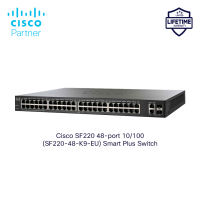
Cisco SF220-48 48 Port 10/100 Smart Plus Switch (SF220-48-K9-EU) | Network Switch
₱27,241.50
Buy on Lazada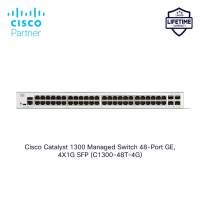
Cisco Catalyst 1300 48-port GE 4X1G SFP (C1300-48T-4G)
₱98,569.90
Buy on Lazada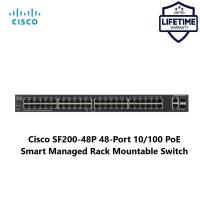
Cisco SF200-48P 48 Port 10/100 PoE Smart Switch (SLM248PT-G5) | Network Switch
₱47,500.00
Buy on Lazada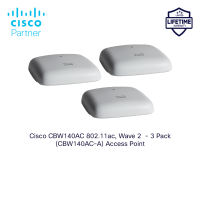
Cisco Business 140AC 802.11ac Wave 2 Access Point 3 Pack (3-CBW140AC-A)
₱30,373.20
Buy on Lazada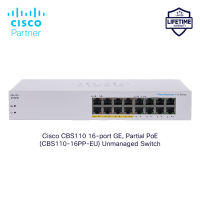
Cisco CBS110 16 port GE Partial PoE Unmanaged Switch (CBS110-16PP-EU) Gigabit Ethernet | Network Switch
₱21,149.70
Buy on Lazada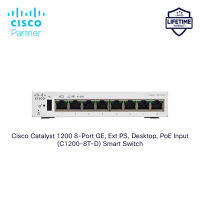
Cisco Catalyst 1200 8-Port GE Desktop EXT PS POE Input (C1200-8T-D) Smart Switch
₱17,046.00
Buy on Lazada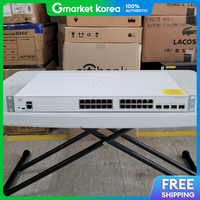
Cisco | Cisco C1300-24T-4G 24-Port Cisco Switching Hub (Product That Was Almost Unused after Purchase)
₱25,995.53₱41,212.43
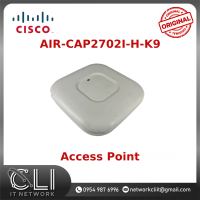
Cisco AIR-CAP2702I-H-K9 Wireless Access Point | Dual-Band 802.11ac 1.3Gbps Internal Antenna PoE+ | Enterprise Indoor AP (Second Hand)
₱4,000.00
Buy on LazadaAbout Cisco
Overview
Cisco is an American multinational technology corporation best known for building the networking infrastructure that connects computers, devices, applications, data centres, and people. Over more than four decades, the company has evolved from a specialist in networking hardware into a comprehensive enterprise-technology provider with capabilities spanning networking, cybersecurity, observability, collaboration, cloud management, data, and artificial intelligence (AI).1
The company’s legal name is Cisco Systems, Inc., and its shares are listed on the NASDAQ under the ticker symbol CSCO. Cisco maintains its global headquarters in San Jose, California, within Silicon Valley.2
Quick facts
| Category | Information |
|---|---|
| Company | Cisco Systems, Inc. |
| Brand | Cisco |
| Industry | Information technology / networking / cybersecurity |
| Founded | 1984 |
| Founders | Leonard Bosack and Sandy Lerner |
| Headquarters | San Jose, California, U.S. |
| Public company | Yes |
| Stock exchange | NASDAQ |
| Ticker | CSCO |
| CEO & Chair | Chuck Robbins |
| Core businesses | Networking, security, observability, collaboration, services |
| Major acquisition | Splunk, completed 2024 |
| FY2025 revenue | US$56.7 billion |
| Current strategic focus | AI infrastructure, secure networking, cybersecurity, observability and AI-enabled operations |
| Website | Cisco.com |
Cisco was incorporated in California on 10 December 1984 and became a publicly traded company in 1990.3
Corporate identity and function
At its core, Cisco develops the technology that enables other technologies to communicate. In large organisational environments comprising thousands of computers, Wi-Fi users, phones, servers, cloud applications, data centres, security systems, branch offices, factories, IoT devices, and AI workloads, these disparate systems require secure and reliable connectivity. Cisco provides much of the infrastructure and software layer that facilitates this communication.
While historically associated primarily with routers and switches, the company now organises its portfolio around four major technology areas:
- Networking
- Security
- Observability
- Collaboration
It also provides cloud management, professional services, data technologies, and AI capabilities.4
Unlike consumer electronics manufacturers, Cisco generally does not sell personal computers or smartphones directly to individuals. Instead, its technologies typically operate behind the scenes, connecting and protecting the critical systems relied upon by businesses, governments, universities, telecommunications providers, and other organisations.
History and origins
Founding at Stanford University
Cisco’s history is intrinsically linked to Stanford University and the early development of computer networking. The company was founded in 1984 by Leonard Bosack and Sandy Lerner, computer scientists working at Stanford who sought to solve a specific problem: enabling different computer networks to communicate with one another. At the time, networks were often isolated, making interconnection significantly more difficult than it is today. Cisco was established around the concept of using routing technology to bridge these separate networks, allowing information to be shared across disparate systems.5
Name and branding
The name “Cisco” is derived from San Francisco, reflecting the company’s origins in the San Francisco Bay Area. This geographic connection is further reinforced by the corporate logo, which visually represents the Golden Gate Bridge.
Early products and the rise of the Internet
A pivotal milestone occurred in 1986 when Cisco shipped its first major product, the Advanced Gateway Server (AGS). As a multiprotocol router capable of connecting different LAN and WAN networks, the AGS established the foundation of Cisco’s business by enabling computers and networks to communicate rather than simply functioning as standalone computing devices.6
During the late 1980s and 1990s, Cisco’s growth coincided with the expansion of the commercial Internet. As organisations increasingly required corporate networks, Internet connections, remote office infrastructure, and scalable network management, Cisco was well-positioned to supply the necessary equipment. In 1993, the acquisition of Crescendo Communications facilitated entry into the switching market, leading to the introduction of the Catalyst switching family, which remains a significant product line.7 The combination of routers, switches, networking software, and services established Cisco as a primary supplier of enterprise networks.
Public listing and the dot-com era
Cisco became a publicly traded company in 1990, listing on the NASDAQ under the symbol CSCO.8 Throughout the 1990s, the shift towards client/server computing, corporate intranets, e-commerce, and distributed computing dramatically increased demand for networking equipment, making Cisco a principal beneficiary of this digital transformation.
By the late 1990s, Cisco had become one of the world’s most valuable companies during the dot-com boom, as investors anticipated massive growth in Internet traffic. However, the subsequent bursting of the Internet bubble in 2000–2001 led to a severe industry downturn due to overbuilt network infrastructure. Cisco survived this period and eventually expanded beyond its original hardware-centric model.
Business evolution
Cisco’s corporate development can be categorised into five distinct eras:
Era 1: Networking (1980s–1990s)
The company’s identity was defined primarily by routers and networking equipment.
Era 2: Enterprise networking (1990s–2000s)
Cisco expanded its portfolio to include switches, wireless networking, network management, IP telephony, and broader enterprise infrastructure.
Era 3: Security and collaboration (2000s–2010s)
The company entered the cybersecurity, unified communications, video conferencing, and data centre technology markets. A notable milestone was the completion of the WebEx acquisition in 2007, which became a central component of Cisco’s collaboration business.9
Era 4: Software, cloud, and recurring revenue (2010s–2020s)
Responding to industry-wide shifts away from purely hardware-based models, Cisco transitioned towards subscriptions, software, cloud-managed networking, analytics, automation, and observability.
Era 5: AI infrastructure (2024–present)
Cisco currently positions itself as a provider of critical infrastructure for the AI era, combining networking, security, observability, data, and AI into an integrated platform.10
Product and technology portfolio
Networking
Networking remains the core of Cisco’s business. The company supplies equipment and software for enterprise networks, data centres, campus networks, branch offices, WANs, wireless networks, service providers, cloud environments, and AI infrastructure.
- Routers: Historically among Cisco’s most recognisable technologies, these devices determine how data packets travel between networks and are used by ISPs, corporations, governments, universities, and telecommunications companies.
- Switches: The Catalyst family is particularly prominent in enterprise networking, connecting PCs, phones, access points, servers, and routers within local networks.
- Wireless: Cisco provides enterprise-grade Wi-Fi infrastructure, including access points, controllers, and management tools designed for high-density environments such as universities, hospitals, airports, hotels, corporate campuses, and factories, distinguishing its offerings from consumer-grade equipment.
Security
Cybersecurity is a major strategic pillar. Cisco’s security portfolio encompasses firewalls, zero-trust architectures, network security, identity management, endpoint protection, cloud security, threat detection, and security operations. The company’s strategy treats networking and security as interconnected disciplines, integrating security controls directly into the infrastructure so that the network can identify communicating entities while security policies determine trust.
Observability and Splunk
Observability, which answers the question of what is happening inside a technology environment and why, has become central to Cisco’s post-Splunk strategy. Observability software collects data across the technology stack to help IT teams identify root causes of performance issues or security incidents.
Cisco announced its intention to acquire Splunk in September 2023 and completed the transaction on 18 March 2024. Valued at approximately US$28 billion in equity value, this acquisition significantly strengthened Cisco’s capabilities in security analytics, machine data, monitoring, and threat detection.11 The integration allows Cisco to combine networking and security data with application and performance intelligence, providing organisations with greater visibility across their digital environments.12
Collaboration
Cisco is a major player in enterprise collaboration through its Webex brand, which provides tools for video meetings, messaging, calling, webinars, and contact centres. This portfolio became particularly significant during the global shift toward hybrid work, and Cisco continues to integrate AI features into its collaboration suite.
Artificial Intelligence
AI is a central strategic theme for Cisco, encompassing several layers:
- AI Networking: Developing infrastructure with the high bandwidth, low latency, and reliability required for large-scale AI workloads.13
- Silicon One: Cisco’s proprietary networking semiconductor architecture designed to provide the performance and efficiency needed for AI infrastructure without relying entirely on third-party chips.14
- AI Security: Technologies such as Cisco AI Defense designed to protect AI applications, models, agents, infrastructure, and data.15
- AI-powered IT Operations: Initiatives like AI Canvas and Cisco IQ that use AI to detect issues, analyse data, and recommend or execute fixes, shifting IT operations from manual diagnosis to AI-assisted governance.16
Strategic acquisitions
Cisco has historically utilised acquisitions as a primary growth strategy. Notable transactions include:
| Year | Acquisition | Strategic importance |
|---|---|---|
| 1993 | Crescendo Communications | Ethernet switching |
| 1995 | Kalpana | Switching |
| 1999 | GeoTel | Network management / telecom |
| 2003 | Linksys | Consumer networking |
| 2005 | Airespace | Wireless networking |
| 2006 | Scientific Atlanta | Video / cable technology |
| 2007 | WebEx | Collaboration |
| 2012 | NDS Group | Video software |
| 2013 | Sourcefire | Cybersecurity |
| 2015 | OpenDNS | Cloud security |
| 2017 | AppDynamics | Application performance / observability |
| 2019 | Duo Security | Identity / zero trust |
| 2023–24 | Splunk | Security / observability / data |
| 2024 | Isovalent | Cloud-native networking/security |
The acquisitions of Splunk and Isovalent are among the most strategically significant recent transactions, reinforcing Cisco’s position in AI-era infrastructure and cloud-native security.17
Business model and customers
Revenue streams
Cisco generates revenue through two broad categories:
* Hardware/Products: Routers, switches, access points, firewalls, and data centre equipment.
* Software and Services: Subscriptions, security software, observability platforms, collaboration tools, support, consulting, and cloud management.
The company has increasingly emphasised recurring software and subscription revenue to mitigate the cyclicality of hardware sales and provide more predictable financial performance.
Customer base
Cisco primarily serves organisations rather than individual consumers. Its customer base includes:
* Enterprises: For corporate networks, cybersecurity, data centres, Wi-Fi, and collaboration.
* Governments: For secure networking, communications, and infrastructure.
* Universities: For campus networking, Wi-Fi, and cybersecurity.
* Healthcare: For reliable networks supporting medical devices and electronic systems.
* Telecommunications: Infrastructure for building and operating carrier networks.
* Data Centres and Cloud Providers: Networking infrastructure for large-scale computing.
Cisco states that its technologies are used by more than 1 million customers worldwide and that it is trusted by 99% of the Fortune 500.18
Competitive landscape
Cisco operates across multiple markets and faces competition from various specialised vendors:
- Networking: Arista Networks, HPE / Aruba, Juniper Networks, Huawei, Nokia, Extreme Networks.
- Cybersecurity: Palo Alto Networks, Fortinet, CrowdStrike, Zscaler, Check Point, Cloudflare.
- Collaboration: Microsoft Teams, Zoom, Google Meet.
- Observability / Security Analytics: Datadog, Dynatrace, Elastic, ServiceNow, Microsoft, IBM.
Cisco’s primary competitive advantage lies in the breadth of its portfolio, its installed base, and integration capabilities. Rather than claiming to have the single best product in every category, Cisco promotes a platform-oriented approach that allows organisations to connect, secure, observe, and operate their enterprises using a unified technology stack.19
Role in the Internet and AI era
Historical significance
Cisco played a foundational role in making large-scale IP networking commercially practical. Its routers and switches helped create the infrastructure upon which websites, email, streaming, e-commerce, cloud computing, and enterprise applications could operate at scale. Cisco’s early multiprotocol routing technology served as a foundation for the emerging Internet backbone.20
Cisco IOS and certifications
One of Cisco’s most historically important technologies is Cisco IOS (Internetwork Operating System), the software environment used to control and configure many networking devices. For generations of network engineers, proficiency in Cisco IOS command-line interfaces became a fundamental professional skill. Today, the operating system portfolio includes IOS XE, IOS XR, and NX-OS.
Cisco has also profoundly influenced the IT profession through its certification programme, including CCNA (Cisco Certified Network Associate), CCNP (Cisco Certified Network Professional), CCIE (Cisco Certified Internetwork Expert), CyberOps, and DevNet. The CCNA, in particular, remains one of the most recognisable entry-level certifications for networking professionals.
The AI era
As AI workloads generate enormous machine-to-machine traffic, Cisco views AI not merely as a software opportunity but as a network infrastructure opportunity. The company’s current vision is to “connect everything, secure everything, observe everything, and use AI to operate everything.”21 This positioning complements the broader AI ecosystem; for example, while NVIDIA provides computational technology for AI, Cisco provides the high-speed networking, switches, and interconnects required for thousands of GPUs to communicate effectively.22
Leadership and financial performance
Executive leadership
The current Chair and CEO is Chuck Robbins, who became CEO in July 2015 and was elected Chair of the Board in December 2017.23 Under his leadership, Cisco has increasingly emphasised software, subscriptions, cybersecurity, cloud, observability, AI, and strategic acquisitions.
Financial results
For fiscal year 2025, Cisco reported:
* Revenue: US$56.7 billion
* GAAP net income: US$10.5 billion
* GAAP EPS: US$2.61
* Operating cash flow: US$14.2 billion
Revenue increased approximately 5% year over year in FY2025, with networking remaining the largest product category while security and observability grew in importance.2425
In fiscal Q2 2026, Cisco reported quarterly revenue of US$15.3 billion, up 10% year over year, driven by strong demand for AI infrastructure. Guidance for FY2026 projected revenue between US$61.2 billion and US$61.7 billion, illustrating that AI infrastructure has become a significant new growth driver for the company.2627
Brand identity
Cisco’s brand is strongly associated with reliability, security, scale, professional expertise, and enterprise trust. Because its products are embedded deeply in corporate and government IT infrastructure, the brand is often less visible to ordinary consumers than companies like Apple or Samsung but remains extremely familiar to IT professionals. Cisco is positioned closer to the infrastructure layer of computing than the consumer-device layer, distinguishing it from companies focused primarily on end-user hardware or internet services.
References
- About Us – Cisco
- Cisco Systems Inc. – Investor Relations
- OverviewCisco Overview Cisco is the worldwide le
- About Us – Cisco
- AI Infrastructure, Secure Networking, and Software Solutions – Cisco
- Cisco Completes Acquisition of WebEx
- Artificial Intelligence (AI) Solutions – Cisco
- Cisco Systems Inc. – Governance – Executive Officers
- Cisco Systems Inc. – CISCO REPORTS FOURTH QUARTER AND FISCAL YEAR 2025 EARNINGS
- Providing the
- Cisco Systems Inc. – CISCO REPORTS SECOND QUARTER EARNINGS
- About Us – Cisco
- Cisco Systems Inc. – Financials – Quarterly Results
- Cisco Systems Inc. – CISCO REPORTS THIRD QUARTER EARNINGS
- Cisco Systems Inc. – Financials – Quarterly Results
- Cisco Systems Inc. – Cisco to Participate in May & June Events with the Financial Community
- Cisco Systems Inc. – Financials – SEC Filings – SEC Filings Details
- Cisco Systems Inc. – Cisco Appoints Pete Shimer to its Board of Directors
- Cisco Systems Inc. – Cisco Reimagines Security for the Agentic Workforce
- Cisco Systems Inc. – Cisco Secure AI Factory with NVIDIA Makes AI Easier to Deploy and Secure, Anywhere Organizations Need It
- Cisco Systems Inc. – Splunk Report: Agentic AI Takes Center Stage in CISOs’ Path to Digital Resilience
- Cisco Systems Inc. – Financials – SEC Filings – SEC Filings Details
- Cisco Systems Inc. – Financials – Annual Meeting
- Cisco Systems Inc. – Cisco 2025 Virtual Annual Meeting of Stockholders
- Cisco Systems Inc. – Cisco to Host 2025 Virtual Annual Meeting of Stockholders
- Cisco Systems Inc. – CISCO REPORTS FIRST QUARTER EARNINGS
- Cisco Systems Inc. – Cisco Sets Benchmark with Industry’s Most Scalable, Efficient 51.2T Routing Systems for Distributed AI Workloads