Shop on Lazada
Clearblue products
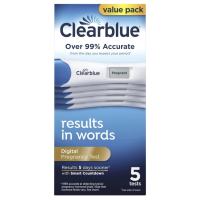
Clearblue Digital & Rapid Pregnancy Test Clear Blue PT
₱2,850.00₱3,000.00
Clearblue digital or rapid pregnancy test with smart countdown
₱2,175.00₱2,500.00

ON-HAND! Clearblue Pregnancy Test Combo Pack Digital and Rapid 4 Count
₱1,795.00
Buy on Lazada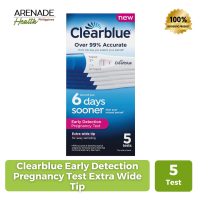
Clearblue Early Detection Pregnancy Test Extra Wide Tip (5 Test)
₱1,899.00
Buy on Lazada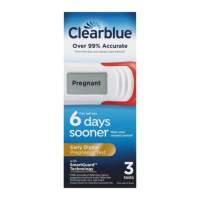
Clearblue Digital Pregnancy Test with Smart Countdown (3 Pregnancy Tests)
₱1,899.00
Buy on Lazada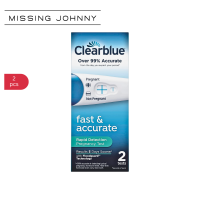
ON-HAND! Clearblue Pregnancy Test Rapid Detection 2 Count
₱895.00
Buy on Lazada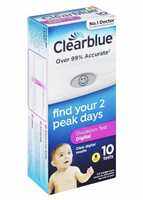
SALE! Clearblue Digital Ovulation Test Predictor refill stick only no reusable holder 10pcs (no box)
₱1,499.00₱1,800.00
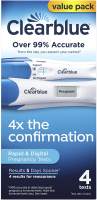
Clearblue Rapid & Digital Pregnancy Test Combo Pack (4 Test) NO BOX
₱2,399.00
Buy on LazadaAbout Clearblue
Clearblue is a global consumer-health brand that specialises in home pregnancy testing, ovulation testing and fertility monitoring. It is widely recognised for converting traditionally complex diagnostic results into simple, easy-to-read formats, most notably through its digital pregnancy tests that display results in words rather than requiring users to interpret lines.
The brand states that its mission is to help transform how women manage their reproductive health. According to Clearblue, more than 23,000 volunteers have participated in over 140 clinical research trials associated with its products.1
Overview
| Category | Information |
|---|---|
| Brand | Clearblue® |
| Industry | Consumer healthcare / diagnostics |
| Main focus | Reproductive health |
| Core products | Pregnancy tests, ovulation tests, fertility monitors |
| First major milestone | 30-minute home pregnancy test, 1985 |
| Digital pregnancy test | Introduced in 2003 |
| Brand owner | Swiss Precision Diagnostics GmbH (SPD) |
| SPD headquarters | Geneva, Switzerland |
| Innovation Centre | Bedford, United Kingdom |
| Primary markets | International/global |
| Brand positioning | Clear, accessible, science-based reproductive-health information |
What is Clearblue?
Clearblue is a consumer diagnostic brand focused on reproductive and fertility-related testing. Rather than operating as a conventional pharmaceutical company, it develops products that allow consumers to obtain specific reproductive-health information at home. Its principal questions are essentially “Am I pregnant?” and “When am I most fertile?” The brand’s products are designed to provide relatively quick and understandable answers without requiring users to interpret laboratory-style measurements.
Today, the Clearblue portfolio includes pregnancy tests and multiple forms of ovulation and fertility testing, ranging from conventional test strips to digital and computer-assisted systems.1
Company and ownership
Clearblue is a brand rather than the name of the underlying diagnostic company. It belongs to Swiss Precision Diagnostics GmbH (SPD), which specialises in the research, development, manufacture and supply of consumer diagnostic products, particularly in women’s reproductive health. SPD is headquartered in Geneva, Switzerland, with an innovation centre in Bedford, UK.
SPD was established in 2007 as a joint venture between Procter & Gamble and Alere. Alere subsequently became part of Abbott in 2017. This distinction is relevant because Clearblue products are sold under the Clearblue name while the underlying research, manufacturing and corporate structure involve SPD.
History
The history of Clearblue is closely associated with the development of increasingly rapid, convenient and understandable home pregnancy tests.
1985 — 30-minute pregnancy test
Clearblue states that it developed the world’s first 30-minute home pregnancy test in 1985. At the time, home testing often involved considerably longer waiting periods, making this rapid test a significant convenience improvement.1
1988 — One-step pregnancy test
In 1988, Clearblue introduced what it describes as the world’s first lateral-flow pregnancy test. Lateral-flow technology subsequently became the standard format used by many modern home diagnostic tests.
1989 — Ovulation testing
The brand expanded beyond pregnancy testing with its first one-step ovulation test in 1989. This established the second major pillar of the brand: helping people identify fertile days when attempting to conceive.
1996 — One-minute pregnancy test
Continuing its emphasis on speed, Clearblue states that it developed the world’s first one-minute pregnancy test in 1996.
2003 — Digital pregnancy test
A significant milestone occurred in 2003 when Clearblue introduced what it describes as the world’s first digital pregnancy test. Instead of asking consumers to interpret lines, the digital display provided a result in words such as “pregnant” or “not pregnant”. The U.S. National Institutes of Health’s history of pregnancy testing also identifies 2003 as the point at which Clearblue’s digital pregnancy test entered the market.1 This innovation became a defining characteristic of the brand’s identity: turning complicated diagnostic information into a clear consumer-facing answer.
2004 — Color-changing sampling tip
In 2004, Clearblue introduced a pregnancy test with a color-changing tip intended to make correct urine sampling easier.
2012 — Smart Countdown and design innovation
Clearblue introduced a digital pregnancy test with Smart Countdown in 2012. In the same year, its ergonomic pregnancy-test design using Floodguard technology became the first pregnancy test to receive a Red Dot design award.
2015 — Touch-screen fertility monitor
The brand expanded its fertility-monitoring technology with the launch of an Advanced Fertility Monitor using touch-screen technology in 2015.
2020 — Earlier pregnancy detection
In 2020, Clearblue states that it developed a pregnancy test capable of providing a result up to six days before the missed period, depending on the product and testing circumstances.
Main product categories
The current Clearblue portfolio can broadly be divided into two major areas.
Pregnancy tests
These products are designed to detect human chorionic gonadotropin (hCG), a hormone associated with pregnancy. The current portfolio includes:
- Early Digital Pregnancy Test
- Early Detection Pregnancy Test
- Rapid Detection Pregnancy Test
- Digital Pregnancy Test with Smart Countdown
- Flip & Click Pregnancy Test
- Various multi-test and confirmation packages
Some digital products communicate the result in words rather than requiring the user to interpret lines. Clearblue currently markets some early-detection products as usable up to six days before the expected period, with exact performance depending on the particular product and timing.1
Ovulation tests
The second major category is ovulation testing. These products are designed for people trying to conceive who wish to identify the days during a menstrual cycle when conception is more likely. Current products include:
- Smart Ovulation Test
- Advanced Digital Ovulation Test
- Digital Ovulation Test
- Easy Ovulation Kit
- Fertility Monitor with Touch Screen
Different products use different approaches to identify the fertile window. Some focus primarily on luteinizing hormone (LH), while more advanced products also measure estrogen-related changes.1
Fertility Monitor
One of Clearblue’s more technologically sophisticated products is its Fertility Monitor with Touch Screen. Unlike a basic ovulation test that principally looks for an LH surge, the monitor tracks two key urinary fertility hormones: the estrogen metabolite E3G and LH. It combines these measurements with information about the user’s cycle to categorise fertility status as Low, High or Peak.1
The system follows the process of hormonal changes leading to urine measurement, algorithmic interpretation and finally a fertility status reading. The monitor is designed to identify more of the fertile window than an LH-only approach. Clearblue states that the system can identify up to six fertile days in a cycle, although the actual number varies between individuals and cycles.1 Importantly, the fertility monitor is intended for those trying to conceive and is not a contraceptive method.
Technology behind Clearblue
Clearblue products combine several fields, including immunoassay technology, antibody-based hormone detection, lateral-flow diagnostics, optical sensing, microelectronics, digital displays, algorithms for interpreting hormone measurements and consumer-oriented industrial design.
Pregnancy tests detect hCG, while fertility products can detect hormones such as LH and E3G. For example, the Fertility Monitor uses test sticks containing monoclonal antibodies and optical technology to measure urinary LH and E3G. The monitor then processes the measurements together with cycle information to produce a simplified fertility status. This combination of biology, diagnostics and consumer electronics positions Clearblue as a consumer diagnostic technology brand rather than simply a pregnancy-test manufacturer.
Brand differentiation
Historically, Clearblue’s strongest differentiator has been clarity. Traditional pregnancy tests can require consumers to interpret one line versus two lines, faint lines versus strong lines, or control lines versus test lines. The digital approach attempted to remove this ambiguity by presenting a textual result. This philosophy is embedded in the brand name itself: Clear + blue = Clearblue. Brand communication consistently emphasises concepts such as clear, accurate, quick, accessible and reassuring answers.1
Scientific and clinical research
Clearblue places considerable emphasis on clinical research and validation. The company states that over its history, 23,000 volunteers have participated in more than 140 clinical research trials associated with its products. Its fertility products have also been studied using comparisons with laboratory hormone measurements and, for some technologies, ultrasound observations of ovulation. The brand maintains a healthcare-professional section containing scientific and clinical information about its pregnancy, fertility and ovulation products.
However, individual accuracy claims should always be interpreted in context. Accuracy varies by product, test timing, sample quality and the biological situation of the user. A brand-level accuracy figure should not be interpreted as a guarantee that every individual test will produce a correct result under every circumstance.
Brand positioning
Clearblue’s positioning can be summarised as science, simplicity and reassurance. The brand occupies the space between sophisticated medical diagnostics and ordinary consumer products. Its underlying proposition is essentially sophisticated reproductive-health science packaged so that consumers can understand the result at home. This is particularly evident in its digital products; while the technology may involve immunochemistry, hormone detection and algorithms, the consumer-facing output is deliberately simple.
Target consumers
Clearblue primarily addresses people at different stages of reproductive planning.
People determining pregnancy
Pregnancy tests provide an at-home way to determine whether pregnancy is likely based on hCG detection.
People trying to conceive
Ovulation tests and fertility monitors help users identify the portion of the menstrual cycle associated with higher fertility.
People tracking reproductive cycles
Clearblue has also developed digital and informational tools around menstrual-cycle and fertility tracking. The brand therefore spans both sides of a reproductive journey: knowing if one is pregnant and knowing when one is most likely to become pregnant.
Brand identity
From a branding perspective, Clearblue has several distinctive characteristics.
Visual identity
The brand has traditionally used a blue-and-white visual language, reinforcing associations with cleanliness, trust, healthcare and the brand name itself.
Product design
Clearblue has invested heavily in making its devices visually intuitive. Digital displays, ergonomic shapes, color-changing components and countdown functions are examples of its attempt to reduce user uncertainty.
Communication style
Communication tends to emphasise clarity, confidence, accuracy, speed, ease of use, scientific credibility and emotional reassurance. Emotional reassurance is particularly important because pregnancy testing is often associated with a highly emotional moment.
Distinction from medical diagnostics
Clearblue products are consumer diagnostic tests, not substitutes for every form of medical diagnosis. A home pregnancy test can detect a biological marker associated with pregnancy but does not provide the same information as a complete clinical assessment. Likewise, an ovulation test can help identify hormonal patterns associated with the fertile window, but fertility is influenced by many biological factors. The brand’s purpose is primarily to give consumers useful reproductive-health information at home rather than to replace physicians or fertility clinics.
Global presence
Clearblue operates internationally and markets its products across numerous countries. The brand describes itself as the world’s No. 1 selling brand in home pregnancy and fertility tests, based on its cited market-research data.1 Clearblue also states that more than 20 million women choose its products each year, while more than 30 million people visit its website for information. These are company and brand claims rather than independent estimates and are best understood as Clearblue’s reported market-position figures.
Key milestones
| Year | Milestone |
|---|---|
| 1985 | World’s first 30-minute home pregnancy test, according to Clearblue |
| 1988 | First one-step/lateral-flow pregnancy test |
| 1989 | First one-step ovulation test |
| 1996 | One-minute pregnancy test |
| 2003 | World’s first digital pregnancy test |
| 2004 | Color-changing sampling tip |
| 2012 | Smart Countdown digital test and Red Dot-winning design |
| 2015 | Advanced touch-screen Fertility Monitor |
| 2020 | Pregnancy testing technology marketed for detection up to six days before the missed period |
| Today | Pregnancy tests, ovulation tests and fertility-monitoring products |
Significance
Clearblue’s significance extends beyond selling pregnancy tests; its larger contribution has been the consumerisation of reproductive diagnostics. Historically, many diagnostic questions were handled by healthcare professionals or required users to interpret relatively complicated test results. Clearblue helped move some of that information into the home while emphasising simplicity. Its evolution can be viewed as a progression from laboratory-style testing to home testing, rapid testing, lateral-flow testing, digital interpretation and hormone-based fertility monitoring. This progression captures much of the brand’s technological and commercial story.
Clearblue today
As of 2026, Clearblue remains principally focused on pregnancy and fertility/reproductive-health testing, with its current portfolio centred on pregnancy tests, ovulation tests and fertility-monitoring technology.1 Its modern identity is built on more than four decades of development, beginning with its 1985 rapid pregnancy test and extending into digital diagnostics and hormone-monitoring technologies. Clearblue is a consumer reproductive-health diagnostics brand owned by Swiss Precision Diagnostics, best known for pioneering rapid and digital home pregnancy tests and for developing ovulation and fertility-monitoring technologies designed to make reproductive-health information easier to obtain and understand at home.1