Shop on Lazada
Robitussin products
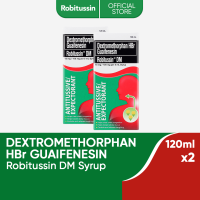
Robitussin DM Syrup Dextromethorphan HBr Guaifenesin 120ml (Pack of 2) for Cough & Sticky Phlegm with Menthol
₱478.00
Buy on Lazada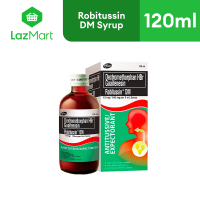
Robitussin DM Syrup 120ml
₱193.64₱217.20
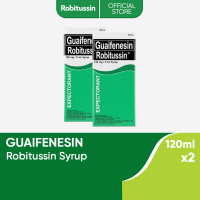
Robitussin Syrup Guaifenesin 120ml (Pack of 2) for Cough with Sticky Phlegm Helps Clear Chest Congestion
₱412.00
Buy on Lazada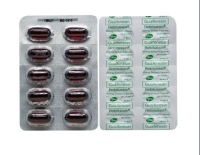
Robitussin 200 mg 20 Capsules
₱599.00₱1,000.00
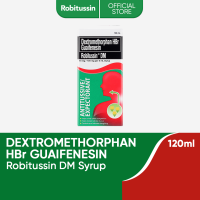
Robitussin DM Syrup Dextromethorphan HBr Guaifenesin 120ml for Cough & Sticky Phlegm with Menthol
₱244.00
Buy on Lazada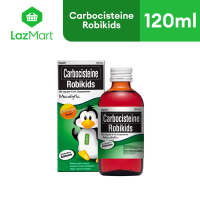
Robikids 120ml
₱187.31
Buy on Lazada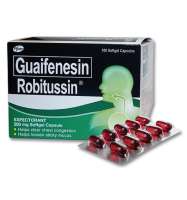
ROBITUSSIN Guaifenesin 200mg 100 Softgel Capsule
₱1,999.00₱3,000.00
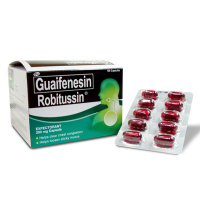
Robitussin Guaifenesin 200 mg 100 Softgel Capsules
₱1,799.10₱1,918.80
About Robitussin
Robitussin is a brand of over-the-counter (OTC) medicines primarily used for the temporary relief of cough and cold symptoms. The brand is particularly associated with cough syrups and other oral formulations designed to suppress coughs, loosen mucus, relieve chest congestion, and address additional flu-related symptoms depending on the specific variant 1.
Originating in the United States, Robitussin was introduced by A.H. Robins in 1949. Over subsequent decades, ownership passed through several major pharmaceutical corporations, including American Home Products, Wyeth, and Pfizer. Following the spin-off of the consumer-health joint venture between Pfizer and GlaxoSmithKline, the brand became part of the independent company Haleon in 2022.
While Robitussin is globally recognised as a respiratory health brand, product formulations, active ingredients, and regulatory classifications vary significantly by country. In the Philippines, the brand has been marketed with specific formulations approved by local regulators.
Basic information
| Category | Information |
|---|---|
| Brand name | Robitussin |
| Industry | Consumer healthcare / pharmaceuticals |
| Product category | Over-the-counter cough and cold medicines |
| Origin | United States |
| Founded/launched | 1949 |
| Original company | A.H. Robins |
| Current brand owner | Haleon (in many markets) |
| Primary uses | Cough, mucus/chest congestion, and selected cold/flu symptoms |
| Common dosage forms | Syrups/liquids, capsules or softgels, lozenges |
| Key active ingredients | Dextromethorphan and guaifenesin |
Consumers should note that “Robitussin” refers to a brand family rather than a single medicine. Different products within the line contain different active ingredients, and the exact formulation should always be verified on the packaging.
History
Origins
Robitussin was launched in 1949 by A.H. Robins, a United States-based pharmaceutical company. U.S. trademark records confirm the first use of the Robitussin mark in January 1949. The brand was developed to provide consumers with an easily administered liquid medicine for cough relief.
Acquisition by American Home Products
In 1989, American Home Products acquired A.H. Robins, bringing Robitussin into its consumer-health portfolio alongside brands such as ChapStick. American Home Products later renamed itself Wyeth, under which Robitussin continued as a major consumer brand.
Pfizer era
Pfizer acquired Wyeth in 2009, integrating Robitussin into its own consumer-health division. By 2012, Pfizer described Robitussin as a leading doctor-recommended OTC cough medicine in the United States and reported that the brand was available in 41 countries worldwide.
Creation of Haleon
During the 2010s, Pfizer and GlaxoSmithKline combined their consumer-health businesses into a joint venture that included Robitussin, Advil, and Centrum. In 2022, this entity separated to become Haleon, an independent publicly listed company. Robitussin remains a key brand within the Haleon portfolio.
The simplified ownership lineage is:
A.H. Robins → American Home Products → Wyeth → Pfizer/GSK consumer-health venture → Haleon
Therapeutic uses
Robitussin products are designed to provide temporary relief from various respiratory symptoms, though specific formulations target distinct conditions.
Cough suppression
Certain variants contain dextromethorphan, an antitussive agent that acts centrally to reduce the cough reflex. These products are typically indicated for persistent dry, irritating coughs 2.
Mucus and chest congestion
Other formulations utilise guaifenesin, an expectorant that helps thin and loosen mucus in the respiratory tract, facilitating its expulsion through coughing 3.
Combination products
Some Robitussin products combine multiple active ingredients to address complex symptom profiles. Common combinations may include:
- Dextromethorphan – cough suppressant
- Guaifenesin – expectorant
- Pseudoephedrine – nasal decongestant
The availability of these combinations depends on local regulations and market-specific approvals.
Major active ingredients
Dextromethorphan
Dextromethorphan (DXM) is a widely used OTC cough suppressant. In Robitussin formulations intended for dry coughs, it serves to decrease the frequency and intensity of the cough reflex 2.
Guaifenesin
Guaifenesin is an expectorant used to aid mucus clearance. For example, U.S. DailyMed data for a Robitussin Chest Congestion product lists guaifenesin 100 mg per 5 mL as the active ingredient 3.
Pseudoephedrine
In some markets outside the United States, certain Robitussin formulations contain pseudoephedrine as a nasal decongestant alongside guaifenesin. Because regulations differ internationally, ingredient profiles are not uniform across all countries.
Robitussin in the Philippines
Robitussin has an established presence in the Philippine market. Documentation from the Philippine Food and Drug Administration (FDA) identifies Robitussin DM as an OTC syrup containing dextromethorphan hydrobromide and guaifenesin, with a strength of 15 mg/100 mg per 5 mL. Regulatory records list Interphil Laboratories as the manufacturer and Pfizer as the trader, with the Philippines noted as the country of origin.
Philippine FDA records also document other Robitussin products containing guaifenesin, indicating that the local product range includes variants distinct from those sold in other jurisdictions.
Product range
Robitussin is not a standardised global formulation; its portfolio varies by market. Historically, the brand has included lines such as:
- Robitussin Cough – targeted primarily at cough relief
- Robitussin DM – combines dextromethorphan and guaifenesin
- Robitussin Chest Congestion – guaifenesin-based mucus relief
- Robitussin Cough + Chest Congestion – dual-action formulation
- Robitussin Day & Night Cold + Flu – multisymptom relief
- Robitussin Naturals – variants featuring ingredients such as ivy leaf
The official U.S. website currently lists cough syrups, softgels, capsules, lozenges, and dietary supplements within the broader portfolio 1.
Dosage forms
Although historically synonymous with liquid cough syrup, Robitussin has expanded into multiple dosage forms depending on the market:
- Oral liquids/syrups
- Softgel capsules
- Liquid-filled capsules
- Lozenges
- Dietary-supplement formulations
Brand positioning
Robitussin occupies a distinct niche in the OTC respiratory market due to its historical focus on cough relief rather than general pain or allergy management. Its architecture typically segments products by symptom type:
- Dry cough → cough suppressant
- Chest/mucus cough → expectorant
- Cough + congestion → combination treatment
- Cold/flu → multisymptom products
This structure allows the brand to address diverse consumer needs while maintaining a strong association with cough medicine.
International presence
Robitussin has been sold internationally for decades. As of 2012, Pfizer reported availability in 41 countries, describing it as the world’s third-largest branded cough remedy.
Because medicines are regulated nationally, products sold under the Robitussin name may differ across borders in terms of:
- Active ingredients
- Strengths
- Dosage forms
- Indications
- Package sizes
- Regulatory classifications
For instance, Australia’s Therapeutic Goods Administration maintains records for Robitussin Cough & Chest Congestion products containing dextromethorphan and guaifenesin 4.
Corporate ownership today
Haleon’s corporate history outlines the following timeline for Robitussin:
- 1949 – Launched by A.H. Robins
- 1989 – Acquired by American Home Products
- 2009 – Transferred to Pfizer via Wyeth acquisition
- 2019–2022 – Included in Pfizer/GSK consumer-health joint venture
- 2022 – Became part of independent Haleon
While older consumers may associate the brand with Robins, Wyeth, or Pfizer, current ownership in most markets resides with Haleon.
Safety and regulatory considerations
Robitussin products are medicines requiring appropriate use based on their specific formulation. The brand name alone does not indicate a single active ingredient; consumers must consult the active-ingredient panel.
- Products with dextromethorphan are intended for cough suppression.
- Products with guaifenesin aid mucus clearance.
- Combination products may carry age restrictions or contraindications.
Regulatory status also varies. In some jurisdictions, certain formulations are classified as pharmacy-only. For example, Hong Kong’s drug registry lists a Philippine-manufactured Robitussin DM variant as a pharmacy-only medicine due to its dextromethorphan and guaifenesin content. Therefore, local labelling and regulatory instructions take precedence over general brand information.
Brand significance
Robitussin is notable as one of the longest-established consumer cough medicine brands, dating to 1949. Its corporate trajectory mirrors the consolidation of the global consumer-health industry, transitioning from A.H. Robins through American Home Products, Wyeth, and Pfizer before settling under Haleon. Furthermore, the brand demonstrates how a single identity can encompass multiple therapeutic approaches—including cough suppression, expectoration, decongestion, and multisymptom relief—while retaining consumer recognition across diverse international markets.