Shop on Lazada
Cocomelon products
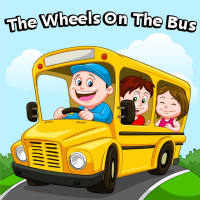
Wheels on the Bus Collection The Wheels on the Bus Special Nursery Rhymes and Kids Songs Educational Suite
₱125.00₱999.00
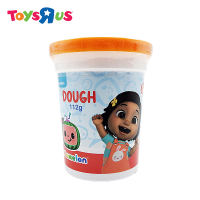
Cocomelon Dough Single Tub
₱39.00₱49.00
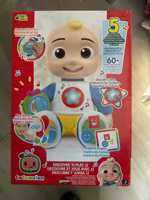
CoComelon Snack Time Features JJ Doll with Red Apple Plush
₱1,600.00₱1,950.00
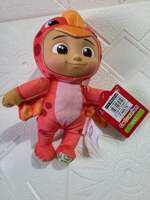
COCOMELON #jj giraffe #jj lion #nico bella #cody #nina
₱450.00₱699.00
About Cocomelon
Cocomelon is an American children’s entertainment brand best known for its brightly coloured 3D-animated nursery rhymes, original children’s songs, preschool stories, and educational content. The franchise centres on JJ, a young child, alongside his family, friends, classmates, and pets. Designed primarily for toddlers and preschool-aged children, the content combines music, repetition, everyday situations, and simple life lessons.1
Today, Cocomelon is operated by Moonbug Entertainment, a subsidiary of Candle Media. It has evolved from a YouTube channel into a large international children’s media franchise encompassing streaming series, television programming, games, merchandise, live experiences, licensing, and a forthcoming theatrical film.
Quick facts
| Category | Information |
|---|---|
| Brand | Cocomelon |
| Type | Children’s entertainment / preschool media franchise |
| Primary audience | Toddlers and preschool children |
| Main format | 3D computer animation, nursery rhymes and children’s songs |
| Main character | JJ |
| Original YouTube launch | 2006 |
| Current owner/operator | Moonbug Entertainment |
| Parent company | Candle Media |
| Original name | Checkgate / ThatsMeOnTV |
| Later name | ABC Kid TV |
| Current name | Cocomelon |
| Major platforms | YouTube, Netflix and other television/streaming platforms |
| Languages | More than 20 languages |
| Major upcoming project | Cocomelon: The Movie |
| Theatrical film release | February 2027 |
Historical naming information is documented in public sources, while Moonbug currently describes Cocomelon as a global children’s brand available in more than 20 languages.2
History
Origins
Cocomelon began as a YouTube-based children’s video project in 2006. It was initially known under names including Checkgate/ThatsMeOnTV and later ABC Kid TV. The channel focused on animated nursery rhymes and songs for young children.
The format was relatively simple in concept: familiar children’s songs were combined with colourful animation and recurring characters. Over time, production became considerably more sophisticated, eventually developing into the recognisable 3D-animated Cocomelon style.2
The channel was officially rebranded Cocomelon in 2018, after which its international audience expanded dramatically.2
Rise on YouTube
YouTube was fundamental to Cocomelon’s growth. Rather than initially depending on traditional television distribution, the brand built a huge audience through online video.
Its formula was particularly well suited to preschool viewing:
- Short, easily understandable stories
- Repetitive songs and lyrics
- Bright colours and simple character designs
- Familiar childhood situations
- Recurring characters
- Lessons about everyday behaviour and routines
- Content that children could watch repeatedly
This helped turn individual nursery-rhyme videos into a recognisable entertainment brand.
Acquisition by Moonbug
Cocomelon’s expansion accelerated after Moonbug Entertainment acquired the brand in 2020. Moonbug subsequently developed Cocomelon as a broader global entertainment franchise rather than treating it simply as a YouTube channel.2
Moonbug itself later became part of Candle Media, the entertainment company founded by former Disney executives Kevin Mayer and Tom Staggs. Moonbug’s portfolio includes other major children’s brands, including Blippi and Little Baby Bum.
Concept
At its core, Cocomelon is built around the idea that young children can learn through music and familiar everyday experiences.
The official brand describes its purpose as bringing early learning and fun together through music. Its songs address experiences such as mealtimes, bedtime, potty training, trying new foods, going to school, playing with friends, and dealing with new situations.1
Rather than presenting education as a conventional classroom lesson, Cocomelon generally embeds lessons inside stories and songs. For example, an episode or song might revolve around:
- Brushing one’s teeth
- Washing hands
- Sharing toys
- Going to school
- Learning numbers and letters
- Eating vegetables
- Going to the doctor
- Bedtime routines
- Making friends
- Helping family members
- Dealing with emotions
- Learning independence
The recurring structure makes the material easy for very young viewers to understand and remember.
Main character: JJ
JJ is the central character of the Cocomelon universe. He is portrayed as a curious, energetic young child who enjoys exploring the world around him. The official character guide describes JJ as determined and adventurous, with interests ranging from riding his tricycle to making pancakes and learning from his older siblings.1
JJ’s recognisable appearance includes:
- A toddler-like appearance
- Large expressive eyes
- Blond hair
- A distinctive curled hairstyle
- Colourful children’s clothing
- His familiar cheerful personality
JJ functions as the audience’s primary point of identification. Many Cocomelon stories essentially allow children to experience an everyday childhood situation alongside him.
JJ’s family
JJ is part of the Smith family.
Melissa — JJ’s mother
Melissa is JJ’s mother. Official character material portrays her as warm and devoted, balancing family life with confidence, a strong work ethic, and an appreciation for yoga and time with her children.1
Patrick — JJ’s father
Patrick is JJ’s father. He is characterised as playful and humorous, with a creative side. The official profile describes him as an architect and musician who enjoys making his family laugh.1
YoYo
YoYo is JJ’s older sister and the middle child of the family. She is portrayed as creative, kind, imaginative, and supportive of her younger brother.1
TomTom
TomTom is JJ’s older brother. He enjoys building things and solving problems and is portrayed as persistent when dealing with challenges.1
Bingo
Bingo is JJ’s playful dog. He is another recurring member of JJ’s household and frequently participates in the children’s adventures.1
Boba Bear
Boba Bear is JJ’s cuddly teddy-bear companion. The official character guide describes Boba as JJ’s “cuddly bestie”.1
JJ’s friends
Cocomelon has gradually developed an ensemble cast around JJ.
Cody
Cody is one of JJ’s closest friends and neighbours. He loves dinosaurs and is characterised as a problem solver with a caring personality. Cody is also an older brother to Kendi.1
His family includes:
- Kwame — Cody’s father and a professional chef
- Toni — Cody’s mother and a paediatrician
- Kendi — Cody’s younger sister
- Pickles — Cody’s mischievous but affectionate cat1
Nina
Nina is another prominent member of JJ’s group. She is a third-generation Mexican-American character who enjoys fútbol, adventure, and trying new things.1
Her family includes Carlos, Daniela, Lucia, Mateo, and Valeria, allowing the franchise to incorporate Mexican-American family and cultural elements into its stories.1
CeCe
CeCe is a Korean-American character who is energetic and confident and particularly enjoys dancing and ballet. Her family includes Richard and Yoomi, while her pet companion is the kitten Lulu.1
Other classmates
The wider Cocomelon world also includes characters such as:
- Ms. Appleberry — JJ and his friends’ preschool teacher
- Nico — a playful class clown
- Bella — a creative and empathetic child
- Luke — Bella’s brother
- Jellybean — the class hamster
The official character universe has consequently grown well beyond JJ’s immediate family.1
Animation style
One of Cocomelon’s most recognisable characteristics is its 3D computer-generated animation. The visual style generally features:
- Rounded character designs
- Large eyes and expressive facial features
- Bright primary and pastel colours
- Simple environments
- Exaggerated movements
- Highly recognisable character silhouettes
- Repeated visual motifs
The style is deliberately approachable for very young children. Characters and objects are usually visually distinct and easy to identify.
Music
Music is arguably the most important component of Cocomelon’s identity. The franchise takes the traditional concept of nursery rhymes and combines it with original children’s songs and animated stories. Repetition is central to the format: children hear familiar melodies, phrases, characters, and situations repeatedly.
According to the official brand, its songs use repetition and music to support early learning and development.1 Common subject areas include:
- Alphabet and vocabulary
- Numbers
- Colours
- Animals
- Family
- Daily routines
- Hygiene
- Food
- Emotions
- Friendship
- School
- Social behaviour
This musical format is a major reason Cocomelon can function simultaneously as entertainment and preschool-oriented educational content.
Educational philosophy
Cocomelon is not positioned as a formal academic curriculum. Instead, it focuses heavily on early-childhood life skills and everyday learning. The brand describes its content as helping children develop life skills by exploring moments that matter to children and their parents.1
Its educational approach can therefore be summarised as:
Everyday experience → song/story → repetition → participation → basic lesson
For example, a child can encounter a song about brushing teeth while simultaneously seeing a character perform the routine. This makes the lesson concrete rather than purely verbal.
Cocomelon on Netflix
Cocomelon became an important part of Netflix’s preschool programming. In 2021, Netflix and Moonbug announced an expanded partnership involving new Cocomelon series, specials, and compilations. The announcement also described Cocomelon Lane, a series focused on JJ and his friends experiencing important childhood milestones.3
The Netflix expansion helped transform Cocomelon from a predominantly YouTube-centred phenomenon into a more conventional streaming franchise.
Cocomelon Lane
Cocomelon Lane expands the characters’ world beyond the short nursery-rhyme format. Rather than simply presenting songs, the series follows JJ and his friends through larger childhood experiences and milestones. This allows the franchise to explore topics that can support longer-form storytelling while retaining its preschool audience.
International expansion
Cocomelon has become a global children’s brand. Moonbug has distributed its content internationally across numerous platforms, and Netflix reported that Cocomelon had reached the Top 10 in multiple countries, including the United States, United Kingdom, Philippines, South Africa, Canada, and Australia.3
Moonbug currently describes Cocomelon as being available in more than 20 languages and reaching audiences in more than 80 countries. Localisation is important to the brand because children’s entertainment can be adapted for different languages and markets while retaining the same characters, melodies, visual identity, and basic stories.
Spin-offs and expanded universe
Cocomelon has expanded beyond the original series into several related productions. Moonbug currently identifies projects and spin-offs including:
- Cocomelon Lane
- The Melon Patch
- Cody Time
- Nina’s Familia
- JJ’s Animal Time
- Cocomelon Playdates with Sanrio Friends
These productions allow individual characters, themes, or partnerships to become separate entertainment properties.
Cocomelon and Sanrio
In 2025, Moonbug announced a multi-year partnership between Cocomelon and Sanrio, the company behind characters such as Hello Kitty. The collaboration introduced a crossover involving JJ and Cocomelon characters alongside Hello Kitty, Cinnamoroll, and other Sanrio characters. The resulting Cocomelon Playdates with Sanrio Friends series forms a crossover between the two children’s brands.
This represents an example of Cocomelon’s evolution from a single children’s programme into a broader character and licensing franchise.
Games and interactive products
The franchise has also expanded into interactive entertainment. The official Cocomelon website currently promotes games designed around preschool learning, including Cocomelon: Play with JJ, an interactive game featuring familiar characters, songs, and mini-games. The game is available through Nintendo Switch and Netflix.1
The brand has also appeared in broader children’s games and creative applications alongside other Moonbug properties.
Merchandise and licensing
Cocomelon’s characters have become recognisable consumer brands, allowing the franchise to extend into products beyond screen entertainment. The broader franchise ecosystem includes categories such as:
- Toys
- Clothing
- Books
- Games
- Children’s accessories
- Home products
- Music
- Digital products
- Live and experiential entertainment
This is an important aspect of Cocomelon’s business model: the characters are designed to function not only as television personalities but also as licensed intellectual property.
Brand identity
Cocomelon’s branding is highly recognisable. Its identity is built around:
Colourful visuals + music + preschool characters + family life + repetition + positive emotions
The name “Cocomelon” is accompanied by the franchise’s distinctive watermelon-shaped logo, which has become one of its most recognisable visual assets. The overall aesthetic is intentionally cheerful, playful, and child-friendly.
Business significance
Cocomelon is notable because it demonstrates how a children’s entertainment property can emerge from digital-first distribution rather than traditional television.
The traditional path for a major children’s franchise might be:
Television → audience → merchandise → digital platforms
Cocomelon’s trajectory was closer to:
YouTube → enormous digital audience → streaming → television → licensing → games → broader franchise
That distinction is important to understanding its success. Moonbug’s strategy has been to treat digital children’s shows as global intellectual properties that can be distributed across YouTube, streaming services, television, consumer products, and other platforms.3
Cultural impact
Cocomelon has become one of the most recognisable names in modern preschool entertainment. Its impact comes partly from the way it fits into the routines of young children. Rather than relying exclusively on elaborate fantasy narratives, much of the content concerns situations children actually encounter:
waking up → eating → playing → learning → cleaning up → going to school → bedtime
This makes the characters easy for preschool audiences to identify with. The franchise has consequently become particularly recognisable among parents of toddlers and preschoolers around the world.
Criticism and discussion
Like many extremely popular children’s media franchises, Cocomelon has also attracted discussion and criticism. Some commentators and parents have questioned aspects of its highly repetitive format, visual stimulation, viewing habits, and the possibility of children becoming strongly attached to particular videos or characters.
These discussions should be distinguished from the brand’s stated educational objectives. Cocomelon presents itself as a resource for early learning and everyday routines, while questions about appropriate screen time and individual children’s media habits are broader parenting and child-development issues.
Upcoming feature film
Cocomelon’s next major expansion is into theatrical cinema. Cocomelon: The Movie is scheduled for theatrical release in February 2027. The film is being produced by Moonbug Entertainment, Flywheel Media, Prime Focus Studios, and DreamWorks Animation, with animation by the DNEG Group and distribution by Universal Pictures.
The story follows JJ and his friends as they move toward kindergarten and enter a larger world. The film is intended to expand the familiar Cocomelon universe into a feature-length musical adventure.1
Ownership
The ownership structure can be simplified as:
Cocomelon → Moonbug Entertainment → Candle Media
Moonbug is the company directly associated with managing and developing Cocomelon today. Moonbug is a subsidiary of Candle Media. This is significant because Cocomelon is no longer simply an individual YouTube channel; it is now one of the flagship properties within a larger children’s entertainment company.
Legacy
Cocomelon’s significance in children’s media lies in its transformation from a relatively simple online nursery-rhyme channel into a global multimedia preschool franchise. Its development illustrates several major changes in modern children’s entertainment:
- YouTube can create global children’s brands.
- Nursery rhymes can be transformed into recurring animated franchises.
- Streaming can turn digital characters into television properties.
- Preschool characters can become major licensing and consumer brands.
- Music can serve simultaneously as entertainment and an early-learning tool.
- A successful children’s IP can expand into games, spin-offs, collaborations, and theatrical films.
In summary, Cocomelon is a global preschool entertainment franchise built around JJ and his friends and family, combining 3D animation, nursery rhymes, original songs, and everyday childhood stories to entertain young children while introducing basic early-learning concepts and life skills.1