Shop on Lazada
Crest products
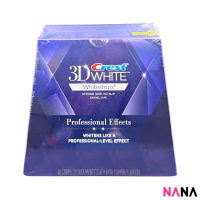
Crest 3D White Professional Effects Whitestrips (40 Strips/ 20 Treatments)
₱2,390.00₱3,180.00
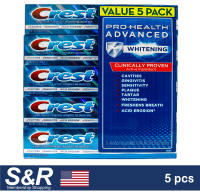
Crest Pro Health Advanced Whitening Toothpaste 5 x 170 g
₱1,467.00
Buy on Lazada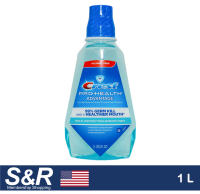
Crest Pro Health Multi-Protection Smooth Mint Mouthwash 1L
₱369.00
Buy on Lazada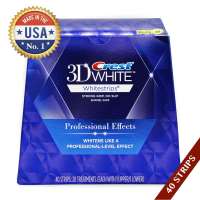
Crest 3D White Whitestrips Professional Effects Teeth Whitening Kit of 40 Strips / 20 Sachets
₱2,300.00₱6,800.00
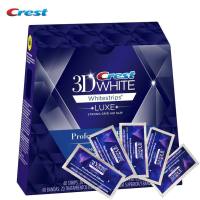
Crest 3D White Luxe Whitestrips Professional Effects Teeth Whitening 10 Strips Set of 5 Sachets
₱650.00₱1,299.00
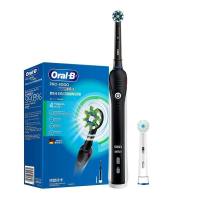
Oral B P4000 Adult Electric Toothbrush Deep Cleaning Gum Massage Tooth Brush With Round Heads Inductive Rechargeable 2 Min Timer
₱4,028.16₱6,000.00
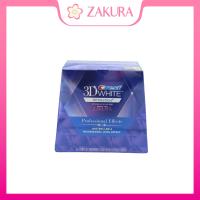
Crest 3D White Strip Pro 40pcs
₱2,344.50₱4,666.94
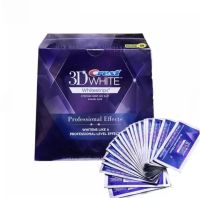
Crest 3D White Professional Effects Whitestrips 20 packs
₱1,505.57₱2,355.00
About Crest
Overview
Crest is an American oral-care brand best known for its toothpaste, though its portfolio also encompasses whitening treatments, mouthwash, dental floss, and other oral-hygiene products. Owned by Procter & Gamble (P&G), one of the world’s largest consumer-goods companies, Crest was introduced in the United States in 1955 and gained historical significance through its pioneering use of fluoride to combat tooth decay.1
| Attribute | Information |
|---|---|
| Brand | Crest |
| Industry | Oral care / consumer health |
| Owner | Procter & Gamble |
| Origin | United States |
| Founded / introduced | 1955 |
| Headquarters | Cincinnati, Ohio, U.S. (P&G) |
| Best known for | Toothpaste and cavity protection |
| Major products | Toothpaste, whitening products, mouthwash, floss and related oral-care products |
| Notable ingredient | Fluoride, historically including stannous fluoride |
| Parent-company portfolio | P&G oral-care business, alongside brands such as Oral-B |
| Market position | One of the best-known toothpaste brands in the United States |
Crest describes itself as a leader in dental-health innovation since 1955, while P&G identifies the brand as one of its major historic innovations.
History
Origins: The search for a cavity-fighting toothpaste
The origins of Crest trace back to a research programme initiated by Procter & Gamble in the early 1940s. At that time, tooth decay was a significant public-health challenge in the United States, prompting P&G to seek ingredients that could be incorporated into toothpaste to reduce cavities.
In 1950, P&G established a collaborative research programme with Indiana University, involving researchers including Joseph Muhler. The objective was to develop a fluoride-containing toothpaste capable of providing measurable protection against tooth decay.
This research ultimately yielded a toothpaste utilising stannous fluoride. Clinical trials conducted in Indiana produced compelling results: Crest’s own historical account reports an average 49% reduction in cavities among children aged 6–16, with a similar magnitude of reduction observed in adults.2 The American Chemical Society’s historical record notes that clinical evidence demonstrated stannous fluoride, when combined with compatible abrasives, reduced cavities by roughly one-third compared with the control group.3
Launch of Crest
Crest entered test markets in 1955 under the name Crest with Fluoristan before expanding nationally across the United States in January 1956.4 This launch was significant because toothpaste had traditionally been viewed primarily as a cosmetic cleaning product. Crest helped establish a new paradigm wherein toothpaste could contain an active therapeutic ingredient designed to prevent a common disease. The American Chemical Society characterises the 1955 introduction as a major milestone in dental chemistry, as it brought fluoride-based cavity prevention into an everyday consumer product.
The brand’s original proposition was essentially that toothpaste could do more than clean teeth; it could help prevent tooth decay. This concept became fundamental to modern toothpaste formulations.
American Dental Association recognition
A pivotal moment in Crest’s early history occurred in 1960, when the American Dental Association (ADA) recognised Crest as effective against tooth decay.5 According to Indiana University’s historical account, Crest received provisional ADA approval in 1960 and subsequently obtained full approval in 1964, becoming the first dentifrice listed by the ADA as an effective decay-preventive agent.
This recognition was invaluable for marketing and credibility, allowing P&G to position Crest not merely as another toothpaste but as a scientifically validated oral-health product. Sales grew dramatically following this endorsement. P&G’s history describes the ADA recognition as a major factor in establishing the brand’s credibility, while Crest states that it became the best-selling toothpaste in the United States by 1962.6
Scientific importance
Crest holds particular importance in the history of consumer healthcare because it demonstrated how consumer packaged goods and medical science could intersect. The underlying concept was relatively simple: fluoride combined with toothpaste and regular brushing leads to greater protection against tooth decay. However, commercialising this concept required years of chemistry, clinical research, formulation work, and regulatory validation.
The American Chemical Society designated Crest’s development a National Historic Chemical Landmark, recognising its significance in the advancement of fluoride toothpaste and preventive dental care.7
Fluoride and formulation
Fluoride remains central to Crest’s identity. The original formulation used stannous fluoride, which became one of the brand’s defining technological characteristics. Crest states it developed its first stannous-fluoride formulation in 1955 and has maintained a long history of research involving the ingredient.8
Over subsequent decades, toothpaste formulations evolved. Different Crest products have utilised various fluoride systems, including sodium fluoride and modern stabilised stannous fluoride formulations. Today, Crest markets stannous-fluoride products for benefits extending beyond cavity protection, including gum health, sensitivity relief, and protection against acid erosion.9
Product categories
Crest originally built its reputation around cavity prevention. Over time, however, consumer expectations broadened to include whitening, stain removal, bad breath control, plaque reduction, gingivitis treatment, gum health, sensitivity relief, enamel protection, acid erosion defence, and long-lasting freshness. In response, Crest developed increasingly specialised product families.
Crest Pro-Health
Crest Pro-Health is one of the brand’s major multifunctional product families. Rather than focusing exclusively on whitening or cavity prevention, Pro-Health products are positioned around broader “whole-mouth” protection. Crest currently describes Pro-Health products as offering multiple oral-health benefits, including protection against cavities, plaque, gingivitis, sensitivity, stains, and bad breath.10
Crest 3DWhite
Crest 3DWhite represents the brand’s emphasis on cosmetic dentistry and teeth whitening. The product family includes whitening toothpastes and, notably, Crest Whitestrips. Whitening allowed Crest to compete not only in the traditional oral-health market but also in the growing consumer beauty and cosmetic-care sector. Strategically, this marked a shift from selling toothpaste primarily as a health product to positioning oral care as both a health and appearance product.
Crest Gum Health
Crest also offers products positioned specifically around gum health, reflecting the broader evolution of oral care from a cavity-centric model toward a more comprehensive view of oral wellness. Modern Crest products using stabilised stannous fluoride are marketed to help address bacteria associated with gum problems and to support healthier gums.
Crest Sensitivity
Sensitivity-focused products target consumers experiencing discomfort from hot, cold, sweet, or other stimuli. This places Crest in competition with specialist sensitivity brands as well as traditional toothpaste manufacturers.
Crest Kids
Crest produces children’s oral-care products, reflecting the brand’s original emphasis on cavity prevention and family dental health. Crest and Oral-B have additionally participated in educational initiatives designed to encourage children to develop regular brushing habits.
Relationship with Oral-B
Crest is closely associated with Oral-B, another P&G oral-care brand. The two brands occupy complementary positions: Crest focuses on toothpaste and chemical or therapeutic oral care, while Oral-B specialises in toothbrushes, electric toothbrushes, and mechanical plaque removal. This allows P&G to build an integrated oral-care ecosystem encompassing toothbrushes, toothpaste, floss, mouthwash, and whitening products. P&G describes Crest and Oral-B as having worked together for more than 60 years to advance oral health.
Branding and advertising
Crest’s marketing history is notable for evolving alongside the science of toothpaste. Early marketing emphasised scientific credibility and cavity prevention, as the brand needed consumers to understand why fluoride made its toothpaste distinct from ordinary alternatives. Later advertising became more emotional and memorable.
A famous example was the “Cavity Creeps” campaign of the late 1970s and early 1980s, which portrayed cartoon-like creatures attempting to attack the fictional city of “Toothopolis”. The basic marketing formula depicted Cavity Creeps attacking teeth and Crest fighting back, transforming an abstract dental-health concept into a memorable narrative for children and families.
Brand positioning
Crest’s positioning has shifted considerably throughout its history:
- 1950s–1960s: Focused on scientific cavity protection, differentiating through fluoride technology and clinical evidence.
- 1970s–1990s: Emphasised family dental health, regular brushing, and cavity prevention.
- 2000s: Expanded into multi-benefit oral care, including whitening, sensitivity, and gum care.
- 2010s–2020s: Adopted a whole-mouth health and aesthetics approach, combining health, whitening, appearance, freshness, gum care, enamel care, and preventive dentistry to compete across both healthcare and beauty categories.
Corporate context
Crest is a brand within Procter & Gamble rather than an independent company. P&G was founded in Cincinnati in 1837 by William Procter and James Gamble. Crest became part of its portfolio in 1955 and stands as one of the company’s notable scientific and brand-management successes. P&G’s corporate history specifically identifies the development of Crest as a key innovation, crediting its researchers’ collaboration with Indiana University for developing the first stable fluoride toothpaste clinically proven to fight cavities.
International presence
While Crest is primarily associated with the United States, P&G sells oral-care products internationally. Notably, the Crest name is not used universally. In several European markets, comparable P&G toothpaste products have historically been sold under the Blend-a-med name, while in other markets P&G uses the Oral-B brand for toothpaste and related oral-care products. Consequently, “Crest” should not be interpreted as P&G’s universal global toothpaste name.
Manufacturing
Crest products for the North American market are manufactured within P&G’s supply network. P&G states that localised U.S. manufacturing produces more than 90% of its toothpaste and manual toothbrushes for the U.S. market. Its manufacturing operations include facilities using renewable electricity and pursuing zero-waste-to-landfill objectives.
Major milestones
| Year | Milestone |
|---|---|
| 1940s | P&G begins research into ingredients capable of reducing tooth decay |
| 1950 | P&G and Indiana University establish a collaborative fluoride-toothpaste research programme |
| 1952 | Large clinical testing programme takes place in Indiana |
| 1955 | Crest with Fluoristan introduced in U.S. test markets |
| 1956 | Crest expands nationally in the United States |
| 1960 | ADA recognises Crest as effective against cavities |
| 1962 | Crest becomes the best-selling toothpaste in the U.S., according to Crest |
| 1964 | Full ADA approval is granted according to Indiana University’s historical account |
| 1976 | Crest with fluoride receives recognition from the American Chemical Society as one of the significant chemical discoveries of the previous century |
| Late 1970s–1980s | “Cavity Creeps” advertising campaign becomes famous |
| 2005 | Crest celebrates its 50th anniversary |
| 2010s | Expansion of multifunctional Pro-Health and whitening products |
| 2017 | Crest highlights ADA recognition for protection against acid erosion |
| Today | Crest operates as a major P&G oral-care brand spanning preventive, cosmetic and specialised oral care |
Sources: Crest, P&G, Indiana University and American Chemical Society.
Industry significance
Crest’s importance extends beyond its commercial success; it helped fundamentally change the function of toothpaste. Before the widespread commercialisation of fluoride toothpaste, toothpaste was largely associated with cleaning, flavour, and freshness. Crest helped establish the standard of cleaning and freshness combined with scientifically supported disease prevention. This shift influenced the entire industry, making fluoride a defining component of modern cavity-preventive toothpaste and prompting competing brands to develop their own fluoride formulations. The American Chemical Society consequently treats Crest as an important landmark in the history of chemistry and preventive dentistry.
Brand identity
Crest’s identity can be summarised through five core pillars:
- Dental science: The brand’s strongest historical differentiator is its scientific origin.
- Protection: Cavity prevention remains foundational to Crest’s identity.
- Aesthetics: Whitening and stain removal have made the brand relevant to cosmetic oral care.
- Innovation: Crest has repeatedly introduced new formulations and specialised product categories.
- Everyday family care: The brand has traditionally positioned oral hygiene as a daily family habit rather than something addressed only at the dentist.
Distinctive research heritage
The most distinctive aspect of Crest’s story is its research heritage. It was not simply created as a flavoured toothpaste and later expanded; its foundation was a deliberate scientific effort by P&G and Indiana University to develop a fluoride toothpaste that could demonstrably reduce cavities. This gives Crest a brand narrative built around research, clinical evidence, professional recognition, consumer product development, and mass adoption. This trajectory explains why the Crest story is closely intertwined with the history of fluoride toothpaste and preventive dentistry.
Current status
As of 2026, Crest remains one of P&G’s flagship oral-care brands in the United States. Its portfolio has expanded far beyond the original cavity-prevention toothpaste to cover multiple aspects of oral care, including whitening, gum health, sensitivity, enamel protection, freshness, and comprehensive mouth care. P&G currently describes Crest as the No. 1 toothpaste brand in America.
Its long-term strategy encompasses preventing dental problems, maintaining oral health, improving appearance, providing specialised solutions, and integrating oral care into everyday life. This evolution has allowed a brand originally built around one breakthrough technology—fluoride cavity protection—to become a broad oral-care platform.
Summary
Crest is an American oral-care brand owned by Procter & Gamble, introduced in 1955 after years of P&G and Indiana University research into fluoride toothpaste. Its original Crest with Fluoristan formulation used stannous fluoride and became historically significant as one of the first toothpastes clinically demonstrated to prevent tooth decay. The brand received recognition from the American Dental Association beginning in 1960 and quickly became a leading U.S. toothpaste. Over the following decades, Crest expanded from cavity prevention into whitening, gum care, sensitivity, enamel protection, mouthwash, floss, and other oral-care categories. Today, Crest remains one of P&G’s major oral-care brands and is particularly associated with scientific dental protection, fluoride technology, whitening, and multifunctional toothpaste.
References
- History of Toothpaste – Crest
- Crest: A Breakthrough in Oral Care – American Chemical Society
- Know About Stannous Fluoride Toothpaste | Crest US
- Know About Stannous Fluoride Toothpaste | Crest US
- Crest (toothpaste)
- Toothpaste Facts & Information – FAQs | Crest US
- Toothpaste Facts & Information – FAQs | Crest US
- When was Toothpaste Invented? – Crest
- Toothpaste Facts & Information – FAQs | Crest US
- Toothpaste Facts & Information – FAQs | Crest CA