Shop on Lazada
BAWANG products
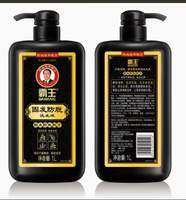
BAWANG | Hair Loss Prevention Ho Shou Wu Black Sesame Shampoo
₱2,499.69
Buy on Lazada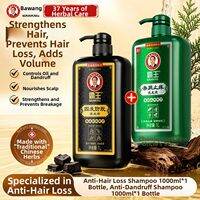
He Shou Wu Hair Strengthening Anti-Hair Loss Shampoo 1L
₱1,589.00₱1,904.00
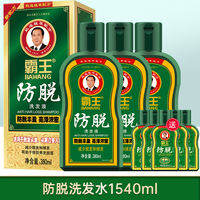
BAWANG | Anti-Hair Loss Strengthening Shampoo by Ginger Density Increase Oil Control Volume
₱1,552.00₱3,450.00
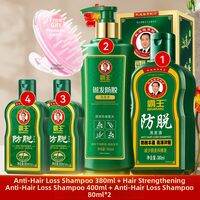
Anti-Hair Loss Oil Control Volumizing Shampoo for Men and Women
₱1,264.00₱1,566.00
About BAWANG
Overview
BAWANG (霸王) is a Chinese personal-care brand best known for its herbal shampoos and hair-care products formulated with Traditional Chinese Medicine (TCM) ingredients. The brand specialises in solutions for hair fall, dandruff, scalp health, and hair nourishment. It is the flagship label of BaWang International (Group) Holding Limited, which designs, manufactures, markets, and distributes household and personal-care goods.1
Unlike conventional cosmetic shampoo brands, BAWANG positions itself around a distinct Chinese heritage identity, emphasising herbal ingredients and traditional medicine concepts rather than fragrance or styling alone. Corporate materials describe the brand as originating from a traditional Chinese medical background with a focus on herbal research.2 Its most prominent historical association is with anti-hair-fall shampoo, though it also offers products for dandruff control, damaged hair repair, dryness, and scalp nourishment.
As of 2025, BAWANG remained the dominant brand within its parent group, generating approximately RMB 257.8 million in revenue. This accounted for 94.4% of the group’s total brand-category revenue according to the company’s annual report.3
Note on naming: “BAWANG” may refer to unrelated products or businesses in various markets. This article refers specifically to the Chinese hair-care brand 霸王, not to other entities using the word “Bawang.”
Name and meaning
The Chinese name 霸王 (Bàwáng) translates literally to “hegemon,” “overlord,” or “dominant ruler.” This choice conveys a deliberately strong brand identity. In the context of hair care, the name suggests strength and vitality, distinguishing the brand from more conventionally feminine or purely cosmetic competitors. The English presentation is typically rendered as BAWANG or BaWang.
History
Origins
The corporate history of BAWANG traces back to 1989, when entrepreneur Chen Qiyuan began developing Chinese-herbal personal-care products in Guangzhou.4 The foundational concept was adapting traditional Chinese herbal medicine into modern hair-care formulations. Rather than competing solely on fragrance or fashion-oriented branding, the business sought to differentiate itself through functional claims and herbal ingredients, establishing the core of the BAWANG brand identity.
Product line expansion
Over subsequent decades, BAWANG expanded beyond its original shampoo positioning into a broader portfolio. Product families have included anti-hair-fall shampoo, Chinese herbal shampoo, anti-dandruff shampoo, nourishing and reparative shampoo, moisturising shampoo, scalp-care treatments, conditioners, and other personal-care items. International product descriptions highlight formulations based on Chinese herbal extracts targeting specific concerns such as dandruff, damage, dryness, and nutritional depletion.5
Brand philosophy
BAWANG’s primary differentiator is its integration of Traditional Chinese Medicine principles into modern personal care. Corporate communications describe the brand as inheriting elements of TCM rather than functioning merely as a Western-style cosmetic line.6 This philosophy rests on three pillars:
- Chinese heritage: Intentional incorporation of cultural and herbal traditions.
- Functional hair care: Focus on addressing hair fall, dandruff, scalp oiliness, and damage rather than exclusively cosmetic attributes.
- Herbal ingredients: Use of components derived from traditional practice; for example, anti-dandruff products have been described as containing honey locust, Euphorbia herb, and lemongrass.7
Flagship positioning: Anti-hair-fall shampoo
Anti-hair-fall shampoo remains the category most strongly associated with BAWANG. The brand targets consumers concerned with excessive shedding, weak hair roots, thinning appearance, and overall scalp health. In its 2024 annual report, the group stated its intention to continue focusing promotion on this range while leveraging patented technologies.
It should be noted that marketing positioning for “anti-hair fall” does not constitute medical evidence of efficacy for clinical hair-loss disorders.
Product portfolio
While the portfolio has evolved, its structure generally encompasses the following categories:
- Anti-hair-fall range: Products designed to strengthen the hair and scalp and reduce the experience of hair fall.
- Anti-dandruff range: Herbal formulations targeting excess sebum, flakes, and itchiness while providing conditioning benefits.8
- Herbal nourishing range: Scalp and hair treatments using ingredients from Chinese herbal traditions.
- Moisturising and repair: Formulations for dry or damaged hair intended to improve softness and manageability.
- Other personal care: Historically, the parent group has also produced toothpaste, shower gels, and other household goods.9
Chinese herbal ingredients
Herbal ingredients are central to the BAWANG identity. For its black-hair and nourishing lines, the company cites the use of Polygonum, black sesame, and black beans, stating these are intended to condition the scalp and improve the appearance of dull hair.10 Similarly, anti-dandruff products emphasise herbal extracts. Consequently, “Chinese herbal shampoo” functions less as a generic descriptor and more as the brand’s definitive category identity.
Marketing and brand image
Historically, BAWANG employed advertising strategies distinct from many international shampoo brands, associating the label with strength, masculinity, Chinese heritage, and celebrity endorsement.
Jackie Chan
Actor Jackie Chan served as a major brand ambassador during the company’s expansion period. His endorsement communicated attributes of physical vitality, traditional Chinese identity, and credibility simultaneously. Historical corporate materials identify him as a key figure in BAWANG’s advertising strategy, contributing significantly to its public image.11
Position in the Chinese market
BAWANG distinguished itself by establishing “Chinese herbal shampoo” as a specific market category rather than competing as a generic shampoo brand. Historical disclosures indicated significant market penetration; for instance, Euromonitor data cited by the company reported that BAWANG held approximately 52.9% of China’s Chinese-herbal shampoo market in 2009.12 While these figures are historical and do not reflect current market share, they underscore the brand’s role in making Chinese herbal hair care a recognisable domestic segment.
Corporate structure
BAWANG operates under BaWang International (Group) Holding Limited. Although BAWANG is currently the overwhelmingly dominant brand, the group has historically managed multiple labels, including:
- BAWANG / 霸王: Chinese herbal shampoo and hair care
- Royal Wind / 追风: Herbal anti-dandruff and hair-care products
- LiTao / 丽涛: Personal-care products
- Herborn: Chinese-herbal skincare
This structure reflects the company’s operation as a broader Chinese herbal personal-care group rather than a single-brand shampoo manufacturer.13
Stock market history
BaWang International listed on the Hong Kong Stock Exchange on 3 July 2009 under stock code 1338.14 This listing marked the transition of BAWANG from a domestic consumer brand to a publicly traded consumer-goods group. The listed entity is incorporated in the Cayman Islands, with principal operations based in Guangzhou.15
BAWANG today
Based on full-year results for 2025, BAWANG remains the group’s primary revenue driver. Key financial indicators include:
| Indicator (2025) | Result |
|---|---|
| Total group revenue | RMB 273.1 million |
| BAWANG brand revenue | RMB 257.8 million |
| BAWANG share of group brand revenue | 94.4% |
| Shampoo & hair-care revenue | RMB 256.9 million |
| Online-channel revenue | RMB 159.3 million |
| Total group revenue growth | +8.0% |
| BAWANG revenue growth | +7.0% |
These figures indicate a shift toward e-commerce as a primary sales channel. Online revenue grew by approximately 17.2% in 2025, whereas conventional channel revenue declined by about 18.5%.16
Digital-era repositioning
To engage younger consumers, BAWANG has adapted its marketing for digital platforms including Weibo, Douyin, Kuaishou, and Xiaohongshu. Strategies now encompass livestream selling, digital promotions, membership programmes, packaging redesigns, influencer collaborations, and e-commerce flagship stores. This represents an evolution from the earlier model reliant on mass television advertising and celebrity endorsements toward a digitally native consumer-brand strategy.
Current product strategy
Recent strategic priorities aim to modernise the brand without abandoning its core identity. Key focuses include:
- Anti-hair-fall: Maintained as the core functional advantage.
- Chinese herbal heritage: Leveraged for brand differentiation.
- Patented technology: Utilised to enhance scientific credibility.
- New packaging: Designed to appeal to younger demographics.
- E-commerce: Prioritised as the modern distribution channel.
The 2024 annual report specifically highlighted investments in patented technologies, anti-hair-fall product development, and youthful packaging aesthetics.17
International presence
BAWANG has marketed products outside mainland China, establishing distribution networks in markets including Hong Kong, Macau, Singapore, Thailand, Malaysia, Myanmar, and the United Arab Emirates by the late 2000s and early 2010s.18 Its international strategy has generally relied on the distinctive appeal of Chinese herbal hair care rather than imitating multinational competitors.
Competitive positioning
BAWANG occupies a unique space between traditional medicine, domestic personal care, functional hair care, and mass-market shampoo. Its closest competitors are not only global brands but also other Chinese labels emphasising herbal ingredients and scalp health. The brand’s primary differentiation lies in combining Chinese heritage, herbal formulation, functional benefits, and mass-market accessibility.
Brand strengths
- Strong recognition: Decades of presence in the Chinese hair-care market have established considerable historical awareness.
- Distinctive positioning: The “Chinese herbal shampoo” identity provides clear categorisation compared to generic propositions.
- Flagship association: Anti-hair-fall shampoo remains closely linked to the BAWANG name.
- Cultural differentiation: Successful integration of traditional concepts into modern consumer goods.
- Digital adaptation: Increasing pivot toward e-commerce, livestreaming, and social media marketing.19
Challenges
- Multinational competition: Global players possess larger marketing budgets and extensive portfolios.
- Evolving preferences: Younger consumers increasingly seek scientific substantiation, aesthetic appeal, and personalised care alongside traditional positioning.
- Herbal positioning scrutiny: Functional claims may require stronger scientific backing to meet modern expectations.
- Retail decline: Conventional channel revenues have decreased as e-commerce grows.20
- Modernisation balance: The brand must preserve heritage while avoiding perceptions of being outdated.
Financial picture
Annual results for 2025 indicate sales growth alongside relatively thin profitability margins:
- Revenue: RMB 273.1 million
- Gross profit: RMB 138.8 million
- Operating profit: RMB 4.46 million
- Net profit attributable to owners: RMB 3.89 million
- Gross margin: 50.8%
- Net profit margin: 1.4%
While revenue increased by 8.0% year-on-year, attributable net profit declined from RMB 6.56 million in 2024 to RMB 3.89 million in 2025.21 This suggests that despite brand growth, the parent company currently operates with limited margin buffer.
Significance in consumer branding
From a branding perspective, BAWANG illustrates the transformation of a traditional cultural concept into a modern FMCG brand. By integrating Traditional Chinese Medicine ingredients, functional benefits, celebrity marketing, and digital distribution, it serves as an example of Chinese cultural localisation in consumer branding rather than merely a shampoo manufacturer.
Timeline
- 1989: Business origins associated with Chen Qiyuan and Chinese-herbal personal care.22
- 1990s–2000s: Development and expansion of the Chinese-herbal shampoo positioning.
- 2000s: Major brand expansion; development of anti-hair-fall and functional product lines.
- 2007: Recognised as a China Well-known Trademark according to company disclosures.23
- 2009: BaWang International listed on the Hong Kong Stock Exchange (stock code 1338).24
- 2010s: Expansion into broader personal care and overseas markets; heavy use of celebrity and mass-media advertising.
- 2020s: Shift toward e-commerce, livestreaming, social media, and younger consumer demographics.25
- 2024: BAWANG generated approximately RMB 240.9 million, representing 95.2% of group revenue by brand category.26
- 2025: BAWANG generated approximately RMB 257.8 million (94.4% of group brand revenue); online sales became an increasingly critical channel.27
Summary
BAWANG (霸王) is a Guangzhou-based Chinese personal-care brand founded on the concept of transforming Traditional Chinese Medicine and herbal ingredients into modern functional hair-care products. It became particularly famous for anti-hair-fall and Chinese-herbal shampoos and developed into the dominant brand of the publicly listed BaWang International Group. Its distinctive territory remains “traditional Chinese herbal heritage combined with functional hair care.” While historical success relied on strong cultural branding and celebrity advertising, the company is currently translating this heritage into a younger, digital-first, and e-commerce-oriented brand while maintaining BAWANG as the group’s central pillar.28
References
- irasia.com – BaWang International (Group) Holding Limited
- BAWANG (GUANGZHOU) CO., LTD | LinkedIn
- bawang.com.cn
- Bawang Shampoo
- BaWang International (Group) Holding Limited – Annual Report 2024 | FinancialFilings
- To: Business Editor
- BaWang International (Group) Holding Limited – Annual Report 2025 | FinancialReports.eu
- BaWang International (Group) Holding (HKG:1338) Company Profile & Description
- Peringatan Publik | Balai POM di Tulang Bawang
- Mie Instan Ayam Bawang Gratis Ongkir 🔥 Harga Murah Juni 2026
- Bawang ✅ Juni 2026 100% Original – Official Store Indonesia
- BaWang International (Group) Holding Limited Annual Report 2025: Business Review, Financial Performance, and Corporate Governance – Minichart
- BaWang International publishes 2025 annual report – Tiger Brokers
- BaWang Group Announces Online Release of 2025 Annual Report and AGM Documents – Tiger Brokers
- BaWang International (Group) Holding Limited – Earnings Release 2025 | FinancialFilings
- Berita | Balai POM di Tulang Bawang
- Mahasiswa IPB University Kembangkan Sunscreen Antiacne dari Limbah Kulit Bawang Merah dan Rumput Laut – IPB University
- BaWang International (Group) Holding Limited – Interim / Quarterly Report 2025 | FinancialFilings
- BaWang International (Group) Holding Limited – Regulatory Filings 2025 | FinancialReports.eu
- Commercial Credit Report for BaWang International Group Holding Ltd – Report Preview
- BaWang International (Group) Holding Limited – Report Publication Announcement 2025 | FinancialReports.eu
- BaWang International (Group) Holding Limited – Earnings Release 2025 | FinancialReports.eu
- No.7611 Indomie (Indonesia) Mi Instan Rasa Ayam Bawang | tontantin即席麺処
- PT. BAWANG MAS SAKTI | Indonesia Companies Registry Search
- bawang.com.cn
- About – Bawang Goreng DELISI
- bawang.com.cn
- Layanan | Balai POM di Tulang Bawang