Shop on Lazada
Crocodile products
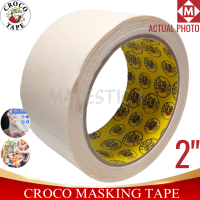
Crocodile Masking Tape 1/2″ 3/4″ 1″ 2″ (SOLD PER ROLL)
₱85.00
Buy on Lazada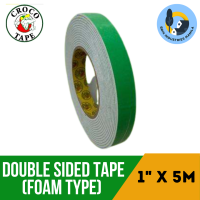
CROCO Double Sided Tape 1/2 3/4 or 1 (Foam Type)
₱114.00₱151.50
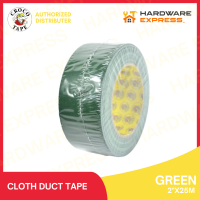
Croco Cloth Duct Tape 2inch x 25m
₱279.00
Buy on Lazada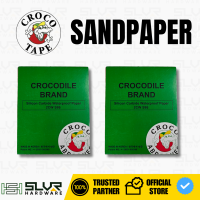
CROCODILE Water Resistant Sandpaper GRIT 60 ~ 1200 GRIT Original Sandpaper Made in Korea 100 pieces per ream
₱1,560.00₱1,850.00

Stationary Tape (1/23/4and 1)Sold per Pack
₱96.00₱280.00
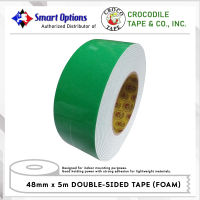
Croco Double Sided Foam Tape 48mm x 5m
₱165.00
Buy on Lazada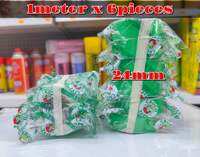
12pcs(12mm) 8pcs(18mm) 6pcs(24mm) Croco Foam Double Sided Tape (1meter 2mm Thickness)
₱129.00
Buy on Lazada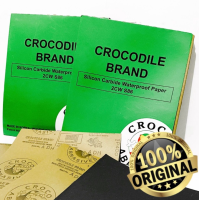
Original Crocodile Brand Sandpaper 100pcs per Ream (Sold per Ream)
₱1,500.00
Buy on LazadaAbout Crocodile
Crocodile is a Singapore-origin fashion and lifestyle brand founded in 1947 by Dato’ Dr. Tan Hian Tsin. Originally a small manufacturer and retailer of men’s singlets, the label has since expanded into shirts, trousers, underwear, footwear, travel goods, watches, eyewear, leather goods, and other lifestyle products. Over the decades, Crocodile evolved from a local clothing business into a widely licensed Asian fashion brand with a significant historical presence across Southeast and East Asia.1
Note: The name “Crocodile” is used by several unrelated businesses. This article refers specifically to the Singapore-founded Crocodile brand associated with Crocodile International Pte. Ltd., and not to Crocodile Garments, which is a separate company based in Hong Kong.
Infobox
| Field | Information |
|---|---|
| Brand name | Crocodile |
| Founded | 1947 |
| Place of origin | Singapore |
| Founder | Dato’ Dr. Tan Hian Tsin |
| Industry | Fashion and lifestyle |
| Original focus | Men’s clothing |
| First product | Singlets |
| Headquarters | Singapore |
| Current corporate identity | Crocodile International Pte. Ltd. |
| Main markets historically | Southeast Asia, East Asia and South Asia |
| Product categories | Apparel, footwear, leather goods, travel goods, watches, eyewear, accessories and other lifestyle products |
History
Foundation
Crocodile was established in Singapore in 1947 by Tan Hian Tsin, who had prior experience in the garment trade. The brand’s first shop was located at 6 North Bridge Road, on the site where Singapore’s Parliament House would later be built. Its initial offering was the singlet, a simple, popular garment that was practical to manufacture and sell.2
The selection of the name “Crocodile” was intentional. According to the company’s history, Tan associated the animal with toughness, longevity, and its distinctive skin. The crocodile subsequently became central to the company’s identity, and live crocodiles were even used as a marketing attraction during the brand’s early years.3
Expansion in the 1950s
Recognising the difficulty of competing with only a single product, Crocodile adopted what it describes as a “single brand, multiple products” strategy. The range was expanded to include:
- Shirts
- Trousers
- Underwear
- Ties
- Socks
- Handkerchiefs
- Footwear
- Travel goods
This diversification was relatively unusual for the period. Rather than creating separate identities for each category, Crocodile sought to establish the Crocodile name itself as the primary consumer brand.4
By the late 1950s, the company had begun expanding beyond Singapore. Early overseas markets included Malaysia, Brunei, Indonesia, Hong Kong, and Thailand.5
Development into a lifestyle brand
During the 1960s, Crocodile continued to broaden its portfolio, entering categories such as timepieces and eyewear. The company also developed footwear and travel-related products, reinforcing its ambition to operate as a lifestyle brand rather than solely a clothing manufacturer.6
This approach eventually became one of Crocodile’s defining characteristics. Its historical product portfolio has encompassed apparel for men, women, and children, as well as footwear, leather goods, travelware, watches, eyewear, bedding, and other accessories.7
International expansion
Crocodile’s international growth was closely linked to licensing. Instead of operating every overseas market directly from Singapore, the brand partnered with local companies to manufacture, distribute, and sell Crocodile products.
The company’s records indicate expansion into countries and territories including:
- Singapore
- Malaysia
- Brunei
- Indonesia
- Thailand
- Japan
- Hong Kong
- Taiwan
- South Korea
- China
- India
- Sri Lanka
- Bangladesh
- Myanmar
- Cambodia
The company states that its network eventually reached more than 3,000 points of sale across various markets.8
This licensing model is key to understanding the brand today: products bearing the Crocodile name in different Asian markets may be operated or distributed by distinct local companies, rather than by a single centralised retail organisation.
China and North Asia
Crocodile entered mainland China in the 1990s, using the name “CATELO” for its Chinese operations. It subsequently expanded into South Korea in 1994, and the Korean business later received a Hit Product Award in 2001.9
The company later established a North Asian headquarters in Shanghai, while continuing its broader expansion across Asian markets.10
India
Crocodile entered India in 1996 through a partnership with S.P. Apparels. The Indian business later became associated with S.P. Retail Ventures Limited, which focuses on developing and expanding the Crocodile brand in the country. The Indian operation positions Crocodile particularly strongly around men’s fashion and everyday formal and casual wear.11
Products and style
Historically, Crocodile has been particularly associated with men’s clothing. Core product categories include:
- Polo shirts
- Dress shirts
- Casual shirts
- Trousers
- Jackets
- Shorts
- Innerwear
- Accessories
- Footwear
- Leather goods
- Travel products
- Watches
- Eyewear
The brand has also expanded into women’s and children’s clothing, making its overall positioning broader than its original menswear focus.7
Its stated brand positioning emphasises timelessness, quality, and functionality rather than rapidly changing fashion trends. This helps explain why Crocodile has historically been prominent in classic menswear and everyday clothing.7
Brand identity
The crocodile itself is the central visual and conceptual element of the brand. According to Crocodile International, the animal was selected because its characteristics suggested strength, durability, and longevity. The company therefore connected the animal’s symbolism with its objective of producing attractive products intended to have lasting qualities.3
The brand’s identity consequently differs somewhat from purely trend-driven fashion labels. Crocodile has traditionally emphasised:
Durability → Functionality → Classic style → Everyday wear → Longevity
This positioning has helped it maintain recognition across generations in several Asian markets.
Crocodile and Singapore
Crocodile is notable as one of the long-established fashion brands originating in Singapore. In 2015, during Singapore’s SG50 celebrations, Crocodile received the SG50 Trademark Award from the Intellectual Property Office of Singapore. The award recognised brands that had grown alongside the nation throughout its history, and Crocodile was selected as a finalist from hundreds of home-grown organisations.1
The company therefore occupies a distinctive position in Singapore’s commercial history, having begun in the immediate post-war period and survived the city-state’s transformation from a colonial trading centre into a modern global hub.
Corporate structure and licensing
A notable aspect of Crocodile is that the brand and the companies operating it in individual countries are not necessarily the same entity.
Crocodile International Pte. Ltd. is based in Singapore and describes itself as the company behind the international Crocodile brand. Its headquarters is listed at Crocodile House, 3 Ubi Avenue 3, Singapore.12
At the same time, different markets may have their own licensees or operating companies. India, for example, has its own corporate structure through S.P. Retail Ventures, while the Hong Kong market is associated with a separate company known as Crocodile Garments Limited.13
This distinction is particularly important because Crocodile International and Crocodile Garments are not the same company.
Crocodile vs. Crocodile Garments
The two names are frequently confused.
Crocodile International
- Originated in Singapore
- Founded in 1947
- Founded by Tan Hian Tsin
- International lifestyle/fashion brand
- Strong historical presence in Southeast Asia
Crocodile Garments
- Associated with Hong Kong
- Historically known as a major shirt and garment company
- Listed on the Hong Kong Stock Exchange in 1971
- Developed men’s, women’s, and children’s apparel
- Has a separate corporate history from the Singapore-founded Crocodile brand14
Despite the similarity of their names, they should be treated as separate corporate histories.
Recognition and legacy
Crocodile’s significance lies less in contemporary high fashion and more in its longevity and regional influence. Founded in 1947, it has served multiple generations of Asian consumers. Its early decision to build a broad product portfolio under a single brand, followed by extensive use of licensing and regional partnerships, allowed the Crocodile name to extend well beyond Singapore.15
The brand’s historical importance can be summarised in three areas:
- Singaporean heritage — one of the country’s long-established home-grown apparel brands.
- Asian expansion — an early Singapore fashion brand to establish a substantial presence across neighbouring Asian markets.
- Lifestyle-brand strategy — expansion from a single basic garment into clothing, accessories, travel goods, and other lifestyle categories.
Timeline
| Year | Event |
|---|---|
| 1947 | Tan Hian Tsin establishes Crocodile in Singapore. |
| 1947 | First shop opens at North Bridge Road; the brand initially sells singlets. |
| 1950s | Crocodile expands into shirts, trousers, underwear, ties, socks and other products. |
| 1950s | Footwear and travel goods are added. |
| 1950s–60s | Brand expands into Malaysia, Brunei, Indonesia, Thailand, Hong Kong and other Asian markets. |
| 1960s | Timepieces and eyewear become part of the broader product portfolio. |
| 1993 | Crocodile enters China using the CATELO name. |
| 1994 | Crocodile enters South Korea. |
| 1996 | Crocodile enters India. |
| 2001 | Crocodile receives a Hit Product Award in South Korea. |
| 2000s | Further expansion into India, Pakistan, Sri Lanka and Bangladesh. |
| 2015 | Crocodile receives recognition as an SG50 Trademark Award finalist. |
| Today | Crocodile continues as an international Asian fashion and lifestyle brand through various markets and licensing arrangements.16 |
In popular perception
Crocodile is generally associated with classic Asian menswear, particularly among consumers familiar with established department stores and traditional clothing retailers in Singapore and Southeast Asia. Rather than positioning itself primarily as a luxury fashion house, the brand has historically occupied the space between affordable everyday clothing and established-quality menswear.
Its longevity remains one of its strongest brand assets; a consumer encountering Crocodile today engages with a brand whose origins date back almost eight decades.
References
- About Us | Crocodile International | Crocodile International Pte Ltd
- Brand Story | Crocodile International | Crocodile International Pte Ltd
- OUR HISTORY – CROCODILE
- Crocodile Outlet | Accessories | Apparel | Apparel | Accessories | Outlet | Fashion | CapitaLand Malls
- CROCODILE – OG Singapore
- Crocodile | Travelite Holdings Limited
- About Crocodile India | Men’s Fashion Brand Since 1947 | S.P. Retail Ventures
- Crocodile | Fashion | CapitaLand Malls
- Crocodile | Fashion | CapitaLand Malls
- Crocodile International Pte Ltd | LinkedIn
- Crocodile
- Crocodile- A Journey of Style and Craftsmanship
- About us | Crocodile Bangladesh Ltd.
- Crocodile International Pte Ltd | LinkedIn
- Singapore Crocodile (1968) Pte Ltd | LinkedIn
- Lacoste Story