Shop on Lazada
Sea to Summit products
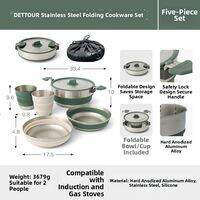
Sea to Summit | Camping Foldable Nesting Cookpot with Lid Food-Grade Silicone Bag
₱16,263.92₱17,072.06
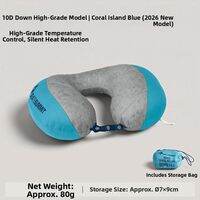
Sea to Summit | Travel Inflatable U Pillow for Neck
₱5,698.16
Buy on Lazada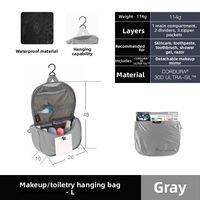
Sea to Summit | Portable Waterproof Separated Toiletry Bag
₱3,702.03₱3,888.38
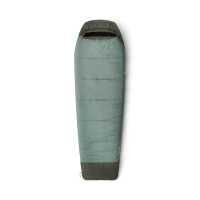
Sea to Summit Boab Synthetic Sleeping Bag
₱14,254.30₱27,399.99
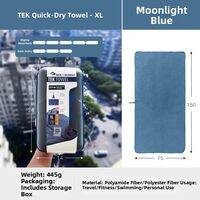
Sea to Summit | Quick Drying Travel Towel
₱2,993.63₱3,281.68
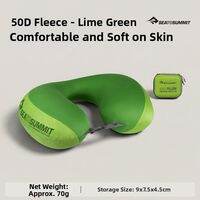
Sea to Summit | Inflatable U-Shaped Neck Pillow Portable
₱3,123.40
Buy on Lazada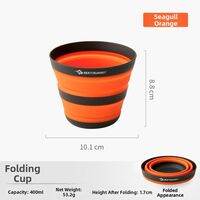
Sea to Summit | Collapsible Travel Cup
₱1,229.57₱1,357.52
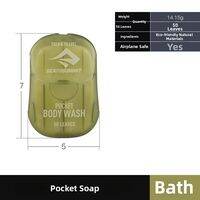
Sea to Summit | Antibacterial Portable Soap Sheets for Laundry Bath Handwashing
₱764.89₱799.47
About Sea to Summit
Sea to Summit is an Australian outdoor equipment brand specializing in lightweight, technical, and highly packable gear for camping, backpacking, trekking, mountaineering, paddling, and travel. Founded in 1991 by adventurer and gear designer Roland Tyson, the company maintains its global headquarters in Perth, Western Australia. 1
The brand is defined by a focus on lightweight design, durability, functionality, and field testing. Rather than limiting itself to a single category, Sea to Summit has developed a comprehensive ecosystem of outdoor accessories and equipment that includes sleeping mats, tents, dry bags, cookware, camping furniture, pillows, towels, and travel accessories. 2
Basic information
| Category | Information |
|---|---|
| Brand | Sea to Summit |
| Industry | Outdoor equipment / sporting goods |
| Founded | 1991 |
| Origin | Perth, Western Australia, Australia |
| Founder | Roland Tyson |
| Key early partner | Penny Sanderson |
| Global headquarters | Perth, Western Australia |
| North American headquarters | Boulder, Colorado |
| European operation | Germany |
| Asian operation | China |
| Current majority owner | Five V Capital |
| Founder involvement | Roland Tyson remains a shareholder and director/adviser |
| Markets | 70+ countries |
| Main philosophy | Lightweight, durable, functional, packable outdoor equipment |
| Major categories | Sleeping, tents, camp kitchen, dry storage, packs/accessories, travel, water sports |
Sea to Summit currently distributes products in more than 73 countries, with regional offices located in Australia, the United States, Germany, and China. 3
Origins
The history of Sea to Summit predates the formal establishment of the company. In 1983, 17-year-old Roland Tyson began manufacturing outdoor equipment using an industrial sewing machine in his bedroom in Perth. At that time, lightweight outdoor gear was difficult to source in Australia, prompting Tyson to design and manufacture his own equipment for local adventurers. 4
This do-it-yourself background established a core company philosophy: identify a specific outdoor problem, design a superior solution, test it in real-world conditions, and refine the product based on performance.
The Everest expedition and brand naming
The name Sea to Summit originated from a unique Mount Everest expedition. In 1990, Australian adventurer Tim Macartney-Snape attempted to climb Everest starting from sea level. Rather than flying or driving to the mountain’s base, the expedition involved traveling under human power from the Bay of Bengal to the summit of Everest. 5
Macartney-Snape commissioned Roland Tyson to design and manufacture specialized equipment for the journey, including bags for expedition gear and medical supplies. Following the expedition’s success, the concept of moving “from sea to summit” inspired the company name. Sea to Summit was formally established in 1991. 6
Unlike conventional fashion or mass-market outdoor brands, Sea to Summit was founded on principles of expedition equipment and practical problem-solving.
Key figures
Roland Tyson
Roland Tyson is the central figure in the company’s history. His experience as an adventurer, climber, designer, and manufacturer shaped the brand’s product development approach. Tyson’s philosophy emphasized designing equipment that serious outdoor users would genuinely want to use, balancing low weight, durability, functionality, compactness, comfort, and reliability. He personally tested prototypes in environments ranging from the Australian outback to the Himalayas. 7 This focus on engineering details over branding remains a defining characteristic of the company.
Penny Sanderson
In 1993, Penny Sanderson joined the company after six years at Australian Geographic. Her background in exploration, publishing, and adventure complemented Tyson’s technical expertise. 8 Together, they traveled extensively to test equipment during climbing, trekking, sailing, cycling, and overlanding trips. This process of continuous field iteration—using gear, identifying issues, modifying designs, and retesting—became integral to the company’s culture. 9
Product philosophy and categories
A key strategic decision in the company’s early years was treating small outdoor accessories as serious technical equipment. Items such as stuff sacks, sleeping bag liners, dry bags, and utensils were engineered with the same rigor as larger gear, allowing Sea to Summit to compete in categories where other brands often overlooked packability and refinement. Over time, the product range expanded into major equipment categories.
Sleeping systems
Sleeping equipment, particularly inflatable sleeping mats, is one of the brand’s strongest categories. Products include Air Sprung Cell sleeping mats, Ultralight sleeping mats, the Ether Light series, insulated mats, pillows, and sleeping bag liners.
The proprietary Air Sprung Cell technology utilizes hundreds of individually formed air chambers rather than a single large cavity. This construction allows the mattress to conform to the body while maintaining stability, comfort, and a low packed volume. 10 Models equipped with pump-sack systems can be inflated rapidly without moisture buildup from breath.
Tents and shelters
Sea to Summit manufactures lightweight backpacking tents, notably the Alto and Telos families. These designs prioritize livability alongside weight reduction, featuring multiple setup configurations, increased interior space, improved ventilation, and compact packing dimensions. The company collaborated with tent designer Jake Lah, founder of DAC, during the development of these lines. 11 This reflects a strategy where weight reduction does not necessitate sacrificing comfort or usability.
Camp kitchen
The camp kitchen range includes pots, pans, bowls, plates, mugs, cutlery, collapsible cookware, coffee equipment, and food storage accessories. The X-Series is particularly recognizable for its silicone construction, which allows cups and bowls to collapse almost flat. This design significantly reduces the volume occupied in a backpack, adhering to the brand’s recurring theme of making conventional camping equipment more packable through folding, nesting, or compression.
Dry storage and waterproof equipment
Dry storage is a significant category for Sea to Summit, encompassing dry bags, compression sacks, waterproof cases, stuff sacks, and waterproof packs. These products are widely used for kayaking, canoeing, rafting, motorcycle travel, trekking, and wet-weather camping.
The company employs RF welding technology to create waterproof seams and components in various products, including specific sleeping mats, dry sacks, and cases. 12 This manufacturing technique ensures durability and water resistance in demanding environments.
Travel and general outdoor equipment
Beyond traditional backpacking gear, the brand offers travel towels, toiletry accessories, mosquito nets, organizers, lightweight bags, waterproof phone and map cases, and camping showers. This range supports an “omni-terrain” concept, providing equipment suitable for diverse environments and activities beyond dedicated camping trips. 13
Design priorities
Sea to Summit distinguishes itself through specific design priorities:
- Lightweight: Weight reduction is fundamental for backpackers, thru-hikers, mountaineers, and bikepackers, but is achieved without compromising structural integrity.
- Packability: Products are frequently designed to collapse, fold, compress, nest, or roll into integrated storage bags to minimize volume, a feature especially evident in cookware and sleeping systems.
- Durability: The development process seeks a balance between weight, durability, functionality, and packability rather than pursuing minimum weight at all costs. 14
- Field testing: Designers and staff are active participants in outdoor pursuits, ensuring products are validated in real-world conditions rather than solely through lab testing. 15
Manufacturing and operations
While originally manufactured in Perth, production became globalized as the company expanded. Materials are sourced internationally, with final assembly currently taking place in Vietnam, China, and Taiwan. A significant operation in China oversees production and supplier relationships. 16 Product development remains centered in Australia and other international offices.
Globally, Sea to Summit operates with headquarters in Perth, a North American base in Boulder, Colorado, a European operation in Germany, and an Asian operation in China. Other markets are served through distributors. 17 The company confirms distribution in over 73 countries. 18
Ownership and corporate structure
In 2022, Five V Capital, an Australian investment firm and certified B Corporation, became the majority shareholder of Sea to Summit. Founder Roland Tyson retained his shareholding and continues to advise on product design and marketing as a director. 19
The transaction was positioned as part of a long-term succession and international growth strategy. Sea to Summit confirmed that the brand would not be rebranded and that its global headquarters would remain in Perth. 20 Five V Capital’s investment focuses on global expansion, e-commerce, omnichannel retail, supply chain development, and sustainability, providing capital and infrastructure while preserving the company’s existing identity.
Brand philosophy and positioning
Sea to Summit’s current philosophy centers on three core ideas: creating trustworthy equipment that enables freedom and self-reliance; taking adventure seriously while maintaining an Australian sense of humor; and following an independent path based on integrity and durable relationships. Its broader brand expression is “#toequipandinspire.”
The brand occupies the premium technical outdoor equipment segment. It is distinct from fashion-oriented brands like Patagonia or The North Face, as well as exclusive ultralight niche manufacturers. Instead, it serves as a technical option for serious expeditions that is also accessible to ordinary campers and travelers.
| Brand type | Typical emphasis |
|---|---|
| Sea to Summit | Lightweight + technical + packable |
| Therm-a-Rest | Sleeping systems |
| MSR | Camping equipment + stoves + tents |
| Big Agnes | Tents + sleeping systems |
| Osprey | Backpacks |
| Patagonia | Apparel + environmental identity |
| The North Face | Apparel + outdoor lifestyle + technical gear |
| NEMO | Innovative camping/sleeping equipment |
Reputation and target audience
Sea to Summit is recognized for engineering-oriented products, particularly sleeping mats, dry bags, and collapsible cookware. Its sleeping mats have received numerous awards from outdoor publications and gear-testing organizations. 21 The brand’s reputation relies primarily on product design and performance rather than celebrity endorsement.
Products appeal to a wide range of users:
* Backpackers and ultralight hikers who prioritize weight-to-functionality ratios.
* Campers seeking comprehensive system compatibility.
* Mountaineers requiring gear proven in alpine environments.
* Paddlers needing reliable waterproof storage.
* Bikepackers and motorcycle travelers benefiting from compact form factors.
* Travelers utilizing versatile accessories like dry bags and microfiber towels.
Strengths and considerations
Key strengths include meticulous attention to detail, superior packability, a broad product ecosystem, technical credibility rooted in expedition history, proprietary Air Sprung Cell technology, and a distinct Australian identity in a market dominated by Northern Hemisphere brands.
Potential considerations for buyers include pricing above the budget segment, the complexity of specialized materials and valves requiring maintenance, and the fact that premium features may offer diminishing returns for casual car camping. Like most technical outdoor brands, manufacturing occurs via international supply chains rather than exclusively in Australia. 22
Distinction from pure ultralight brands
Sea to Summit is best characterized as a lightweight technical brand rather than a pure ultralight specialist. Its philosophy emphasizes reducing weight without unnecessarily sacrificing comfort or durability. For example, the Ether Light sleeping mat series prioritizes thickness and comfort over absolute minimum weight, and tents are designed for genuine livability. This approach differentiates it from brands focused solely on gram-counting.
Timeline
- 1983: Roland Tyson begins making outdoor equipment in Perth at age 17. 23
- 1990: The sea-level-to-Everest expedition that inspired the brand name succeeds. 24
- 1991: Sea to Summit is established in Australia. 25
- 1993: Penny Sanderson joins the company. 26
- 1990s–2000s: Expansion of lightweight accessories and international presence.
- 2010s: Significant expansion into sleeping systems, cookware, and tents; introduction of Air Sprung Cell technology. 27
- 2022: Five V Capital becomes majority shareholder; Tyson remains as director/adviser.
- 2020s: Continued global expansion of product ranges including next-generation sleeping systems and shelters. 28
- Today: Headquartered in Perth, operating as a global technical outdoor brand in over 73 countries. 29
References
- Our Story | Sea to Summit
- Where are you based out of? – Sea to Summit Australia
- What is the meaning behind the name Sea to Summit? – Sea to Summit
- Sea to Summit | Outdoor Gear To Equip & Inspire
- Key Announcement | Sea to Summit
- WHAT IS THE MEANING BEHIND THE NAME SEA TO SUMMIT? – Sea to Summit – Europe
- Affiliate Program for Sea to Summit
- Sea Level to Everest’s Summit: Sea to Summit’s Origin Story – Uncommon Path – An REI Co-op Publication
- Sleeping Mats | Air Sprung Cell Sleeping Mats
- The Best Ultralight Backpacking Tents we Could Imagine: Alto, Telos an | Sea to Summit Canada
- RF Welding – what does it mean? And what products is it used on? | Sea to Summit
- The Design Series: Interview with Product Designer and adventurer Tim | Sea to Summit
- Will mouth inflating my sleeping mat damage it? – Sea to Summit
- Where are your products made? – Sea to Summit
- Where is Sea to Summit based? – Sea to Summit
- Key Announcement FAQs | Sea to Summit
- Our Story | Sea to Summit Australia
- Our most awarded gear | Sea to Summit Switzerland
- Our Most Awarded Gear | Sea to Summit Canada
- From a Bedroom Sewing Machine to Base Camp: The Sea to Summit Story – Quest Outdoors
- Our Story | Sea to Summit Italy
- WHERE ARE YOU BASED OUT OF? – Sea to Summit – Europe
- Our most awarded gear | Sea to Summit Austria
- Our Story
- General FAQs
- UltraLight Backpacking Air Sleeping Pad | Sea to Summit
- UltraLight Backpacking Air Sleeping Pad | Sea to Summit
- California Transparency in Supply Chains Act | Sea to Summit Canada
- Sea to Summit | Outdoor Gear To Equip & Inspire