Shop on Lazada
Cummins products

LF670 3889310 Oil Filter Cummins
₱650.00
Buy on Lazada
LF3000 3318853 Oil Filter Liugong & Cummins
₱850.00
Buy on Lazada
FS1280 1125N-010 3930942 Fuel Filter Dongfeng XCMG Cummins
₱420.00
Buy on Lazada
LF3325 Oil Filter Cummins
₱995.00
Buy on Lazada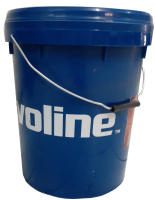
Valvoline Premium Blue 15W40
₱8,105.00
Buy on Lazada
LF777 Oil Filter Cummins
₱680.00
Buy on Lazada
FF5052 1117N-010 Fuel Filter Dongfeng Cummins ISLe340
₱365.00
Buy on Lazada![Alternator 3016627 4060811 4913675 [LOCAL STOCK. READY TO SHIP WITHIN 24HRS.] [24V 45A ] FOR CUMMINS ENGINES NTA855 K19](https://ph-live.slatic.net/p/954a50cd9b116615d6d0656e8945e0a4.png_200x200q80.jpg)
Alternator 3016627 4060811 4913675 [LOCAL STOCK. READY TO SHIP WITHIN 24HRS.] [24V 45A ] FOR CUMMINS ENGINES NTA855 K19
₱15,400.00
Buy on LazadaAbout Cummins
Overview
Cummins Inc. is an American multinational corporation that specializes in the design and manufacture of engines, power-generation equipment, powertrain components, and low- and zero-emissions technologies. Headquartered in Columbus, Indiana, Cummins has grown from a small diesel-engine manufacturer founded in 1919 into one of the world’s leading power and energy-technology companies.
The company’s products are utilized across a wide range of sectors, including commercial trucks, buses, construction and mining equipment, agricultural machinery, marine applications, rail, defense, data centers, hospitals, and industrial facilities. While historically renowned for its heavy-duty diesel engines, Cummins describes itself today as a global power leader. Its modern portfolio extends to natural-gas engines, hybrid and electric powertrains, batteries, fuel cells, hydrogen electrolyzers, automated transmissions, axles, braking systems, turbochargers, aftertreatment systems, and electrical power-generation systems.
Company Profile
| Item | Information |
|---|---|
| Full name | Cummins Inc. |
| Former name | Cummins Engine Company |
| Founded | February 3, 1919 |
| Founders | Clessie Cummins and William G. Irwin |
| Headquarters | Columbus, Indiana, United States |
| Industry | Engines, power systems, automotive/industrial components, energy technology |
| Stock symbol | CMI |
| Stock exchange | New York Stock Exchange |
| Current Chair & CEO | Jennifer Rumsey |
| Main markets | Commercial vehicles, power generation, construction, mining, marine, rail, agriculture, defense, and industrial applications |
| Global reach | Approximately 190 countries and territories |
| Distributor locations | About 640 wholly owned, joint-venture, and independent locations |
| Certified dealer locations | More than 13,000 |
| 2025 revenue | US$33.67 billion |
| 2025 net income attributable to Cummins | US$2.84 billion |
Note: Financial and network figures are based on Cummins’ 2025 annual report and investor-relations information.
Core Technologies and Portfolio
At its core, Cummins develops technologies for producing, converting, controlling, and using power. Historically, the brand was synonymous with diesel engines, particularly in heavy-duty transportation where high torque, durability, reliability, and long operating life are critical.
Modern Cummins operates beyond traditional engine manufacturing. Its technologies function across several layers:
Power source → Engine/Electric Motor → Transmission/Driveline → Emissions Control → Electronic Controls → Complete Power System → Service and Support
This integrated approach allows Cummins to supply individual components or complete powertrain and power-generation solutions. The current portfolio encompasses conventional internal-combustion technologies alongside natural gas, hybrid, battery-electric, hydrogen, and fuel-cell technologies. 1
Foundation (1919)
Cummins was founded on February 3, 1919, in Columbus, Indiana, as the Cummins Engine Company. The company was established by two central figures:
- Clessie Lyle Cummins: An inventor, mechanic, and engineer.
- William Glanton Irwin: A local businessman and financier who provided backing for Clessie Cummins’ engine business.
Clessie Cummins had previously worked for Irwin as a driver and mechanic. He recognized the potential of Rudolf Diesel’s compression-ignition engine technology, which was still commercially young at the time. The company’s first engine, produced in April 1919 under license, was a 6-horsepower single-cylinder Hvid engine intended for stationary applications like farm pumps and workshops. Thus, Cummins began not as a truck-engine giant, but as a small experimental firm exploring a technology that would later transform global industry.
The Role of Clessie Cummins
Clessie Cummins remains central to the company’s identity. Largely self-taught with a strong interest in mechanical engineering, he believed diesel engines offered superior fuel economy and durability for commercial use. Throughout his career, he focused on proving that diesel engines could outperform gasoline engines in practical, demanding environments. This philosophy—demonstrating reliability under difficult conditions—became a cornerstone of the Cummins brand.
Growth into a Diesel Powerhouse
During the twentieth century, Cummins expanded its applications into increasingly demanding sectors, becoming associated with:
- Heavy-duty trucks and buses
- Construction and mining machinery
- Agricultural equipment
- Marine vessels
- Industrial generators
- Rail and military applications
Over time, Cummins became one of the world’s most significant independent diesel-engine manufacturers. Unlike many competitors, it supplied engines to other vehicle manufacturers rather than producing only its own branded vehicles. This meant consumers might purchase a truck from another brand while relying on a Cummins engine inside.
Trucking and Automotive
The trucking industry is strongly linked to Cummins. The company developed a reputation for engines emphasizing durability, torque, fuel efficiency, serviceability, and reliability. Its engines serve heavy- and medium-duty trucks, buses, light-duty automotive applications, and off-highway equipment.
In North America, Cummins gained particular fame through its diesel engines supplied for Ram heavy-duty pickup trucks. These pickups have cultivated a substantial enthusiast following due to their high towing capability, simple mechanical heritage, and strong aftermarket support. Consequently, the term “Cummins” is often used colloquially as a synonym for a heavy-duty diesel engine, despite the corporation’s broader scope.
Business Structure
As of the 2025 reporting year, Cummins operates through five complementary segments:
- Engine: Manufactures engines using diesel, natural gas, gasoline, and alternative fuels for on-highway and off-highway markets.
- Components: Supplies technologies surrounding the engine, including turbochargers, fuel systems, aftertreatment, filtration, electronics, automated transmissions, axles, drivelines, and braking systems.
- Distribution: Manages the global sales and service network.
- Power Systems: Provides equipment for generating electricity, ranging from approximately 2 kW to 3.5 MW generator sets.
- Accelera: Focuses on zero-emissions technologies.
These segments share technology, customers, distribution infrastructure, and brand recognition while serving distinct markets.
Power Systems and Data Centers
The Power Systems segment provides diesel and natural-gas generator sets, alternators, controls, transfer switches, and distributed power systems. Applications include data centers, hospitals, commercial buildings, industrial facilities, mining, oil and gas, marine, and defense.
Data-center power has become a critical area for Cummins. Cummins supplies backup generators, switchgear, automatic transfer systems, and increasingly, batteries and energy-management solutions. In 2025, the company reported strong growth in power-generation markets, particularly driven by demand from data centers and commercial applications.
Accelera by Cummins
Launched in March 2023, Accelera by Cummins is the brand for the company’s New Power business. It focuses on technologies enabling zero-emissions applications, including:
- Batteries
- Electric powertrains
- Fuel cells
- Hydrogen technologies
- Electrolyzers
Strategically, Accelera reflects Cummins’ recognition that future transportation and industrial power will rely on a mix of technologies—diesel, renewable fuels, natural gas, hybrid, battery-electric, hydrogen, and fuel cells—rather than a single solution.
Destination Zero
Cummins’ overall energy-transition strategy is called Destination Zero. The concept acknowledges that no single technology will immediately replace combustion engines. Instead, Cummins pursues multiple technological paths while improving existing products. These paths include more efficient diesel engines, lower-carbon fuels, natural gas, hybrid systems, battery-electric power, hydrogen, and fuel cells. The approach is customer-driven, recognizing that different industries will transition at different speeds. Cummins is not abandoning diesel; it is transitioning from a diesel-engine company to a broad power-technology company.
Sustainability and Emissions
Facing stringent emissions regulations, Cummins invests heavily in control technologies. Modern engine systems combine design improvements with electronic controls, high-pressure fuel systems, turbocharging, exhaust-gas management, diesel particulate filters, and selective catalytic reduction. Simultaneously, the company develops zero-emissions alternatives through Accelera. Its environmental strategy is aligned with Planet 2050 sustainability goals.
Research and Engineering
Engineering is a defining characteristic of Cummins. The company invests significantly in combustion research, thermodynamics, materials, fuel systems, turbocharging, electronics, emissions control, batteries, fuel cells, hydrogen, and powertrain integration. In 2023, Cummins reported $1.4 billion in R&D spending. This capability allows the company to compete on the total combination of performance, efficiency, emissions, durability, reliability, cost, and serviceability.
Global Presence and Network
Cummins operates as a genuinely global entity. As of December 31, 2025, the company reported coverage in approximately 190 countries and territories, with about 640 distributor locations and more than 13,000 certified dealer locations.
For heavy equipment, uptime is vital. A non-operational truck, excavator, or generator can incur substantial costs. Therefore, the availability of parts and trained technicians through Cummins’ extensive service network is a key component of its business model. This global presence supports international trucking fleets, mining companies, construction firms, shipping operators, energy companies, governments, and data-center operators.
Brand Identity
Cummins possesses one of the most recognizable identities in the commercial-engine industry, notably its red-and-black “C” logo. This trademark was developed by legendary graphic designer Paul Rand and officially adopted in 1976. The brand emphasizes dependability, engineering, durability, innovation, industrial strength, service, and performance.
Philosophy
Cummins states its mission as: “Making people’s lives better by powering a more prosperous world.”
Its vision is: “Innovating for our customers to power their success.”
The stated values include Integrity, Diversity and Inclusion, Caring, Excellence, and Teamwork.
Leadership
The current Chair and CEO is Jennifer Rumsey, who assumed the role of Chair and Chief Executive Officer on August 1, 2023. She had previously served as President and CEO starting in 2022. Rumsey joined Cummins in 2000 and has held various senior positions in engineering, technology development, product quality, and business leadership. Her tenure represents the company’s shift toward a technology-diverse future involving both traditional engines and electrified systems. 2
Financial Performance
Cummins is a large publicly traded industrial corporation listed on the New York Stock Exchange under the ticker CMI. For fiscal year 2025, the company reported:
- Revenue: Approximately US$33.67 billion
- Net income attributable to Cummins: Approximately US$2.84 billion
- Diluted EPS: Approximately US$20.50
Revenue was slightly lower than in 2024. The company attributed changes in earnings partly to the absence of gains from the previous year’s Atmus transaction, weaker on-highway commercial-truck demand, and actions involving Accelera, offset by strong power-generation demand. 3
OEM Relationships and Competition
Cummins primarily operates within a B2B/OEM ecosystem, supplying engines and components to vehicle and equipment manufacturers rather than selling finished consumer vehicles. Key long-standing relationships include major manufacturers such as PACCAR, Traton Group, Daimler Truck, and Stellantis.
The company competes with other global manufacturers including Caterpillar, Volvo, PACCAR, Weichai Power, Mitsubishi Heavy Industries, Yanmar, Wärtsilä, and various battery and fuel-cell technology firms.
Future Outlook
Cummins is transitioning from being a “Diesel engine company” to a “Global power and energy technology company.” While the traditional engine business remains important due to the millions of machines still dependent on combustion, Cummins is expanding into advanced diesel, natural gas, hybrid powertrains, battery-electric systems, hydrogen, fuel cells, and electrolyzers. This multi-energy strategy ensures the company remains relevant across the evolving landscape of transportation and industrial power.