Shop on Lazada
Dabao products
Dabao | Hydrating & Moisturizing Face Cream
₱1,037.10₱2,312.97
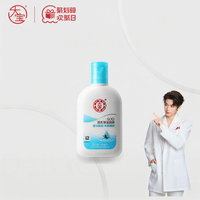
Dabao | Moisturizing and Refreshing Cream
₱464.26₱6,936.41
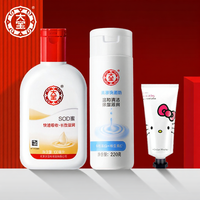
Dabao | Cleaning Moisturizing Nourishing Hydrating Face Cleansing & Moisturizing Set
₱549.79₱716.99
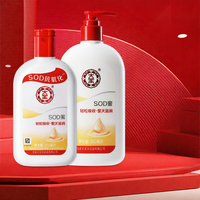
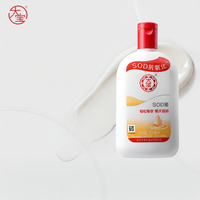
Dabao | SOD Moisturizing Face and Body Lotion
₱1,026.86₱1,321.51
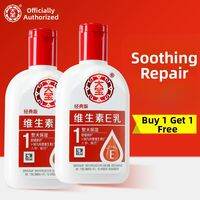
Dabao | Hydrating Soothing Repair Lotion
₱456.00₱958.00
About Dabao
Overview
Dabao is a Chinese skincare and personal-care brand established in 1985. It is widely recognized for its affordable, uncomplicated moisturizing products, most notably Dabao SOD Honey (SOD蜜) and its Beauty Day Cream and Night Cream. Although the brand became part of Johnson & Johnson in 2008, it has retained its Chinese name, heritage, and strong association with everyday skincare in China.1
| Field | Information |
|---|---|
| Brand name | Dabao |
| Country of origin | China |
| Origin | Beijing |
| Established | 1985 |
| Corporate entity | Beijing Dabao Cosmetics Co., Ltd. |
| Parent company | Johnson & Johnson |
| Industry | Cosmetics / skincare / personal care |
| Main market | China |
| Best known for | SOD Honey, Beauty Day Cream, Beauty Night Cream |
| Positioning | Affordable, everyday skincare |
| Historical slogan | “大宝天天见” (“Dabao, seen every day”) |
A distinction exists between the brand’s founding and its corporate formation: while Dabao products date to 1985, Beijing Dabao Cosmetics Co., Ltd. was formally established in 1999 following the restructuring of the earlier Beijing Sanlu Factory (北京市三露厂).2
History
Origins: 1985
The history of Dabao began in 1985 when its predecessor, Beijing Sanlu Factory, started developing cosmetics. The factory’s original name referenced three early products: acne lotion, skin-whitening lotion, and depilatory lotion. The Dabao product line subsequently expanded significantly from these initial offerings.3
During its formative years, the company prioritized the production of functional, affordable cosmetics for ordinary consumers over positioning itself as a luxury beauty house. This strategy helped establish the brand’s enduring image of practicality and accessibility.
By the late 1980s, Dabao had developed a range of specialized products, including eye-area creams, age-spot creams, eye-bag creams, and hair-growth treatments.3
The SOD era: 1990s
A pivotal development occurred in 1990 with the introduction of the SOD series. SOD stands for superoxide dismutase, an enzyme involved in the body’s antioxidant defense system. Dabao promoted SOD-derived ingredients in its cosmetics, making the component central to its brand identity.
The most prominent product in this line was SOD蜜 (SOD Honey). Despite the name, it is not a food product; rather, “蜜” refers to a moisturizing cosmetic formulation. The success of the SOD line transformed Dabao from a domestic manufacturer into a nationally recognized skincare brand.
1993: Day Cream and Night Cream
In 1993, Dabao launched its Beauty Day Cream and Beauty Night Cream. Alongside SOD Honey, these became signature products for the company. Historical records indicate annual sales of approximately 14 million bottles for these items during that period, demonstrating their extensive penetration in the Chinese mass market.
Expansion in the 1990s and early 2000s
Dabao expanded its portfolio beyond basic facial moisturizers to include body care, haircare, beauty products, fragrance, and specialty-use cosmetics. At one stage, the company described its offerings as comprising five major categories and more than 100 individual products.13
Key developments during this expansion included:
- 1994 — MT series: Introduction of products using metallothionein (MT), reflecting an emphasis on incorporating contemporary ingredient research into mass-market goods.4
- 1996 — Ginseng haircare and bath products: Launch of ginseng shampoo and bath items, continuing the use of recognizable traditional ingredients.5
- 2000 — Hand and foot cream: Further expansion into body-care segments.6
- 2001 — Physical sunscreen: Introduction of a sunscreen based on physical rather than chemical UV-filtering technology.7
- 2002 — Anti-dandruff and perm-related hair products: Continued growth of the haircare portfolio.8
Acquisition by Johnson & Johnson
In July 2008, Johnson & Johnson acquired Dabao, integrating the Chinese brand into its global portfolio.9 Consequently, Dabao is accurately described as a Chinese-origin skincare brand owned by an American multinational corporation. While ownership transferred to Johnson & Johnson, the brand’s heritage and origins remain distinctly Chinese.
Brand Positioning
Dabao historically occupied the mass-market, affordable skincare segment. Its philosophy stood in contrast to prestige beauty brands. Rather than emphasizing luxury packaging, exclusive boutiques, celebrity endorsements, or high-fashion branding, Dabao built its reputation on affordability, practicality, basic skincare, wide availability, and value for money.
Historical descriptions of the company explicitly highlighted the combination of high quality, product variety, and low prices aimed at serving ordinary consumers.10 This positioning secured strong recognition among mass-market consumers and established Dabao as a quintessential national skincare brand in China.
Cultural Significance
For many Chinese consumers, particularly those who grew up during the 1980s, 1990s, and early 2000s, Dabao represents an era of transition in China’s consumer market. Its products were inexpensive, available through conventional retail channels, simple to understand, and recognizable across generations.
The advertising slogan “大宝天天见” (“Dabao, seen every day”) communicated familiarity and ubiquity rather than aspiration. This association with everyday life remains a significant component of the brand’s equity.
Flagship Products
SOD Honey (SOD蜜)
SOD Honey is the product most strongly associated with Dabao. It is a moisturizing skincare product named for the SOD technology it employs rather than for honey as a food ingredient. Known for being inexpensive, easy to use, and widely distributed, it became almost synonymous with the brand itself.11
Beauty Day Cream and Night Cream
Introduced in the 1990s, these products epitomized the brand’s proposition of simple daily skincare at an accessible price. Together with SOD Honey, they formed the core of Dabao’s classic product identity.11
Haircare
Dabao also developed shampoos and other hair products, including ginseng shampoo and anti-dandruff formulations.12
Product Categories
Historically, Dabao’s portfolio covered five broad areas: skincare, haircare, beauty and makeup-related products, fragrance, and special-purpose cosmetics. The company has stated that its portfolio reached more than 100 individual products over its history.13 In practice, however, public perception of Dabao remains most closely tied to basic skincare and moisturization.
Packaging and Rebranding
In 2014, Dabao underwent a comprehensive packaging refresh to introduce a more contemporary visual language while retaining the familiarity of its classic products. The update also incorporated simpler, environmentally oriented packaging approaches.14 This rebranding addressed the challenge of modernizing a nostalgic mass-market brand without alienating existing consumers or losing relevance against international brands, K-beauty, J-beauty, and premium domestic startups.
Role in Chinese Beauty Culture
Dabao played a significant role in the development of China’s modern mass-market skincare culture. Before the current proliferation of beauty brands, Dabao helped make packaged skincare a routine purchase for ordinary households. It is often categorized as part of the generation of Chinese “national brands” (国货) that achieved widespread recognition prior to the current wave of domestic beauty companies.
Later brand-development analyses have noted Dabao as one of China’s highly recognized facial-care brands, with particularly strong penetration in lower-tier cities and rural markets.15
Relationship with Johnson & Johnson
The acquisition by Johnson & Johnson provided Dabao with access to the resources, technology, management, and distribution capabilities of a global consumer-healthcare company. Despite this, the brand’s fundamental equity remains tied to its Chinese heritage, affordability, and nostalgic value—attributes that are difficult to replicate artificially.
Factors in Historical Success
Several factors contributed to Dabao’s historical success:
- Affordable pricing: Products were designed for ordinary consumers rather than a narrow affluent demographic.
- Simple product proposition: Consumers did not require extensive skincare knowledge to use the products effectively.
- Distribution: Extensive availability across China’s retail market reinforced brand familiarity.
- Product continuity: Long-standing products like SOD Honey established intergenerational recognition.
- Advertising: Marketing was straightforward and memorable rather than aspirational.
- Timing: The brand emerged during a crucial period of economic and consumer market expansion in China.
Brand Personality
| Attribute | Dabao |
|---|---|
| Luxury | Low |
| Accessibility | Very high |
| Prestige | Low–moderate |
| Mass-market appeal | Very high |
| Nostalgia | Very high |
| Scientific image | Moderate |
| Traditional Chinese identity | High |
| Modern/trendy image | Moderate |
| Value-for-money | Very high |
| Everyday usability | Very high |
The brand’s core emotional territory is characterized as familiar, affordable, and trustworthy everyday care.
Contemporary Status
China’s skincare market has become significantly more sophisticated since Dabao’s peak, with consumers now accessing hundreds of domestic and international brands. Consequently, Dabao no longer represents the entirety of the Chinese skincare market. Its primary assets today are its heritage, recognition, classic products, affordability, and cultural familiarity.
The brand continues to attempt to modernize its identity and product presentation while preserving its established consumer base. A 2018 brand-development project specifically focused on refreshing the Dabao experience and expanding its portfolio while maintaining existing brand equity.11
Timeline
- 1985: Dabao product line originates from Beijing Sanlu Factory.16
- 1990: SOD skincare series introduced.17
- 1992: Dabao received recognition as a Beijing famous trademark.
- 1993: Beauty Day Cream and Night Cream become major products.
- 1994: MT series introduced.
- 1996: Ginseng shampoo and bath products introduced.
- 1999: Beijing Dabao Cosmetics Co., Ltd. established through restructuring of the predecessor enterprise.
- 2001: Physical sunscreen introduced.
- 2002: New haircare products including anti-dandruff shampoo introduced.
- 2008: Dabao becomes part of Johnson & Johnson.
- 2014: Broad packaging refresh.
- 2018: Brand refresh and modernization efforts.
References
- Dabao是什么牌子_大宝品牌是什么档次?-百强排行网
- 大宝化妆品
- 大宝海淘商城入口_Dabao是什么牌子
- How to write Dabao’s brand introduction? – WebNovel
- Dabao – WebNovel
- Is Dabao a Chinese brand? – WebNovel
- Is Dabao a Chinese brand? – WebNovel
- Dabao – WebNovel
- Dabao brand – WebNovel
- 大宝Dabao-妙百科-全球商业展示平台
- Refreshing China’s Iconic Skincare Brand | CBi China Bridge
- Johnson & Johnson said to take over Dabao
- dabao大宝品牌资料介绍_大宝怎么样 – 品牌之家
- dabao大宝品牌资料介绍_大宝怎么样 – 品牌之家
- 大宝官网
- 大宝品牌介绍_大宝是哪个公司品牌?-百强排行网
- Dabao:大寶系列化妝品1985年誕生至今,適應了不同時期、不同層次的 -百科知識中文網