Shop on Lazada
DEBO products
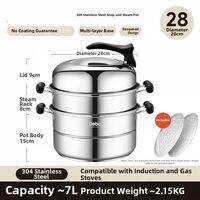
DEBO | Hot Pot Stainless Steel 304 Pot
₱1,925.71
Buy on Lazada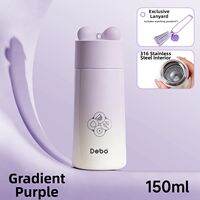
DEBO | Portable Compact Thermos 150ml
₱500.64
Buy on Lazada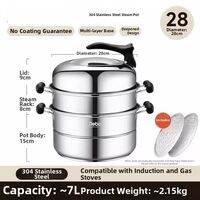
DEBO | Double Layer 304 Stainless Steel Steamer Pot
₱2,029.74
Buy on Lazada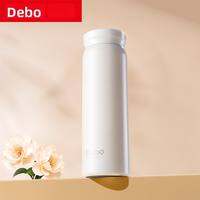
DEBO | 304 Stainless Steel Long-term Insulation Stylish Portable Travel Mug
₱788.42
Buy on Lazada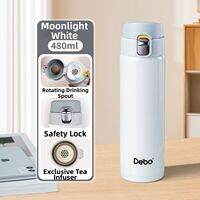
DEBO | Insulated Travel Mug Stylish Large Capacity
₱673.77
Buy on Lazada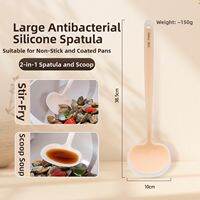
DEBO | Food-Grade Non-Stick Silicone Cooking Spoon for High Temperature Use
₱266.74₱660.23
About DEBO
Overview
DEBO is a Chinese-origin architectural and decorative panel brand specializing in high-performance surface materials, compact laminates, fiberboards, and related architectural solutions. Established in 2004 by Risewell Industries (Shenzhen Risewell Industry Co., Ltd.), the brand focuses on integrating decorative design with technical performance 1. DEBO defines its market positioning through the phrase “Performance Plate, Beyond Decoration,” indicating that its architectural panels are engineered to provide durability, hygiene, fire and moisture resistance, and dimensional stability alongside aesthetic appeal.
According to its corporate profile, DEBO possesses over 20 years of industry experience, operates two R&D centers, maintains a production base exceeding 60,000 m², and distributes products to 65 countries 1. The brand name is an abbreviation of “DEcorative BOards,” reflecting its origins in decorative architectural boards, though its current scope encompasses performance materials and integrated applications rather than simple decorative sheet supply 1. DEBO is fundamentally a materials and architectural-solutions provider; while its products are used to manufacture furniture and interior elements, it is not primarily a furniture brand 3.
History
Early beginnings
The origins of DEBO date to the early 1990s when its founding team relocated to the Shenzhen Special Economic Zone. The team transitioned from construction-related activities and brand agency work into manufacturing 2. A pivotal figure in this period was John Chan, who developed an interest in High Pressure Laminate (HPL) through kitchen and bathroom cabinet production, recognizing the material’s ability to combine decorative appearance with performance in high-traffic environments 2.
Establishment and expansion
DEBO was formally established in 2004 by HPL industry specialists aiming to introduce high-performance decorative materials for architects and designers 1. At that time, HPL and compact laminate were relatively new concepts in the Chinese market, allowing DEBO to specialize in a technical material category 2. The company subsequently expanded beyond conventional HPL into compact laminate and specialized architectural applications, developing products for wall panels, facades, furniture, worktops, lockers, toilet cubicles, doors, laboratory surfaces, and interior architectural elements. Projects during this era included hospitals, airports, railway stations, laboratories, restaurants, kitchens, and restrooms 2.
Between 2015 and 2019, DEBO internationalized its sales network to more than 65 countries while expanding its production base to over 60,000 m² and upgrading manufacturing capabilities 2. Following the onset of the COVID-19 pandemic in 2020, the company increased R&D efforts regarding antimicrobial panel surfaces and placed greater emphasis on sustainability and environmental considerations 2.
Products and technology
DEBO’s product portfolio extends beyond traditional laminate manufacturing. The official catalog categorizes offerings into interior compact HPL, exterior compact HPL, compact fiberboard, MFC, UltraCore, FireA2, and other specialized surface products.
Major product families
- DEBO® Compact HPL: A high-pressure compact laminate designed for demanding interior applications where panels must function as both decorative surfaces and structural or semi-structural materials.
- DEBO® Compact Fiberboard: A dense wood-fiber-based board with a decorative melamine surface. DEBO states this product has a density of at least 1,200 kg/m³, providing properties comparable to thick compact HPL for applications involving humidity, impact, and durability 3.
- DEBO® Labench®: A specialized surface solution designed for laboratory and technical environments.
- CleanTop®: A surface and panel technology emphasizing easy cleaning and hygiene-related applications.
- Exterior HPL: Products engineered specifically for exterior architectural cladding and applications.
- UltraCore / FireA2: Specialized product families addressing higher fire-performance requirements and specific architectural needs.
Technological foundation
The core technology behind DEBO is High Pressure Laminate (HPL), a composite material manufactured by pressing resin-impregnated paper layers under high temperature and pressure. This process yields a material combining surface durability, decorative flexibility, wear and moisture resistance, impact resistance, and ease of cleaning. DEBO’s technological evolution has progressed from fire-resistant HPL to compact laminate, Labench, compact fiberboard, and specialized products like CleanTop, effectively transforming laminate technology from a surface-finishing product into a broader architectural-material system 1.
Design philosophy and sustainability
DEBO’s design philosophy rests on four principles: innovation, international quality, forward-thinking design, and sustainability. The company cites over 20 years of focus on R&D innovation as a fundamental competitive advantage 1. It works with international industrial suppliers and emphasizes adherence to international standards, testing, and certification 2. Rather than treating panels solely as construction materials, DEBO emphasizes colors, textures, surfaces, and new applications, offering plain colors, wood grains, stone patterns, metallic colors, and creative textures 2.
Regarding sustainability, DEBO utilizes certification and testing systems related to sustainable forestry, emissions, and chemical compliance 1. The brand states it has obtained or passed various environmental and product-related certifications, including FSC, PEFC, GREENGUARD, EU REACH, RoHS, and FDA-related food-contact testing for relevant products. However, specific certifications apply to individual products based on technical documentation rather than universally across the entire range 1.
Applications and architectural positioning
DEBO occupies a position between decorative laminate manufacturers, architectural-surface producers, compact-board manufacturers, and building-envelope suppliers. Its differentiation lies in combining material engineering, decorative design, and architectural applications, encapsulated by the slogan “Performance Plate, Beyond Decoration” 1. Unlike conventional laminate companies that sell decorative sheets for bonding to substrates, DEBO products can function as surface materials, panels, partitions, furniture components, and architectural elements.
Application sectors
The brand’s portfolio covers diverse environments:
- Commercial: Retail stores, offices, restaurants, and public interiors.
- Residential: Kitchen furniture, components, wall applications, and residential interiors.
- Healthcare: Hospitals and healthcare facilities requiring durability, hygiene, and easy maintenance.
- Education: Schools, universities, and educational facilities.
- Scientific: Laboratories and research facilities.
- Transportation: Airports, railway stations, and high-traffic transit environments.
- Sports: Sports facilities and related public environments.
- Outdoor: Outdoor furniture, architectural elements, and exterior facilities.
DEBO explicitly categorizes case studies into commercial, residential, medical, educational, scientific, sports, outdoor, and tabletop applications 1.
Furniture integration
While primarily a materials company, furniture is a significant application area. The Innovative Furniture program uses DEBO Compact Laminate and Compact Fiberboard to create spatial systems rather than merely decorative skins 3. An example is the CROSS Box by MaxForm, which combines DEBO 8 mm Compact Laminate or Compact Fiberboard with an aluminum-alloy frame for flexible commercial and office furniture 3. This reflects a philosophy of progressing from material to component to furniture to architectural system.
Manufacturing and global presence
DEBO identifies Shenzhen Risewell Industry Co., Ltd. as its parent company and reports manufacturing facilities and industrial parks in Guangdong and Jiangsu. The company maintains standardized processes spanning raw-material procurement, production, packaging, transportation, and logistics 2. DEBO states its products have been used in tens of thousands of projects and serves more than 60 countries and regions, with agency and distribution networks in the Middle East, Europe, and America 2. Notable project examples include Xiamen North Railway Station, where Risewell served as an exclusive partner for China Railway Group-related work utilizing DEBO materials 1. These figures are company-reported rather than independently audited market-share statistics.
Current status
As of 2026, DEBO presents itself as a mature international architectural-materials brand with over two decades of experience. Its product ecosystem encompasses compact HPL, compact fiberboard, exterior materials, laboratory surfaces, fire-performance products, furniture applications, and architectural solutions. The strategic direction has shifted from viewing laminate as mere decoration toward positioning engineered panels as comprehensive architectural and design systems 1.