Shop on Lazada
Dremel products
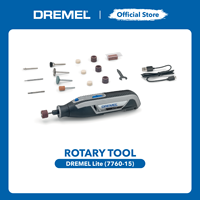
DREMEL® Lite 7760 - 15 acc
₱4,735.00
Buy on Lazada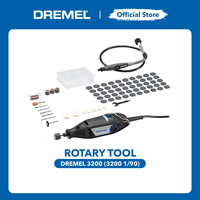
DREMEL® 3200 - 1 att / 90 acc
₱6,310.00
Buy on Lazada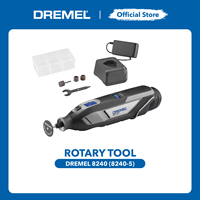
DREMEL® 8240 - 5 accessories
₱7,955.00
Buy on Lazada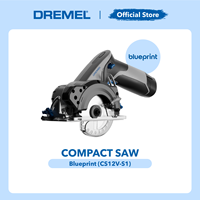
DREMEL® Blueprint Compact Saw (CS12V-S1)
₱9,150.00
Buy on Lazada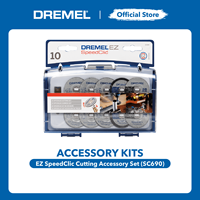
DREMEL EZ SpeedClic Cutting Accessory Set (SC690)
₱985.00
Buy on Lazada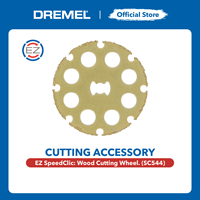
DREMEL® EZ SpeedClic: Wood Cutting Wheel. (SC544)
₱1,215.00
Buy on Lazada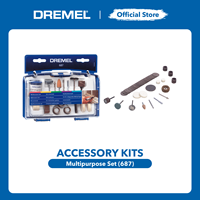
DREMEL Multipurpose Set (687)
₱910.00
Buy on Lazada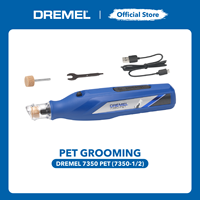
DREMEL® 7350 Pet Grooming (7350-1/2)
₱4,000.00
Buy on LazadaAbout Dremel
Dremel is an American power tool brand best known for its compact, high-speed rotary tools and the extensive ecosystem of accessories designed for them. The brand was established in Racine, Wisconsin, where inventor Albert J. Dremel founded Dremel Manufacturing Co. in 1932. Today, Dremel operates as part of the Bosch Power Tools organization and distributes products internationally across approximately 80 countries.1
Overview
| Item | Information |
|---|---|
| Brand | Dremel |
| Industry | Power tools, DIY, maker tools, accessories |
| Founded | 1932 |
| Founder | Albert J. Dremel |
| Founded in | Racine, Wisconsin, United States |
| Best known for | High-speed rotary tools |
| Parent organization | Bosch / Bosch Power Tools |
| Major acquisition | Acquired by Bosch in 1993 |
| Core customers | DIY users, hobbyists, makers, craftspeople and professionals |
| Major product ecosystem | Rotary tools, accessories, attachments and other compact power tools |
| Global reach | Products supplied to about 80 countries |
| Notable milestone | More than 40 million rotary/multi-tools sold globally, according to Dremel |
Historical and corporate information regarding the brand is derived primarily from official materials published by Dremel and Bosch.2
History
Albert J. Dremel
The origins of Dremel trace back to Albert J. Dremel, an Austrian immigrant who arrived in the United States in 1906. An inventor and engineering designer, he eventually secured 55 patents for his various innovations. Following years of work in engineering, he established the Dremel Manufacturing Company in Racine, Wisconsin, in 1932.3
Dremel’s foundational concept was commercially significant yet straightforward: rather than requiring a separate large machine for every small task, a single compact, high-speed tool could perform numerous operations simply by changing its accessory. This philosophy became the basis of the modern Dremel product system.
The first Dremel rotary tool
In 1935, the company introduced what it describes as the world’s first handheld, high-speed rotary tool. Known as the Moto-Tool, this early product was designed as a compact alternative to larger conventional power tools.3
The tool accepted various accessories for operations including:
- Grinding
- Cutting
- Sanding
- Polishing
- Drilling
- Engraving
- Carving
- Sharpening
This concept of one motor paired with many accessories remains the defining characteristic of the Dremel brand.
The Dremel concept
Dremel is distinguished not merely as a manufacturer of a specific electric tool, but as the creator of a comprehensive ecosystem. A typical Dremel rotary tool features a small high-speed motor connected to a chuck or collet, allowing users to attach different bits, wheels, brushes, and other accessories depending on the specific task.
According to the company, the rotary tool ecosystem accommodates more than 150 accessories and attachments.4 For example, a single rotary tool can be configured with:
- Cutting wheel
- Sanding drum
- Grinding stone
- Polishing wheel
- Wire brush
- Engraving bit
- Drill bit
- Carving bit
This versatility has made Dremel particularly popular among DIY enthusiasts, model makers, woodworkers, craftspeople, and hobbyists.
Expansion of the product range
While rotary tools remain the signature product, the brand has gradually expanded its portfolio over several decades.
1957 — Moto-Saw
Dremel introduced the Moto-Saw, marking its expansion into the jigsaw and scroll-saw category.5
1964 — Electric Engraver
The launch of an electric engraving tool strengthened the brand’s position in precision and craft applications.6
2014 — 3D printing
Dremel entered the 3D printing market with the Dremel DigiLab 3D20 Idea Builder.7
2017 — Pet grooming
The company introduced a rotary tool specifically designed for pet nail grooming.8
2020 — Home solutions
Expansion continued into household products, including an electric screwdriver and flashlight.9
Bosch acquisition
A pivotal event in the corporate history of Dremel occurred in 1993, when the company was acquired by Bosch. Official historical timelines identify 1993 as the year Dremel became a division of Robert Bosch Tool Corporation.10
Consequently, Dremel is currently understood as a brand within the Bosch Power Tools organization rather than an independent publicly traded company. Bosch’s Power Tools division lists Dremel alongside Bosch and other brands in its portfolio.11 This acquisition provided Dremel with access to the resources and international infrastructure of a major technology group while allowing it to retain its distinct identity and specialization.
Applications and reputation
The rotary tool is the product category most synonymous with Dremel. Essentially a small, high-speed handheld motor capable of driving various accessories, it is utilized for jobs requiring precision rather than brute force.
Typical applications
Woodworking
- Carving
- Sanding
- Detail shaping
- Cutting
- Engraving
Metalworking
- Grinding
- Polishing
- Deburring
- Cutting
- Rust removal
Crafts
- Engraving
- Jewelry work
- Model making
- Decorative cutting
- Fine detail work
Home improvement
- Cutting small materials
- Sharpening
- Removing grout
- Cleaning
- Light repair work
Automotive
- Polishing
- Detail grinding
- Cleaning
- Small repair and restoration jobs
Dremel positions its tools for applications ranging from home maintenance and automotive restoration to woodworking, model building, jewelry making, and other creative projects.12
Major product categories
The Dremel portfolio has evolved significantly and can be broadly grouped into several categories.
Rotary tools
Rotary tools represent the core of the brand. Examples include various generations of corded and cordless models, such as the Dremel 3000, 4000, and 4300 families. These tools are designed around variable speeds, interchangeable accessories, and compact ergonomics.
Oscillating tools
The Multi-Max line expanded the brand into oscillating cutting and sanding applications.13
Compact saws
Dremel has produced compact saw systems such as Saw-Max and Ultra-Saw.
Flex-shaft tools
The Fortiflex system places the motor and drive arrangement outside the user’s hand, connecting via a flexible shaft for detailed work.
Engravers
Electric engraving tools enable users to create marks and designs on various materials.
Glue guns
The brand produces hot-glue systems aimed at crafting and DIY applications.
Butane tools
Products such as the VersaTip are offered for applications involving heat.
3D printers
Dremel expanded into desktop 3D printing with its DigiLab products.
Cleaning and home tools
Recent expansions have included compact cleaning and household tools.
Accessory ecosystem
A primary competitive advantage of Dremel is its accessory ecosystem rather than the motor alone. The company has developed a vast range of specialized accessories and attachments designed around its rotary tool platform, including:
- Cutting discs
- Grinding stones
- Sanding drums
- Sanding discs
- Polishing wheels
- Wire brushes
- Drill bits
- Engraving cutters
- Routing accessories
- Carving bits
- Sharpening accessories
- Cleaning brushes
- Specialty attachments
Dremel describes its offerings as “Versatile Tool Systems”, emphasizing the relationship between the base tool and its accessories.14 This systemic approach is central to the brand’s identity.
Target market
Dremel occupies a distinct position between consumer DIY tools and professional precision equipment. Its traditional customer base includes:
- DIY enthusiasts
- Homeowners
- Hobbyists
- Woodworkers
- Model makers
- Craftspeople
- Artists
- Makers
- Jewelry makers
- Automotive hobbyists
- Handymen
The company describes its users as ranging from woodworkers and locksmiths to automotive mechanics, handymen, crafters, and hobbyists.15 The brand is strongly associated with precision, creativity, and small-scale fabrication rather than heavy construction.
Comparison with conventional power tools
Understanding Dremel requires distinguishing it from conventional drills or grinders.
| Characteristic | Dremel rotary tool | Conventional drill | Angle grinder |
|---|---|---|---|
| Size | Small | Medium | Larger |
| Primary strength | Precision & versatility | Drilling/fastening | Heavy cutting/grinding |
| Speed | Very high | Generally lower | High |
| Accessories | Very large variety | Moderate | More specialized |
| Fine detail | Excellent | Limited | Poor |
| Heavy-duty work | Limited | Good | Excellent |
| Craft work | Excellent | Moderate | Poor |
| Portability | Excellent | Good | Moderate |
Dremel tools are generally not intended to replace full-size drills, grinders, or saws. Instead, they excel in applications where control, compactness, and detailed work are paramount.
Brand identity
Modern branding for Dremel focuses heavily on making and creativity. Current positioning emphasizes taking projects into one’s own hands and using tools to create, repair, remodel, repurpose, and customize items.16
Historically, the appeal was largely functional, centered on a single compact tool capable of performing many jobs. Today, the proposition has broadened to represent a tool ecosystem for people who like to make things themselves. This evolution has fostered a strong connection to the maker movement, DIY culture, and creative hobbies.
Global presence
From its origins as a Wisconsin-based manufacturer, Dremel has grown into a globally distributed brand. Products are currently available in about 80 countries through hardware stores, home centers, hobby shops, online retailers, and industrial tool wholesalers. The company estimates that it has sold approximately 40 million multi-tools and rotary tools worldwide.2
Its association with Bosch further extends its international reach.
Relationship with Bosch
It is important to distinguish Dremel from Bosch. Bosch is a large German technology and engineering group founded by Robert Bosch in 1886, with businesses spanning mobility, industrial technology, consumer goods, and energy/building technology.
Dremel, by contrast, is a specialized tool brand focused on compact, versatile tools and accessories. Within Bosch Power Tools, Dremel serves a different market position than the core Bosch professional power tool portfolio. Bosch Power Tools describes itself as having brands including Bosch and Dremel, with products spanning power tools, garden tools, accessories, and measuring technology.
Brand recognition
Dremel has achieved a level of recognition where its name is strongly associated with an entire category of tool. The term “Dremel” is often used as shorthand for a small rotary tool, even when referring to similar products from other manufacturers.
This association is largely historical, stemming from the introduction of the compact high-speed rotary tool concept in the 1930s and decades of subsequent development in tools, accessories, and applications.17 Consequently, the brand has become nearly synonymous with small, high-speed, multi-purpose precision tools with extensive accessories.
Important milestones
| Year | Event |
|---|---|
| 1932 | Albert J. Dremel establishes Dremel Manufacturing Co. in Racine, Wisconsin |
| 1935 | Dremel introduces its handheld high-speed rotary tool |
| 1957 | Moto-Saw introduced |
| 1964 | Electric Engraver introduced |
| 1993 | Bosch acquires Dremel |
| 2003 | Dremel introduces a 10.8 V lithium-ion tool |
| 2008 | Multi-Max oscillating tool introduced |
| 2014 | Dremel enters 3D printing with DigiLab 3D20 |
| 2017 | Pet nail-grooming rotary tool introduced |
| 2018 | Versa cleaning tool introduced |
| 2020 | Expansion into home-solution products |
| Today | Dremel operates as part of the Bosch Power Tools portfolio |
This timeline is compiled primarily from official Dremel history.17
Strengths
Versatility
The primary advantage is the ability to perform numerous operations with a single compact platform.
Precision
Dremel tools are particularly effective for small, detailed, and delicate jobs.
Accessory availability
The extensive accessory ecosystem is a defining characteristic of the brand.
Brand recognition
With decades of history, Dremel is one of the most recognized names in rotary tools.
DIY and maker appeal
Products integrate naturally into woodworking, crafts, model building, restoration, and maker projects.
Bosch ownership
Being part of Bosch provides the backing of a major global power tool organization.18
Limitations
The strengths of Dremel also define its limitations. A rotary tool is not a substitute for every full-size power tool. For instance:
- Cutting thick steel typically requires an angle grinder.
- Drilling large holes is better suited to a conventional drill.
- Driving screws is best handled by a drill/driver.
- Cutting large pieces of wood requires a circular saw or jigsaw.
- Heavy material removal necessitates a larger grinder.
The optimal use case for Dremel is detail work and versatility, rather than maximum power.
Significance in the tool industry
Dremel’s historical significance lies in changing perceptions of small power tools. Before the widespread adoption of compact rotary tools, many tasks required relatively large, specialized machines. Dremel reduced this barrier through the concept of a small motor plus interchangeable accessories equaling many possible applications.
This concept proved influential in hobbyist and DIY markets, helping establish the compact rotary tool as a recognizable category. The company has described the original Moto-Tool as a kind of “pocket-sized machine shop”, illustrating the philosophy behind the product.19
Dremel today
As of 2026, Dremel remains primarily associated with rotary tools but operates as part of Bosch Power Tools, continuing to position itself around DIY, creativity, precision, and making. Bosch’s Power Tools division reported approximately €5 billion in 2025 sales, with around 17,300 employees and six brands as of April 2026; Dremel is one of the brands in that portfolio.19
The modern strategy extends beyond selling rotary tools. The brand describes its goal as helping people create, refine, and reinvent, with applications ranging from home repairs and upgrades to arts, crafts, and other hands-on projects.
References
- A 90-year tradition of excellence | Dremel
- Spanning the globe | Dremel
- Dremel History | Dremel
- Book of Inspiration
- Dremel History | Dremel
- Dremel History | Dremel
- Who Owns Dremel? Bosch Ownership and Company History – LegalClarity
- Dremel – Wikidata
- Who Makes Dremel Brand Power Tools And Are They Any Good?
- Dremel Website and Community Privacy Notice – Highlights/Notice at Collection | Dremel
- A 90-year tradition of excellence | Dremel
- Historia de Dremel | Dremel
- En 90-årig kvalitetstradition | Dremel
- Dremel History | Dremel
- 90 años de tradición y excelencia | Dremel
- L’histoire de Dremel | Dremel
- Completando 90 anos, Dremel lança ferramenta visando democratizar o DIY – Bosch Media Service Brasil
- Tools
- Completando 90 anos, Dremel lança ferramenta visando democratizar o DIY – Bosch Media Service Brasil