Shop on Lazada
Ducati products
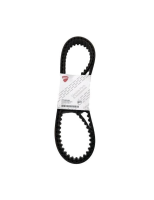
73740241B TIMING DRIVE TOOTHED BELT
₱11,760.00
Buy on Lazada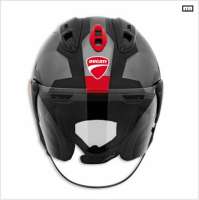
98108513 DUCATI-HEMMET DUCATI ATTITUDE V2 ECE 22-06
₱20,880.00
Buy on Lazada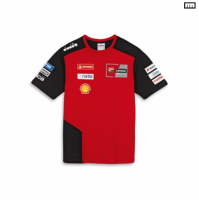
98771316 REPLICA GP25 T-SHIRT
₱8,400.00
Buy on Lazada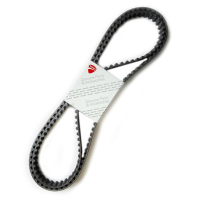
73740341B DUCATI TIMING DRIVE TOOTHED BELT 94T
₱11,760.00
Buy on Lazada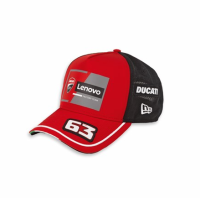
987805032 CAP NE GP REPLICA 26 PB63
₱5,400.00
Buy on Lazada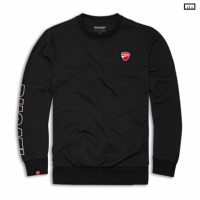
98771205 Ducatiana BLACK ROUND-NECK SWEATSHIRT
₱8,400.00
Buy on Lazada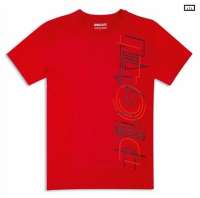
98770843 DUCATI-T-SHIRT SKYLINE RED
₱4,200.00
Buy on Lazada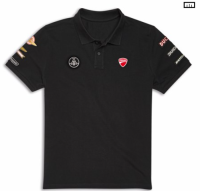
98780170 ICON BLACK POLO-SHIRT
₱7,320.00
Buy on LazadaAbout Ducati
Ducati is an Italian premium motorcycle manufacturer headquartered in Borgo Panigale, Bologna, Italy. Established in 1926, the company originally produced radio components and electrical equipment before transitioning into motorcycle manufacturing. Over the subsequent century, it evolved into one of the world’s most recognised performance motorcycle marques, synonymous with Italian design, motorsport success, advanced engineering, high-performance engines, and its signature red colour.1
Currently, Ducati operates as a subsidiary of the Audi Group and, by extension, the wider Volkswagen Group. Despite this corporate ownership, it maintains its distinct identity as a premium brand with motorcycles distributed internationally.2
Basic information
| Details | |
|---|---|
| Full name | Ducati Motor Holding S.p.A. |
| Founded | 4 July 1926 |
| Founders | Antonio Cavalieri Ducati and his sons Adriano, Bruno and Marcello |
| Original company | Società Scientifica Radio Brevetti Ducati |
| Headquarters | Borgo Panigale, Bologna, Italy |
| Industry | Motorcycle manufacturing |
| Parent group | Audi / Volkswagen Group |
| Core identity | Premium performance motorcycles |
| Known for | Italian design, V-twin/V2 engines, desmodromic valve technology, racing |
| Motorsport divisions | Ducati Corse |
| Major championships | MotoGP, WorldSBK and others |
| Global presence | More than 90 countries |
The company was founded in Bologna on 4 July 1926. Its current factory in Borgo Panigale became its industrial base during the 1930s and remains central to the brand’s identity today.3
Origins: Ducati before motorcycles
Unlike many automotive manufacturers, Ducati did not begin as a vehicle maker. Adriano Cavalieri Ducati, alongside his brothers Bruno and Marcello, founded the Società Scientifica Radio Brevetti Ducati in Bologna in 1926, driven by an interest in radio technology and short-wave communications.
Early production focused on capacitors, radio components, and electrical equipment. The company expanded significantly throughout the 1930s, eventually constructing a major industrial complex in Borgo Panigale. Beyond radio equipment, the product range grew to include cameras, optical devices, cash registers, and electric shavers.4 Ducati became a significant industrial employer in the region.
World War II, however, drastically altered the company’s trajectory. Allied bombing heavily damaged the Borgo Panigale factory on 12 October 1944, necessitating a complete post-war reconstruction of operations.5
Entry into motorcycle manufacturing
The pivotal shift towards two-wheelers occurred in the post-war era when Italy required affordable transportation. Ducati began producing a small auxiliary motor designed by SIATA, which became known as the Cucciolo (Italian for “puppy” or “little dog”).
Essentially a clip-on engine for bicycles, the Cucciolo transformed them into lightweight motorised vehicles. Manufacturing commenced in the immediate post-war period, and the company quickly realised its potential extended beyond simple engine assembly.6
This led to the development of proprietary motorcycles and engines. By 1954, Ducati had fully transitioned from a component supplier to an independent motorcycle manufacturer,7 marking the genesis of the modern brand.
Fabio Taglioni and desmodromic technology
Engineer Fabio Taglioni is arguably the most influential figure in Ducati’s history. Joining in 1954 as chief designer, his engineering philosophy shaped the marque for decades.8
His most significant contribution was the adoption and refinement of desmodromic valve control.
Desmodromic valve system
In conventional four-stroke engines, valves are opened mechanically but closed via spring return. A desmodromic system, however, mechanically controls both the opening and closing of the valve.
This technology enabled Ducati’s racing engines to operate reliably at extremely high revolutions, becoming a defining engineering characteristic. It debuted in competition with the 125 Desmo in 1956 before being integrated into production models.9 Derived from Greek roots meaning “controlled path,” the term “Desmo” has become virtually synonymous with Ducati among enthusiasts.
Racing heritage
Motorsport is integral to Ducati’s brand identity. Competition history dates back to the Cucciolo era, with Mario Recchia securing a notable victory at the Viareggio Grand Prix in 1947 aboard a Cucciolo-powered machine.10
As motorcycles became more sophisticated, racing served as a vital testing ground. A landmark moment arrived in 1972 at the 200 Miles of Imola, where Paul Smart and Bruno Spaggiari finished first and second on Ducati 750 V-twin machines. This victory cemented the reputation of Ducati’s large-capacity twins as serious performance motorcycles.11
Subsequently, the link between road-going models and race-bred technology became increasingly explicit.
V-twin and V4 identity
Ducati gained fame for its 90-degree V-twin engine architecture, historically referred to as an L-twin due to cylinder orientation. This layout became a signature engineering solution, typically combined with:
- Desmodromic valve control
- High-performance tuning
- Lightweight construction
- Sport-focused chassis geometry
- Advanced electronics
- Emphasis on power-to-weight ratio
These characteristics differentiated Ducati from Japanese manufacturers like Honda, Yamaha, Suzuki, and Kawasaki. While the V-twin defined the brand for decades, the modern lineup also features V4 powerplants and other configurations, such as the single-cylinder engine in the Hypermotard 698 Mono.
Development through the 1970s and 1980s
The 1970s were formative for Ducati as a performance brand, proving that large-capacity V-twins could compete against powerful Japanese four-cylinder machines.
During the 1980s, Ducati came under the ownership of the Cagiva Group. This period saw the development of new models and an expanded racing programme,12 paving the way for Ducati’s emergence as a distinctively premium European sports motorcycle manufacturer.
World Superbike dominance
The establishment of the Superbike World Championship (WorldSBK) proved pivotal. Unlike prototype racing, WorldSBK utilises production-derived machines, aligning perfectly with Ducati’s philosophy of linking road bikes to racers.
Ducati became a dominant force in the series, securing numerous manufacturers’ and riders’ titles. This success reinforced the perception that purchasing a Ducati road bike meant acquiring a machine with genuine racing lineage.
The Ducati 916
Introduced in the 1990s, the Ducati 916 stands as one of the most significant models in the marque’s history. Designed under Massimo Tamburini, it merged aggressive performance with highly influential styling.
Key design elements included:
- Single-sided swingarm
- Under-seat exhausts
- Compact proportions
- Sharp aerodynamic bodywork
- Twin headlights
- Trellis frame
- V-twin engine
- Strong racing influence
The 916 became a design icon, establishing Ducati as a luxury and performance brand focused on aesthetics as much as speed. The company regards it as a major technical and stylistic milestone.13
The Monster and the naked bike segment
Equally transformative was the Ducati Monster, introduced in 1992. As a naked motorcycle rather than a faired superbike, it followed a simple formula: a powerful engine paired with exposed mechanical components and minimal bodywork.
The Monster demonstrated that Ducati could appeal to riders not seeking dedicated track machines. It became one of the brand’s most recognisable families and helped establish the modern premium naked-bike segment.14
MotoGP participation
Ducati entered MotoGP, the premier class of Grand Prix racing, in 2003 through its official racing division, Ducati Corse.
A historic breakthrough occurred in 2007 when Australian rider Casey Stoner won the MotoGP Riders’ Championship. This achievement was particularly significant given the dominance of larger Japanese manufacturers. Ducati also secured the Manufacturers’ Championship that same year.15
Modern MotoGP era
Ducati’s MotoGP programme achieved extraordinary success in the 2020s with the Desmosedici GP racer. In 2024 alone, the company claimed its third consecutive MotoGP World Championship, winning 19 of the 20 Grand Prix races, alongside the Constructors’ and Teams’ titles.
This dominance underpins modern marketing and engineering strategies, using racing technology to validate and enhance production motorcycles.
Ownership history
Ducati has undergone several ownership changes throughout its existence:
- 1926: Founded by the Ducati family
- Post-war: Commencement of motorcycle manufacturing
- 1948: State ownership
- 1980s: Cagiva Group
- 1990s: Various corporate and financial restructuring
- 2012: Acquired by Audi via Lamborghini
- Present: Part of the Audi/Volkswagen Group
Since the 2012 acquisition by Audi through Lamborghini, Ducati has been part of the Volkswagen Group.16 Despite this, it retains its Italian identity and continues to be headquartered and developed in Borgo Panigale, Bologna.
Current model range
Ducati’s contemporary portfolio extends well beyond superbikes, encompassing diverse categories:
Panigale
The flagship supersport and superbike family, representing the closest link between road and race machinery.
Streetfighter
An aggressive, stripped-back naked interpretation of high-performance technology.
Monster
The iconic naked-bike family balancing performance with everyday usability.
Multistrada
A versatile range designed for sport touring, long-distance travel, and adventure riding.
Diavel
A distinctive power cruiser merging muscular styling with performance engineering.
XDiavel
A cruiser-oriented evolution of the Diavel concept.
Hypermotard
Lightweight, agile motorcycles emphasising playful handling and aggressive riding dynamics.
SuperSport
A sport-oriented model positioned below the extreme Panigale superbikes.
Scrambler Ducati
A lifestyle-focused family inspired by classic Scrambler heritage.
DesertX
The dedicated adventure motorcycle family.
Desmo450 MX
Marking entry into motocross, the Desmo450 MX represents a significant expansion beyond traditional road segments. It was launched for the 2026 model year.17
Electric and off-road expansion
Ducati has diversified beyond internal combustion engines. Since 2019, the brand has offered high-end e-mountain bikes and city e-bikes.18
Additionally, Ducati serves as the official motorcycle supplier for the MotoE electric racing championship, a role scheduled through 2026 involving the development of high-performance electric race bikes.19 Concurrently, the Desmo450 MX signals entry into the motocross market, illustrating a gradual broadening of the brand’s scope beyond its traditional superbike image.
Key technologies
Ducati’s reputation rests heavily on specific engineering solutions:
Desmodromic valve system
Mechanically controlling both valve opening and closing, this technology has been central to Ducati’s racing and production engines since the 1950s.20
V-twin and V4 engines
While historically defined by two-cylinder layouts, modern high-performance models increasingly utilise V4 configurations to maintain competitiveness in superbike and MotoGP categories without sacrificing compactness.
Trellis frames
Distinctive tubular-steel trellis frames remain strongly associated with the brand, despite newer structural solutions on some models.
Lightweight construction
Significant emphasis is placed on mass reduction to improve handling and power-to-weight ratios.
Aerodynamics
Modern superbikes feature advanced aerodynamic solutions derived from racing, including winglets and sophisticated bodywork.
Electronics
Current models incorporate comprehensive electronic suites, including:
- Riding modes
- Traction control
- Wheelie control
- Cornering ABS
- Engine-braking management
- Quickshifters
- Inertial measurement units
- Launch control
- Advanced rider-assistance systems
Ducati Corse
Ducati Corse is the official motorsport division responsible for programmes in MotoGP, WorldSBK, World Supersport, MotoE, and motocross.
Far from being merely a marketing exercise, the racing division functions as an engineering laboratory for developing engines, electronics, aerodynamics, chassis technology, and materials. Technologies validated on track subsequently influence production models. Ducati describes racing as fundamental to its “DNA.”21
Design philosophy
Unusually for a motorcycle manufacturer, design holds equal importance to performance at Ducati. Motorcycles typically combine Italian styling, mechanical beauty, aggressive proportions, and performance.
Mechanical components are often left visually exposed rather than concealed. The resulting aesthetic is characterised by:
- Red paint
- Sculpted fuel tanks
- Compact proportions
- Exposed engine components
- Sharp bodywork
- Minimalist tail sections
- Racing-inspired aerodynamics
The association with red is so strong that Ducati has historically been nicknamed “La Rossa” (the red one).22
Brand positioning
Ducati is marketed as a premium lifestyle and performance brand rather than a utilitarian transport provider. Core values include:
Performance
Emphasis on acceleration, handling, braking, and racing capability.
Italian design
Visual distinctiveness matching technical sophistication.
Technology
Positioning at the technological and premium end of the market.
Exclusivity
Deliberate premium positioning relative to mass-market manufacturers.
Racing heritage
MotoGP and WorldSBK victories are central to public identity.
Passion
Cultivation of a global enthusiast community known as Ducatisti.
Business performance
Compared to mass-market manufacturers, Ducati remains a specialised producer. In 2025, global deliveries totalled 50,895 motorcycles, down from 54,495 in 2024. Turnover for 2025 was approximately €925 million, with an operating profit of €52 million.23
Italy remained the largest market in 2025, followed by the United States and Germany. The Multistrada family was the best-selling line globally, with 13,873 units delivered.24 These figures reflect a strategy focused on the premium, high-performance segment rather than volume leadership.
Significant historical models
| Motorcycle | Era | Importance |
|---|---|---|
| Cucciolo | 1940s | Ducati’s entry into two-wheelers |
| 125 Desmo | 1950s | Early demonstration of desmodromic technology |
| Marianna | 1950s | Important racing success |
| 750 GT / 750 Sport | 1970s | Established the large V-twin identity |
| 900 Super Sport | 1970s | Iconic Ducati sport motorcycle |
| 851 | 1980s | Major step toward modern superbikes |
| 916 | 1990s | One of the most influential Ducati designs |
| Monster | 1992 | Created Ducati’s iconic naked-bike family |
| 996 | 1990s | Evolution of the superbike formula |
| 999 | 2000s | Radical redesign of Ducati’s superbike |
| Multistrada | 2003 onward | Expanded Ducati into sport-touring/adventure |
| Desmosedici RR | 2000s | MotoGP-inspired road motorcycle |
| Panigale | 2010s onward | Modern Ducati superbike |
| Diavel | 2010s onward | Performance-cruiser concept |
| Scrambler Ducati | 2010s onward | Lifestyle-oriented expansion |
| Panigale V4 | 2018 onward | V4-era flagship superbike |
| DesertX | 2020s | Major adventure segment entry |
| Desmo450 MX | 2025/26 | Ducati’s first motocross motorcycle |
Historical records highlight the Cucciolo, Scrambler, Monster, 916, and Multistrada as particularly critical milestones in the brand’s evolution.25
Market position
Ducati occupies a unique niche within the motorcycle industry. While Japanese manufacturers like Honda, Yamaha, Kawasaki, and Suzuki compete across vast ranges emphasising scale and value, and European rivals like BMW, KTM, Triumph, and Aprilia target the premium sector, Ducati differentiates itself through a specific combination of Italian design, racing heritage, premium positioning, sophisticated engineering, and exclusivity.
Ultimately, the brand sells an experience and identity rather than mere transportation.
Defining characteristics
Ducati’s century-long history can be distilled into several key pillars:
- Italian origins: Deeply connected to Bologna since inception.
- Unusual history: Began with radios and electrical components.
- Racing: Fundamental to engineering development.
- Desmodromic technology: A recognisable technical signature.
- V-twin heritage: Defined by 90° two-cylinder engines for decades.
- Italian design: Models like the 916 are industrial design icons.
- Premium positioning: Deliberately targets the high-performance end of the market.
- Modern V4 technology: Evolution beyond traditional two-cylinder formulas.
- Global racing success: Dominance in MotoGP and WorldSBK.
- Exclusivity and emotion: Appeal based on sound, styling, heritage, and ownership experience.
Summary
Ducati is an Italian premium motorcycle manufacturer founded in Bologna in 1926. Originally established as a radio and electrical-equipment company, it entered motorcycle manufacturing after World War II through the Cucciolo auxiliary engine. Under engineers such as Fabio Taglioni, Ducati developed its distinctive desmodromic valve technology and became increasingly associated with high-performance V-twin motorcycles and racing. Its successes in World Superbike, MotoGP and other championships helped establish Ducati as one of the world’s premier performance motorcycle brands. Iconic motorcycles such as the 916, Monster, Multistrada and Panigale further expanded its influence in motorcycle engineering and design. Since 2012, Ducati has been part of the Audi/Volkswagen Group, while retaining its headquarters and core identity in Borgo Panigale, Bologna. Today, Ducati produces a broad range of premium motorcycles spanning superbikes, naked bikes, sport touring, adventure, cruisers, lifestyle motorcycles and, more recently, motocross machines.26
In essence, Ducati represents a synthesis of Bologna, Italian design, performance, racing, engineering, and passion. From its origins in radio manufacturing to its status as a legendary racing and superbike company, and now as a global premium brand within the Audi/Volkswagen Group, its century-long history provides the foundation for its enduring prestige.27
References
- The History of Ducati | Volkswagen Group
- Who we are | Ducati
- Ducati | Volkswagen Group
- Portrait of Ducati | audi.com
- Ducati Chronicle | History & Milestones | Ducati UK
- The Ducati Brothers – Founders of the Iconic Motorcycle Brand
- Cucciolo Racing | Historical Models | Ducati Heritage
- The Ducati chronicle – Ducati Heritage
- On its founding anniversary, Ducati launches on Instagram the account dedicated to the narration of its history – Ducati Media House | Pressroom officiel
- Ducati presents 2025 financial results: solidity and profitability in a challenging global environment – Ducati Media House
- Sporting successes and product innovation: Ducati consolidates its position in a challenging 2025 – Ducati Media House | Pressroom officiel
- Ducati presenta sus resultados financieros de 2025: solidez y rentabilidad en un contexto mundial difícil – Ducati Media House
- Ducati präsentiert Finanzergebnisse für 2025: Stabilität und Profitabilität in einem herausfordernden globalen Umfeld – Ducati Media House
- A Ducati apresenta os resultados financeiros de 2025: solidez e rentabilidade num ambiente global desafiante – Ducati Media House
- Ducati presenta i risultati finanziari 2025: solidità e reddittività in un contesto globale sfidante – Ducati Media House
- Ducati Motor Holding S.p.A. | audi.com
- Ducati presents 2025 financial results: solidity and profitability in a challenging global environment | audi.com
- sec.gov
- Successi sportivi e innovazione di prodotto: Ducati consolida la propria posizione in un 2025 sfidante – Ducati Media House | Pressroom officiel
- Éxitos deportivos e innovación de producto: Ducati consolida su posición en un 2025 desafiante
- Succès sportifs et innovation produit : Ducati consolide sa position dans une année 2025 exigeante
- 1926–2026: Ducati kicks off celebrations for its 100-year history – Ducati Media House
- Ducati Road to Centenary
- SIUSA | Gli archivi di impresa – Ducati
- The Ducati chronicle
- La cronistoria Ducati – Ducati Heritage
- Ducati Chronicle Australia | History, Milestones & Legacy