Shop on Lazada
Duncan Hines products
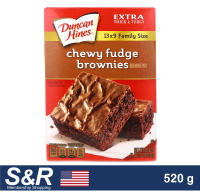
Duncan Hines Chewy Fudge Brownie Mix 520 g
₱195.00
Buy on Lazada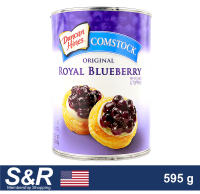
Duncan Hines Comstock Original Royal Blueberry Pie Filling & Topping 595g
₱319.00
Buy on Lazada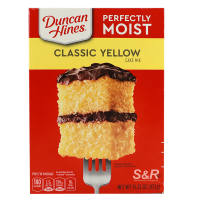
Duncan Hines Perfectly Moist Classic Yellow Cake Mix 432g
₱162.00
Buy on Lazada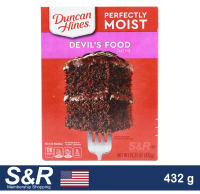
Duncan Hines Perfectly Moist Devils Food Cake Mix 432g
₱170.00
Buy on Lazada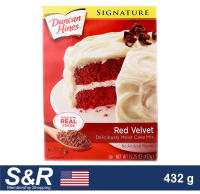
Duncan Hines Signature Red Velvet Deliciously Moist Cake Mix 432 g
₱199.00
Buy on Lazada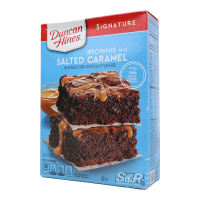
Duncan Hines Salted Caramel Brownie Mix 498g
₱261.00
Buy on Lazada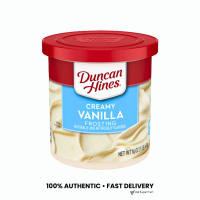
Duncan Hines Creamy Frosting 454g – Chocolate Cream Cheese & Vanilla Dessert Topping
₱309.00
Buy on Lazada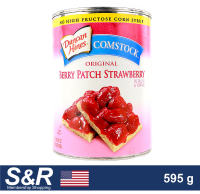
Duncan Hines Comstock Original Berry Patch Strawberry 595 g
₱333.00
Buy on LazadaAbout Duncan Hines
Duncan Hines is an American food brand best known for cake mixes, frosting, brownies, baking mixes, and other convenient dessert products. The brand takes its name from Duncan Hines (1880–1959), a traveling salesman, restaurant reviewer, author, and food enthusiast whose recommendations became highly influential among American travelers in the first half of the 20th century. Today, Duncan Hines is owned by Conagra Brands, one of the major American packaged-food companies.3
A distinctive aspect of the brand’s history is that it did not originally begin as a cake-mix company. It grew out of Hines’ reputation as a trusted authority on restaurants and good food before his name was eventually licensed for packaged foods.
Quick facts
| Category | Information |
|---|---|
| Brand name | Duncan Hines |
| Named after | Duncan Hines |
| Duncan Hines | March 26, 1880 – March 15, 1959 |
| Origin | United States |
| Industry | Packaged foods / baking products |
| Best known for | Cake mixes and frosting |
| Current owner | Conagra Brands |
| Brand headquarters | Operated as part of Conagra Brands |
| Major categories | Cake mixes, brownies, frosting, pie fillings, baking kits, single-serve desserts and other sweet treats |
| Official website | duncanhines.com |
History
Duncan Hines, the person
Duncan Hines was born in 1880 in Bowling Green, Kentucky. He worked as a traveling salesman and spent considerable time traveling around the United States during an era when automobile travel was rapidly becoming more common.
Because he traveled extensively, Hines became interested in finding good, reliable places to eat along the road. He began recording information about restaurants he considered worthwhile.
His reputation eventually grew beyond his personal circle. Instead of simply recommending restaurants to friends, Hines turned his observations into published guides.1
Adventures in Good Eating
In 1936, Hines published the first edition of his famous restaurant guide, Adventures in Good Eating. It contained hundreds of restaurant recommendations from across the United States.
The guide became particularly useful to travelers because the American highway system and automobile culture were expanding. At a time when standardized restaurant chains were far less common than today, travelers had to rely heavily on personal recommendations.
Hines’ reputation was based on his perceived independence and attention to food quality. His recommendations became so influential that restaurants proudly displayed signs identifying themselves as “Recommended by Duncan Hines.”2
He subsequently published other food-related books, including guides dealing with lodging and cooking. His name gradually became associated with trustworthy food recommendations, rather than simply with one particular product.
From restaurant critic to food brand
The transformation of Duncan Hines from a person into a consumer-food brand happened during the 1950s.
In 1952, Hines and businessman Roy H. Park developed a business around the Duncan Hines name. Products carrying the Duncan Hines name began appearing in different food categories. Conagra’s historical account says that Hines and Park brought more than 250 food products to market under the label.3
One of the most important developments was the creation of Duncan Hines cake mixes.
The cake-mix business was developed by Nebraska Consolidated Mills, a flour-milling company. The company was looking for ways to create additional demand for its flour, helping lead to the development of Duncan Hines-branded cake mixes.
This was a major conceptual shift:
Duncan Hines went from telling Americans where to find good food to helping Americans make good food at home.
That connection between food expertise, trust, convenience, and baking became the foundation of the modern brand.
Ownership history
Duncan Hines has passed through several major corporate owners during its history.
Nebraska Consolidated Mills
Nebraska Consolidated Mills played an important role in creating the cake-mix business. The company developed Duncan Hines cake mixes as a way of expanding the market for its flour.
Procter & Gamble
In the 1950s, Procter & Gamble (P&G) acquired the Duncan Hines food business. P&G expanded the brand and developed it into a major national packaged-food business.
This period was particularly important because it transformed Duncan Hines from a licensed food name into a recognizable national consumer brand.
Aurora Foods / Pinnacle Foods
Duncan Hines eventually left P&G’s portfolio. The brand subsequently became associated with Aurora Foods and later Pinnacle Foods.
Pinnacle Foods continued developing Duncan Hines as a major baking brand, maintaining its emphasis on cake mixes, frosting and related products.
Conagra Brands
In 2018, Conagra Brands acquired Pinnacle Foods, bringing Duncan Hines back under the ownership of the corporate successor to Nebraska Consolidated Mills—the company that had originally helped create the cake-mix business.3
As of 2026, Duncan Hines is owned by Conagra Brands. Conagra lists Duncan Hines among its major brands alongside names such as Birds Eye, Healthy Choice, Marie Callender’s, Reddi-wip and Slim Jim.3
Products
Although Duncan Hines is strongly associated with cake mix, the modern brand has a considerably broader product portfolio.
Cake mixes
Cake mix remains the brand’s most recognizable category. Duncan Hines offers a range of traditional and specialty cake mixes designed to make home baking easier.
The basic concept is simple: instead of measuring and combining every dry ingredient from scratch, consumers start with a prepared mix and add the required wet ingredients.
Frosting
Duncan Hines also produces ready-to-use frosting, allowing consumers to decorate cakes and cupcakes without making frosting from scratch.
Brownie mixes
Brownie mixes are another important part of the portfolio, extending the brand beyond cakes into other popular baked desserts.
Cookies and other baking products
The company has expanded into additional baking-oriented products, including cookie products, pie fillings, baking kits and other dessert solutions.1
Single-serve desserts
Duncan Hines has also developed products intended for individual portions, including Perfect Size for 1 and similar single-serving desserts.
This reflects a broader change in the baking market: traditional baking was often associated with families and celebrations, while modern consumers increasingly want convenient desserts for one or two people.
Keto-friendly products
The brand has also introduced keto-friendly baking mixes and desserts, responding to changing consumer preferences and dietary trends.1
Brand identity
Duncan Hines has historically been built around three major ideas:
- Trust — The original Duncan Hines earned a reputation for identifying good restaurants.
- Quality — The brand uses Hines’ name as a symbol of dependable food results.
- Convenience — Cake mixes and other prepared baking products make homemade desserts easier and faster.
This gives the brand an unusual heritage compared with many packaged-food companies.
Duncan Hines isn’t simply named after a fictional character or a company founder who manufactured food. The name comes from a real person who became famous for his knowledge of food.1
The Duncan Hines brand today
Today, Duncan Hines positions itself as a brand centered on creating sweet moments and making baking accessible.
Its official brand mission is described as “Creating sweet moments every day.” The company emphasizes not only major celebrations such as birthdays and holidays but also smaller everyday occasions involving family, friends and personal enjoyment.1
The modern portfolio therefore goes beyond the traditional image of a box of cake mix. Duncan Hines describes its products as including cakes, brownies, cookies, single-serve desserts, pie fillings and baking kits.1
The brand also continues to develop collaborations and limited-edition products. For example, its current website features collaborations involving Snoopy and PEANUTS.1
Marketing and cultural significance
Duncan Hines is an interesting example of how personal reputation can become a consumer brand.
Before the modern era of food influencers, restaurant apps and online reviews, travelers depended heavily on published guides and word-of-mouth recommendations. Hines established himself as an authority by personally traveling, evaluating restaurants and publishing his findings.
His name therefore already carried a meaning:
Duncan Hines = someone who knows good food.
When that name appeared on packaged baking products, consumers could associate the product with the authority Hines had established as a food reviewer.
This was particularly powerful in the 1950s, when packaged cake mixes were becoming part of the broader American movement toward convenience foods and modern home cooking.
Duncan Hines vs. Duncan Hines the person
An important distinction is that Duncan Hines the man and Duncan Hines the modern food brand are related but not identical.
Duncan Hines himself was primarily known as:
- A traveling salesman
- A restaurant reviewer
- A food writer
- An author of restaurant and cooking guides
- A promoter of good food and hospitality
The modern Duncan Hines company is primarily a:
- Packaged-food brand
- Baking-products brand
- Dessert brand
- Consumer convenience-food business
The modern brand uses his name and historical reputation as part of its identity.1
Corporate ownership timeline
A simplified timeline looks like this:
Duncan Hines → Hines-Park / licensing → Nebraska Consolidated Mills → Procter & Gamble → Aurora Foods / Pinnacle Foods → Conagra Brands
The particularly interesting part is that Conagra ultimately reacquired Duncan Hines through its 2018 acquisition of Pinnacle Foods, reconnecting the brand with the corporate lineage of Nebraska Consolidated Mills, which had been involved in developing the original cake-mix business.
Why Duncan Hines became famous
Duncan Hines’ success can be understood as a combination of several factors.
1. A real personality behind the name
Unlike many food brands, Duncan Hines was based on an actual person with a recognizable professional reputation.
2. Trust before advertising
Hines became famous for food recommendations before his name was placed on packaged foods. His authority was therefore established independently of the cake-mix business.
3. The rise of automobile travel
His restaurant guides emerged at an ideal time. Americans were traveling increasingly by automobile, creating demand for reliable information about roadside restaurants and lodging.
4. The rise of convenience foods
The postwar period saw rapid growth in packaged and convenience foods. Cake mixes fit perfectly into this trend.
5. A strong connection between convenience and homemade food
Cake mix offered consumers a compromise: the result looked and felt homemade, but the preparation was considerably easier.
That positioning remains central to the brand.
Legacy
Duncan Hines died in 1959, but his name continued to grow as a food brand after his death. His legacy is preserved not only through the commercial brand but also through historical recognition in Bowling Green, Kentucky, his hometown. A section of U.S. Route 31W near Bowling Green was named the Duncan Hines Highway, and historical material about him has been exhibited at the Kentucky Museum at Western Kentucky University.
His story is therefore unusual: a man who became famous for finding and recommending good food eventually lent his name to products that helped millions of people make desserts at home.