Shop on Lazada
DuPont products
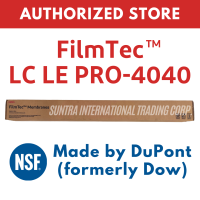
DuPont Filmtec LC LE PRO-4040 RO Membrane
₱11,300.00₱21,000.00
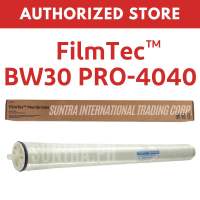
FilmTec RO Membrane BW30 PRO-4040 (Replaces BW30-4040 BW30 4040)
₱11,300.00₱21,000.00
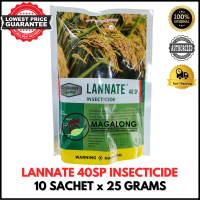
DuPont LANNATE 40SP INSECTICIDE (METHOMYL) BROAD SPECTRUM CARBAMATE INSECTICIDE 10 sachet x 25 Grams
₱598.00₱1,500.00
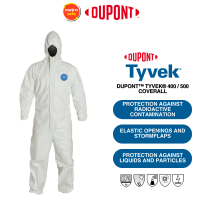
DUPONT Tyvek 400 Breathable and Waterproof Coverall TY122S WH PPE
₱506.00
Buy on Lazada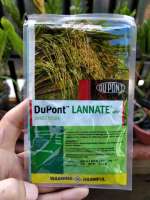
DuPont LANNATE 40SP INSECTICIDE (METHOMYL) BROAD SPECTRUM CARBAMATE INSECTICIDE 25 Grams
₱65.00₱200.00
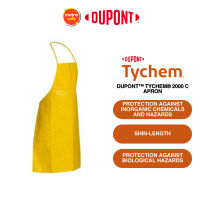
DuPont Tychem C 2000 Polymer Coated Chemical Protective Apron
₱470.00
Buy on Lazada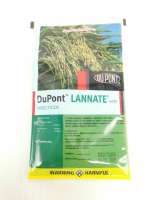
LANNATE 25g sachet original packing
₱78.00
Buy on Lazada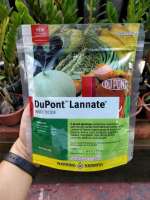
DuPont LANNATE 40SP INSECTICIDE (METHOMYL) BROAD SPECTRUM CARBAMATE INSECTICIDE 425 Grams
₱898.00₱1,900.00
About DuPont
Overview
DuPont is one of the world’s oldest and most recognized science and materials companies. Its history dates to 1802, when French-American chemist Éleuthère Irénée du Pont established a gunpowder business on the Brandywine River in Delaware, United States. Over more than two centuries, the organization evolved from an explosives manufacturer into a major chemical and materials enterprise. Following a series of mergers, spin-offs, and divestitures, it has emerged as a focused advanced-materials and specialty-solutions company.12
Today, DuPont de Nemours, Inc. is publicly traded on the New York Stock Exchange under the ticker symbol DD. Its primary areas of operation include water and water purification, healthcare, construction, advanced mobility, industrial technologies, and protective materials.1 According to its 2025 annual report, DuPont operates subsidiaries in approximately 50 countries and maintains manufacturing operations in about 20 countries.2
Corporate Profile
| Item | Information |
|---|---|
| Company | DuPont de Nemours, Inc. |
| Common name | DuPont |
| Founded | 1802 |
| Founder | Éleuthère Irénée du Pont |
| Origin | Brandywine Creek, Delaware, USA |
| Headquarters | Wilmington, Delaware, USA |
| Industry | Specialty chemicals, advanced materials, engineering solutions |
| Stock exchange | New York Stock Exchange |
| Ticker | DD |
| Current CEO | Lori Koch |
| Core identity | Science, materials, engineering and innovation |
| Current major markets | Healthcare, water, construction, industrial, mobility and protection |
| Historical famous products | Nylon, Teflon™, Kevlar®, Nomex®, Tyvek®, Mylar®, Lycra® |
| Current major brands | Kevlar®, Nomex®, Tyvek®, Tychem®, Vespel®, FilmTec™, AmberLite™, Liveo™, Tedlar® and others |
Business Model and Identity
DuPont functions primarily as a B2B technology company rather than a consumer brand. While many end-users encounter DuPont technologies daily, they are often embedded within other products or industrial processes. The company describes its mission as providing technology-based materials and solutions that help transform industries and everyday life.3 Key examples of its technology platforms include:
- Tyvek®: Used in protective clothing, medical packaging, and building envelopes.
- Kevlar®: Utilized for high-strength and ballistic protection applications.
- Nomex®: Employed in heat- and flame-resistant protective gear.
- Vespel®: Applied in demanding industrial and aerospace components.
- FilmTec™: Membranes used for water purification.
- AmberLite™: Ion-exchange resins for water treatment and industrial processing.
- Liveo™: Materials serving healthcare and medical applications.
In the contemporary market, DuPont is best characterized as an advanced materials and specialty-solutions provider rather than a traditional commodity chemical producer.
Historical Development
Founding and Early Safety Culture
The company was founded by Éleuthère Irénée du Pont (1771–1834), son of the prominent French economist Pierre Samuel du Pont de Nemours. After emigrating to the United States, E.I. du Pont identified an opportunity in the developing American market and established his company on the banks of the Brandywine River near Wilmington, Delaware, in 1802.4 The original enterprise focused exclusively on manufacturing high-quality black powder and explosives.
Safety became a defining cultural value early in the company’s history due to the inherent dangers of gunpowder manufacturing. DuPont’s first written safety rules date to 1811, establishing a safety culture that predated modern industrial standards.5
Expansion into Industrial Science
During the 19th century, DuPont grew into a significant player in the American explosives industry. By the early 20th century, the company transitioned toward a broader model integrating chemistry, scientific research, engineering, and manufacturing. In 1902, a new corporate structure was established alongside increased investment in scientific research. The creation of the Experimental Station institutionalized a research culture that shifted the company’s focus from selling existing chemicals to discovering new materials capable of enabling entirely new industries.
Polymer Innovation and Nylon
Throughout the 20th century, DuPont invested heavily in fundamental research, polymer chemistry, and materials science. This era produced innovations in synthetic rubber, fibers, plastics, fluoropolymers, and electronic materials. A pivotal figure in this transformation was scientist Wallace H. Carothers, whose polymer research led to the development of nylon. Researchers produced a synthetic fiber-forming “superpolymer” in 1930, and DuPont announced the development of nylon in 1938. Nylon became the first commercially viable synthetic fiber, finding use in toothbrush bristles, stockings, textiles, and military equipment. During World War II, production was redirected heavily toward military applications, demonstrating the company’s ability to scale laboratory discoveries for mass-market and industrial use.
Teflon™ and Fluoropolymers
Teflon™ (PTFE or polytetrafluoroethylene) was discovered accidentally in 1938 by DuPont scientist Roy J. Plunkett during refrigerant gas research. A sample of tetrafluoroethylene polymerized into a white, waxy substance with exceptional properties, including low friction, chemical resistance, high-temperature tolerance, and electrical insulation.6 The Teflon™ trademark was registered in 1945.7 While widely associated with non-stick cookware, PTFE’s industrial applications span aerospace, electronics, chemical processing, and architecture.
World War II and the Manhattan Project
DuPont played a critical role in U.S. industrial mobilization during World War II. Beyond explosives production, the company participated in the Manhattan Project, helping to design and operate plutonium production facilities at Hanford, Washington, and contributing to operations at Oak Ridge.8 This period highlighted DuPont’s integrated capabilities in research, process engineering, plant design, and large-scale manufacturing.
High-Performance Materials Era
Post-war innovation continued with the development of advanced fibers. In 1965, scientist Stephanie Kwolek developed a liquid-crystal polymer that became the basis for Kevlar®.9 Known for its high strength-to-weight ratio and thermal performance, Kevlar became synonymous with ballistic protection and is also used in automotive, aerospace, and industrial reinforcement. DuPont notes that Kevlar has been used in protective applications for more than 50 years.10
Simultaneously, Nomex® was developed as a heat- and flame-resistant fiber for firefighter gear, motorsport, and industrial protection.11 Today, DuPont groups Nomex®, Kevlar®, Tyvek®, and Tychem® as its core personal-protection brands.12
Tyvek®, made from high-density polyethylene (HDPE), combines light weight, strength, and breathability. It is widely used in medical packaging, construction, and protective apparel, exemplifying the company’s strategy of adapting specific material properties across multiple industries.
Corporate Transformations
Diversification and Complexity
For much of the 20th century, DuPont expanded into chemicals, plastics, agriculture, automotive, nutrition, and biotechnology. While diversification drove growth, it eventually created significant organizational complexity, leading to major restructuring efforts in the 21st century.
The Dow–DuPont Merger and Split
In 2015, DuPont and The Dow Chemical Company announced a merger, which was completed in 2017 to form DowDuPont. The merger was always intended as a precursor to separation. The plan involved splitting the combined entity into three independent public companies:
- Materials Science → Dow
- Agriculture → Corteva
- Specialty Products → DuPont
This transformation was realized in 2019. On April 1, the materials-science business separated as Dow Inc. On June 1, the agriculture business became Corteva, Inc. On June 3, 2019, the remaining specialty-products company began trading as DuPont de Nemours, Inc. under the ticker DD.131415
Consequently, the current DuPont is the successor to the specialty-products portion of the DowDuPont structure. Historical businesses such as agriculture and commodity materials now belong to Corteva and Dow, respectively.
Recent Portfolio Simplification
Following the 2019 split, DuPont further refined its portfolio through additional divestitures:
- Nutrition & Biosciences merged with International Flavors & Fragrances (IFF) in 2021.
- Most of the Materials & Mobility segment was sold to Celanese in 2022.
- Delrin® was divested to TJC in 2023.
- The Aramids business was sold in 2026.
Additionally, DuPont separated its Electronics business into a new independent public company, Qnity Electronics, Inc., completing the transaction on November 1, 2025. Qnity trades under the ticker Q, while DuPont retains DD.16 As of 2026, DuPont operates as a focused advanced-solutions company with primary activities in healthcare, water, construction, and industrial markets.17
Current Business Segments
As of 2026, DuPont’s operations are organized around advanced solutions for key strategic markets.
Water
Water technologies represent a major strategic pillar. Brands include FilmTec™, AmberLite™, IntegraTec™, and MEMCOR™.18 Applications encompass drinking-water purification, wastewater treatment, desalination, semiconductor manufacturing, and pharmaceutical production. Technologies include reverse-osmosis membranes, nanofiltration, ultrafiltration, and ion-exchange resins.
Healthcare
DuPont supplies materials for medical devices, pharmaceutical manufacturing, healthcare packaging, and medical tubing. The Liveo™ portfolio specifically targets healthcare applications, including silicone-based medical technologies.19
Construction
The company provides materials designed to improve insulation, weather resistance, energy efficiency, and moisture management. Key brands in this segment include Styrofoam™, Great Stuff™, Froth-Pak™, and Tyvek®.20
Advanced Mobility
DuPont supplies materials for automobiles, electric vehicles, aerospace, and rail. These solutions address thermal management, adhesives, and engineered components, helping manufacturers reduce weight and improve safety.21
Protection
Protection remains a core area of brand recognition. Materials are designed to guard against heat, flame, chemicals, mechanical hazards, and impact. Key brands include Kevlar®, Nomex®, Tyvek®, and Tychem®.22
Brand Architecture
DuPont operates as a corporate technology platform, with individual brands representing specific material technologies. This architecture explains why the DuPont name may not always be visible on end products.
| DuPont brand | General identity |
|---|---|
| Kevlar® | High-strength aramid fiber |
| Nomex® | Heat/flame-resistant fiber |
| Tyvek® | Lightweight protective/barrier material |
| Tychem® | Chemical protective materials |
| Vespel® | High-performance engineering materials |
| FilmTec™ | Water-treatment membranes |
| AmberLite™ | Ion-exchange resins |
| Liveo™ | Healthcare materials |
| Tedlar® | PVF-based specialty films |
| Styrofoam™ | Insulation materials |
Innovation Philosophy
DuPont’s competitive advantage lies in its innovation model, which differs from traditional commodity chemical production. The company typically follows a progression from fundamental science to material discovery, engineering, application development, commercialization, and industry adoption. Rather than selling raw polymers, DuPont often develops specialized formulations and manufacturing processes tailored to specific industry needs. This approach leverages intellectual property, formulation expertise, and established technical brands.24
Sustainability and Environmental Legacy
Sustainability is integrated into DuPont’s corporate strategy, with a focus on clean water, resource efficiency, and worker protection. Technologies like FilmTec™ membranes and AmberLite™ resins support resource-intensive processes and water purification.25
However, the company’s environmental history includes controversies regarding PFAS (per- and polyfluoroalkyl substances). Historically, PFOA was used in the production of certain fluoropolymer products. Discussions regarding PFAS require distinguishing between historical DuPont, its successor companies, and current owners of specific fluorochemical businesses, as significant portions of these operations were transferred or sold over time. Teflon/PTFE and PFOA are distinct chemicals, and the modern DuPont entity differs legally and operationally from the historical corporation associated with legacy environmental issues.
Distinction from Related Companies
It is essential to distinguish the current DuPont from other entities resulting from the 2017–2019 restructuring:
| Company | Modern focus |
|---|---|
| DuPont | Advanced materials and specialty solutions |
| Dow | Materials science, chemicals and polymers |
| Corteva | Agriculture, seeds and crop-protection technologies |
| Qnity | Electronics and semiconductor materials |
All four companies share historical lineage through the Dow–DuPont merger but are now separate public entities.26
Timeline of Key Milestones
- 1802: E.I. du Pont establishes the company in Delaware to manufacture gunpowder.27
- 1930s: Major polymer research leads to the invention of nylon.28
- 1938: Teflon/PTFE is discovered accidentally during research.29
- 1940s: Extensive contribution to U.S. wartime industrial programs, including the Manhattan Project.30
- 1965: Stephanie Kwolek develops the material that becomes Kevlar®.31
- 2017: Dow and DuPont merge to create DowDuPont.
- 2019: DowDuPont separates into Dow, Corteva, and DuPont.
- 2021–2023: Portfolio simplification through divestiture of Nutrition & Biosciences, Materials & Mobility, and Delrin®.
- 2025: Separation of Electronics business as Qnity Electronics.32
- 2026: Operation as a focused advanced-solutions company; completion of Aramids business divestiture.33
References
- About Us | DuPont
- dd-20251231
- History of our Safety Core Value | DuPont
- DuPont Nylon Collection | NMAH.AC.0007 | SOVA, Smithsonian Institution
- DuPont Nylon Collection | Smithsonian Institution
- Manhattan Project Spotlight: E.I. du Pont de Nemours & Company – Nuclear Museum
- History of Dow, DuPont and Pioneer | Corteva Agriscience
- Kevlar® Media Center
- Nomex® for PPE
- Personal Protective Equipment | PPE Equipment From DuPont™ | DuPont
- DuPont Brands | DuPont
- DowDuPont Board of Directors Approves Separation of Materials Science Division, Creating the New Dow | Dow Investor Relations
- DuPont de Nemours, Inc. – DuPont Becomes Independent Company, Uniquely Positioned to Drive Innovation-Led Growth and Shareholder Value
- DuPont de Nemours, Inc. – DuPont Reports Fourth Quarter and Full Year 2019 Results
- Dow completes separation from DowDuPont | Dow Investor Relations
- DuPont Completes Separation of Qnity Electronics | DuPont
- Sustainability
- DuPont de Nemours, Inc. – DuPont Reports First Quarter 2026 Results
- DuPont de Nemours, Inc. – DuPont Publishes 2026 Sustainability Report
- d18rn0p25nwr6d.cloudfront.net
- DuPont de Nemours, Inc. – Annual Report 2025 | FinancialFilings
- DuPont de Nemours, Inc. – DuPont Reports Fourth Quarter and Full Year 2025 Results
- dow-20251231
- DuPont Announces Appointment of D.G. Macpherson to Board of Directors | DuPont
- DuPont de Nemours, Inc. – DuPont Reports Third Quarter 2025 Results; Announces Plans to Return Cash to Shareholders
- dd-20250930
- DuPont Innovation Awards Recognize the Best PPE and Fabrics Against Emerging Risks | DuPont
- DuPont Board of Directors Approves Qnity Distribution | DuPont
- DuPont Announces Effectiveness of Form 10 Registration Statement for Qnity | DuPont
- DuPont to Outline Value Creation Strategy and Financial Framework | DuPont
- DuPont de Nemours, Inc. – DuPont to Outline Value Creation Strategy and Financial Framework
- DuPont Publishes 2025 Sustainability Report | DuPont
- DuPont Unveils Brand Identity for Qnity, Future Electronics Spin-Off | DuPont