Shop on Lazada
Nissin Brakes products
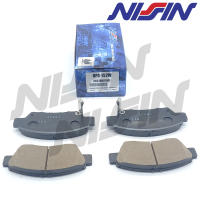
Nissin Brake Pad for Honda City 2009-2021 || Brake Pad for Honda Jazz 2014-2021 || Brake Pad for Honda Mobilio 2014-2021 - NPO-152W (Front)
₱2,139.00
Buy on Lazada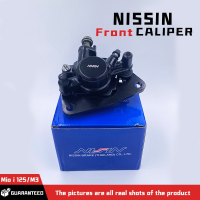
NISSIN Front Brake Caliper Mio i 125/M3 Made In Thailand
₱460.00₱1,000.00
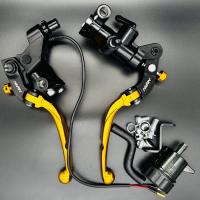
Nissin Brake Master Folding long lever Accossato Style Thailand
₱859.00₱2,500.00
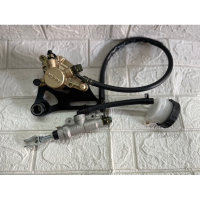
NISSIN Caliper W/Master Pump Assy Raider 150 Made In Thailand
₱600.00₱2,000.00
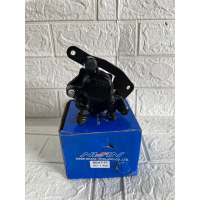
NISSIN Front Brake Caliper Beat Fi/Beat Made In Thailand
₱370.00₱1,000.00
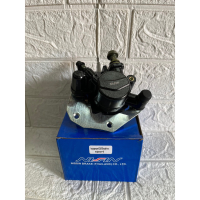
NISSIN Front Brake Caliper Burgman125/Skydrive Sport Made In Thailand
₱460.00₱2,000.00
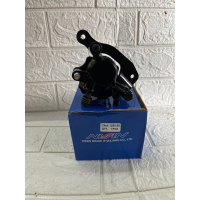
NISSIN Front Brake Caliper Click125/150 V1/V2 Made In Thailand
₱460.00₱2,000.00
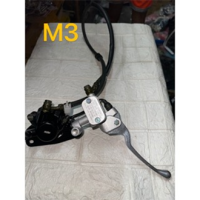
NISSIN Caliper W/Master Pump Assy Mio i 125/M3
₱580.00₱2,000.00
About Nissin Brakes
NISSIN is a Japanese automotive and powersports braking brand with origins tracing back to Nissin Kogyo Co., Ltd., established in 1953. Originally focused on manufacturing automotive brake components, the company evolved into a major supplier of braking systems for both motorcycles and automobiles. Today, the NISSIN name operates as a brake product brand under Astemo, Ltd., a Japanese mobility-components company formed through the 2021 integration of Hitachi Automotive Systems, Keihin, Showa, and Nissin Kogyo.
In the Philippines and globally, NISSIN is particularly recognized within the motorcycle industry for OEM brake calipers, master cylinders, brake systems, brake pads, and racing or performance braking equipment. Its products have been widely used on Japanese motorcycles and in motorsport, with technology developed through racing activities frequently incorporated into production and aftermarket offerings.
Overview
| Category | Information |
|---|---|
| Brand | NISSIN / Nissin Brakes |
| Original company | Nissin Kogyo Co., Ltd. |
| Founded | 1953 |
| Country of origin | Japan |
| Original headquarters | Nagano, Japan |
| Industry | Automotive and motorcycle components |
| Primary specialty | Braking systems |
| Products | Brake calipers, master cylinders, brake pads, brake discs, ABS-related systems and other brake components |
| Major markets | Motorcycles, automobiles, motorsports and aftermarket |
| Current corporate group | Astemo, Ltd. |
| Current brand status | NISSIN continues as a brake-product brand under Astemo |
The historical Nissin Kogyo company was headquartered in Tomi, Nagano Prefecture, Japan, and specialized in motorcycle and automobile brake equipment as well as aluminum products.1
History
1953 — Foundation
Nissin Kogyo was established in Tokyo in 1953 to manufacture automotive brake components. A factory was set up in Ueda, Nagano, where the company began producing aluminum brake pistons for four-wheeled vehicles. This focus on brake hardware laid the foundation for what would eventually become the NISSIN braking brand.
1960s — Expansion into automobile brakes
During the 1960s, Nissin expanded its automobile-braking activities. In 1963, it began assembling wheel cylinders for automobile drum brakes. By 1968, the company had entered into a technical agreement with British firm Lucas Industries concerning drum brakes and commenced manufacturing automobile drum-brake systems.
1970s — Motorcycle braking
Nissin diversified beyond automobile braking during the 1970s:
- 1970: Production of automobile brake master cylinders and master-vacuum units began.
- 1971: Production of motorcycle master cylinders began.
These developments allowed the company to build expertise in both four-wheel and two-wheel braking systems. The introduction of motorcycle master cylinders was particularly significant, as motorcycle braking eventually became one of NISSIN’s most recognizable areas of specialization.
1980s — International expansion and racing
In the 1980s, Nissin expanded its international manufacturing footprint by establishing operations in the United States and Thailand. The company also became increasingly involved in motorcycle racing. Nissin-supported riders achieved major results during the World Grand Prix (WGP) era; company records indicate that a rider supported by Nissin won the 500cc and 250cc WGP titles in 1985.
This racing involvement became integral to the company’s technical development philosophy. Racing provided a demanding environment for testing brake performance, which subsequently influenced production and aftermarket products.
1990s — ABS and global growth
The 1990s marked another significant period of development. In 1991, Nissin began production of anti-lock braking systems (ABS) for motorcycles.
The company also established manufacturing operations in several Asian markets. Notably, Nissin Brake Philippines Corporation was established in 1995, alongside expansions into Vietnam and China. By this period, Nissin had developed into an international automotive-component manufacturer rather than solely a Japanese brake-parts producer.
NISSIN and motorcycle braking
When motorcycle enthusiasts refer to Nissin Brakes, they are typically discussing the company’s motorcycle braking hardware. NISSIN has historically supplied components to motorcycle manufacturers as an OEM supplier, meaning Nissin braking components are often installed directly by the manufacturer rather than sold separately under the NISSIN name.
Its motorcycle portfolio has included:
- Brake calipers
- Master cylinders
- Brake pads
- Brake discs
- ABS-related braking components
- Racing brake components
- Brake-system assemblies
Current aftermarket materials specifically identify calipers, master cylinders, racing pads, racing discs, and racing brake fluid among its performance and racing offerings.
Brake calipers
NISSIN is especially recognizable for its motorcycle brake calipers. A caliper houses the brake pads and uses hydraulic pressure to push them against the brake disc. Depending on the application, NISSIN calipers have been produced in various configurations, including conventional and radial-mount designs.
Modern performance-oriented NISSIN products include high-level calipers derived from the company’s accumulated braking technology. Consequently, NISSIN calipers are found across different categories of motorcycles, from standard street models to higher-performance and racing applications.
Master cylinders
Another major NISSIN product category is the brake master cylinder, which converts rider input at the brake lever into hydraulic pressure transmitted through brake fluid to the caliper. Nissin began producing motorcycle master cylinders as early as 1971, giving the company more than five decades of experience with this component.
Modern NISSIN racing equipment includes radial master cylinders, which are commonly associated with higher-performance motorcycles and racing applications.
OEM reputation
A defining characteristic of NISSIN is its historical operation as an OEM supplier rather than exclusively as an aftermarket performance brand. This distinction is significant because a rider may own a motorcycle equipped with NISSIN brake components even without prominent branding. Manufacturers often specify NISSIN hardware as part of the original braking system.
As a result, NISSIN’s reputation has been built largely on supplying braking technology to motorcycle and automobile manufacturers while maintaining an aftermarket and racing presence.
Racing heritage
Motorsport has played a significant role in NISSIN’s development, with involvement in motorcycle racing dating back decades, including success during the WGP era. The relationship between racing and production braking follows a clear trajectory: racing provides testing under extreme conditions, leading to engineering development, production technology, and finally aftermarket products.
Astemo explicitly states that NISSIN’s years of racing activities have been leveraged in its aftermarket products. The current NISSIN racing range includes:
- Radial calipers
- Radial master cylinders
- Racing brake pads
- Racing brake discs
- Racing brake fluid
The company also offers racing packages for specific motorcycle applications.
NISSIN and Honda
NISSIN has maintained a particularly important relationship with the Japanese motorcycle and automobile industry, especially Honda. Historically, Honda became Nissin Kogyo’s largest shareholder, and Nissin products became widely associated with Japanese motorcycle manufacturing.1 The company’s OEM business helped establish NISSIN as a major braking-system supplier rather than merely a performance aftermarket company, which is one reason NISSIN components are commonly encountered on Japanese motorcycles.
Global manufacturing
Although NISSIN originated in Japan, its manufacturing and business operations expanded internationally. Nissin established or operated subsidiaries and manufacturing facilities in countries including:
- Japan
- United States
- Thailand
- Philippines
- Vietnam
- China
- Brazil
- Mexico
For example, the company established Nissin Brake Philippines Corporation in 1995 and subsequently expanded its manufacturing network elsewhere in Asia and the Americas. This global structure allowed NISSIN to supply multinational motorcycle and automobile manufacturers closer to their production facilities.
NISSIN Brake Philippines
The Philippines holds particular relevance in NISSIN’s history due to the establishment of Nissin Brake Philippines Corporation in 1995. This entity became part of the company’s international manufacturing network. Consequently, when NISSIN brake components are encountered in the Philippine motorcycle market, the brand carries a longstanding connection to the country’s automotive-component manufacturing industry.
From Nissin Kogyo to Astemo
One of the most significant changes in NISSIN’s corporate history occurred around 2021. In 2019, Nissin Kogyo, Keihin Corporation, and Showa Corporation announced plans to integrate their management with Hitachi Automotive Systems to create a larger global mobility-components supplier.1
The integration was completed in January 2021, creating Hitachi Astemo, with Nissin’s braking operations becoming part of the new organization. The four companies contributed distinct areas of expertise:
| Former company | Major expertise |
|---|---|
| Hitachi Automotive Systems | Automotive systems, electronics, chassis and advanced mobility technologies |
| Keihin | Engine management and motorcycle/automotive components |
| Showa | Motorcycle and automotive suspension |
| Nissin Kogyo | Brake systems and aluminum products |
Astemo describes the resulting company as inheriting the technology and expertise of these four organizations.
Astemo and the NISSIN brand today
Despite corporate restructuring, NISSIN did not disappear as a product brand. Astemo’s aftermarket division confirms that NISSIN joined the group in January 2021 while its brake products continued to be marketed under the NISSIN brand.
In 2025, Hitachi Astemo changed its company name to Astemo, Ltd. The corporate evolution can be summarized as:
Nissin Kogyo → Hitachi Astemo → Astemo
Meanwhile:
NISSIN → continues as the brake-product brand
This distinction is essential: NISSIN is the product and brand identity, while Astemo is the current corporate organization behind it.
What makes NISSIN different
NISSIN’s identity is based less on being a boutique aftermarket “racing brand” and more on being a large-scale Japanese OEM brake-system manufacturer with racing experience. Its main strengths historically include:
OEM engineering
NISSIN has decades of experience developing brake systems for vehicle manufacturers. Products are designed not merely for maximum braking power but also for reliability, durability, manufacturability, and consistent performance.
Motorcycle specialization
Although Nissin has manufactured automobile braking equipment, its motorcycle products are particularly prominent. The company has produced motorcycle master cylinders since 1971 and motorcycle ABS since 1991.
Racing technology
Racing has provided NISSIN with an engineering environment where braking performance, heat management, hydraulic response, and durability are rigorously tested.
Global production
Expansion from Japan into North America, Asia, and Latin America has allowed the company to support international vehicle manufacturers.
Long history
NISSIN’s brake business dates to 1953, giving the brand more than 70 years of brake-engineering history as of 2026.
NISSIN vs. “Nissin” food company
It is important to note that NISSIN Brakes is unrelated to Nissin Foods. The brake manufacturer is historically Nissin Kogyo Co., Ltd., a Japanese automotive-components company.1 It should not be confused with Nissin Foods, the instant-noodle and food company. The similarity in names is purely coincidental.
Brand positioning
NISSIN can broadly be positioned between three worlds:
- OEM braking: Factory-fitted braking systems supplied to motorcycle and automobile manufacturers.
- Performance braking: Higher-specification calipers, master cylinders, and related components.
- Racing: Products developed and marketed for competitive applications.
This gives NISSIN a distinct identity compared to brands that focus almost exclusively on aftermarket racing equipment.
NISSIN’s product philosophy
At a fundamental level, a motorcycle braking system must balance multiple characteristics, including braking force, hydraulic feel, modulation, heat resistance, durability, weight, reliability, manufacturing consistency, and cost. NISSIN’s extensive OEM history means its engineering generally addresses the complete braking system rather than simply producing the most aggressive possible component. This explains why a standard NISSIN OEM caliper may not appear as exotic as an expensive racing caliper while remaining a highly engineered component.
NISSIN in the motorcycle aftermarket
Today, the NISSIN name remains present in the powersports aftermarket through Astemo. The current aftermarket range includes performance and racing brake components, and Astemo describes NISSIN as a trusted powersports braking brand whose racing experience is incorporated into its products.
This makes NISSIN relevant to several types of users:
- OEM replacement users
- Street-bike owners
- Sportbike riders
- Track-day riders
- Racing teams
- Motorcycle builders
- Performance enthusiasts
Timeline
| Year | Milestone |
|---|---|
| 1953 | Nissin Kogyo founded in Japan to manufacture automotive brake components |
| 1963 | Automobile drum-brake wheel-cylinder assembly begins |
| 1968 | Technical cooperation with Lucas Industries for drum brakes |
| 1970 | Automobile brake master-cylinder and master-power production begins |
| 1971 | Motorcycle master-cylinder production begins |
| 1980s | International expansion and major motorcycle-racing involvement |
| 1990 | Nissin Brake System established in Thailand |
| 1991 | Motorcycle ABS production begins |
| 1995 | Nissin Brake Philippines established |
| 1996 | Nissin Brake Vietnam established |
| 1997 | Nissin Kogyo listed on the Tokyo Stock Exchange |
| 2000 | Nissin Brake Thailand established through merger of Thai operations |
| 2012 | Nissin Brake Mexico established |
| 2019 | Integration with Hitachi Automotive Systems, Keihin and Showa announced |
| 2021 | Hitachi Astemo established; Nissin becomes part of the group |
| 2025 | Hitachi Astemo renamed Astemo, Ltd. |
| 2026 | NISSIN continues as an Astemo braking brand |
Historical milestones are based primarily on Astemo’s official Nissin Kogyo history.