Shop on Lazada
Dyson products
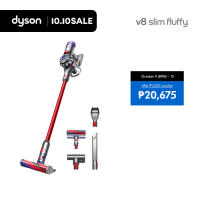
Dyson V8 Slim Fluffy Cordless Vacuum Cleaner | 4-in-1 with dock | 40 Mins Runtime | Soft Roller Head
₱19,230.00₱28,900.00
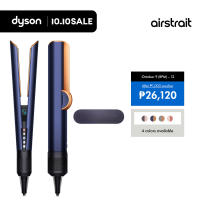
Dyson Airstrait ™ straightener (Prussian Blue/Rich Copper) | Wet to dry straightening with air | No Heat Damage
₱24,425.00₱33,900.00
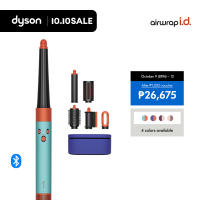
Dyson Airwrap i.d.™ Straight+Wavy hair multi-styler and dryer (Ceramic Patina/Topaz) | 6-in-1 | No Heat Damage
₱26,675.00₱36,900.00
![[New Launch] Dyson Airwrap Co-anda2x ™ hair multi-styler & dryer HS09 (Ceramic Pink/Rose Gold) | 6-in-1 | Curler | Faster drying | Straighter styles | Most powerful | No heat damage](https://ph-live.slatic.net/p/1f130fb1a2a03d7cccd81de5a2b9fd2e.jpg_200x200q80.jpg)
[New Launch] Dyson Airwrap Co-anda2x ™ hair multi-styler & dryer HS09 (Ceramic Pink/Rose Gold) | 6-in-1 | Curler | Faster drying | Straighter styles | Most powerful | No heat damage
₱36,955.00₱38,900.00
![[Lazada Exclusive] Dyson HushJet ™ Mini Cool Fan | Unique | Powerful | Quiet | Fast evaporative cooling](https://ph-live.slatic.net/p/77d6b9ca12414c28e699cebfeef36c4e.jpg_200x200q80.jpg)
[Lazada Exclusive] Dyson HushJet ™ Mini Cool Fan | Unique | Powerful | Quiet | Fast evaporative cooling
₱6,499.00
Buy on Lazada![[New Launch] Dyson Supersonic ™ Travel Hair Dryer HD19 (Ceramic Pink/Rosé Gold) | Universal Voltage | Travel friendly | Ultra - Lightweight | Fast drying](https://ph-live.slatic.net/p/6f1e2b14c231c9085850ebf522976045.jpg_200x200q80.jpg)
[New Launch] Dyson Supersonic ™ Travel Hair Dryer HD19 (Ceramic Pink/Rosé Gold) | Universal Voltage | Travel friendly | Ultra - Lightweight | Fast drying
₱17,999.00
Buy on Lazada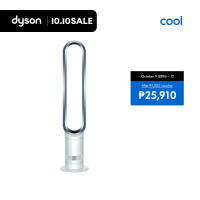
Dyson Cool ™ Tower Fan AM07 (White/Silver)
₱23,920.00₱29,900.00
![[New Launch] Dyson V10 Optic Cordless Vacuum Cleaner | Illuminates Invisible Dust | 150 Air Watts Fade-free Suction | 60 Mins Runtime](https://ph-live.slatic.net/p/8e1824bab054adae462f691211944c6a.jpg_200x200q80.jpg)
[New Launch] Dyson V10 Optic Cordless Vacuum Cleaner | Illuminates Invisible Dust | 150 Air Watts Fade-free Suction | 60 Mins Runtime
₱29,665.00₱34,900.00
About Dyson
Dyson Limited is a British-founded, Singapore-headquartered multinational technology company best known for designing premium household appliances that combine engineering innovation, industrial design, and advanced digital technologies. The company is recognized worldwide for pioneering bagless vacuum cleaners and has since expanded into air treatment, beauty technology, robotics, audio, lighting, and intelligent home appliances. Today, Dyson operates in more than 80 markets with engineering, research, manufacturing, and commercial operations across the UK, Singapore, Malaysia, and the Philippines. [1]
Company Overview
| Category | Information |
|---|---|
| Company Name | Dyson Limited |
| Founded | 1991 |
| Founder | Sir James Dyson |
| Headquarters | Singapore |
| Original Headquarters | Malmesbury, Wiltshire, England |
| Industry | Consumer Technology & Home Appliances |
| Type | Private Company |
| Products | Vacuum cleaners, air purifiers, fans, heaters, hair care devices, robot vacuums, headphones, lighting, hand dryers |
| Markets | 80+ countries |
| Employees | Approximately 14,000+ |
| Core Focus | Engineering-driven innovation and problem-solving |
History
The Beginning (1978)
The story of Dyson began when James Dyson became frustrated with his vacuum cleaner.
He noticed that:
-
Suction gradually became weaker.
-
Dust bags clogged easily.
-
Existing vacuum technology had changed very little.
Inspired by industrial cyclone technology used to separate paint particles from air, Dyson wondered whether the same principle could eliminate the need for vacuum bags.
Over the next five years, he built 5,127 prototypes before successfully creating the world’s first practical bagless vacuum cleaner. [3]
First Commercial Success
Since British manufacturers were reluctant to license the invention, Dyson launched the G-Force vacuum cleaner in Japan.
The G-Force:
-
Sold as a premium luxury appliance
-
Cost nearly US$2,000
-
Won the International Design Fair Prize (1991)
The profits from these sales enabled James Dyson to establish Dyson Ltd. in 1991. [4]
The DC01 Revolution
In 1993, Dyson introduced the DC01, marketed as:
“The vacuum that never loses suction.”
Its patented Dual Cyclone™ technology maintained strong suction without relying on disposable dust bags.
The DC01 quickly became the UK’s best-selling vacuum cleaner and established Dyson as a major appliance brand. [5]
Philosophy
Dyson’s philosophy centers on solving everyday problems through engineering rather than following existing product conventions.
Its design principles emphasize:
-
Engineering-first innovation
-
Continuous improvement
-
Extensive prototyping
-
Premium materials
-
High-performance motors
-
Scientific testing
-
Long-term investment in research
James Dyson has often described the company’s approach as identifying products that “don’t work properly” and reinventing them. [6]
Major Product Categories
Vacuum Cleaners
Dyson remains best known for cordless and upright vacuum cleaners featuring:
-
Cyclone technology
-
Powerful digital motors
-
HEPA filtration (selected models)
-
Laser dust detection (selected models)
-
Intelligent suction adjustment
Popular series include:
-
V8
-
V10
-
V11
-
V12 Detect Slim
-
V15 Detect
-
Gen5detect
Air Treatment
Dyson combines air purification with climate control in products such as:
-
Air Purifiers
-
Purifier Cool
-
Purifier Hot+Cool
-
Humidify+Cool systems
These machines can capture fine particles and, depending on the model, circulate purified air throughout a room. [7]
Hair Care
Dyson entered the beauty market with high-speed digital motors and airflow engineering.
Major products include:
-
Supersonic™ Hair Dryer
-
Airwrap™ Multi-Styler
-
Corrale™ Straightener
-
Airstrait™
These products are designed to reduce excessive heat exposure while maintaining styling performance. [8]
Robot Vacuums
Dyson has also developed robotic vacuum cleaners featuring:
-
360° vision systems
-
LiDAR navigation
-
AI-assisted cleaning
-
Powerful suction
Its latest models emphasize autonomous cleaning and smart mapping. [9]
Audio
In recent years Dyson expanded into consumer audio with products such as:
-
Dyson Zone™
-
OnTrac™ headphones
These products combine noise cancellation with Dyson’s engineering expertise, and some models integrate personal air purification. [10]
Core Technologies
Dyson invests heavily in proprietary technologies, including:
Cyclone Technology
Uses centrifugal force instead of disposable bags to separate dust from airflow.
Dyson Digital Motor
A compact, high-speed electric motor developed in-house, enabling lightweight cordless products. Dyson recently surpassed 100 million digital motors produced. [11]
Air Multiplier™
Introduced in Dyson’s bladeless fans, this technology amplifies airflow to produce a smooth stream of air without exposed blades.
Intelligent Sensors
Many recent Dyson products include sensors that automatically detect:
-
Dust
-
Air quality
-
Particle size
-
Temperature
-
Humidity
Research & Development
Dyson is known for investing a significant share of its resources into research and development.
Its engineering teams work across disciplines including:
-
Robotics
-
Fluid dynamics
-
Electronics
-
Software engineering
-
Materials science
-
Acoustics
-
Artificial intelligence
-
Battery technology
The company has engineering and manufacturing operations in the UK, Singapore, Malaysia, and the Philippines. [12]
Manufacturing
Although Dyson originated in the United Kingdom, much of its manufacturing now takes place in Asia.
Major facilities are located in:
-
Singapore
-
Malaysia
-
Philippines
The company retains significant research and development operations in the UK while manufacturing many of its digital motors and products in Asia. [13]
Brand Positioning
Dyson positions itself as a premium technology brand rather than a conventional appliance manufacturer.
Its products are characterized by:
-
Premium pricing
-
Minimalist industrial design
-
Proprietary technology
-
Strong engineering focus
-
High-performance motors
-
Distinctive aesthetics
Rather than competing primarily on price, Dyson emphasizes performance, design, and innovation.
Competitive Advantages
Dyson’s strengths include:
-
Strong research and development capability
-
Proprietary motor technology
-
Extensive patent portfolio
-
Distinctive product design
-
Premium global brand recognition
-
Expertise in airflow engineering
-
Advanced manufacturing
Challenges
Like many technology companies, Dyson faces ongoing challenges, including:
-
Premium pricing that limits accessibility for some consumers
-
Competition from lower-cost appliance manufacturers
-
Intellectual property protection against imitation
-
Maintaining rapid innovation in a competitive market
The company also underwent restructuring in 2024, including workforce reductions in the UK, while continuing to invest in research and development globally. [14]
Legacy and Impact
Dyson has transformed several consumer product categories by applying engineering principles to everyday household devices. Its success with bagless vacuum cleaners influenced the wider appliance industry, while later products expanded its reputation into beauty technology, air treatment, and intelligent home devices. Today, Dyson is widely recognized as one of the world’s leading premium consumer technology brands, with a continued focus on robotics, artificial intelligence, battery technology, and next-generation home appliances. [15]
References
-
Jake Dyson interview: stepping out of his father’s shadow to lead the Dyson AI empire
-
DYSON GROUP PLC overview – Find and update company information – GOV.UK
-
DYSON LIMITED overview – Find and update company information – GOV.UK
-
DYSON TECHNOLOGY LIMITED overview – Find and update company information – GOV.UK