Shop on Lazada
Echolac products
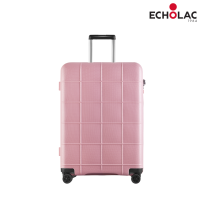
Echolac New Square PC185SA Trolley
₱10,000.00
Buy on Lazada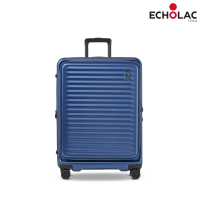
Echolac PC183 Celestra Medium Luggage
₱16,199.00
Buy on Lazada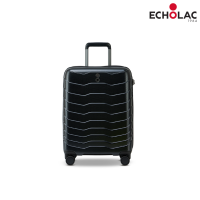
Echolac Exo PC295SA 8-Wheel Luggage
₱11,799.00
Buy on Lazada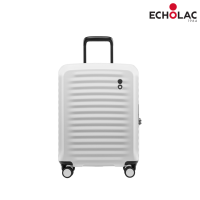
Echolac PC316 Oxygen 8-Wheel Luggage
₱13,799.00
Buy on Lazada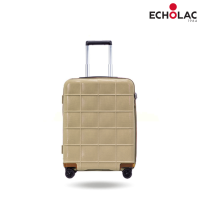
Echolac New Square PC185SA Small Trolley
₱8,500.00
Buy on Lazada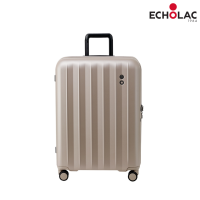
Echolac Amos Pro PC232SA 8-Wheel Luggage Medium
₱9,999.00
Buy on Lazada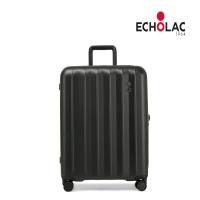
Echolac Amos Pro PC232SA 8-Wheel Luggage Large
₱9,999.00
Buy on Lazada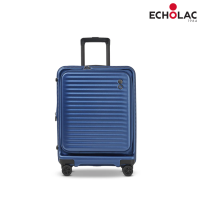
Echolac PC183 Celestra Luggage Small
₱14,699.00
Buy on LazadaAbout Echolac
Overview
ECHOLAC is a Japanese-origin luggage and travel goods brand best known for its long history in hard-shell luggage, attaché cases, suitcases, business cases, and travel bags. Founded in Tokyo in 1964, ECHOLAC built its early reputation around the use of advanced plastics and manufacturing technology, claiming a major milestone in 1965 with the development of the world’s first ABS attaché case 1.
Today, ECHOLAC positions itself as a premium travel brand combining Japanese manufacturing heritage, contemporary international design, material innovation, and functionality. Its products are marketed internationally, with designs created across Tokyo, Milan, and Shanghai and manufactured using the company’s own production capabilities 2.
Basic Information
| Attribute | Information |
|---|---|
| Brand | ECHOLAC |
| Founded | 1964 |
| Place of origin | Tokyo, Japan |
| Founder | Reizo Koseki |
| Original corporate connection | Kodama Chemical / Mitsubishi Corporation |
| Industry | Luggage, travel goods and bags |
| Best known for | Hard-shell suitcases, ABS luggage and attaché cases |
| Design heritage | Japanese |
| Current design locations | Tokyo, Milan and Shanghai |
| Core emphasis | Design, durability, craftsmanship, functionality and innovation |
| Notable recognition | Red Dot Award, Japanese Good Design Award, China Red Star Design Award and Stiftung Warentest recognition |
| Official positioning | Premium/quality-oriented travel luggage |
The historical information above is primarily based on ECHOLAC’s own brand-history materials 1.
History
1964 — Foundation in Tokyo
ECHOLAC traces its origins to Tokyo in 1964, when Reizo Koseki founded the brand in connection with Kodama Chemical, which was associated with Mitsubishi Corporation. The company’s chemical-material background was significant because plastics and synthetic materials were becoming increasingly important in luggage manufacturing during the postwar period 1. Rather than treating luggage simply as a traditional leather or wooden product, ECHOLAC’s early development was closely associated with materials science and moulded plastics.
1965 — ABS Attaché Case
One year after its founding, ECHOLAC states it developed the world’s first ABS attaché case. ABS (acrylonitrile butadiene styrene) is a tough thermoplastic that can be moulded into relatively lightweight, rigid shells. Its application to luggage helped demonstrate how synthetic materials could replace heavier traditional construction while retaining strength and durability 1. This innovation became an important part of ECHOLAC’s identity, and the company has subsequently described its early ABS case as a landmark in the evolution of modern hard luggage.
Independent historical evidence also supports ECHOLAC’s early use of ABS. A specialist history of vintage ECHOLAC luggage notes that the company registered the ECHOLAC trademark in 1965 and marketed moulded ABS cases internationally during the 1960s 3.
1960s–1970s — Growth of the Hard-Case Concept
ECHOLAC’s early products included attaché cases and business-oriented cases, reflecting the growing importance of international business travel. Historical advertisements and surviving vintage examples show ECHOLAC products being marketed in countries including Japan, Singapore, Taiwan, and the Philippines during this period. The brand developed multiple generations of cases with improvements to locks, interiors, and styling 3.
This period established an association that remains important to the brand today: hard-shell construction combined with lightweight materials, business/travel functionality, and Japanese design.
Philosophy and Meaning
ECHOLAC’s current brand philosophy is strongly influenced by the Japanese concept of Monozukuri, broadly referring to a philosophy of meticulous craftsmanship and manufacturing. The company describes its approach as combining precision manufacturing, attention to detail, material innovation, functional design, elegant aesthetics, durability, and continuous improvement. Rather than presenting luggage purely as a fashion accessory, ECHOLAC emphasises the idea that design and engineering should work together 1.
Its stated mission is to push the limits of available materials, machinery, craftsmanship, and creativity in order to make travel more comfortable, secure, and convenient 2.
Product Categories
ECHOLAC’s contemporary product portfolio extends well beyond the original attaché case.
Suitcases
Suitcases remain the centre of the brand’s business. Current collections include different hard-shell formats, colours, sizes, and constructions designed for modern travellers 2.
Trunk-Style Luggage
ECHOLAC also produces larger trunk-style cases, combining the visual character of traditional travel trunks with modern wheels, shell construction, and organisational features.
Aluminium Luggage
The brand has expanded into aluminium suitcases, placing it in competition with other premium luggage manufacturers that use metal shells as a design and durability feature 2.
Business Luggage
Business-oriented luggage and pilot/business trolleys connect directly with ECHOLAC’s historical roots in attaché cases and professional travel equipment.
Backpacks and Bags
The modern range also includes backpacks and other travel bags, allowing the brand to target travellers who do not necessarily require a traditional suitcase 2.
Design Philosophy
ECHOLAC is positioned at the intersection of Japanese industrial design and contemporary international luggage design. The company identifies Tokyo, Milan, and Shanghai as its primary design locations 2. Its design language generally emphasises clean forms with restrained silhouettes rather than excessive decoration. Functional details such as wheels, handles, interior organisation, locks, and expandable structures are treated as integral parts of the product.
Material expression is also central; ABS, polycarbonate, aluminium, and other modern materials are used not merely for strength but as part of the aesthetic. Contemporary ECHOLAC collections make extensive use of both traditional neutral colours and brighter fashion-oriented colours. This represents a shift from the brand’s early image as a producer of business attaché cases toward a broader lifestyle and travel brand.
Technology and Materials
Material innovation is arguably the most important part of ECHOLAC’s historical identity. Its 1965 ABS case was significant because ABS allowed luggage manufacturers to produce rigid shells without relying exclusively on traditional materials, providing a combination of impact resistance, rigidity, relatively low weight, and mouldability 1.
Modern ECHOLAC products use a broader range of materials and construction techniques, including:
- ABS
- Polycarbonate and other polymer-based shells
- Aluminium
- Textile materials
- Moulded structural components
- Modern wheel and handle systems
The company’s current positioning focuses on using appropriate materials and manufacturing techniques to improve travel performance rather than relying on a single material.
Awards and Recognition
ECHOLAC states its products have received recognition from several major design and testing organisations, including:
- Red Dot Design Award (Germany)
- Good Design Award / G-Mark (Japan)
- China Red Star Design Award
- Stiftung Warentest (Germany)
The company presents these awards as evidence of its emphasis on combining aesthetic design, engineering, and practical functionality 1. It is worth noting that this recognition applies to particular products or ranges rather than necessarily to the entire brand.
Global Development
Although Japanese in origin, ECHOLAC has developed into an international luggage brand. Its official materials describe a global presence and an international design organisation. Its current European site, for example, sells products directly in European markets and presents the brand as an international travel-goods company 2. The company’s heritage is therefore somewhat unusual, characterised by Japanese origins, international manufacturing and distribution, and contemporary design influenced by multiple global markets.
Brand Positioning
In the luggage market, ECHOLAC is broadly positioned between mass-market luggage brands and ultra-luxury luggage houses. Its strongest differentiators include:
- Long heritage: More than six decades of history.
- Early materials innovation: Particularly its 1965 ABS attaché case.
- Japanese manufacturing heritage: Precision and Monozukuri.
- Design emphasis: Considerable importance placed on aesthetics.
- International orientation: Contemporary products designed for global travellers.
- Broad product range: From backpacks and business cases to premium hard-shell luggage and aluminium cases.
This makes ECHOLAC distinctive as a brand whose heritage is based less on fashion or celebrity branding and more on industrial innovation and luggage engineering.
Comparison with Major Luggage Brands
| Brand | Historical Identity | Typical Positioning |
|---|---|---|
| ECHOLAC | Japanese materials innovation and design | Premium / design-oriented |
| Samsonite | American luggage engineering and mass international expansion | Premium mainstream |
| Rimowa | German aluminium and distinctive grooved cases | Luxury / premium |
| Tumi | Business travel and functional luxury | Premium / luxury |
| American Tourister | Colourful, accessible travel luggage | Mass-market / affordable |
| Briggs & Riley | Business and premium travel functionality | Premium |
| Delsey Paris | French luggage design and engineering | Premium mainstream |
This comparison is necessarily broad, as individual collections can overlap considerably in price, materials, and target customer. For context, Samsonite’s corporate history describes its development around strength, durability, and luggage innovation, while ECHOLAC’s history places particularly strong emphasis on its Japanese origins and early ABS-material innovation 1.
Distinctive Characteristics
A key aspect of ECHOLAC’s story is that its heritage predates the modern explosion of polycarbonate and ABS luggage. The brand was working with advanced synthetic materials in the 1960s, when much luggage still relied heavily on traditional construction. Its 1965 ABS attaché case gives the company a legitimate historical connection to the development of modern hard luggage 1. Material innovation was part of its identity from the beginning, rather than a later adoption of the “Japanese design” aesthetic.
Brand Evolution
- 1964: Founded in Tokyo
- 1965: ABS attaché case innovation
- 1960s–70s: Expansion of hard business/travel cases
- Later decades: Development of broader luggage and travel products
- Modern era: International design and distribution
- Today: Suitcases, trunks, aluminium luggage, business cases, backpacks, and travel accessories
ECHOLAC now describes itself as having more than 60 years of experience while maintaining the original emphasis on craftsmanship, innovation, and travel functionality.
Summary
ECHOLAC is a Japanese-origin luggage brand founded in Tokyo in 1964 by Reizo Koseki in association with Kodama Chemical and Mitsubishi Corporation. The company became notable for its early adoption of advanced synthetic materials and claims to have created the world’s first ABS attaché case in 1965. Over the following decades, ECHOLAC developed from a maker of hard business cases into an international travel-goods brand offering suitcases, trunks, aluminium luggage, business trolleys, backpacks, and other travel products. Its contemporary identity combines Japanese Monozukuri craftsmanship with international design, material innovation, and functional travel engineering, and its products have received recognition from organisations including Red Dot, Japan’s Good Design Award, China’s Red Star Design Award, and Germany’s Stiftung Warentest.
Official Resources
- ECHOLAC — Official Website: echolac.com
- ECHOLAC — Brand Story: echolac.eu
- ECHOLAC — Mission & Vision: echolac.eu
Note: Some of ECHOLAC’s historical claims—particularly the description of its 1965 product as the “world’s first ABS attaché case”—are presented by the company itself. Independent historical material supports the existence and early use of ECHOLAC ABS cases, but a definitive “world’s first” claim is harder to independently establish 1.