Shop on Lazada
Eneos products
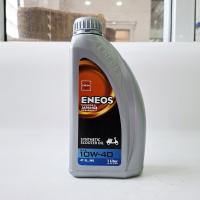
ENEOS SCOOTER OIL SL/MB 10W-40 (WY015AC-800ML / WY015AD-1LITER)
₱375.00
Buy on Lazada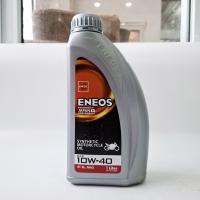
ENEOS SYNTHETIC OIL SL/MA2 10W-40 (WY015AA-800ML / WY015AB-1-LITER)
₱350.00
Buy on Lazada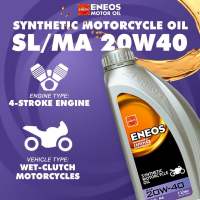
ENEOS SL/MA 20W40 MOTOR OIL 1L
₱290.00
Buy on Lazada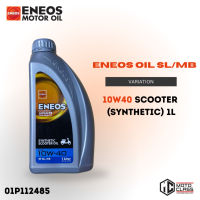
ENEOS OIL SL/MA SL/MB (10W40) (20W40) (SYNTHETIC) (SCOOTER) 800ML 1L
₱480.00
Buy on Lazada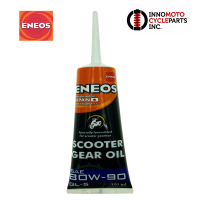
Eneos - Scooter Gear Oil 120ml / GL-5 / SAE 80W90 - Japan
₱96.00₱150.00
Eneos SN/CF Pro Racing 5W40 Fully-Synthetic Gasoline Engine Oil (4 Liters)
₱3,180.00₱3,275.00
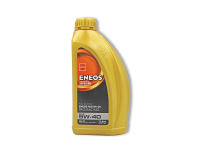
Eneos SN/CF Pro Racing 5W40 Fully-Synthetic Gasoline Engine Oil (1 Liter)
₱850.00₱875.00
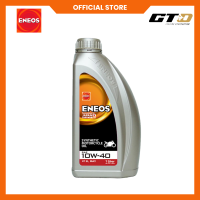
10W40 Synthetic Motorcycle Engine Oil - Eneos Synthetic Motorcycle Oil 10W-40 SL/MA2
₱340.00
Buy on LazadaAbout Eneos
Overview
Eneos Corporation, widely known as Eneos, is a leading Japanese energy company and the primary operating entity of the Eneos Group. While internationally recognised for its motor oils and lubricants, its domestic operations in Japan encompass a far broader spectrum, including gasoline, petroleum refining, petrochemicals, gas, electricity, hydrogen, and other energy-related sectors. The organisation’s origins trace back to 1888, establishing it as one of Japan’s oldest major petroleum enterprises.1
Corporate Profile
| Item | Information |
|---|---|
| Brand | Eneos |
| Company | Eneos Corporation |
| Parent Company | Eneos Holdings, Inc. |
| Country | Japan 🇯🇵 |
| Headquarters | Otemachi, Chiyoda-ku, Tokyo |
| Established | May 10, 1888 |
| President | Atsuji Yamaguchi |
| Capital | ¥30 billion |
| Employees | 7,539 (as of March 31, 2026) |
| Main Industries | Petroleum, lubricants, petrochemicals, gas, electricity, hydrogen |
| Parent Company Listing | Tokyo Stock Exchange / Nagoya Stock Exchange |
| Brand Introduced | 2001 |
Etymology and Brand Identity
The name Eneos is a portmanteau derived from two elements:
- ENERGY
- NEOS, the Greek word for “new”
Collectively, the name signifies the concept of “new energy.” The corporate logo also carries specific symbolism: the central sphere denotes reliability and persistence, whilst the outward-extending spiral represents creativity and innovation.1 The Eneos brand was officially launched in 2001.2
History
The history of Eneos predates the adoption of its current name by over a century.
1888: Origins
The group’s historical foundation was laid in 1888 with the establishment of Nippon Oil Corporation Limited during the Meiji era. This coincided with the development of oil production in Niigata Prefecture and the growing demand for petroleum within Japan’s nascent industrial economy.2
Over the subsequent century, the company and its predecessors expanded through advancements in petroleum refining, distribution, fuel retailing, and associated industries.
2001: Launch of the Eneos Brand
The Eneos brand was introduced in 2001, establishing a unified consumer-facing identity for the company’s energy operations.2
2010: Formation of Eneos Holdings
Eneos Holdings, Inc. was established on April 1, 2010, serving as the group’s holding company. It oversees subsidiaries engaged in petroleum, natural gas development, functional materials, electricity, renewable energy, and other ventures.2
Consequently, it is necessary to distinguish between:
- Eneos: The operating company and consumer brand.
- Eneos Holdings: The corporate holding company that controls the group.
Business Operations
Although international consumers often associate Eneos primarily with engine oil, the corporation operates as a comprehensive energy provider.
⛽ Petroleum
Eneos refines and markets a wide range of petroleum products, including:
- Gasoline
- Diesel
- Kerosene
- Fuel oil
- Lubricants
The company maintains an extensive petroleum refining and distribution network throughout Japan.1
🛢️ Lubricants
Lubricants represent one of Eneos’s most prominent international business segments. The company manufactures oils and fluids for:
- Passenger cars
- Motorcycles
- Racing and performance vehicles
- Trucks
- Industrial machinery
- Construction equipment
- Specialised applications
Eneos emphasises the utilisation of advanced base oils and additive technologies, developed through research and engineering collaboration with Japanese automobile manufacturers.1
🧪 Petrochemicals and Materials
Eneos also produces and sells petrochemical products and functional materials, positioning the company within Japan’s broader chemical and industrial materials sector.1
⚡ Electricity and Energy
Reflecting a strategy to diversify beyond traditional petroleum, the group’s activities have expanded into electricity generation and renewable energy.
💧 Hydrogen
Hydrogen supply is listed among Eneos’s core business activities as part of its future energy portfolio.1
🔥 Gas
The company imports and sells gas as a component of its diversified energy offerings.1
Domestic Market Position in Japan
Eneos holds a dominant position within the Japanese market. According to corporate data based on FY2025 results and information as of March 31, 2026, Eneos reports:1
- More than 11,000 service stations across Japan
- Approximately 50% domestic market share for petroleum products
- Crude oil processing capacity of approximately 1.64 million barrels per day
- The No. 1 domestic service station share in Japan
These figures underscore that Eneos is not merely a lubricant brand competing with entities such as Mobil, Shell, or Castrol; in Japan, it functions as a major integrated energy company with a vast physical fuel distribution network.
Lubricant Product Lines
International automotive enthusiasts are typically most familiar with the Eneos lubricant portfolio. The company states that its lubricants are developed using advanced Japanese additive and base oil technology, covering both standard consumer vehicles and high-performance applications.
Key lubricant families include:
Eneos X PRIME
A premium engine oil line for passenger cars. Examples available in markets such as Indonesia include:
- Eneos X PRIME 0W-16
- Eneos X PRIME 5W-30
Eneos X
A major automotive lubricant range featuring fully synthetic products such as:
- 0W-20
- 5W-30
Product lineups vary by country, as Eneos formulates and markets products tailored to specific vehicle fleets, climatic conditions, and regulatory requirements.3
Alignment with Japanese Automotive Technology
A key differentiator for Eneos is its relationship with the Japanese automotive industry. The company states that its lubricant technologies are developed through research and engineering partnerships with Japanese automobile manufacturers, which explains the brand’s prominence in Japanese car applications.
The lubricant portfolio is engineered to meet requirements such as:
- Fuel efficiency
- Engine protection
- High-temperature stability
- Low-temperature performance
- Emissions compliance
- Hybrid vehicle operation
- High-performance engine demands
This focus has established Eneos as a technology-oriented Japanese lubricant brand rather than a generic oil producer.
Motorsports Involvement
Eneos maintains a strong association with motorsports and performance vehicles. Racing serves as a platform for lubricant manufacturers to demonstrate technology under extreme operating conditions, and Eneos utilises this connection as part of its brand positioning.
For international marketing, the combination of Japanese engineering, racing heritage, and high-performance lubricants provides Eneos with a distinctive identity compared to standard fuel station brands.
Presence in Indonesia 🇮🇩
Eneos has a significant footprint in Indonesia, particularly within the lubricant market. Operations there are conducted through PT Nippon Oil Indonesia (NOID), which handles the marketing and sale of automotive and industrial lubricants for sectors including automotive, industrial, mining, plantation, and agriculture.3
The Indonesian headquarters are located at:
MM2100 Industrial Estate, Cikarang, West Java.3
Eneos Indonesia states that products sold in the region are adapted to local weather and road conditions to ensure appropriate engine protection and fuel economy performance. The company also reports a network of more than 1,000 partner outlets across Indonesia.3
Corporate Philosophy
The corporate philosophy of Eneos extends beyond petroleum sales. Its stated mission is to harness the Earth’s power for the common good and everyday life, contributing to society through innovation in energy, resources, and materials.2
The group identifies five core values:
- High ethical standards
- Health, safety, and environment
- Focus on customers
- Taking on challenges
- Moving forward
This framework reflects Eneos’s transition from a petroleum-centric identity toward a broader energy and technology company.
Mascot
A distinctive element of the Japanese Eneos brand is Enegorikun (エネゴリくん), a gorilla character introduced in 2007. Eneos features this character in commercials and advertising, including communications regarding environmental activities.1 The mascot is highly recognisable in Japan and forms part of the company’s consumer-facing identity.
Corporate Structure
The simplified corporate structure is as follows:
Eneos Holdings, Inc.
↓
Eneos Corporation
↓
Major businesses including:
- Petroleum refining
- Fuel distribution
- Service stations
- Lubricants
- Petrochemicals
- Gas
- Electricity
- Hydrogen
- Other energy and material businesses
Eneos Holdings was established in 2010 and is publicly listed with the stock code 5020 on the Japanese market.2
Distinction Between Brand and Corporate Entities
The terminology surrounding Eneos can refer to different entities depending on context:
Eneos (Brand)
The consumer-facing brand appearing on service stations, motor oils, and other products.
Eneos Corporation (Operating Company)
The principal operating company behind the Eneos brand and many of the group’s energy businesses.
Eneos Holdings, Inc. (Parent Company)
The holding company overseeing the broader Eneos Group.
References to “Eneos oil” typically denote an Eneos-branded lubricant, while “Eneos Corporation” refers to the Japanese operating company, and “Eneos Holdings” indicates the listed parent company.
Key Differentiators
The identity of Eneos is defined by four primary characteristics:
🇯🇵 Japanese Heritage
With a history extending to 1888, the company is deeply integrated into Japan’s petroleum industry.2
🛢️ Integrated Energy Business
Beyond lubricant manufacturing, Eneos operates across petroleum, refining, petrochemicals, gas, electricity, and emerging energy technologies.1
🔬 Lubricant Technology
The international brand identity emphasises advanced base oils, additives, and collaboration with automobile manufacturers.
🚗 Automotive Connection
Eneos has cultivated a strong identity centred on passenger cars, motorcycles, high-performance vehicles, and motorsports.
Reputation and Market Positioning
From a branding perspective, Eneos occupies a dual position. In Japan, it functions as a mainstream national energy giant, comparable in significance to Shell or ExxonMobil in other markets. Conversely, outside Japan, consumers predominantly encounter Eneos as a premium Japanese lubricant brand.
This results in two distinct perceptions:
Japan: Major integrated energy company with an extensive fuel network.
International: Japanese automotive lubricant and technology brand.
Both descriptions are accurate but neither is exhaustive in isolation.
Current Status
As of 2026, Eneos remains one of Japan’s largest petroleum and energy businesses while increasingly adapting to a changing energy landscape. Its traditional petroleum business remains substantial, with the company reporting roughly 50% domestic petroleum product market share, more than 11,000 service stations in Japan, and approximately 1.64 million barrels per day of crude processing capacity.1
Simultaneously, Eneos is expanding its focus beyond conventional petroleum into areas such as electricity, renewable energy, hydrogen, advanced materials, and other technologies.2