Shop on Lazada
ENI products
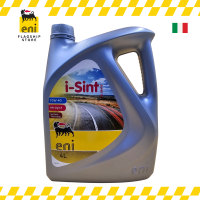
Eni i-Sint Super Tec 10W40 Synthetic 1L 4L
₱1,700.00
Buy on Lazada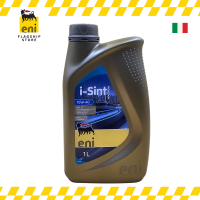
Eni i-Sint Protection 10W40 Fully Synthetic 1L
₱550.00
Buy on Lazada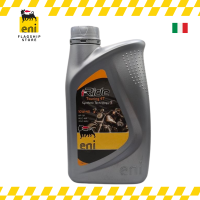
Eni i-Ride Touring 4T Synthetic Technology 10W40
₱350.00
Buy on Lazada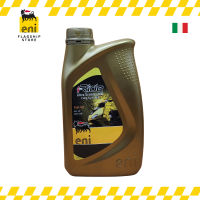
Eni i-Ride Ultra Scooter MB 5W40 800ML 1L
₱465.00
Buy on Lazada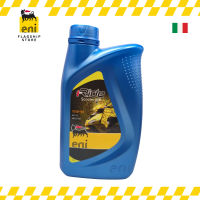
Eni i-Ride Scooter MB 10W40 800ML 1L
₱360.00
Buy on Lazada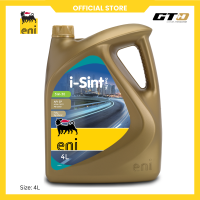
5W30 FULLY SYNTHETIC AUTOMOTIVE ENGINE OIL - Eni i-Sint Dual Tec 5W-30 Fully Synthetic
₱2,690.00
Buy on Lazada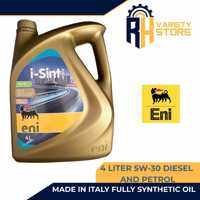
ENI I-SINT DUAL TEC 5W-30 FULLY SYNTHETIC 4 LITERS MADE IN ITALY
₱2,420.00
Buy on Lazada
Eni i-Sint Dual Tec 5W-30
₱680.00
Buy on LazadaAbout ENI
Eni S.p.A. (formerly Ente Nazionale Idrocarburi) is an Italian multinational energy company headquartered in Rome and San Donato Milanese, Italy. Founded in 1953, Eni has evolved from a state-owned oil and gas organization into a globally integrated energy company involved in oil and natural gas, LNG, refining, chemicals, biofuels, renewable energy, electricity, carbon capture, and emerging energy technologies.1
As of 2026, Eni describes itself as an integrated energy company pursuing a transition toward lower-carbon energy while maintaining a significant oil and gas business. It operates internationally and is controlled in practice by the Italian state through the Ministry of Economy and Finance and Cassa Depositi e Prestiti (CDP).2
Corporate profile
| Field | Information |
|---|---|
| Official name | Eni S.p.A. |
| Former name | Ente Nazionale Idrocarburi |
| Type | Public company / Italian multinational |
| Industry | Energy |
| Founded | 10 February 1953 |
| Founder / key architect | Enrico Mattei |
| Headquarters | Rome and San Donato Milanese, Italy |
| Chairman | Giuseppina Di Foggia |
| CEO & General Manager | Claudio Descalzi |
| Employees | 32,349 at year-end 2025 |
| Operations | More than 60 countries |
| Stock exchange | Euronext Milan; also has ADRs in the United States |
| Ticker | ENI |
| Major controlling shareholders | Italian Ministry of Economy and Finance + CDP |
| Main businesses | Oil & gas, LNG, power, refining, chemicals, biofuels, renewables, EV charging, carbon capture and new technologies |
| Website | Eni.com |
The 2025 annual report records 32,349 Group employees at year-end, while Eni’s broader description of its worldwide activities covers more than 60 countries.3
Overview
Eni is one of Italy’s most important energy companies and one of Europe’s major integrated energy groups. The name Eni comes from its original Italian name, Ente Nazionale Idrocarburi, meaning approximately National Hydrocarbons Agency. It was established by the Italian government in the post-war period when Italy was rebuilding its industrial and energy infrastructure.
Although Eni historically became famous primarily as an oil and gas company, its modern business is considerably broader. It operates across much of the energy value chain, spanning exploration, production, natural gas, LNG, refining, chemicals, fuels, electricity, renewables, biofuels, energy services, and decarbonization technologies. Eni describes its business model as being integrated across this value chain, from exploration and production through to the marketing of energy, products, and services to customers.4
History
Foundation and the Mattei era
Eni was founded on 10 February 1953 as Ente Nazionale Idrocarburi. Its creation was closely associated with Enrico Mattei, an Italian industrialist and politician who became one of the most influential figures in Italy’s post-war energy sector. Mattei envisioned Eni not merely as another oil company, but as an instrument for developing Italy’s energy independence and industrialization. During the post-war economic expansion, Eni became an important contributor to Italy’s industrial growth.5
Under Mattei, Eni developed a distinctive approach to relationships with oil-producing countries. Rather than following the traditional arrangements used by many Western oil majors, Eni sought partnerships that gave producing nations a larger share of the economic benefits. This approach helped Eni establish international relationships and contributed to its reputation as a company willing to challenge the established structure of the international petroleum industry.
Privatization
For much of its early history, Eni was an Italian state-owned entity. A major transformation occurred in the 1990s when Eni became a publicly traded company in 1995, beginning its transformation into a global publicly listed energy corporation.6 However, privatization did not mean that the Italian state completely abandoned its influence. The Italian government has continued to maintain significant ownership through direct holdings and CDP. As of the latest company shareholding information, the Ministry of Economy and Finance and CDP together hold approximately 33.09% of Eni’s share capital, giving the Italian state de facto control.7
Current strategy and operations
Eni is no longer simply an oil company. Its modern strategy combines traditional energy operations with a comprehensive energy transition framework. The company calls this approach a pragmatic and technologically neutral energy transition, meaning that it intends to reduce emissions while continuing to use technologies such as natural gas where it considers them useful for energy security and the transition.8
Traditional energy
Eni maintains significant operations in oil exploration and production, natural gas, LNG, electricity generation, refining, and petrochemicals. Exploration and production remain strategically important, with the company increasingly emphasizing high-value discoveries, efficient development, and partnerships with other companies and governments.9
Natural gas is another major component of Eni’s portfolio. The company participates in natural gas production, trading, LNG procurement and sales, transportation, supply, and electricity generation. In 2025, Eni reported 43.72 billion cubic metres of natural gas sales and 12.1 billion cubic metres of LNG sales.10 Eni has also been expanding and diversifying its LNG portfolio through long-term supply agreements.
Energy transition
Eni’s transition activities encompass solar and wind power, renewable electricity, biofuels, biorefineries, electric vehicle charging, carbon capture and storage, biochemistry, plastic recycling, advanced energy research, and fusion research.
Major business divisions
Enilive
Enilive is Eni’s business focused on mobility and products associated with the transition away from conventional petroleum fuels. Its activities include service stations, fuel retailing, sustainable mobility, biorefineries, biofuels, and mobility services. A major part of the strategy involves converting existing refining infrastructure into facilities capable of producing lower-carbon fuels. At the end of 2025, Enilive had 5,294 service stations in Europe and 1.65 million tonnes per year of biorefining capacity.11
Plenitude
Plenitude is Eni’s energy-transition business combining renewable electricity generation, solar and wind power, electricity and gas retail, EV charging, and energy services. At the end of 2025, Plenitude had approximately 5.8 GW of installed renewable capacity and about 22,800 EV charging points. It also served nearly 10 million retail and business customer points of delivery. This makes Plenitude an important part of Eni’s attempt to move beyond the traditional oil-and-gas business.
Refining and chemicals
Eni has a substantial downstream industrial business including oil refining, fuel production, petrochemicals, chemical products, and industrial processing. The company has been transforming this segment by converting some facilities toward biofuels, circular-economy products, lower-carbon fuels, chemical recycling, and other transition technologies. Eni describes this as a transformation and reconversion of its downstream industrial assets.12
Carbon capture and storage
Carbon Capture and Storage (CCS/CCUS) has become a component of Eni’s energy-transition strategy. The technology targets industries where eliminating emissions completely is difficult, involving CO₂ capture, transportation, and underground geological storage. Eni is developing carbon-storage hubs and related infrastructure as part of its strategy for reducing emissions from difficult-to-abate sectors.13
Research and technology
Technology has historically been an important part of Eni’s identity. The company describes itself as a Global Energy Tech Company and invests in research covering both conventional energy and emerging technologies.14 Its research interests include renewable energy, new materials, biofuels, biochemistry, carbon capture, plastic recycling, digital technologies, energy efficiency, advanced nuclear technologies, and magnetic fusion. In 2025, Eni reported approximately €207 million in R&D expenditure and 42 first patent-filing applications.15
Sustainability and environmental position
One of the defining features of modern Eni is its attempt to transform while remaining a major hydrocarbons producer. Its stated long-term objective is carbon neutrality by 2050.16 Eni’s strategy does not involve immediately abandoning oil and gas; instead, it combines traditional energy with lower-carbon technologies and new energy businesses. The company argues that natural gas can play a role as a transition fuel because it generally has lower carbon intensity than coal and can provide flexibility to electricity systems.17
According to its 2025 sustainability reporting, Eni’s net Scope 1 and 2 emissions had declined 40% compared with 2018.18 In 2025, Eni reported 18.6 million tonnes of direct Scope 1 greenhouse-gas emissions and 0.5 million tonnes of Scope 2 emissions, measured under the company’s reported methodology.26 The company’s transition strategy involves restructuring its entire energy and industrial portfolio rather than simply replacing oil and gas with renewables.
Corporate structure and leadership
Satellite model
A distinctive element of Eni’s modern corporate strategy is its satellite model. Rather than keeping every business completely inside the parent company, Eni creates specialized companies around particular businesses, such as Enilive for mobility and biofuels, and Plenitude for renewable energy and customer energy services. These businesses can attract outside capital and strategic partners while continuing to benefit from Eni’s industrial expertise and assets.19 The strategy is designed to unlock the value of businesses that might otherwise remain buried inside a large integrated oil-and-gas company.
Leadership
Following Eni’s 2026 corporate renewal, Giuseppina Di Foggia serves as Chairman and Claudio Descalzi as CEO and General Manager. Eni’s Board confirmed Claudio Descalzi as CEO and General Manager on 7 May 2026. The current board was appointed for a three-year term extending through approval of the 2028 financial statements.20 Descalzi has been Eni’s CEO since 2014 and has overseen much of the company’s modern transformation toward its current integrated energy and transition-business model.12
Ownership
Eni is publicly traded, but the Italian state remains its controlling shareholder. As of the latest ownership information:
| Shareholder | Approx. shareholding |
|---|---|
| CDP S.p.A. | 30.92% |
| Italian Ministry of Economy and Finance | 2.17% |
| Combined public control | 33.09% |
| BlackRock | 4.64% |
| Romano Minozzi | 3.27% |
The exact percentages can change because of share buybacks and other transactions; Eni’s May 2026 ownership disclosure notes that the displayed shareholder data did not yet reflect the subsequent 2026 buyback program.21
Stock market presence
Eni is listed on the Italian stock market and is one of the major publicly traded companies associated with Italy. Its ordinary shares trade under the ticker ENI. The company also has American Depositary Receipts (ADRs) available to U.S. investors.22
Financial performance
Eni remains a very large international energy group. For 2025, Eni reported €12.5 billion in adjusted cash flow, €12.2 billion in pro forma adjusted EBIT, and €5 billion in shareholder remuneration.23 Its 2025 annual report also records a €1.05 per-share dividend pertaining to the year.24 These figures demonstrate that, despite its increasing emphasis on transition businesses, hydrocarbons and conventional energy remain financially important to the Group.
Global presence and subsidiaries
Eni has a significant international footprint spanning Europe, Africa, the Middle East, Asia, the Americas, Australia, and other regions.25 The company’s international presence is particularly significant in upstream oil and gas, where it works with national governments, national oil companies, and other international energy companies. Eni’s business model emphasizes long-term partnerships with countries and communities in which it operates.27
Key subsidiaries and businesses include:
- Enilive: Mobility, service stations, biofuels, and biorefineries
- Plenitude: Renewables, energy retail, and EV charging
- Versalis: Eni’s chemical business
- Eni Natural Resources: Oil and gas exploration and production activities
The corporate structure continues to evolve as Eni separates, develops, and attracts partners for individual businesses.
Role in the energy industry
Eni occupies a position between traditional oil majors and emerging energy companies. It resembles traditional integrated oil companies due to its oil and gas production, refining, petrochemicals, LNG, and global operations. Simultaneously, it increasingly resembles a diversified energy-transition company through its renewable power, biofuels, EV charging, energy retail, carbon capture, circular chemistry, and advanced energy research capabilities. This hybrid model is central to Eni’s identity in the 2020s.
While Eni operates in the same broad global industry as Shell, BP, TotalEnergies, ExxonMobil, Chevron, and Equinor, it possesses a distinctive combination of Italian state influence, upstream expertise, natural gas focus, downstream assets, and separately structured transition businesses.
Relationship with Italy
Eni has an unusually close relationship with modern Italian economic history. Created by the Italian state during post-war reconstruction, it subsequently became one of the country’s largest multinational corporations. Its importance to Italy stems from energy security, oil and gas production, natural gas imports, refining and fuels, industrial employment, technological research, international investment, and government revenues. Even after privatization, the Italian government retained significant control, making Eni both a commercial corporation and an important strategic asset for Italy.
Controversies and criticism
Like many large oil and gas companies, Eni has faced criticism and controversy over environmental, political, and social issues. Areas of criticism have included fossil-fuel production, greenhouse-gas emissions, environmental impacts of operations, activities in developing countries, relations with governments and communities, historical corruption-related investigations, and the pace and credibility of its energy transition. A balanced assessment characterizes Eni as a large integrated energy company attempting to transform its portfolio while maintaining profitable conventional energy operations, rather than simply an “oil company” or a “green-energy company.”
References
- Our history, an always cutting-edge path | Eni
- Eni Annual Report 2025 – Home
- Key Figures – Eni Annual Report 2025
- Eni for 2025 – Sustainability Report
- MissionWe are an energy company. We concretely s
- Eni’s Board of Directors confirms Claudio Descalzi as Chief Executive Officer and appoints the Board Committees
- The members of Eni’s Board of Directors
- Financial Statements | Eni
- Eni: results for the second quarter and half year 2026 – Excellent 2Q performance and enhanced guidance; increased shareholder returns
- Downloads – Eni Annual Report 2025
- Eni Relazione Finanziaria Annuale 2025 – Home
- Claudio Descalzi biography, CEO since 2014 | Eni
- Eni publishes its voluntary sustainability report “Eni for 2025 – A Just Transition”
- 2026 Shareholders’ Meeting | Eni
- Eni: l’Assemblea degli Azionisti approva il Bilancio 2025 e rinnova gli organi sociali
- Eni: Shareholders approve 2025 Financial Statements and appoint the Company bodies at Annual Meeting
- Assemblea degli Azionisti Eni 2026 | Eni
- Assemblea Saipem. Nomina Collegio Sindacale. Lista congiunta Eni-CDP Equity
- Eni: depositate le liste per il rinnovo degli organi sociali
- Eni: filed slates for the renewal of the corporate bodies
- ENI CAPITAL MARKETS UPDATE 2026-2030
- Eni: 2025 Consolidated Financial Statements and Draft Financial Statements of the Parent Company
- Eni: bilancio consolidato e progetto di bilancio di esercizio 2025
- The President of Nigeria Bola Tinubu meets Eni CEO Claudio Descalzi
- Eni Group: Global energy tech company for a decarbonised future | Eni
- Eni celebrates thirty years of listing on the New York Stock Exchange
- Our relationships with people and partnerships | Eni