Shop on Lazada
LS2 products
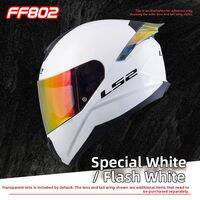
LS2 | All-Season Fog-Resistant Full Face Motorcycle Helmet with Large Wing
₱8,303.54
Buy on Lazada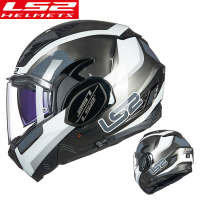
Original LS2 FF900 motorcycle helmet 180 degrees back somersault helmets ls2 Valiant 2 casco moto casque
₱17,999.00₱24,389.00
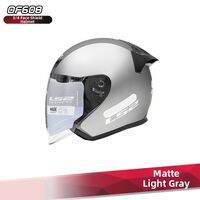
LS2 | Summer Universal Motorcycle Helmet Large Size
₱4,857.67
Buy on Lazada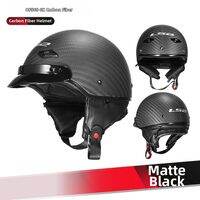
LS2 | Vintage Unisex Summer Motorcycle Helmet Fiberglass/Carbon Fiber
₱16,322.83
Buy on Lazada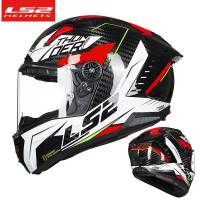
LS2 FF805 carbon fiber motorcycle helmet full face helmets Racing car cascos para moto ls2 THUNDER double D ring
₱22,999.00₱29,999.00
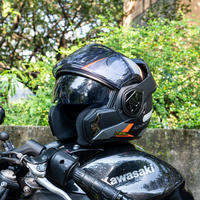
LS2 | Flip Front Helmet with Dual Lens Fog-Proof
₱23,077.91
Buy on Lazada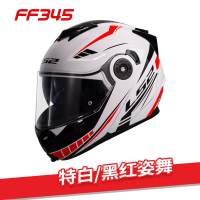
LS2 FF345 MotorcycleFull Face Flip Up All Season Helmet Dual Lens Anti Fog For Men and Women Casco Moto ECE
₱8,099.00₱11,999.00
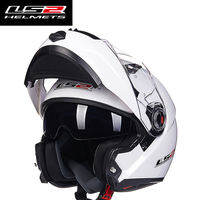
LS2 | Flip-up Dual Lens Full-face Helmet
₱6,724.62
Buy on LazadaAbout LS2
Overview
LS2 is a global motorcycle-helmet and riding-gear brand best known for producing motorcycle helmets across a wide range of categories, from everyday commuter helmets to premium racing and touring models. Although the LS2 brand itself was established in 2007, its roots go back to 1990, when founder Arthur Liao began manufacturing motorcycle helmets in China. The company subsequently developed into an international helmet manufacturer before launching LS2 as its own consumer brand. 1
| Field | Information |
|---|---|
| Brand | LS2 |
| Industry | Motorcycle equipment / Personal protective equipment |
| Main products | Motorcycle helmets, jackets, pants, gloves, boots, goggles |
| Brand founded | 2007 |
| Manufacturing roots | 1990 |
| Founder | Arthur Liao |
| European headquarters / design presence | Barcelona, Spain |
| Parent-company heritage | MHR |
| Global distribution | 125+ countries |
| Main identity | Safety, value, innovation, design and racing |
| Core market | Motorcyclists and powersports riders |
LS2 itself says the brand was created in 2007 with the ambition of becoming a global leader in the motorcycle-helmet industry, building on more than 30 years of helmet-manufacturing experience. 2
Origins
The story of LS2 actually begins 17 years before the LS2 name appeared.
In 1990, Arthur Liao started a small motorcycle-helmet manufacturing operation in China. According to LS2’s historical account, he initially invested approximately €350 and worked with only one employee, Peng Zheng, in a very small workshop. 3
The business initially concentrated on manufacturing helmets for other companies rather than selling helmets under its own international consumer brand. This is important to understanding LS2: the company developed manufacturing expertise first and created the LS2 brand later.
Early growth
- 1990: Arthur Liao begins helmet manufacturing.
- 1992: Rapid demand leads to expansion into a larger factory and the workforce grows to roughly 100 people.
- 1994: The company establishes its own larger factory and sells helmets domestically under the FENGXING trademark.
- 1997: The company moves toward international markets and adopts MHR as its international-facing helmet trademark.
- 1999: Arthur’s brother Paul Liao joins the business, strengthening the family-owned structure.
- 2000: MHR obtains ISO 9000 accreditation and develops greater in-house control over helmet production and testing.
- 2005: The Liao family invests heavily in Jiangmen Pengcheng Helmets (JPH), expanding industrial production.
- 2007: LS2 is officially born as a global consumer brand. 4
Why the name “LS2”?
The name LS2 is associated with the Liao family and the company’s own explanation describes it as an abbreviation of “Liao’s System.”
There is also a commonly reported interpretation connecting the “2” with the two Liao brothers involved in creating and developing the brand. Contemporary industry reporting describes LS2 as being connected to Liao Shi 2, referring to the two brothers.
The safest way to summarize it is that the name represents the Liao family/company system behind the brand, rather than being an acronym for a particular helmet technology.
The birth of LS2 in 2007
2007 was the major turning point.
Before LS2, the company’s business was heavily based on OEM/ODM manufacturing—essentially producing helmets for other brands.
The Liao family recognized that relying exclusively on manufacturing products for other companies limited the company’s long-term potential. The decision was therefore made to create a proprietary international motorcycle brand.
That brand became LS2. 5
An important part of the strategy was establishing the brand’s European presence in Barcelona, Spain. LS2’s headquarters/design operation there helped the company develop products specifically for the European and international motorcycle markets. The brand made its first major public appearance at EICMA in Milan in 2007, one of the world’s most important motorcycle exhibitions. 6
This gives LS2 a somewhat unusual identity:
Chinese manufacturing heritage + European design/market orientation + global distribution.
LS2’s business philosophy
LS2 identifies five major pillars behind its brand:
1. Safety
Safety is positioned as the company’s number-one priority. LS2 designs its helmets around impact protection, energy management, retention systems, materials and applicable safety standards.
2. Quality
LS2 emphasizes materials, manufacturing control and compliance with international testing requirements.
Depending on the product and market, LS2 helmets can be developed to meet standards such as ECE, DOT and other national/international requirements. Individual models should always be checked for the exact certification applicable to the country where they are sold. 7
3. Innovation
Research and development is a major part of LS2’s identity. The company develops its own shell materials, manufacturing processes and helmet technologies rather than simply treating helmets as generic products. 8
4. Design
LS2 puts considerable emphasis on styling and graphics. This is particularly visible in its large range of road, sport, adventure, touring and urban helmets.
5. Racing
Motorsport is another important part of LS2’s marketing and development strategy. The company has been involved with riders and teams in disciplines including MotoGP, Moto2, Moto3, Superbike and Dakar. 9
What does LS2 actually make?
LS2 began primarily as a helmet brand, but it has expanded into a broader motorcycle-equipment company.
Its current product categories include:
- Full-face helmets
- Modular / flip-up helmets
- Open-face / jet helmets
- Adventure / dual-sport helmets
- Off-road helmets
- Racing helmets
- Motorcycle jackets
- Motorcycle pants
- Motorcycle gloves
- Motorcycle boots
- Motorcycle goggles
LS2 describes this as covering the needs of two-wheel riders from “head to toe.” Its products are distributed in more than 125 countries, according to the company’s current corporate information. 10
Helmet technology
One of the more interesting aspects of LS2 is its range of shell materials.
HPTT
HPTT — High Pressure Thermoplastic Technology is one of LS2’s proprietary approaches to thermoplastic helmet construction.
It uses ABS and other thermoplastic polymers with the goal of balancing:
- impact-energy management
- weight
- strength
- durability
- manufacturing cost
It is generally found in LS2’s more accessible helmet ranges. 11
KPA
KPA — Kinetic Polymer Alloy is another material developed by LS2.
LS2 describes it as a proprietary material combining thermoplastics with microscopic aramid fibers. The objective is to provide a combination of low weight, strength and energy management. 12
HPFC
HPFC — High Performance Fiberglass Composite is LS2’s fiberglass-based composite shell technology.
Compared with conventional thermoplastic construction, fiberglass composite allows LS2 to target lighter and more performance-oriented helmet designs. 13
Carbon fiber
At the premium end, LS2 produces carbon-fiber helmets.
Carbon fiber provides an excellent strength-to-weight ratio, making it particularly attractive for racing and premium sport helmets. LS2 says it uses multiple layers of its own wide-weave carbon construction in certain helmets. 14
LS2 and safety certification
A crucial point about LS2 is that the brand name itself does not determine whether a particular helmet is safe or legal.
Safety certification is model- and market-specific.
Depending on where a helmet is sold, LS2 products may be certified against standards including:
- ECE
- DOT
- FIM for certain racing helmets
- Other regional standards
LS2 says its helmets undergo testing involving components such as the outer shell and EPS energy-absorbing liner, while also checking compliance with the standards required for their destination markets. 15
For European-market helmets, the transition from ECE 22.05 to ECE 22.06 is particularly significant because 22.06 introduces more demanding testing requirements.
So when buying an LS2 helmet, it’s much better to ask:
“Which LS2 model and which certification?”
rather than simply:
“Is LS2 certified?”
LS2’s position in the motorcycle market
LS2’s major competitive advantage has historically been its ability to combine large-scale manufacturing with relatively accessible pricing.
It occupies a broad portion of the market rather than concentrating exclusively on luxury helmets.
You can find LS2 products aimed at:
Entry-level → mid-range → premium → racing
This broad positioning is one reason LS2 became a major global helmet manufacturer.
The company’s history also explains why it can offer such a large range: it didn’t start as a small designer brand that outsourced everything. Its roots are in large-scale helmet manufacturing, accumulated over decades.
LS2 and racing
Racing is a major component of LS2’s brand identity.
The company has participated in multiple levels of motorcycle racing, including:
- MotoGP
- Moto2
- Moto3
- World Superbike
- Dakar
- Enduro
- Other international and junior racing championships
LS2 says racing is not simply promotional activity; information from professional riders and competition is also intended to feed into product development.
This has allowed LS2 to build a reputation beyond the commuter-helmet market.
Global expansion
After launching in 2007, LS2 expanded aggressively.
One major step came in 2010, when the company established a warehouse and operation in Chicago, Illinois, to support the U.S. and Canadian markets.
The brand subsequently expanded its distribution network across Europe, North America, Asia, Australia and other markets.
Today, LS2 says it is distributed in more than 125 countries and is a market leader in several of them.
Is LS2 a Chinese or Spanish brand?
This is probably one of the most common questions about LS2.
The short answer: both locations are important, but in different ways.
Chinese heritage:
LS2’s manufacturing roots originate in China. Arthur Liao started the original helmet business there in 1990, and the company’s manufacturing history is fundamentally Chinese. 16
Spanish/global identity:
When LS2 was launched as an international brand in 2007, its headquarters and design operation were established in Barcelona, Spain. 17
So calling LS2 simply a “Spanish helmet brand” isn’t quite accurate, nor is calling it merely a “Chinese helmet brand” enough to describe the company.
A better description is:
LS2 is a globally marketed motorcycle-equipment brand with Chinese manufacturing roots and a major European design/business presence in Spain.
Manufacturing vs. design
LS2’s history illustrates the difference between where a product is manufactured and where a brand is designed and managed.
Its manufacturing heritage comes from the Liao family’s Chinese helmet-production business, while Barcelona became an important center for the international brand and design operation.
This international structure is relatively common in modern motorcycle equipment: engineering, design, testing, manufacturing and distribution can take place across different countries.
China has a huge and sophisticated motorcycle-helmet manufacturing industry, and LS2’s own corporate history is deeply connected to that manufacturing base.
LS2 timeline
1990 — Arthur Liao begins helmet manufacturing in China.
1992 — Rapid expansion; workforce grows to around 100.
1994 — FENGXING becomes an important domestic trademark and the company moves into a larger factory.
1997 — MHR becomes the company’s international trademark as it targets overseas markets.
1999 — Paul Liao joins the family business.
2000 — ISO 9000 accreditation is obtained.
2005 — Major investment creates Jiangmen Pengcheng Helmets (JPH).
2007 — LS2 is officially established as a global motorcycle-helmet brand; Barcelona becomes its European headquarters/design center; LS2 appears at EICMA.
2010 — LS2 expands its North American infrastructure with a Chicago warehouse.
2017 — LS2 expands/relaunches its Australian market presence.
Today — LS2 has expanded from helmets into a broader motorcycle-equipment brand and says it distributes products in 125+ countries.
LS2’s brand identity
LS2’s slogan and philosophy are strongly connected with the idea of “Always Ahead.”
The company positions itself around several concepts:
Safety → protecting the rider
Technology → continuous R&D
Accessibility → performance at different price levels
Design → modern styling and graphics
Racing → learning from professional competition
Globalization → designing for riders worldwide
This makes LS2 quite different from brands that focus exclusively on ultra-premium racing equipment.
LS2 compared with traditional premium helmet brands
In the motorcycle helmet world, LS2 is often compared with brands such as Shoei, Arai, AGV, HJC, Bell, Shark and others.
The important distinction is that LS2 has historically emphasized value and broad product coverage.
A simplified positioning might look like this:
| Brand characteristic | LS2 |
|---|---|
| Price range | Entry → premium |
| Product range | Very broad |
| Manufacturing scale | Very large |
| Racing involvement | Strong |
| Carbon helmets | Yes |
| Modular helmets | Yes |
| Adventure helmets | Yes |
| Commuter helmets | Yes |
| European presence | Strong |
| Chinese manufacturing heritage | Strong |
| Main selling point | Feature/value balance |
That doesn’t mean an LS2 helmet is automatically equivalent to every premium helmet from Arai or Shoei. Helmet fit, model design, certification, weight, noise, ventilation and intended use vary enormously between individual models.
Why LS2 became successful
There are several reasons behind LS2’s rapid rise.
Manufacturing experience
The company had already spent roughly 17 years manufacturing helmets before LS2 was launched as a consumer brand. That gave it considerable manufacturing knowledge from the beginning.
Economies of scale
Large-scale production allows LS2 to produce a broad range of helmets while keeping many models relatively affordable.
International strategy
Establishing the brand in Barcelona helped LS2 build a European identity while retaining its manufacturing base in China.
Huge product range
Instead of concentrating on one type of rider, LS2 makes products for commuters, sport riders, touring riders, adventure riders, off-road riders and racers.
Racing credibility
Its involvement in international racing gives the brand technological and marketing credibility.
Value proposition
Perhaps most importantly, LS2 has consistently attempted to offer higher-end features at prices accessible to a much wider group of riders.
LS2 today
As of 2026, LS2 is no longer simply a helmet manufacturer.
It has evolved into a full motorcycle-equipment brand, with helmets remaining its most recognizable product category.
Its current product portfolio extends into clothing, gloves, boots and goggles, while its helmet range covers everything from relatively simple urban helmets to sophisticated carbon-fiber, modular, adventure and racing products. LS2 reports distribution in more than 125 countries.
The company’s own brand pillars remain:
Safety • Quality • Innovation • Design • Passion for Racing
Overall assessment
LS2 is a particularly interesting motorcycle brand because its history is essentially a story of transformation from manufacturer to global brand.
It began in 1990 as a tiny Chinese helmet-production business founded by Arthur Liao. Through the 1990s and early 2000s, the company expanded its manufacturing capabilities and built experience producing helmets for other companies. In 2007, the Liao family transformed that manufacturing experience into its own international brand: LS2. Barcelona became a key European base, while the company’s Chinese manufacturing heritage remained fundamental.
Today, LS2’s identity can be summarized as:
Chinese manufacturing heritage
↓
30+ years of helmet-production experience
↓
LS2 brand launched in 2007
↓
European design/business presence
↓
Global distribution
↓
Helmets + complete motorcycle riding equipment
In other words, LS2 isn’t a newcomer that suddenly appeared in the motorcycle market in 2007. The brand is relatively young, but the manufacturing organization behind it has roots dating back to 1990. That distinction is probably the single most important thing to understand about LS2.
References
- LS2
- Company – LS2 Helmets Australia
- BRAND – LS2 Helmets
- LS2 despega: el crecimiento del gigante chino, desde dentro – Motorbike Magazine
- LS2, la historia de la marca de cascos
- The History of LS2: From a Garage in China to a Worldwide Helmet Icon
- Histoire marque : LS2 Helmets
- Cascos LS2: Todo lo que debes de saber en modelos, historia, precios
- LS2 – always win by a head!: Helmet manufacturer LS2 became partners of ADAC MX Masters this season.
- LS2: Calidad a buen precio
- LS2 Helmets : the History
- Entrevista a Giuseppe Porcu, CEO de LS2 Helmets – Motorbike Magazine
- TWIN RIDERS SAFETY GEARS TRADING – About LS2 Helmets
- Sociedade Comercial do Vouga – LS2
- Cascos LS2 – Historia, Marca de casco de moto – raiderstil.com
- Sobre nosotros – LS2 – Tienda Online
- Light Mobility Cluster | LS2 joins the Light Mobility Cluster