Shop on Lazada
Essence products
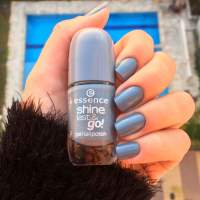
Essence Shine Last & Go Gel Nail Polish | Quick Dry & UV Lamp Not Needed
₱580.00
Buy on Lazada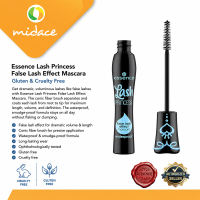
Katelegance Essence Lash Princess False Lash Effect Mascara Gluten & Cruelty Free - Blue
₱200.00₱650.00
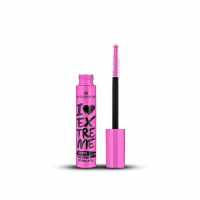
【Ready Stock】Essence I Love Extreme Crazy Volume Mascara 12ML
₱220.80₱441.59
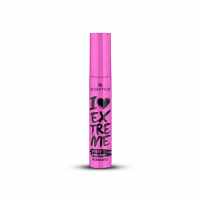
Essence I Love Extreme Crazy Volume Mascara 12ML
₱220.79₱441.59
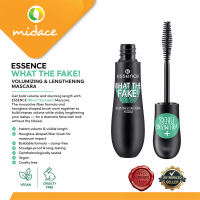
ESSENCE WHAT THE FAKE! VOLUMIZING & LENGTHENING MASCARA
₱591.00₱650.00
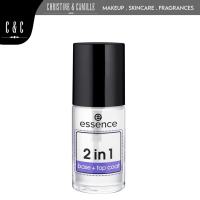
Essence 2 in 1 Base + Top Coat 8ml | Glossy Finish
₱600.00
Buy on Lazada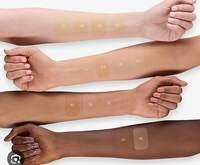
essence stay all day 16h foundation
₱250.00
Buy on Lazada
Essence Cosmetics USA • Lash Princess Mascara
₱1,950.00
Buy on LazadaAbout Essence
Essence (stylized as essence) is a German cosmetics and beauty brand recognised for affordable makeup, trend-led products, colourful packaging, and a playful approach to beauty. Founded in 2001 by Christina Oster-Daum and Javier González, the brand is operated by cosnova GmbH, a German cosmetics company headquartered in Sulzbach (Taunus), Germany. Essence first entered the German market in 2002 and has since grown into an international mass-market label with products sold in more than 80 countries.1
The brand was established on the premise that high-quality, fashionable cosmetics should be accessible at affordable prices rather than reserved for premium consumers. Over two decades, it evolved from a domestic drugstore makeup line into a global mass-market brand under the cosnova group.12
Brand overview
| Category | Information |
|---|---|
| Brand name | essence |
| Founded | 2001 |
| First market launch | Germany, 2002 |
| Founders | Christina Oster-Daum and Javier González |
| Parent company | cosnova GmbH |
| Headquarters | Sulzbach (Taunus), Germany |
| Industry | Cosmetics and beauty |
| Main positioning | Affordable, trend-driven beauty |
| Major categories | Makeup, nails, lips, eyes, face and skincare |
| Brand philosophy | “Make Beauty fun” |
| Current European positioning | No. 1 cosmetics brand in Europe, according to cosnova |
| Cruelty-free | Yes, according to the brand and EU-law framework |
| Vegan | Essence currently describes its products as 100% vegan |
| International presence | 80+ countries historically reported by cosnova |
Essence operates as a brand within the cosnova GmbH group.2
History
Founding and early years
Essence originated from the vision of entrepreneur Christina Oster-Daum to create cosmetics that combined attractive design, contemporary trends, quality, and accessible pricing. In 2001, she founded cosnova with her husband, Javier González, to address a gap in the market for innovative, fashionable makeup that did not carry premium price tags. The company’s own history notes that operations initially began from a kitchen and dining-room table before expanding into an international business.3
Market entry and leadership
Essence officially launched in Germany in 2002, focusing on the drugstore and mass-market segment where affordable pricing and frequent product updates provided a competitive advantage. By 2007, the brand had achieved the number one sales position in Germany and was being sold in numerous international markets, marking its transition from a local concept to a global brand.4
International expansion
The brand entered the United States in 2008 and conducted a test with Ulta Beauty in 2009. North American operations continued to grow, and Essence expanded into Canada in 2012 through retailers including Shoppers Drug Mart and Pharmaprix.5 Throughout the 2010s, the brand solidified its status as a major international mass-market player by relying on inexpensive products, frequent launches, trend-responsive collections, eye-catching packaging, social-media-friendly items, drugstore distribution, and limited-edition collaborations. According to cosnova, Essence eventually became the best-selling cosmetics brand in Europe.6
Digital-first era and anniversaries
Around 2022, Essence celebrated its 20th anniversary, with cosnova reporting availability in more than 80 countries and strong volume sales across Europe. In the 2020s, the brand has increasingly emphasised social media and online communities. Cosnova states that Essence has more than 10 million followers worldwide and highlights digital initiatives such as the Roblox experience “Kingdom of Essentia.” The brand also received TikTok’s “Greatest Performance” award in 2023.7
Brand philosophy
Essence’s central philosophy is summarised by the phrase “Make Beauty fun.” Rather than presenting makeup as exclusive or luxury-oriented, the brand treats cosmetics as experimental, colourful, inexpensive, and entertaining. The company describes its approach as positive and open to everyone, noting that while Essence takes beauty seriously, it does not take itself too seriously.8 This positioning contrasts with luxury cosmetics that rely on exclusivity and prestige, instead prioritising accessibility, experimentation, trends, and affordability to appeal to younger and price-conscious consumers.
Target market
Essence is primarily positioned towards consumers seeking affordable, fashionable cosmetics rather than luxury beauty products. Historically, the brand has maintained a strong connection with teenagers and young adults, although its expanded range now appeals to a broader demographic. Its consumer proposition aligns with those who wish to try new makeup without significant expenditure, follow current trends, experiment with colours, and discover products through social media platforms like TikTok, Instagram, and YouTube. This compatibility with digital beauty ecosystems allows products to gain popularity rapidly among connected consumers.
Product portfolio
While most strongly associated with colour cosmetics, Essence covers several areas of beauty.
Face makeup
Products include foundations, concealers, powders, blushes, bronzers, highlighters, contour products, primers, and fixing sprays.1620
Eye makeup
Eye makeup is one of the brand’s strongest categories, comprising mascara, eyeliner, eyeshadow, eyeshadow palettes, eyebrow products, and false lashes. Mascara, in particular, has become a signature category for the brand.
Lip products
The lip range includes lipsticks, lip glosses, lip liners, lip balms, and lip oils.
Nail products
Essence maintains a significant nail business featuring nail polish, base coats, top coats, nail-care products, and accessories.
Skincare
Reflecting broader industry shifts, Essence has expanded beyond decorative cosmetics into skincare, integrating care and makeup in its recent product development.18
Brushes and accessories
The brand also offers makeup brushes and various beauty accessories.
Differentiation and strategy
Affordable pricing
Essence is defined by its price-to-performance positioning, founded on the belief that consumers should not have to choose between quality and affordability. It competes primarily in the mass-market and drugstore segments rather than against luxury houses.9
Fast trend response
The brand is notably active in refreshing its assortment. Cosnova states that Essence introduces more than 30 trend editions per year, with approximately 50% of its portfolio consisting of new products. This rapid cycle helps maintain relevance in an industry where trends can shift within weeks.9
Fun branding
The visual and verbal identity is youthful, colourful, playful, informal, and experimental. This encourages consumers to view makeup as a form of self-expression rather than a serious obligation, directly reflecting the “Make Beauty fun” philosophy.
Vegan and cruelty-free positioning
Responsibility is a key component of the brand’s identity. Essence states that its products are 100% vegan, meaning formulations contain no animal-derived ingredients. The brand also affirms it has been cruelty-free since its founding, in accordance with EU legislation. Cosnova similarly describes Essence as 100% vegan and cruelty-free, emphasising safer ingredients and waste reduction efforts. This combines ethical positioning with affordability, making these attributes accessible outside the premium segment.
Distribution
Essence’s traditional strength lies in mass retail and drugstore distribution. Products are designed to be easily accessible through retail partners and online platforms rather than standalone luxury boutiques. Official customer service channels direct consumers to store finders and retail partners for purchasing, reinforcing accessibility as a core part of the brand identity.1719
Marketing and community
Marketing is heavily community-driven, placing emphasis on social media, influencers, creators, product launches, limited editions, and user-generated content over traditional celebrity advertising. Cosnova explicitly describes Essence as “Digital and social first,” with more than 10 million global followers. This strategy leverages the fact that lower price points facilitate easier discovery and trial via social media compared to luxury alternatives.7
A major component of the business model is continuous novelty. Instead of maintaining a static catalogue, the brand frequently launches new products, follows emerging trends, creates limited editions, and collaborates with other brands or entertainment properties. This approach makes Essence function more like a constantly changing beauty playground, encouraging repeat visits to retailers and digital channels.
Relationship with cosnova
Essence is a brand within the cosnova group, which was founded in 2001 by Christina Oster-Daum and Javier González. Cosnova subsequently expanded its portfolio with Catrice in 2004 and later developed additional beauty businesses.10 Within this structure, Essence serves as the flagship mass-market, playful, and trend-oriented brand, while Catrice targets a more sophisticated segment. Essence remains the primary brand associated with the company’s original vision of affordable beauty.
Competitive positioning
Competitors may include e.l.f. Cosmetics, NYX Professional Makeup, Maybelline, Catrice, Wet n Wild, Revolution Beauty, and ColourPop, though the specific competitive set varies by country. Essence’s advantage lies not merely in low prices but in combining affordability with fast trend adoption, strong visual identity, and a substantial social media community. This combination enables it to compete against both traditional drugstore brands and newer digitally native beauty companies.
Brand identity
- Personality: Playful, optimistic, accessible, experimental, and youthful.
- Brand promise: Consumers do not need to spend significantly to enjoy beauty.
- Emotional benefit: Makeup becomes a form of experimentation rather than an expensive commitment.
- Functional benefit: Affordable products with contemporary formulas, colours, and designs.
- Cultural positioning: Democratisation of beauty, ensuring good cosmetics are available to everyone regardless of budget.
Global presence
Although founded in Germany, Essence has become an international business available in more than 80 countries. Corporate materials describe it as Europe’s number one cosmetics brand and continue to position it for international growth. The official website provides country-specific versions for markets across Europe, the Americas, Asia, Africa, and Oceania, including Thailand and other Asian markets.1112
Key milestones
| Year | Milestone |
|---|---|
| 2001 | Essence/cosnova founded by Christina Oster-Daum and Javier González |
| 2002 | Essence launches in Germany |
| 2004 | Cosnova launches Catrice |
| 2007 | Essence becomes No. 1 in Germany |
| 2008 | Essence enters the U.S. |
| 2009 | U.S. test with Ulta Beauty |
| 2010 | North American sales reach $1 million according to the brand’s U.S. history |
| 2011 | Essence receives its first Allure Best of Beauty award |
| 2012 | Essence expands into Canada |
| 2022 | 20th anniversary; brand reported in 80+ countries |
| 2023 | Essence receives TikTok’s “Greatest Performance” award |
| 2020s | Greater emphasis on vegan products, skincare, social media and digital communities |
Corporate leadership
The brand’s founders, Christina Oster-Daum and Javier González, remain associated with cosnova’s leadership.14 In 2025, cosnova announced a leadership realignment appointing Isabelle Tambue as Chief Brand Officer for Essence, with responsibility for strategic development. This change was intended to strengthen consumer connections, accelerate trend response, and reinforce brand identities.15
Essence today
As of 2026, Essence is characterised as a large, German-origin, international mass-market cosmetics brand. Its core proposition remains consistent with its founding: high-quality, fashionable beauty should be affordable and fun. However, the scale and delivery have evolved from a domestic drugstore concept to a globally distributed, highly digital brand with rapid product cycles, extensive social media activity, vegan positioning, skincare expansion, and strong community engagement.16 Cosnova currently cites Essence as number one in Europe, highlighting more than 30 annual trend editions, approximately 50% new products, over 10 million global followers, and a strategy centred on trends and community.
References
- essence | cosnova GmbH
- essenceMAKE
- About – essence makeup
- Herzlich Willkommen beim essence Kundenservice.
- Welcome to essence Customer Service.
- essence cares ❤️️ Discover the world of essence
- Ready for the next level: With the launch of the essence Club, cosnova is redefining the role of communities and creators | cosnova GmbH
- Wie Cosnova mit Essence und Catrice 500 Mio. Euro Umsatz macht
- essence | cosnova GmbH
- essence celebrating 20 years – cosnova
- cosnova is strengthening its Marketing Management Team – cosnova
- Imprint
- Imprint
- Impressum und Datenschutzhinweis Social Media
- Imprint and Privacy Policy Social Media
- สั่งซื้อเครื่องสำอางสำหรับใบหน้าออนไลน์ ❤️️ essence Shop
- Welcome to essence Customer Service.
- สั่งซื้อผลิตภัณฑ์ดูแลผิวออนไลน์ ❤ เอสเซนส์ช็อป
- ยินดีต้อนรับเข้าสู่บริการของ essence Customer Service
- Buy Face Make-Up online ❤️️ essence Shop